Artwork
Three Goddesses
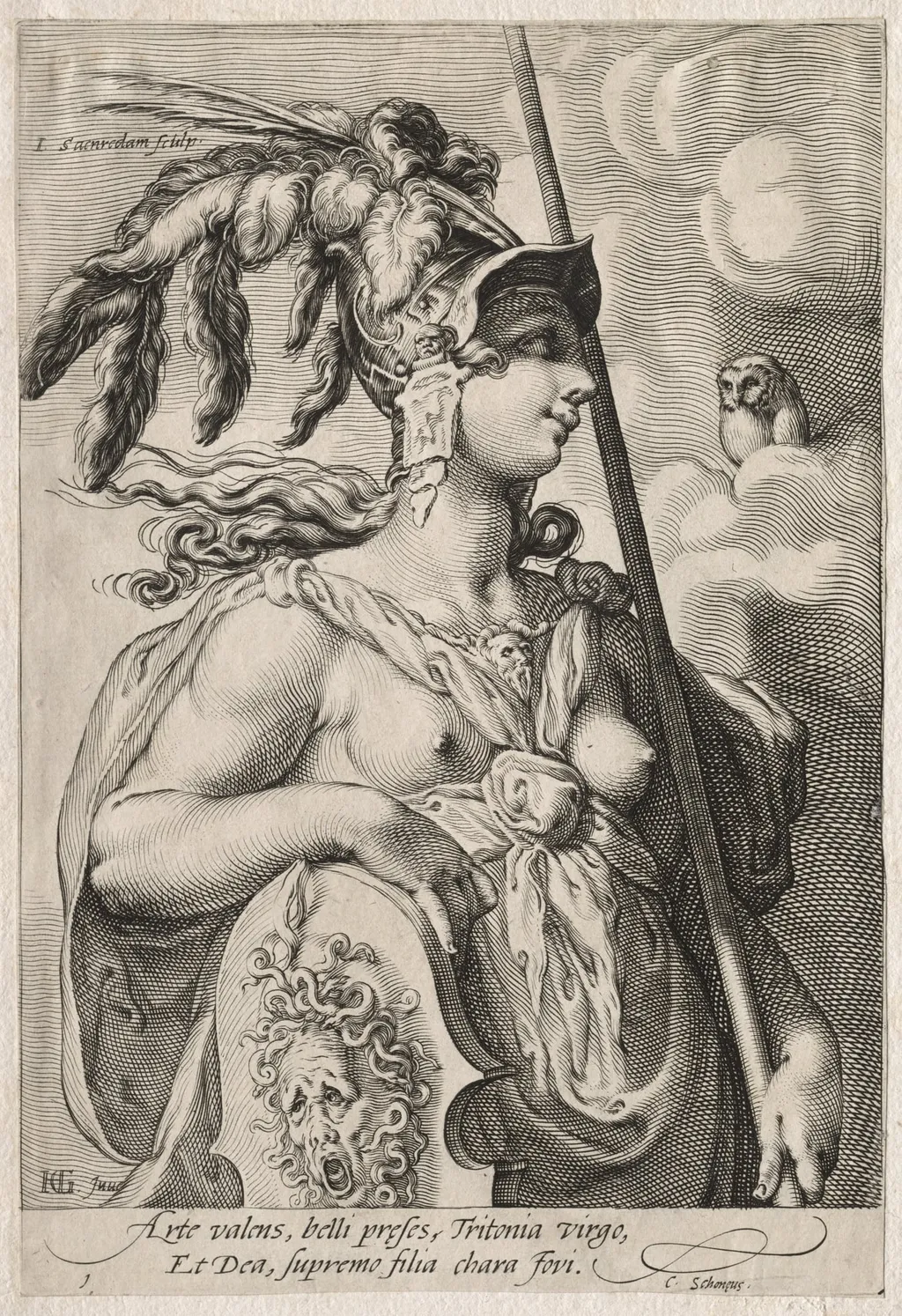
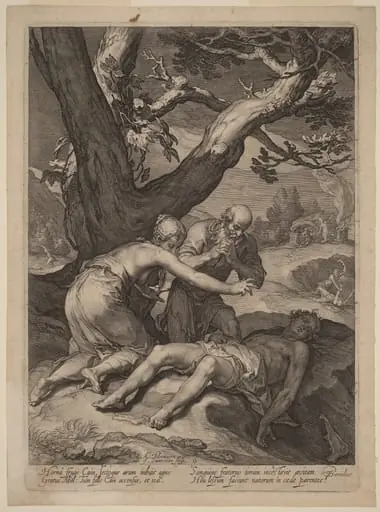
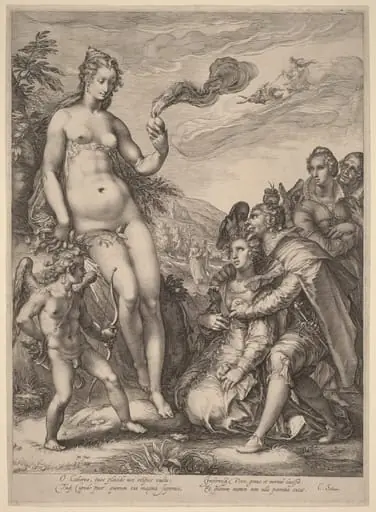
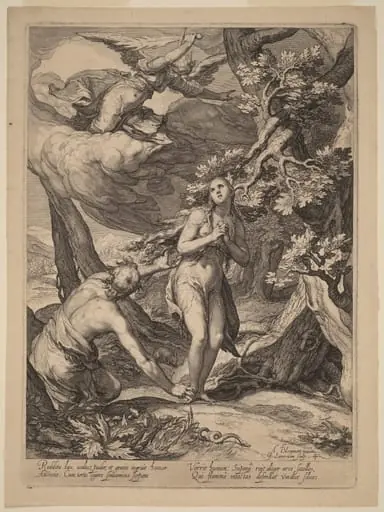
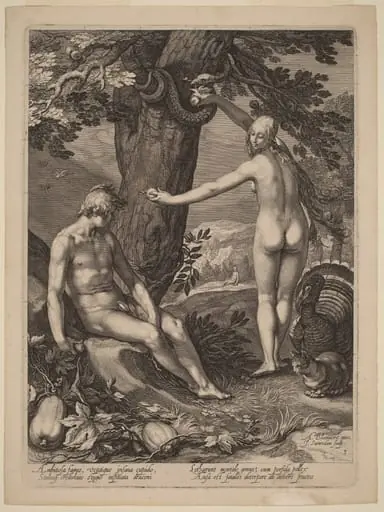
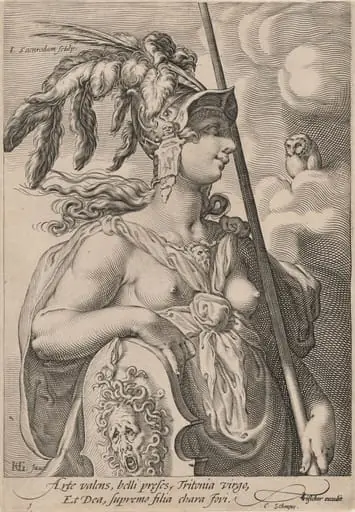
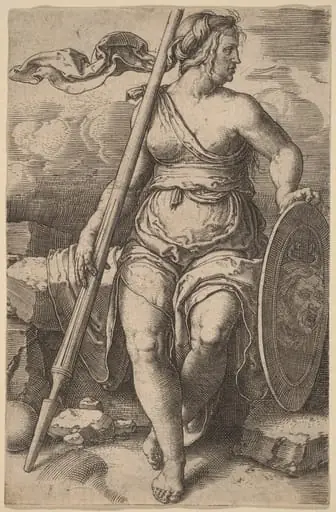
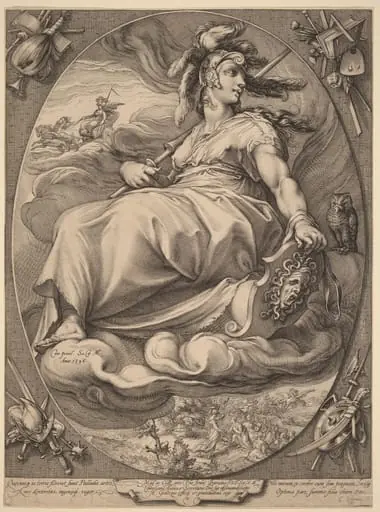
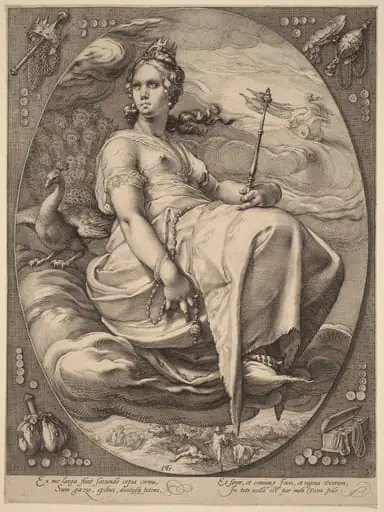
Three Goddesses is a print by the Renaissance artist Jan Pietersz Saenredam. It dates from 1595 and is held in the collection of the Cleveland Museum of Art. This set of three engravings by Hendrick Goltzius depicts Juno, Athena, and Venus from the myth of The Judgment of Paris.
About this work
Overview
This set of three engravings by Hendrick Goltzius depicts Juno, Athena, and Venus from the myth of The Judgment of Paris.
This set of three engravings by Hendrick Goltzius depicts Juno, Athena, and Venus from the myth of The Judgment of Paris. Created as designs for his pupil Jan Saenredam to engrave, the prints were part of a broader trend in late 16th-century Northern Europe that favored intricate line work and mythological subjects. Each goddess appears in a separate panel, inviting viewers to consider their individual appeals and the nature of beauty.
Subject & Meaning
The three goddesses each offer Paris a different reward to win the golden apple: sovereignty, military prowess, or romantic love. Their contrasting attributes reflect competing ideals of value—power, wisdom, and desire. By presenting them individually, Goltzius shifts the decision from a narrative climax to a contemplative act, positioning the viewer as the arbiter of beauty rather than the mythic mortal.
Technique & Style
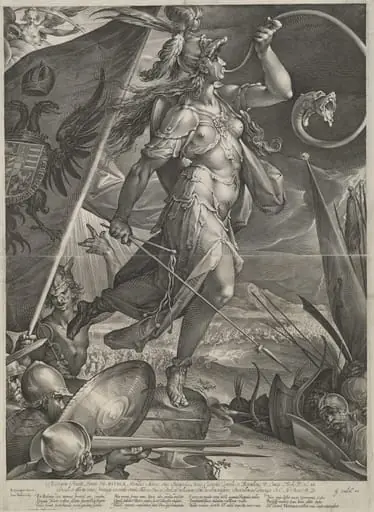
Goltzius employed a highly refined engraving technique characterized by undulating, interwoven lines that model form with rhythmic precision. The surfaces of skin, fabric, and hair are rendered through delicate cross-hatching and tapering strokes, creating a tactile richness. This style, known for its virtuosic control, became a hallmark of Mannerist printmaking and influenced a generation of Northern European engravers.
History & Provenance
The designs were produced around 1589–1590 for Saenredam, who engraved them with fidelity to Goltzius’s drawings. These prints circulated widely among collectors and artists in the Netherlands and beyond, contributing to the dissemination of Goltzius’s aesthetic. Their survival in multiple institutional collections attests to their early acclaim and enduring technical influence.
Context
The Judgment of Paris was a popular subject in Dutch humanist circles, frequently referenced in literature and visual art as a metaphor for moral choice and aesthetic judgment. Goltzius’s treatment aligns with the period’s fascination with classical mythology as a vehicle for intellectual and artistic exploration, particularly in a region where print culture thrived and private collecting was widespread.
Legacy
Goltzius’s approach to the subject set a precedent for later engravers, emphasizing line as both descriptive and expressive. His collaboration with Saenredam exemplified the workshop model of print production, where master and pupil shared creative authority. The prints remain studied for their technical innovation and their subtle challenge to fixed notions of beauty.
Artist & collection
Artist
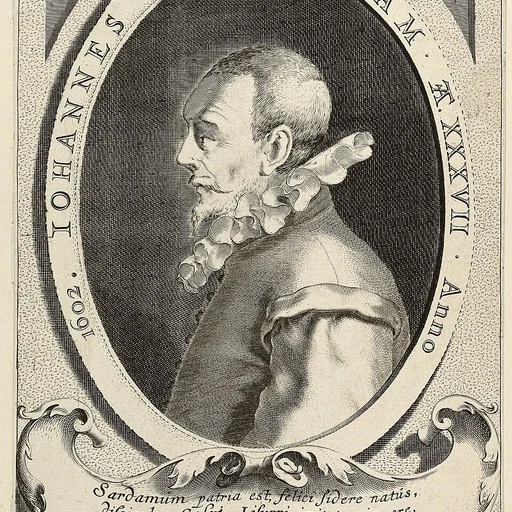
Jan Pieterszoon (abbr. Pietersz.) Saenredam (c. 1565 – 6 April 1607) was a Dutch Northern Mannerist painter, printmaker in engraving, and cartographer, and father of the painter of church interiors, Pieter Jansz…