Artwork
Allegorie sur la mariage du Comte de Provence
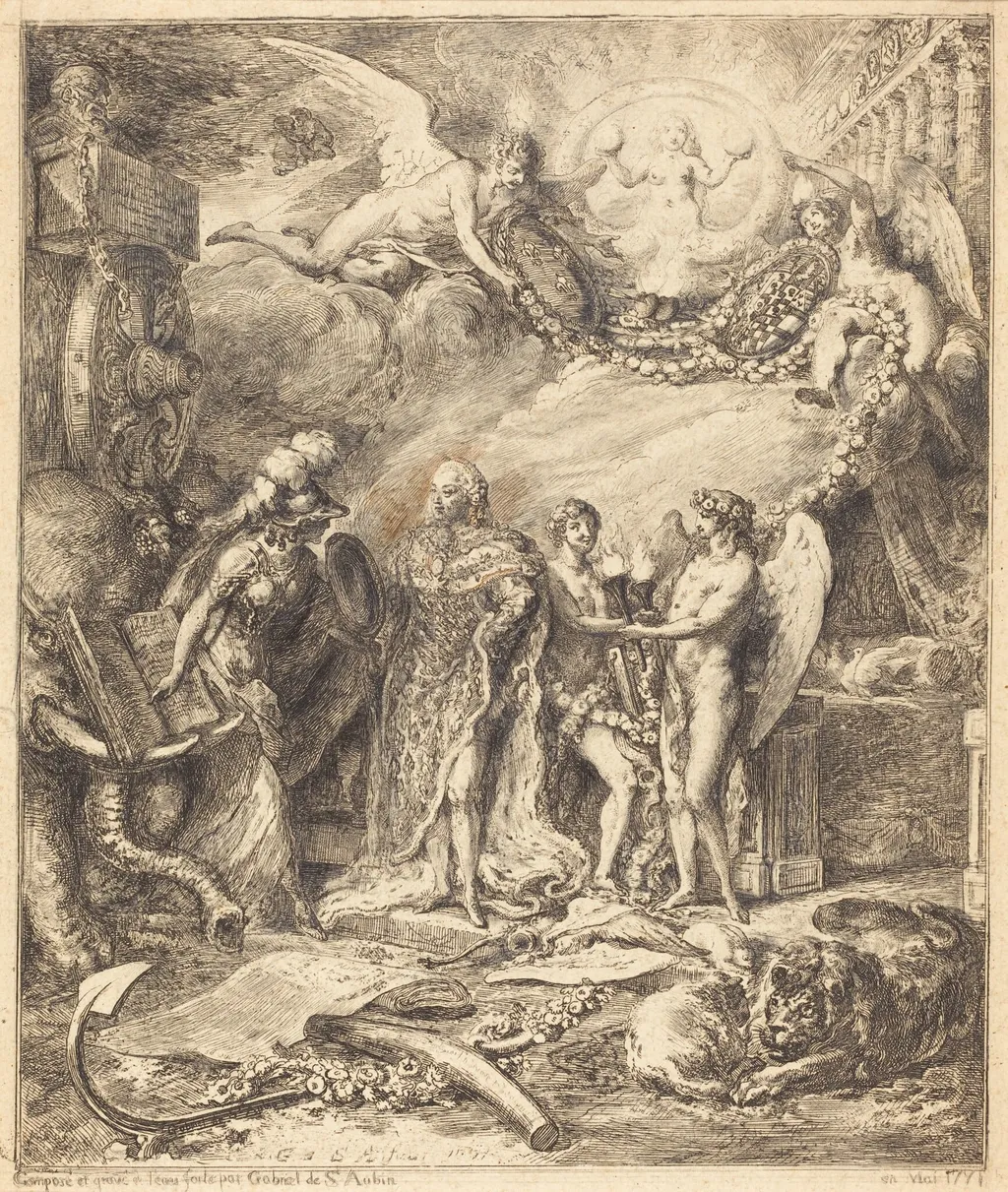
Allegorie sur la mariage du Comte de Provence is a graphite print by the Romanticist artist Gabriel de Saint-Aubin. It dates from 1771 and is held in the collection of the National Gallery of Art.
About this work
Overview
Created in 1771 by Gabriel de Saint-Aubin, this print is an etching enhanced with graphite and ink on laid paper. It presents a symbolic narrative tied to the marriage of the Comte de Provence, blending allegory with detailed draftsmanship. The work’s layered medium allows for nuanced tonal contrasts, reflecting the artist’s skill in translating ceremonial themes into intimate graphic form.
Subject & Meaning
The throne-like structure and swirling clouds evoke celestial approval, framing the event as both personal and dynastic.
The scene depicts a mythological allegory of the Comte de Provence’s union, centered on a winged figure cradling an infant, possibly symbolizing the promise of future lineage. Two solemn figures on the left, dressed in archaic attire, may represent ancestral or political guardians. A second winged entity leans toward the child, suggesting divine sanction. The throne-like structure and swirling clouds evoke celestial approval, framing the event as both personal and dynastic.
Technique & Style
Saint-Aubin employed etching as a base, then intensified the image with graphite and brown and black ink to model form and depth. Lines vary from sharp and precise to softly blurred, creating texture in drapery and atmosphere. The contrast between defined figures and indistinct, turbulent backgrounds directs focus to the central allegorical group, demonstrating a deliberate interplay of clarity and ambiguity.
History & Provenance
Produced in 1771, the print was likely made for a private or aristocratic audience familiar with the political implications of the Comte’s marriage. Its survival in collections today suggests it was valued as both a commemorative object and an artistic study. No public exhibition record from the period is known, but its intricate execution implies it was circulated among connoisseurs rather than the general public.
Context
In late 18th-century France, allegorical prints were common tools for conveying political and dynastic messages without overt commentary. Saint-Aubin, known for his keen observations of Parisian life, here shifts to mythological symbolism, aligning with courtly traditions. The work reflects the tension between Enlightenment rationality and lingering monarchical iconography, using classical forms to legitimize contemporary events.
Legacy
Though not widely reproduced, the print exemplifies Saint-Aubin’s ability to merge documentary precision with allegorical invention. It stands as a rare example of his engagement with courtly themes beyond his more familiar genre scenes. The work contributes to understanding how visual allegory functioned in pre-Revolutionary France as a subtle medium for political messaging.
Artist & collection

Artist
Gabriel de Saint-Aubin was a French draftsman, printmaker, etcher and painter.


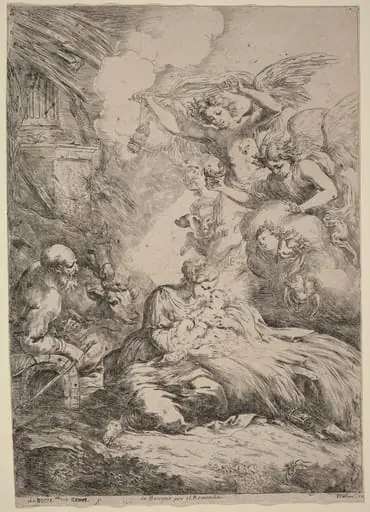 The Holy Family Adored by Angels (The Large Nativity)
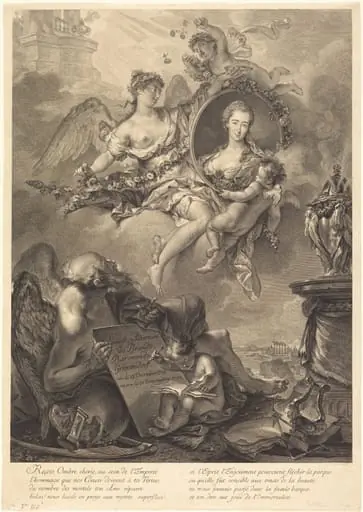 Louise Albertine de Brandt, Baroness von Grapendorf
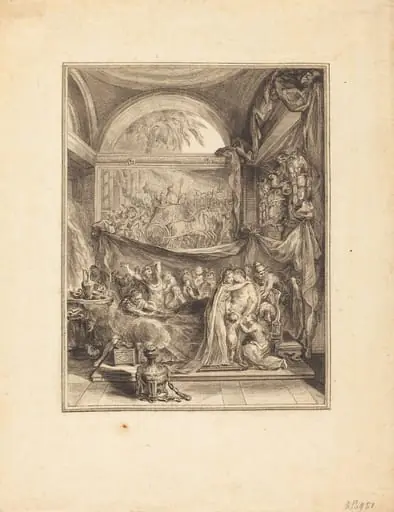 La mort de Germanicus
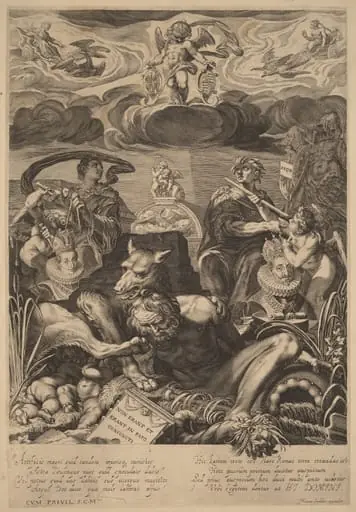 Allegory of the Marriage of Emperor Ferdinand II and Eleanor Gonzaga
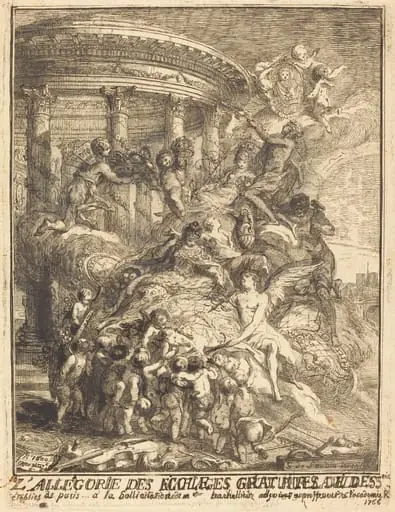 Allégorie des Ecoles gratuites du dessein (Allegory of the Free Drawing Schools)
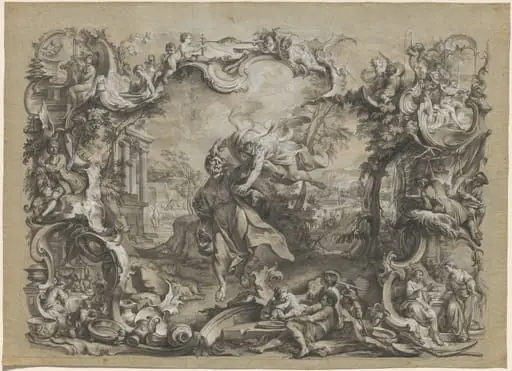 The Angel Carrying off Habakkuk by His Hair, Surrounded by an Elaborate Rococo Frame
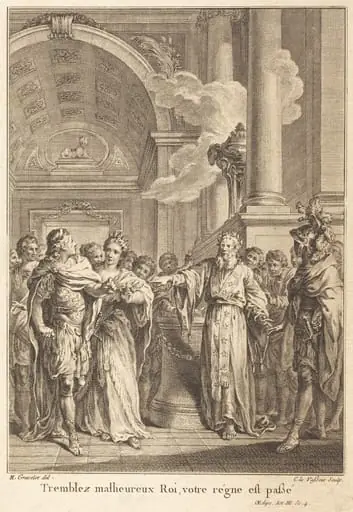 Tremblez malheureux Roi, votre régne est passé
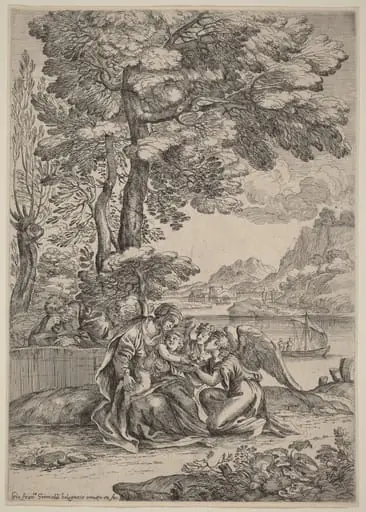 The Rest on the Flight into Egypt
 The Golden Age
![Protection accordée aux beaux-arts 1663 (Protection Granted to the Fine Arts 1663) [pl. 24], by Jean-Baptiste Massé](https://artifactworldgallery.com/img/jean-baptiste-masse--protection-accordee-aux-beaux-arts-1663-protection-granted-t--045f3db9c3e49b51-w320.webp) Protection accordée aux beaux-arts 1663 (Protection Granted to the Fine Arts 1663) [pl. 24]
Protection accordée aux beaux-arts 1663 (Protection Granted to the Fine Arts 1663) [pl. 24]