Artwork
Protection accordée aux beaux-arts 1663 (Protection Granted to the Fine Arts 1663) [pl. 24]
![Protection accordée aux beaux-arts 1663 (Protection Granted to the Fine Arts 1663) [pl. 24], by Jean-Baptiste Massé, ink, 1752](https://artifactworldgallery.com/img/jean-baptiste-masse--protection-accordee-aux-beaux-arts-1663-protection-granted-t--045f3db9c3e49b51-w1024.webp)
Protection accordée aux beaux-arts 1663 (Protection Granted to the Fine Arts 1663) [pl. 24] is an ink print by the Romanticist artist Jean-Baptiste Massé. It dates from 1752 and is held in the collection of the National Gallery of Art.
About this work
In the center, a man in fancy clothes sits on a throne-like chair, surrounded by people who look like they’re paying attention to him.
This print shows a grand, ornate scene framed like a decorative wall panel. In the center, a man in fancy clothes sits on a throne-like chair, surrounded by people who look like they’re paying attention to him. Around him, four muscular figures—two standing on either side and two flying above—hold up scrolls and tools. The whole thing is packed with swirls, flowers, and heavy borders that look carved from stone.
The title at the bottom, *Protection accordée aux Beaux-Arts 1663*, hints this is about supporting the arts. The mix of real people and myth-like figures suggests it’s an allegory—a way to show ideas instead of real events.
Next, check out the technique: etching.
Overview
Jean-Baptiste Massé’s print *Protection accordée aux beaux‑arts 1663* is an etching and engraving executed on laid paper in 1752. The image is framed as an elaborate decorative panel, with a central figure seated on a throne‑like chair surrounded by attentive attendants, while four muscular allegorical figures—two standing, two airborne—support scrolls and artistic tools amid swirling foliage and a heavy, stone‑like border.
Subject & Meaning
The composition presents an allegorical celebration of state support for the visual arts. The central dignitary, likely representing a patron or sovereign, is flanked by personifications of strength and creativity who bear symbols of artistic practice. The title’s reference to the year 1663 suggests a historical decree or edict granting protection to artists, rendered here as a timeless ideal rather than a specific event.
Technique & Style
Massé combined etching with engraving to achieve both delicate line work and crisp, deep incisions. The laid‑paper substrate enhances the texture of the print, while the intricate borders and ornamental motifs reflect the Rococo taste for elaborate decoration. The interplay of fine hatching and bold outlines creates a sense of depth, especially in the muscular figures that appear to rise above the pictorial plane.
History & Provenance
The print forms part of Massé’s *Galerie de Versailles*, a series produced between 1732 and 1753 that reproduced Charles Le Brun’s designs for the royal palace. As a court painter to Louis XV, Massé contributed to the dissemination of official artistic programs. The work later entered museum collections as an example of mid‑18th‑century French printmaking and of the collaborative networks that linked artists such as Jean‑Étienne Liotard and Cornelius Høyer to the royal atelier.
Artist & collection
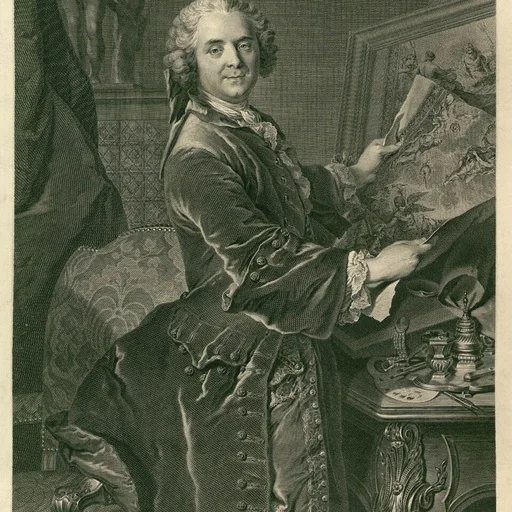
Artist
Jean-Baptiste Massé (29 December 1687, in Paris – 26 September 1767, in Paris) was a French miniature painter, engraver, and draftsman, best remembered as the court painter of Louis XV, for training Jean-Étienne Liotard…

 Pierre Louis Dubus (1721–1799), Called Préville, of the Comédie-Française
![Coupole du Salon de la Paix (Cupola of the Salon of Peace) [pl. 44], by Jean-Baptiste Massé](https://artifactworldgallery.com/img/jean-baptiste-masse--coupole-du-salon-de-la-paix-cupola-of-the-salon-of-peace-pl--083dda9da8b00531-w320.webp) Coupole du Salon de la Paix (Cupola of the Salon of Peace) [pl. 44]
Coupole du Salon de la Paix (Cupola of the Salon of Peace) [pl. 44]![La Prééminence de la France reconnue par l'Espagne 1662 (The Preeminance of France Recognized by Spain 1662) [pl. 17], by Jean-Baptiste Massé](https://artifactworldgallery.com/img/jean-baptiste-masse--la-preeminence-de-la-france-reconnue-par-l-espagne-1662-the--0865c0d8271fc4b5-w320.webp) La Prééminence de la France reconnue par l'Espagne 1662 (The Preeminance of France Recognized by Spain 1662) [pl. 17]
La Prééminence de la France reconnue par l'Espagne 1662 (The Preeminance of France Recognized by Spain 1662) [pl. 17]![L'Allemagne Cintre du Salon de la Guerre du côté des appartemens du Roi (Germany, Center of the Salon of War next to the King's Chambers) [pl. 37], by Jean-Baptiste Massé](https://artifactworldgallery.com/img/jean-baptiste-masse--l-allemagne-cintre-du-salon-de-la-guerre-du-cote-des-apparte--107e6bb2bd4fa1ce-w320.webp) L'Allemagne Cintre du Salon de la Guerre du côté des appartemens du Roi (Germany, Center of the Salon of War next to the King's Chambers) [pl. 37]
L'Allemagne Cintre du Salon de la Guerre du côté des appartemens du Roi (Germany, Center of the Salon of War next to the King's Chambers) [pl. 37]![L'Espagne Cintre du Salon de la Paix sur l'Arcade de la Galerie (Spain, Center of the Salon of Peace in the Gallery's Arcade) [pl. 47], by Jean-Baptiste Massé](https://artifactworldgallery.com/img/jean-baptiste-masse--l-espagne-cintre-du-salon-de-la-paix-sur-l-arcade-de-la-gale--1780f995882c221b-w320.webp) L'Espagne Cintre du Salon de la Paix sur l'Arcade de la Galerie (Spain, Center of the Salon of Peace in the Gallery's Arcade) [pl. 47]
L'Espagne Cintre du Salon de la Paix sur l'Arcade de la Galerie (Spain, Center of the Salon of Peace in the Gallery's Arcade) [pl. 47]![Coupole du Salon de la Guerre (Cupola of the Salon of War) [pl. 35], by Jean-Baptiste Massé](https://artifactworldgallery.com/img/jean-baptiste-masse--coupole-du-salon-de-la-guerre-cupola-of-the-salon-of-war-pl--2b9793f18c09c4bc-w320.webp) Coupole du Salon de la Guerre (Cupola of the Salon of War) [pl. 35]
Coupole du Salon de la Guerre (Cupola of the Salon of War) [pl. 35]![L'Europe Chrêtienne en Paix Cintre du Salon de la Paix du côté des appartemens de la Reine (Christian Europe in Peace, Center of the Salon of Peace next to the Queen's Chambers) [pl. 45], by Jean-Baptiste Massé](https://artifactworldgallery.com/img/jean-baptiste-masse--l-europe-chretienne-en-paix-cintre-du-salon-de-la-paix-du-co--42b41626259ce77e-w320.webp) L'Europe Chrêtienne en Paix Cintre du Salon de la Paix du côté des appartemens de la Reine (Christian Europe in Peace, Center of the Salon of Peace next to the Queen's Chambers) [pl. 45]
L'Europe Chrêtienne en Paix Cintre du Salon de la Paix du côté des appartemens de la Reine (Christian Europe in Peace, Center of the Salon of Peace next to the Queen's Chambers) [pl. 45]![L'Allemagne Cintre du Salon de la Paix en face de la Galerie (Germany, Center of the Salon of Peace Opposite the Gallery) [pl. 46], by Jean-Baptiste Massé](https://artifactworldgallery.com/img/jean-baptiste-masse--l-allemagne-cintre-du-salon-de-la-paix-en-face-de-la-galerie--447dbb6c5f024d11-w320.webp) L'Allemagne Cintre du Salon de la Paix en face de la Galerie (Germany, Center of the Salon of Peace Opposite the Gallery) [pl. 46]
L'Allemagne Cintre du Salon de la Paix en face de la Galerie (Germany, Center of the Salon of Peace Opposite the Gallery) [pl. 46]
![Ambassades envoyées des extrêmités de la Terre (Embassies Sent from the Extremities of the Globe) [pl. 15], by Jean-Baptiste Massé](https://artifactworldgallery.com/img/jean-baptiste-masse--ambassades-envoyees-des-extremites-de-la-terre-embassies-sen--d683ea402b3c3659-w320.webp) Ambassades envoyées des extrêmités de la Terre (Embassies Sent from the Extremities of the Globe) [pl. 15]
Ambassades envoyées des extrêmités de la Terre (Embassies Sent from the Extremities of the Globe) [pl. 15]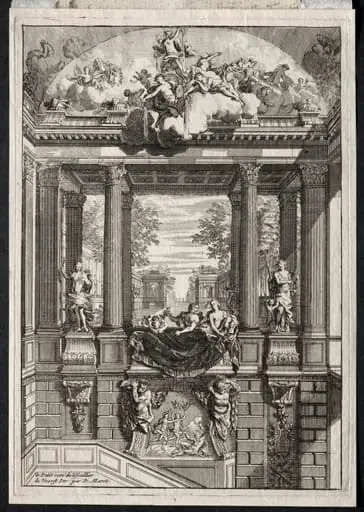 Staircase at the Palace of Voorst in Holland
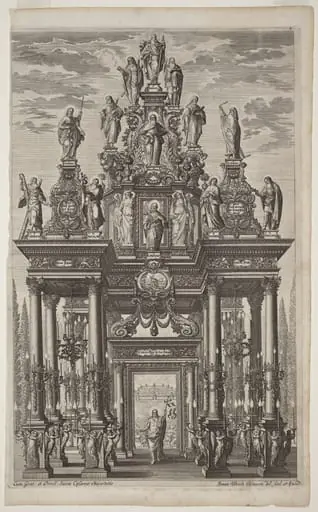 Frontispiece with Triumphal Arch with Christ and the Apostles
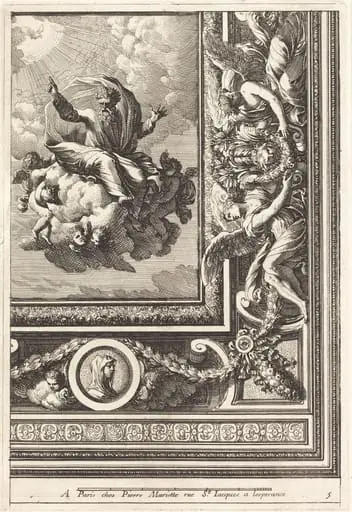 Quarts de plafons
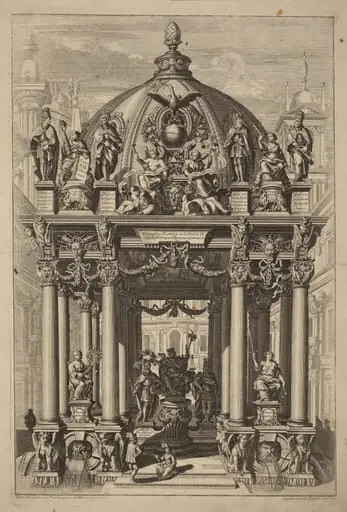 Triumphal Arch for Lotharius II
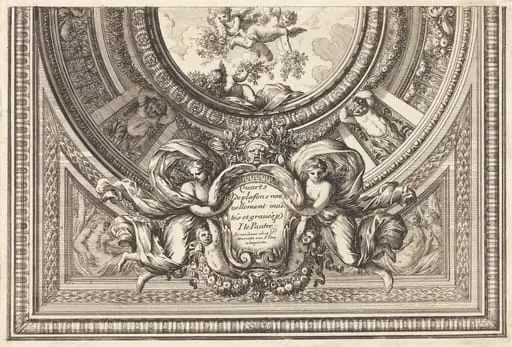 Title Page
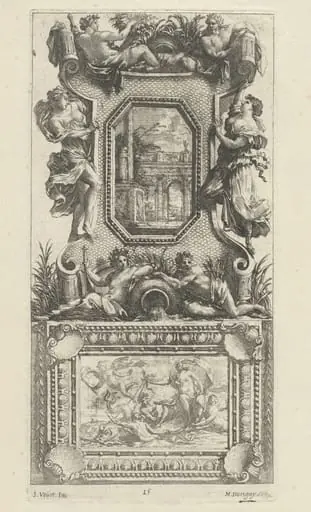 Ornamental Panel Surmounted by a Naiad and a River God
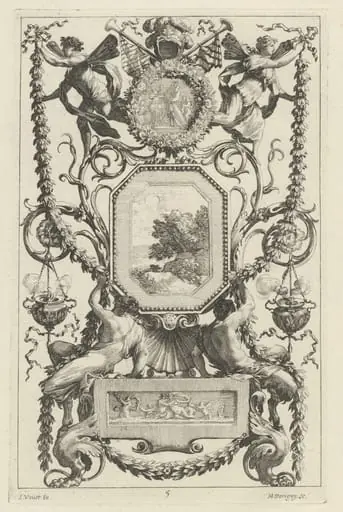 Ornamental Panel Surmounted by a Medallion with a Sacrifice
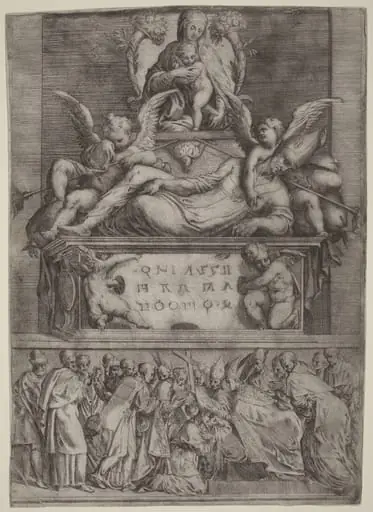 Tomb of a Bishop
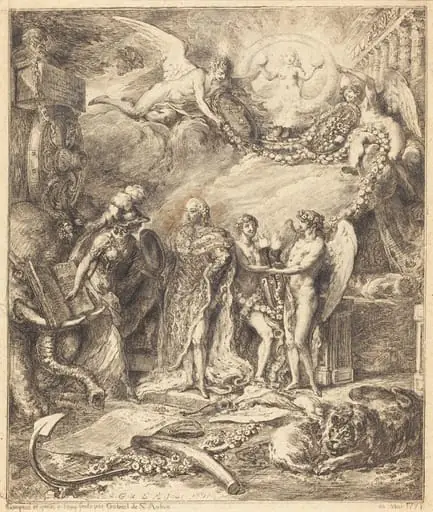 Allegorie sur la mariage du Comte de Provence
![Renouvellement d'Alliance avec les Suisses 1663 (Renewal of Alliance with the Swiss 1663) [pl. 18], by Jean-Baptiste Massé](https://artifactworldgallery.com/img/jean-baptiste-masse--renouvellement-d-alliance-avec-les-suisses-1663-renewal-of-a--b0549fa383211be6-w320.webp) Renouvellement d'Alliance avec les Suisses 1663 (Renewal of Alliance with the Swiss 1663) [pl. 18]
Renouvellement d'Alliance avec les Suisses 1663 (Renewal of Alliance with the Swiss 1663) [pl. 18]