Artwork
Allegory of the Marriage of Emperor Ferdinand II and Eleanor Gonzaga
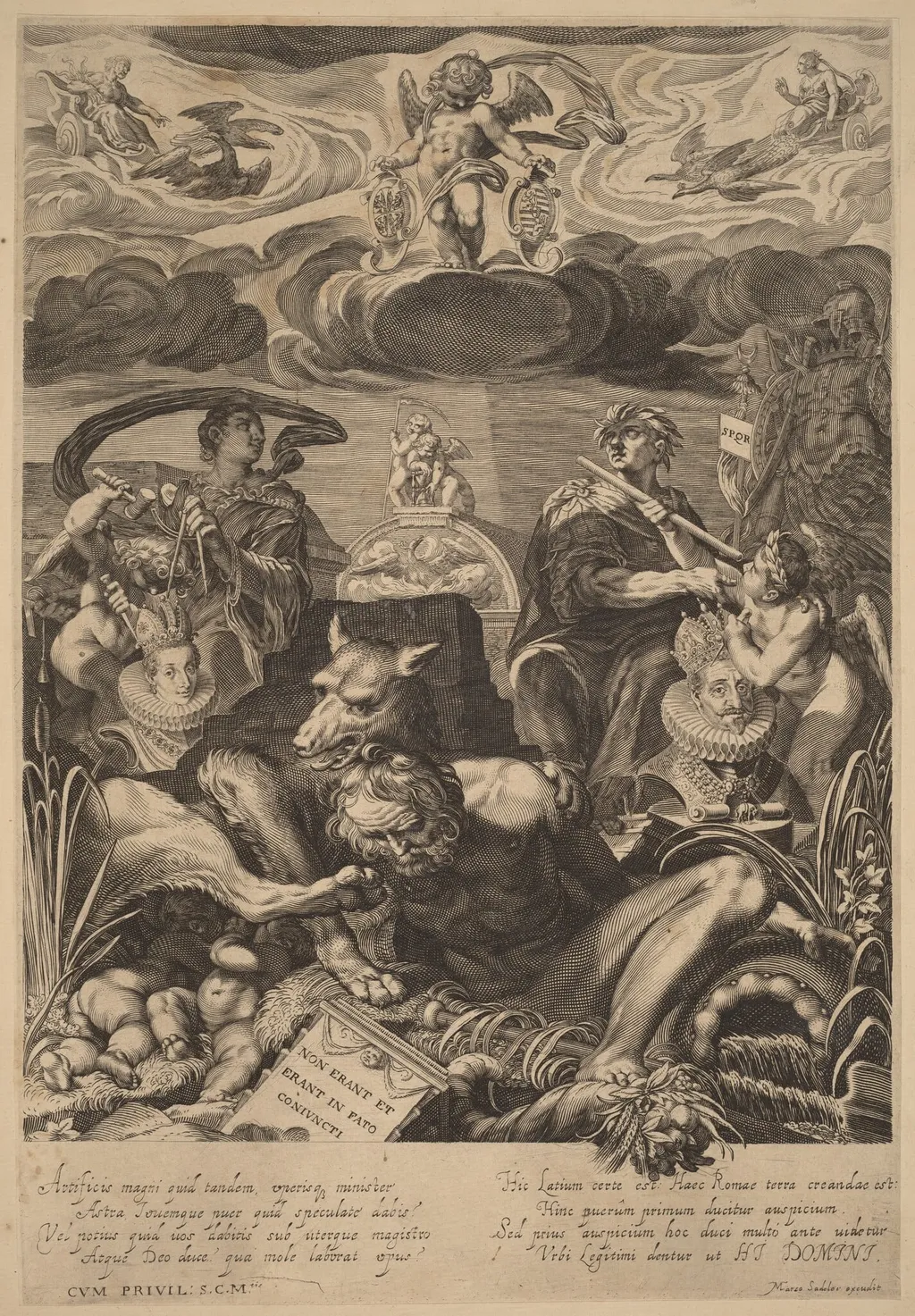
Allegory of the Marriage of Emperor Ferdinand II and Eleanor Gonzaga is an ink print by the Renaissance artist Aegidius Sadeler II. It dates from 1600 and is held in the collection of the National Gallery of Art.
About this work
Overview
Executed in fine black-and-white lines on laid paper, it belongs to the tradition of courtly allegorical prints produced in Prague.
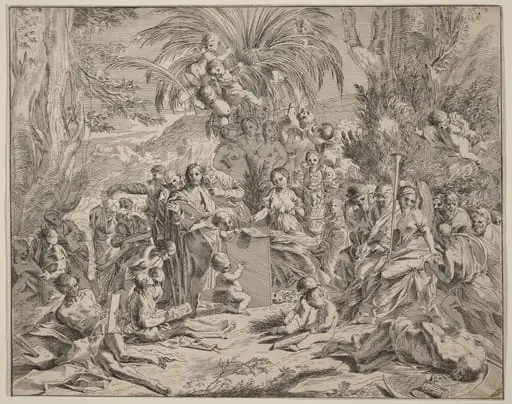
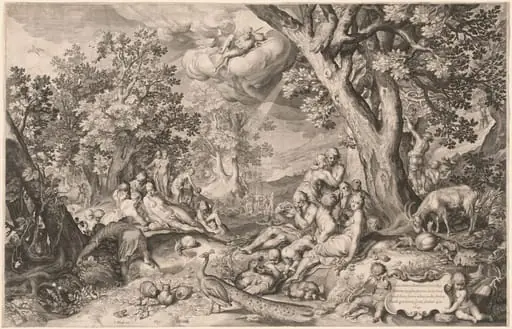
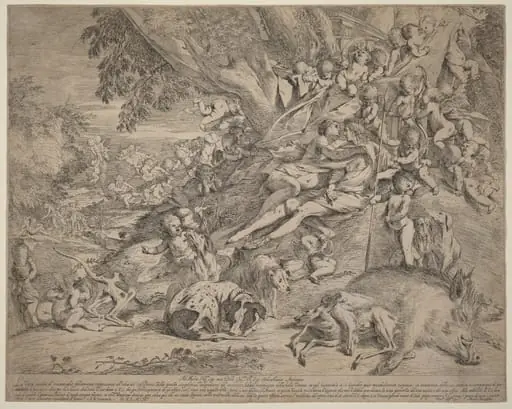
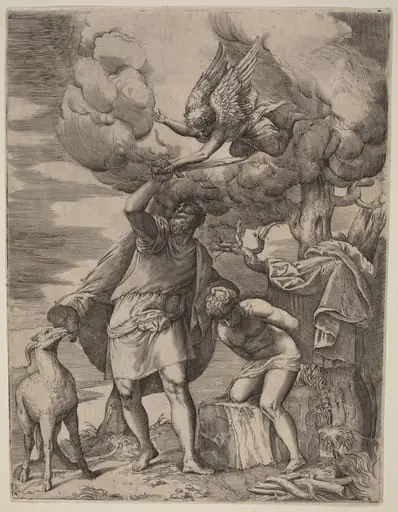
This engraving, created by Aegidius Sadeler II around 1600, commemorates the marriage of Emperor Ferdinand II and Eleanor Gonzaga. Executed in fine black-and-white lines on laid paper, it belongs to the tradition of courtly allegorical prints produced in Prague. The composition layers human figures with mythological elements to convey the political and divine significance of the union, reflecting the Habsburg court’s use of imagery to reinforce dynastic legitimacy.
Subject & Meaning
The scene presents the imperial marriage as a celestial event. Two central figures, one holding a scroll and the other gesturing skyward, likely represent authority and divine sanction. Below, a woman gazes upward, possibly symbolizing the bride or a personified virtue, while a crowned, slumped figure may signify the old order yielding to the new. Winged putti, clouds, and animals around the margins suggest cosmic approval and the fertility of the union, blending political messaging with Renaissance allegory.
Technique & Style
Sadeler employed fine, precise engraving lines to render intricate details across a dense composition. The texture of fabric, feathers, rock, and cloud forms is achieved through controlled hatching and cross-hatching, showcasing the engraver’s mastery of the burin. The lack of color emphasizes linear clarity, typical of Northern Mannerist prints, where complexity and minute detail served to demonstrate technical virtuosity and intellectual depth.
History & Provenance
Created during Sadeler’s tenure at the Prague court of Rudolf II, the print was likely commissioned to celebrate Ferdinand’s 1600 marriage to Eleanor Gonzaga. As a member of a prominent Flemish engraving family, Sadeler produced numerous official portraits and allegories for Habsburg patrons. The work circulated among nobility and collectors, reinforcing imperial prestige through reproducible imagery in an era before mass media.
Context
In early 17th-century Central Europe, allegorical prints were vital tools for conveying political narratives to literate elites. The Habsburgs, facing religious tensions and succession challenges, relied on visual symbolism to project stability and divine favor. Sadeler’s work aligns with a broader trend of court artists using classical and mythological references to elevate dynastic events, merging Renaissance humanism with Baroque grandeur.
Legacy
Though not widely known today, Sadeler’s engraving exemplifies the role of printmaking in early modern statecraft. Its detailed iconography influenced later court artists and remains a valuable record of how Habsburg propaganda was visually constructed. As a surviving example of Prague’s vibrant print culture, it contributes to understanding the intersection of art, power, and print technology in the Holy Roman Empire.
Artist & collection
Artist
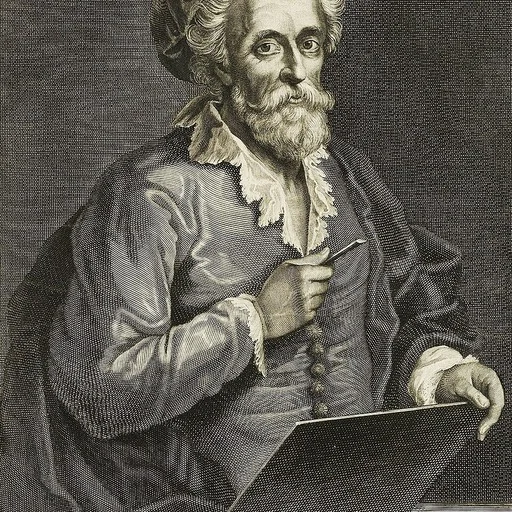
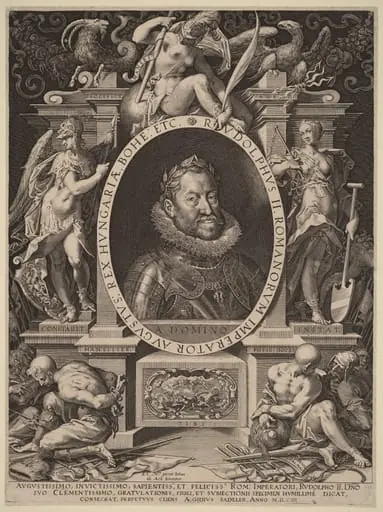
Aegidius Sadeler or Aegidius Sadeler II (1570–1629) was a Flemish engraver who was principally active at the Prague court of Rudolf II, Holy Roman Emperor and his successors.

![Temporalis Aeternitas [Second Version], by Italian 17th Century](https://artifactworldgallery.com/img/italian-17th-century--temporalis-aeternitas-second-version--2b55857961773f67-w320.webp)