Artwork
David Meade Randolph
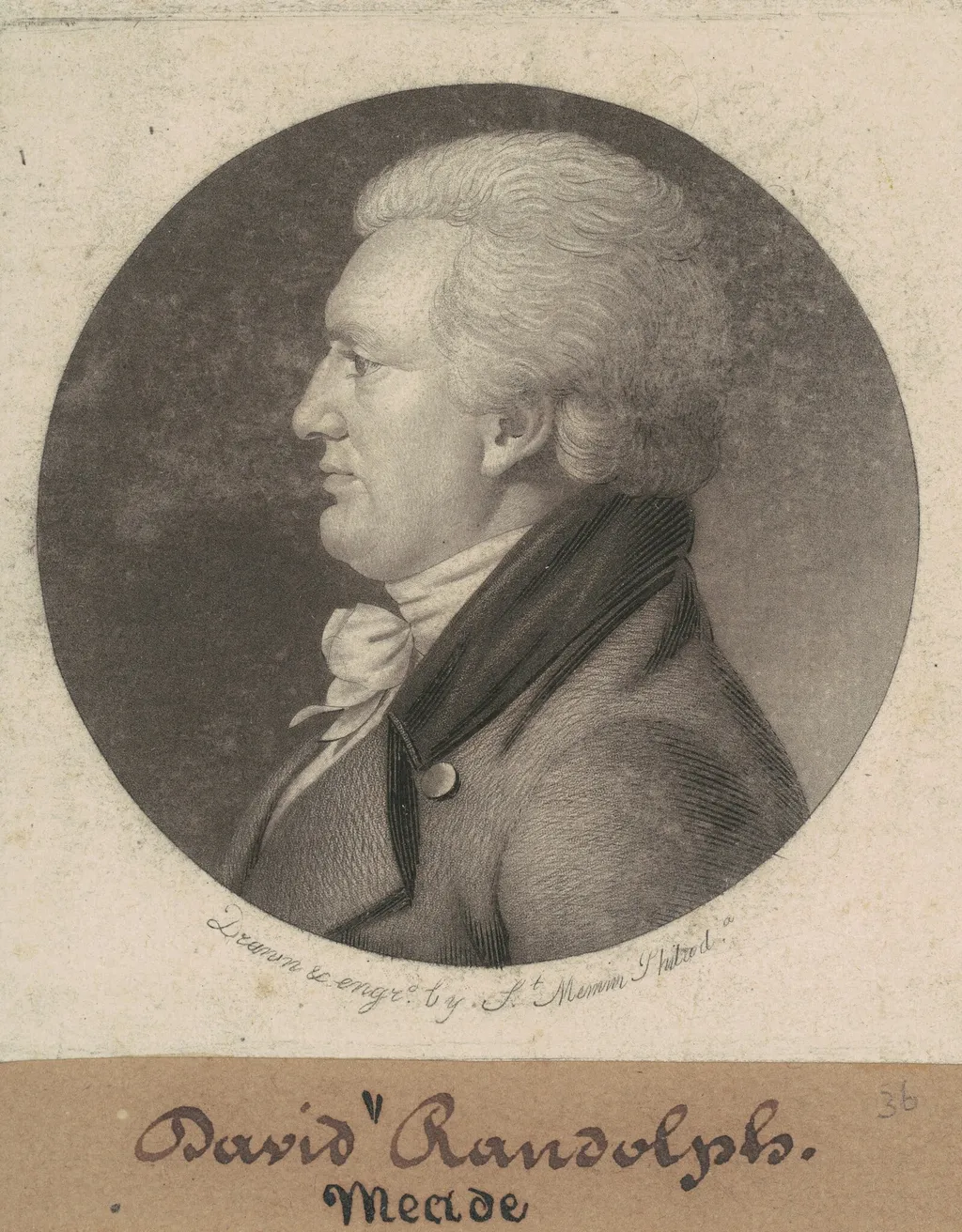
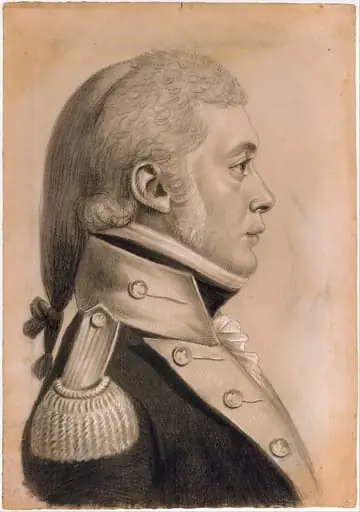
David Meade Randolph is an ink print by the Romanticist artist Charles Balthazar Julien Févret de Saint-Mémin. It dates from 1807 and is held in the collection of the National Gallery of Art. This 1807 print is a mezzotint and engraving on wove paper, mounted to a brown wove support.
About this work
You can learn more about this style by looking up the technique: engraving.
This portrait shows a man's left profile.
He has a strong nose and neatly styled hair.
The artist paid close attention to details like his prominent chin.
The portrait is interesting because it's an engraving from 1807.
The artist used a technique to create detailed lines and textures.
This was a common way to make portraits at that time.
You can learn more about this style by looking up the technique: engraving.
Overview
This 1807 print is a mezzotint and engraving on wove paper, mounted to a brown wove support. Created by Charles B. J. Févret de Saint-Mémin, it presents a left-profile portrait of David Meade Randolph. The work belongs to a tradition of American portraiture that relied on engraved techniques to reproduce likenesses for private and public circulation. Its format reflects the era’s preference for detailed, small-scale images suitable for albums and collections.
Subject & Meaning
David Meade Randolph, a Virginia planter and public official, is depicted with formal composure, emphasizing dignity and social standing. His strong nasal profile and prominent chin are rendered with precision, aligning with contemporary ideals of masculine character. The absence of overt symbols or background elements focuses attention on the individual’s physiognomy, suggesting a desire to convey personal identity rather than status or occupation.
Technique & Style
Saint-Mémin employed mezzotint and engraving to achieve subtle tonal gradations and fine linear detail. The mezzotint process, involving roughened copper plates, allowed for rich blacks and soft transitions, while engraving defined sharp contours like the hair and jawline. The result is a portrait with tactile texture and controlled contrast, characteristic of early 19th-century reproductive portraiture in the United States.
History & Provenance
Created in 1807, the print was likely made during Saint-Mémin’s active years in America, when he produced numerous portraits of prominent figures. The work was probably commissioned or circulated among Randolph’s social circle. Its mounting on brown paper suggests careful preservation, possibly for a personal collection. No public record of early ownership exists beyond its association with the artist’s known body of work.
Context
In the early 1800s, engraved portraits were a primary means of disseminating likenesses before photography. Saint-Mémin, a French émigré, became a leading practitioner of this craft in the U.S., blending European techniques with American subjects. This portrait reflects a broader cultural trend: the desire to document civic leaders through standardized, reproducible imagery that balanced realism with decorum.
Legacy
Though not widely exhibited today, the print remains a representative example of early American reproductive portraiture. It contributes to the historical record of how individuals of influence were visually constructed in the post-Revolutionary era. The work’s survival in institutional collections underscores its value as a document of technique, taste, and identity in early 19th-century America.
Artist & collection

Artist
Charles Balthazar Julien Févret de Saint-Mémin
Charles Balthazar Julien Févret de Saint-Mémin (French pronunciation: ; 1770–1852) was a French portrait painter and museum director.