Artwork
Edward Johnson Coale
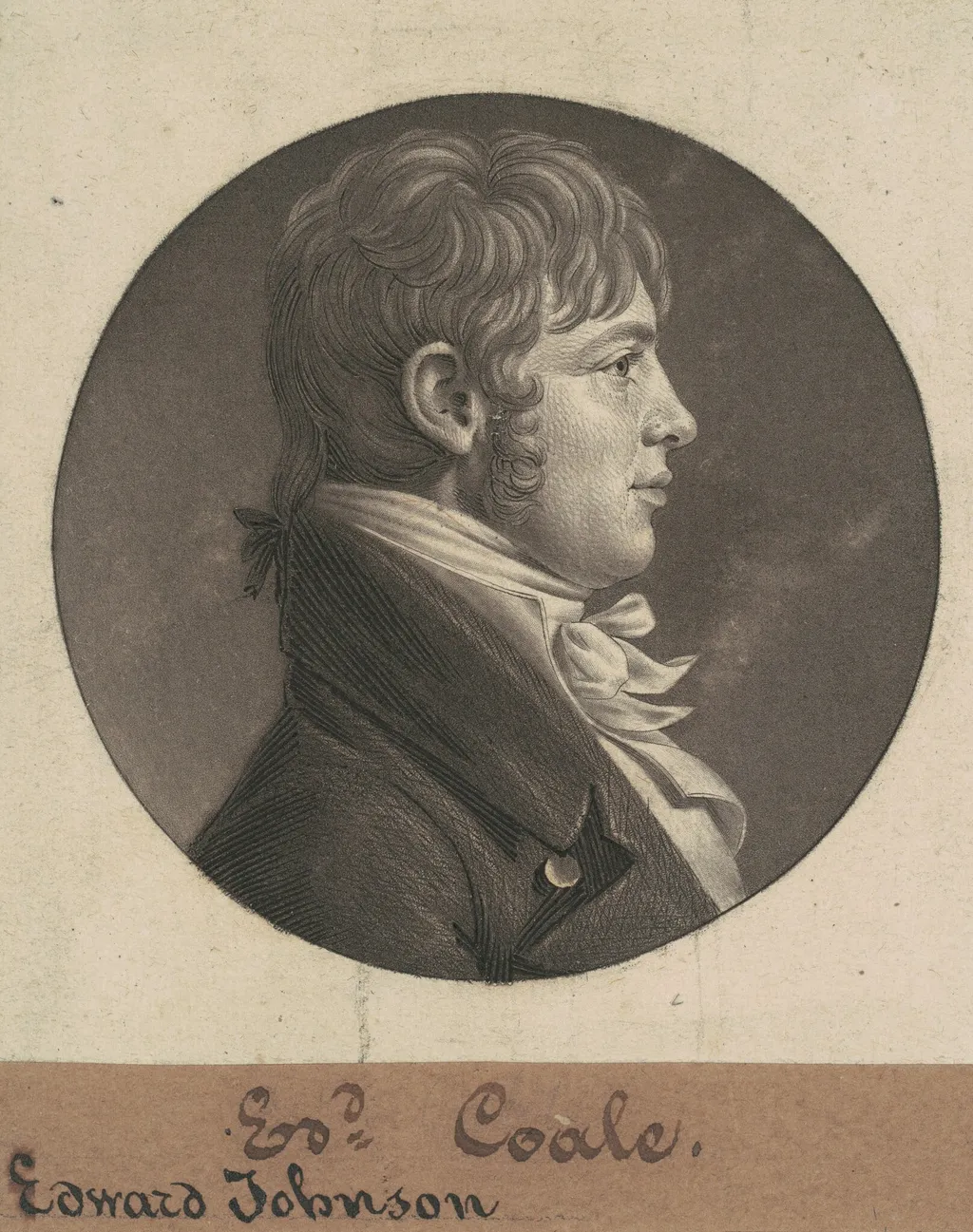
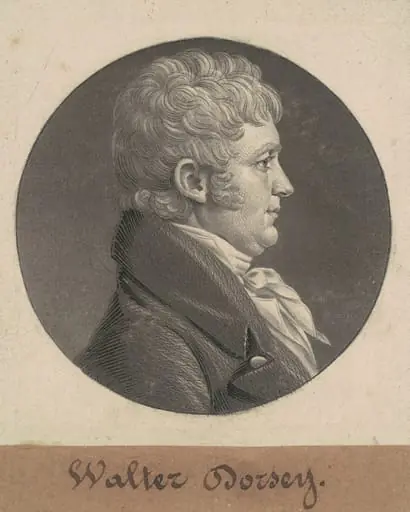
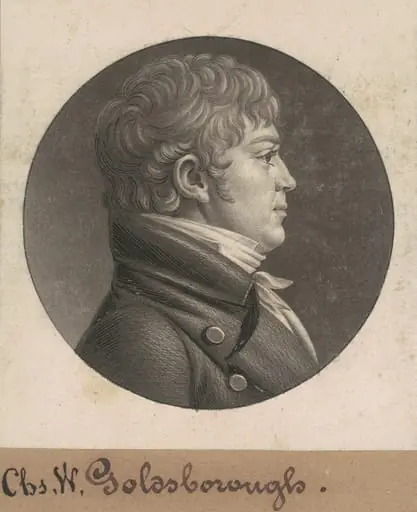
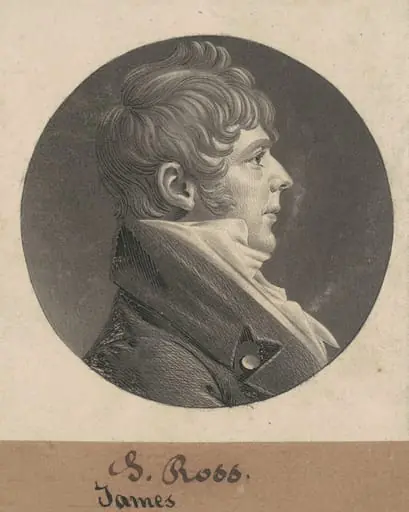
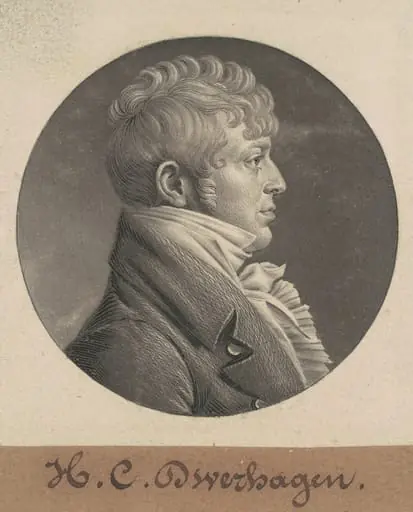
Edward Johnson Coale is an ink print by the Romanticist artist Charles Balthazar Julien Févret de Saint-Mémin. It dates from 1804 and is held in the collection of the National Gallery of Art. This small print, created in 1804, is a mezzotint and engraving by Charles B.
About this work
Overview
Executed in black ink on wove paper and mounted on brown wove paper, it measures just over five and a half centimeters square.
This small print, created in 1804, is a mezzotint and engraving by Charles B. J. Févret de Saint-Mémin, depicting Edward Johnson Coale. Executed in black ink on wove paper and mounted on brown wove paper, it measures just over five and a half centimeters square. Rare for its time in the United States, the technique combines the tonal richness of mezzotint with the precision of engraving, reflecting Saint-Mémin’s European training and his role in introducing refined portrait printing to early American audiences.
Subject & Meaning
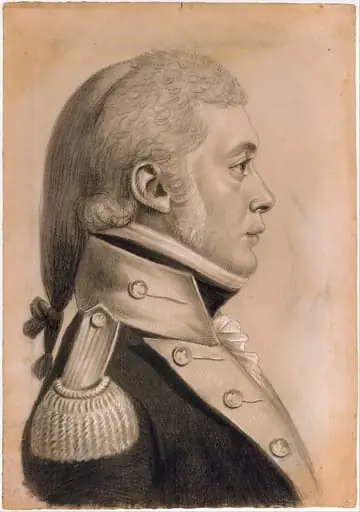
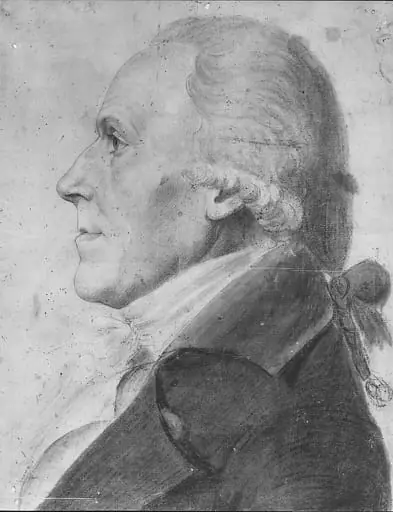
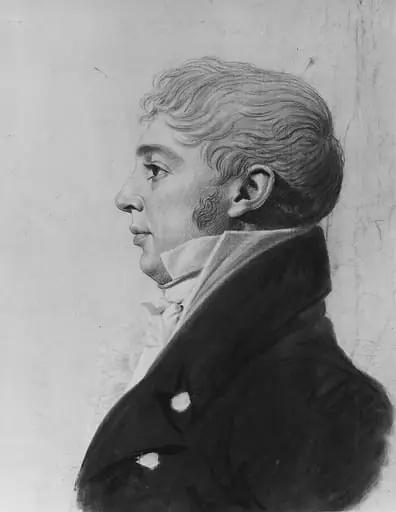
Edward Johnson Coale, a figure of modest historical record, is portrayed with quiet formality. Dressed in a dark coat and high white collar, his face is rendered with sharp definition—prominent cheekbones and focused eyes suggest a reserved, contemplative demeanor. The portrait lacks ornamentation or symbolic context, emphasizing individual presence over status or achievement. Its intimacy suggests a personal commission, possibly from Coale or someone within his circle seeking a lasting likeness.
Technique & Style
Saint-Mémin employed mezzotint to achieve subtle gradations of tone, then refined the image with fine engraved lines to define contours and texture. Cross-hatching enhances the modeling of light across Coale’s face, particularly on the left side, where illumination creates depth without harsh contrast. The paper’s surface retains a tactile quality, its slight texture visible even in reproduction. This fusion of techniques was technically demanding and uncommon in early 19th-century American printmaking.
History & Provenance
Created in Washington, D.C., during Saint-Mémin’s time in the United States, the print was likely made for a local patron. It entered the Corcoran Collection in the 19th or early 20th century and later became part of the National Gallery of Art’s holdings following the Corcoran’s dissolution. Its survival in good condition is notable, given the fragility of small-scale prints and the limited circulation of mezzotints in America at the time.
Context
In the early 1800s, portrait prints in America were typically produced via woodcut or simple line engraving. Mezzotint, a labor-intensive method developed in Europe, was rarely practiced stateside due to its technical complexity and cost. Saint-Mémin, a French émigré and trained engraver, stood apart as one of the few artists capable of executing such work. His presence in Washington placed him at the center of a nascent American cultural scene seeking refined visual documentation.
Legacy
This print represents one of the earliest American examples of mezzotint portraiture, illustrating the transfer of European printmaking traditions to the young republic. While Saint-Mémin’s broader body of work remains underappreciated, this small image endures as a quiet testament to the skill required to translate human presence into fine, hand-inked lines. It continues to inform studies of early American print culture and the role of individual portraiture in shaping public identity.
Artist & collection

Artist
Charles Balthazar Julien Févret de Saint-Mémin
Charles Balthazar Julien Févret de Saint-Mémin (French pronunciation: ; 1770–1852) was a French portrait painter and museum director.