Artwork
James Wilson
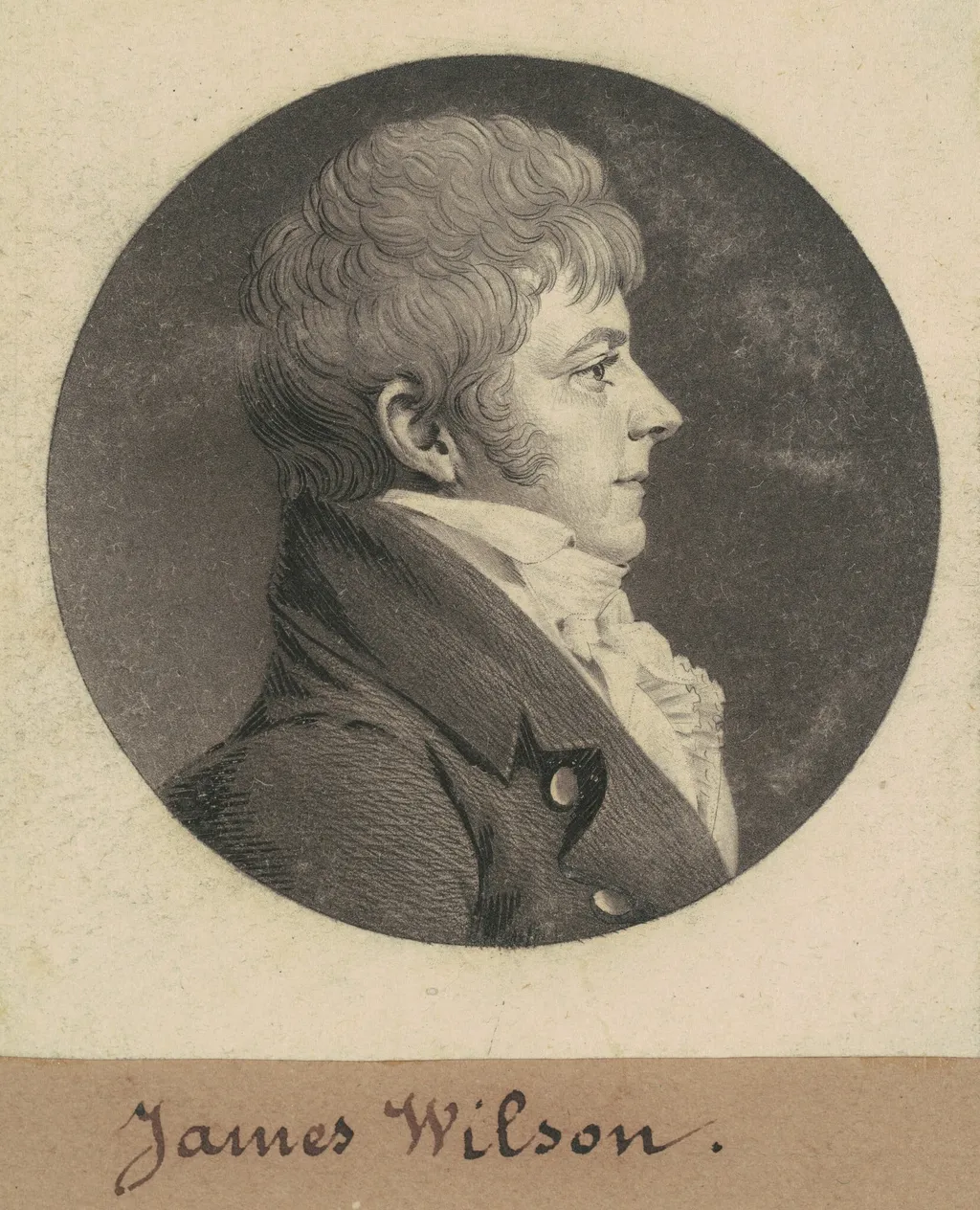
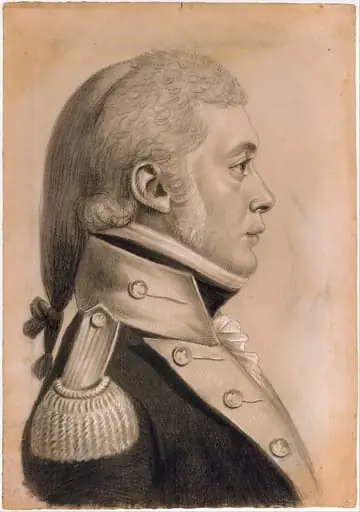
James Wilson is an ink print by the Romanticist artist Charles Balthazar Julien Févret de Saint-Mémin. It dates from 1809 and is held in the collection of the National Gallery of Art.
About this work
Overview
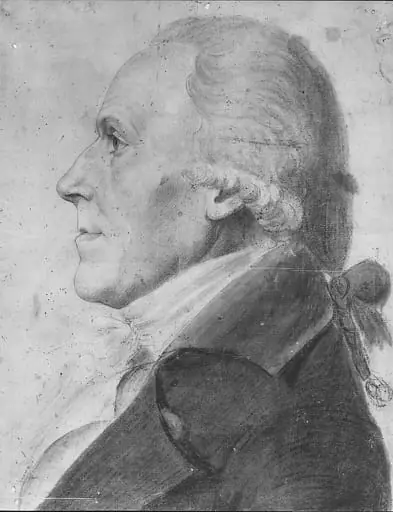
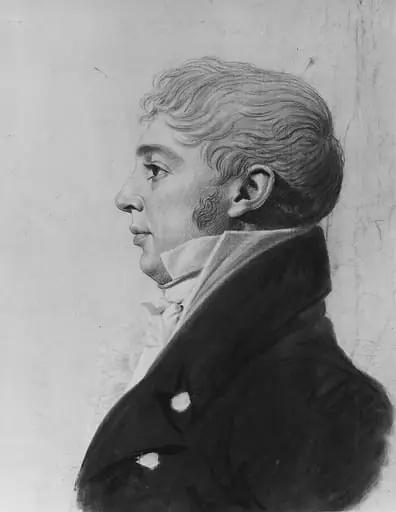
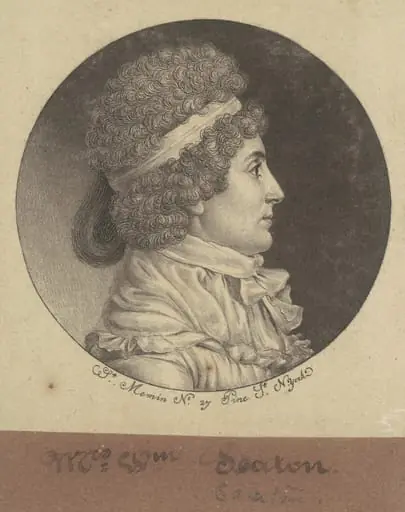
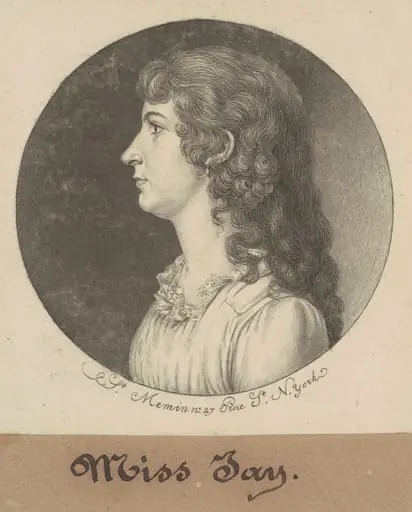
This 1805 print depicts James Wilson, an American jurist and signer of the Declaration of Independence. Executed in mezzotint and engraving on wove paper, the portrait is mounted on a brown wove support. The image is framed within a dark circular vignette, a common compositional device of the period, emphasizing the subject’s presence against an abstracted background.
Subject & Meaning
James Wilson is portrayed with short, wavy hair and a high-collared shirt beneath a dark coat, reflecting formal attire of early American elites. The restrained pose and minimal background convey dignity and gravitas, aligning with the era’s ideals of civic virtue. His name is inscribed below the image, reinforcing the portrait’s function as a record of identity and public standing.
Technique & Style
Charles B. J. Févret de Saint-Mémin employed mezzotint for tonal richness and engraving for fine linear detail, combining both to achieve subtle gradations in skin and fabric. The dark circular vignette isolates the figure, focusing attention on facial structure and attire. This method was characteristic of Saint-Mémin’s portraiture, valued for its precision and clarity in reproducing likenesses.
History & Provenance
Created in 1805, the portrait was made during Saint-Mémin’s time in the United States, where he produced numerous likenesses of prominent figures. The print likely served as a public or institutional commemoration of Wilson, who had died in 1798. Its mounting on brown paper suggests careful preservation, possibly for archival or educational use.
Context
Saint-Mémin’s portraits were part of a broader effort to document American leaders in the decades following independence. His technique, rooted in European engraving traditions, was adapted to suit American tastes for sober, authoritative imagery. This work aligns with contemporaneous portraits of statesmen, emphasizing character over ornamentation.
Legacy
The portrait remains a key example of early American print portraiture, illustrating how European techniques were employed to construct national identity. Saint-Mémin’s body of work, including this piece, contributed to the visual record of the Founding generation, preserving faces and forms for historical study rather than decorative display.
Artist & collection

Artist
Charles Balthazar Julien Févret de Saint-Mémin
Charles Balthazar Julien Févret de Saint-Mémin (French pronunciation: ; 1770–1852) was a French portrait painter and museum director.