Artwork
Joseph Bloomfield
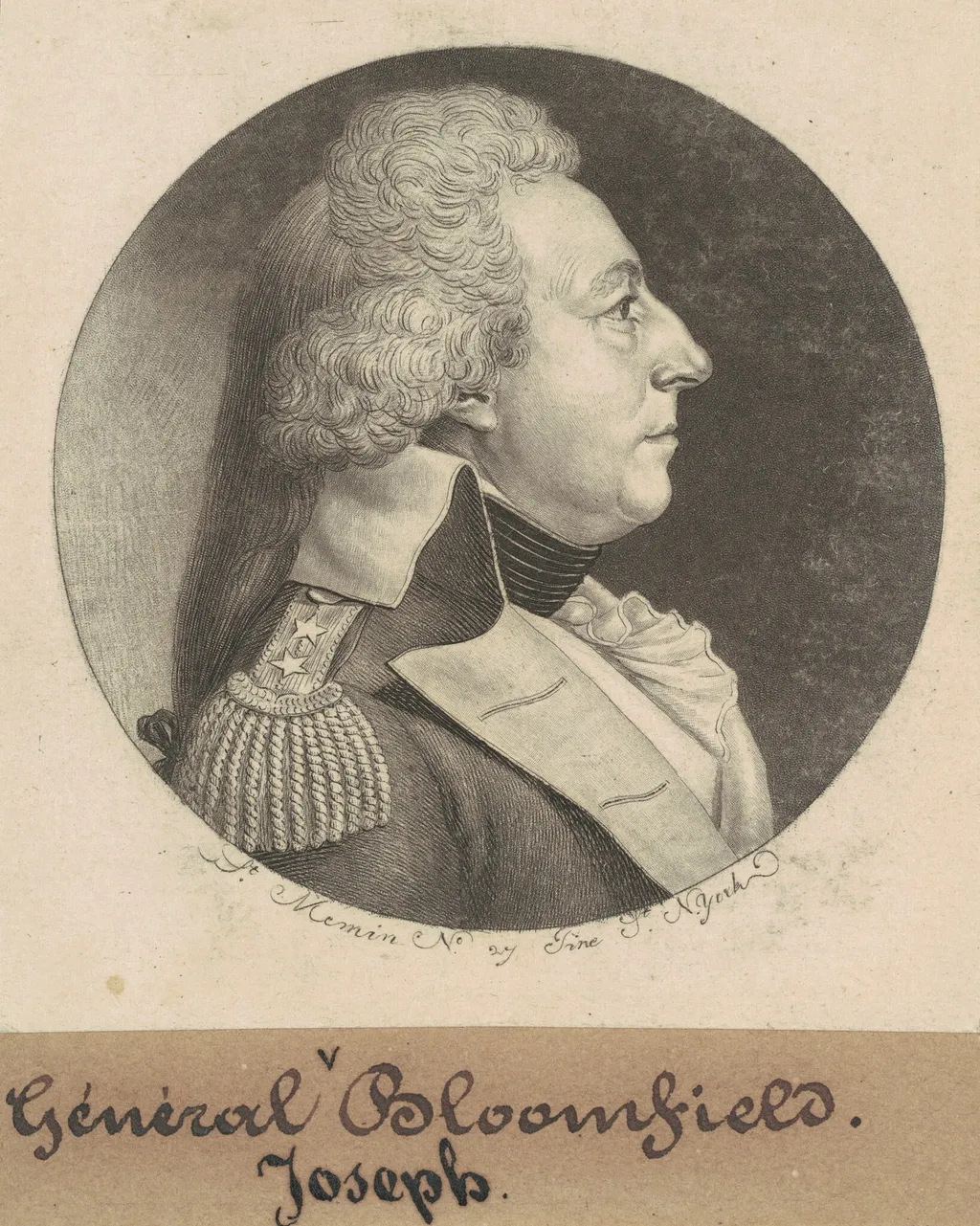
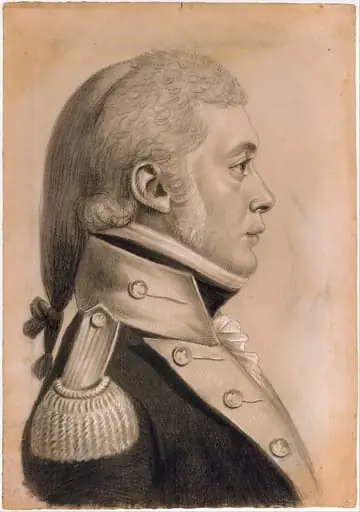
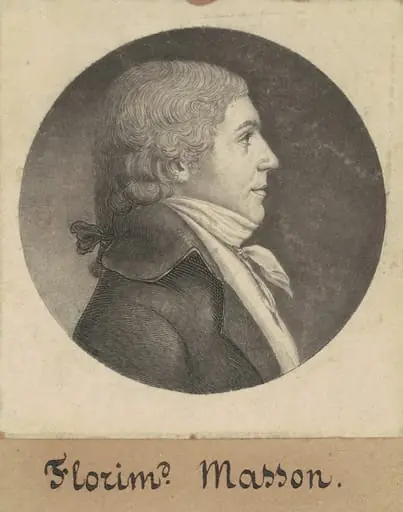
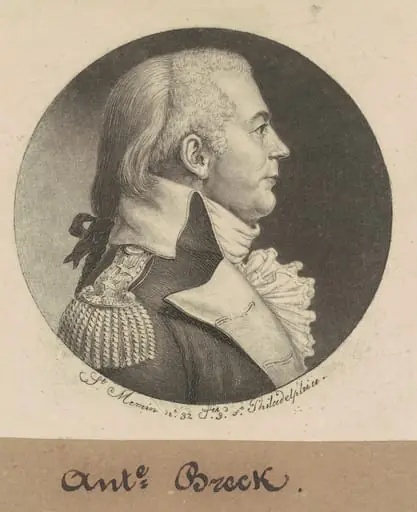
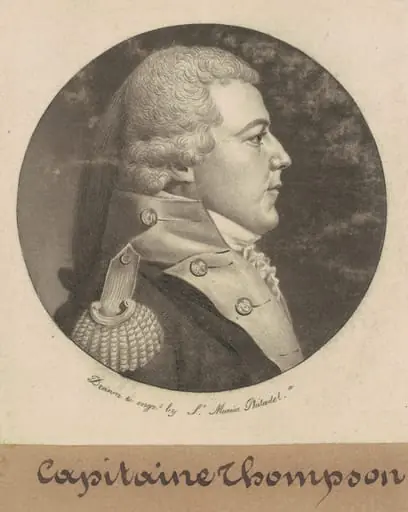
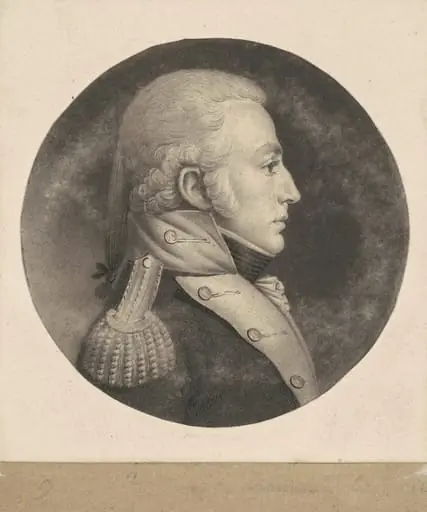
Joseph Bloomfield is an ink print by the Romanticist artist Charles Balthazar Julien Févret de Saint-Mémin. It dates from 1798 and is held in the collection of the National Gallery of Art.
About this work
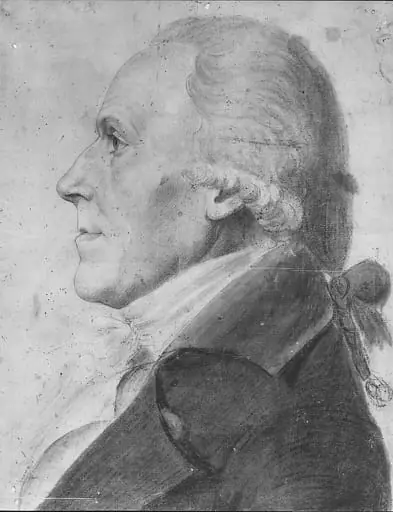
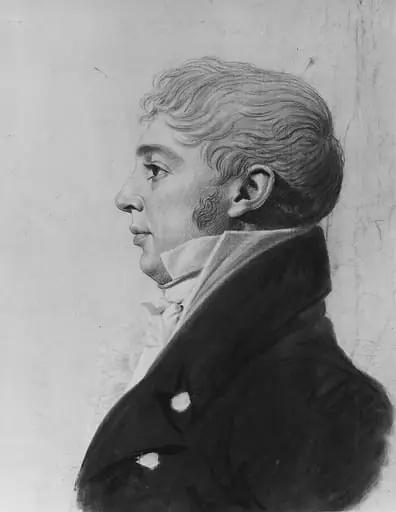
This engraving shows New Jersey governor Joseph Bloomfield in a three-quarter view, his white hair neatly powdered.
This engraving shows New Jersey governor Joseph Bloomfield in a three-quarter view, his white hair neatly powdered.
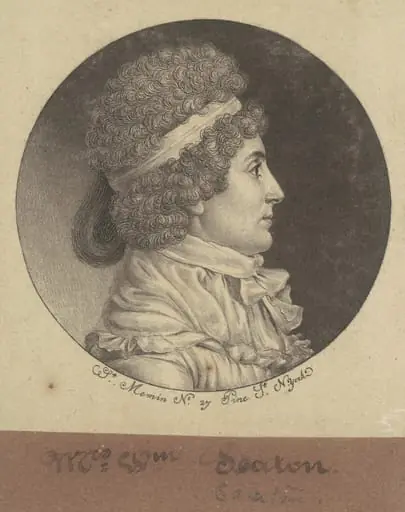
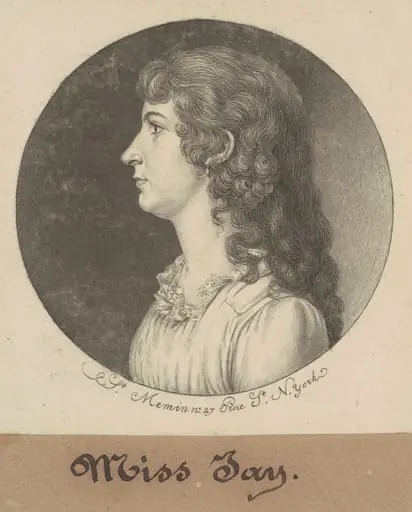
Printed in 1798, it’s a small oval—just 5.5 by 5.5 centimeters. The dark background pushes Bloomfield’s face forward, so every wrinkle and mole stands out.
The artist used cross-hatching to create soft shadows. It’s a quiet piece, but it lets you study 18th-century portrait style up close.
Overview
A small oval print from 1798, this work portrays Joseph Bloomfield, then governor of New Jersey, rendered in mezzotint and engraving on wove paper. Mounted on a brown backing, the piece measures just over five centimeters square. Its compact scale and monochrome palette reflect the precision favored in portrait prints of the era, designed for intimate viewing rather than public display.
Subject & Meaning
Joseph Bloomfield is depicted in a three-quarter profile, his powdered white hair and composed expression conveying the dignity expected of public figures in late 18th-century America. The absence of ornate clothing or symbolic objects focuses attention on his individuality, suggesting a preference for restrained civic virtue over aristocratic display. The portrait serves as a personal likeness, likely intended for private circulation among political associates.
Technique & Style
Charles B. J. Févret de Saint-Mémin employed mezzotint to achieve subtle tonal gradations, enhanced by fine engraving lines that define texture and contour. The dark background intensifies the contrast, drawing the eye to Bloomfield’s face, where cross-hatching renders wrinkles and skin imperfections with quiet precision. The technique prioritizes fidelity over flourish, aligning with the era’s emphasis on accurate, unembellished representation.
History & Provenance
Created in 1798, the print was part of a series of American civic leaders produced by Saint-Mémin during his time in the United States. It entered the Corcoran Collection in the 19th century and later became part of the National Gallery of Art’s holdings following the Corcoran’s dissolution. Its survival in good condition reflects its status as a carefully preserved documentary artifact rather than a decorative object.
Context
In the late 1790s, portrait prints like this one served as accessible alternatives to painted likenesses, circulating among educated elites and government circles. Saint-Mémin’s method—combining mezzotint’s richness with engraving’s clarity—was favored for its ability to reproduce facial detail faithfully. Such images reinforced civic identity in a young republic, where visual records of leaders were still relatively rare.
Legacy
This print remains a representative example of early American portraiture in print form, illustrating how technical precision could convey personal and political presence without grandeur. It contributes to a broader archive of civic portraiture from the Federal period, offering insight into how leadership was visually constructed in a society still defining its public imagery.
Artist & collection

Artist
Charles Balthazar Julien Févret de Saint-Mémin
Charles Balthazar Julien Févret de Saint-Mémin (French pronunciation: ; 1770–1852) was a French portrait painter and museum director.