Artwork
雪中縁先美人図|Beauty on a Veranda in Snow
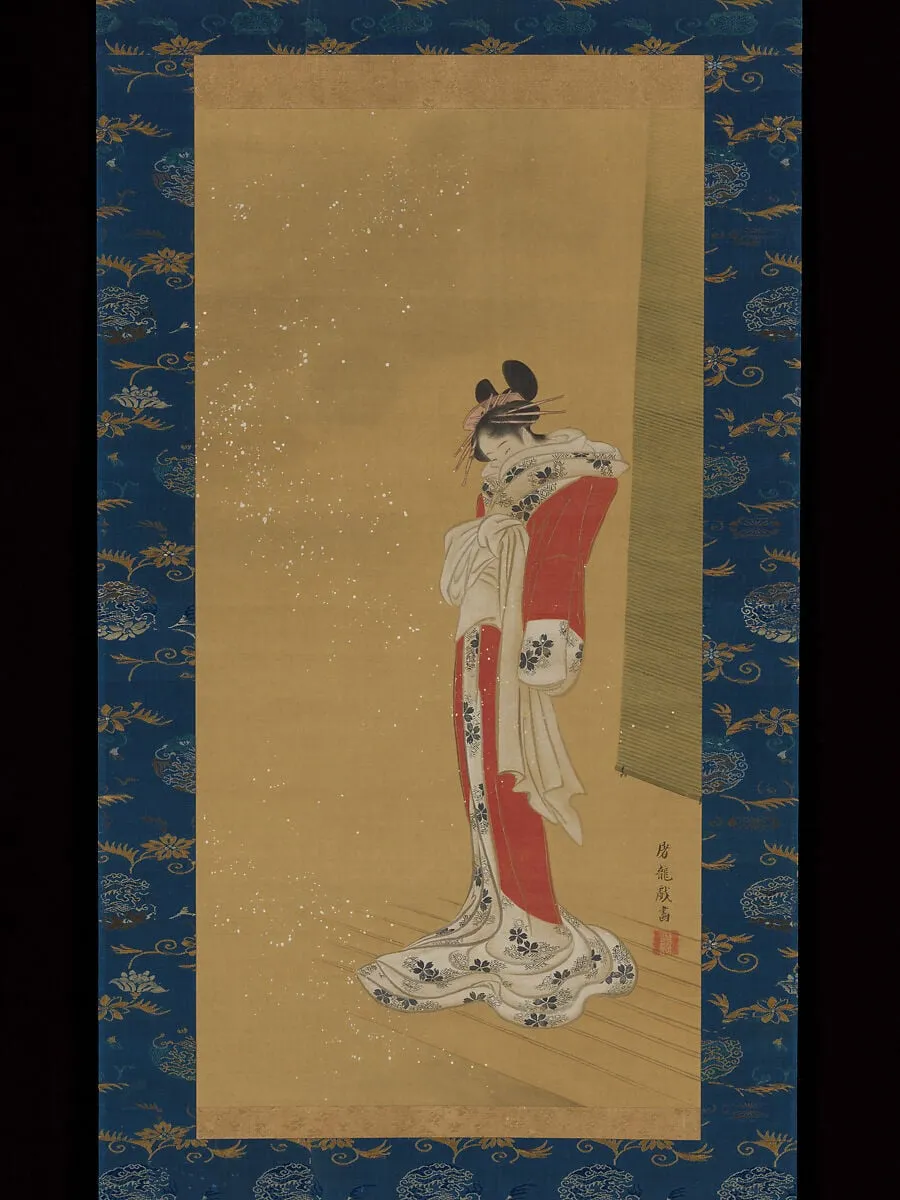
雪中縁先美人図|Beauty on a Veranda in Snow is an ink painting by the Romanticist artist Sakai Hōitsu. It dates from 1794 and is held in the collection of the Metropolitan Museum of Art.
About this work
Overview
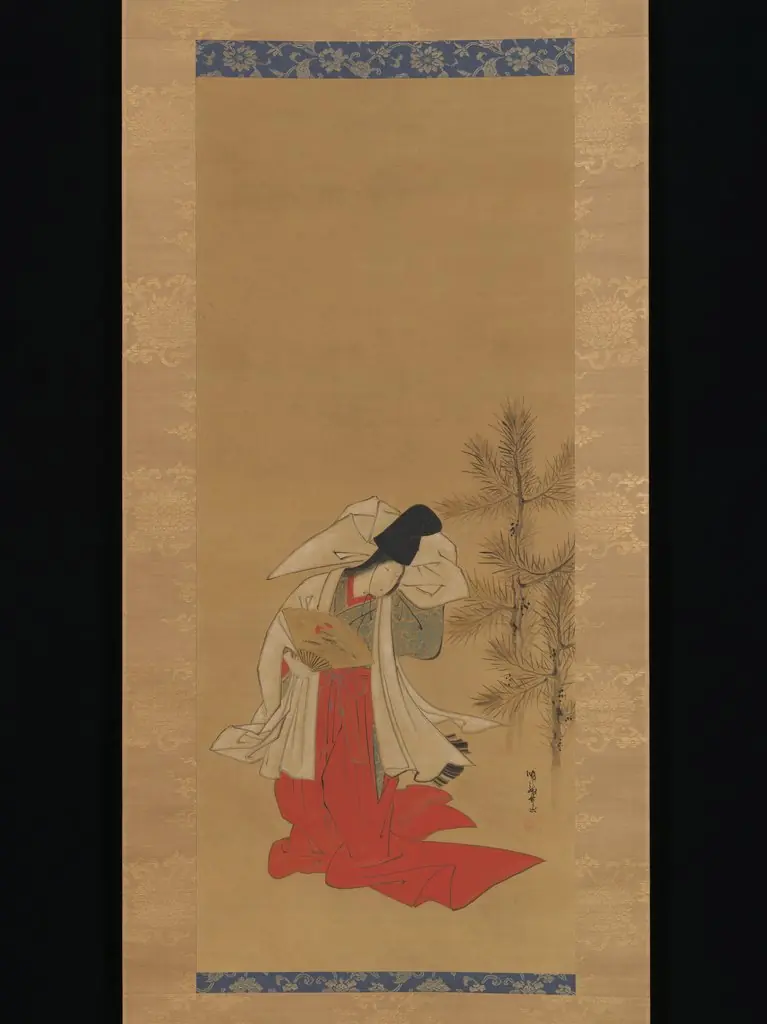
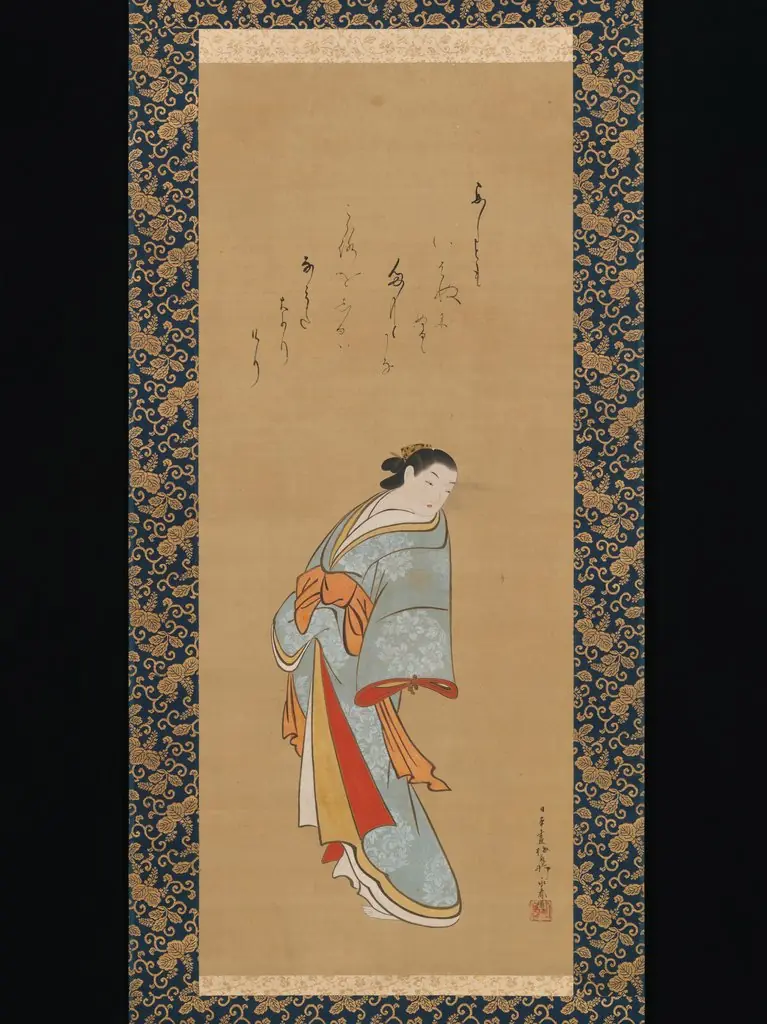
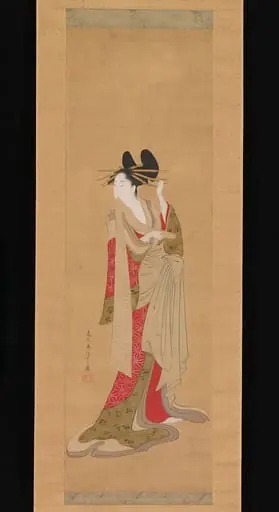
Created around 1794 by Sakai Hōitsu, this hanging scroll depicts a woman on a veranda amid falling snow. Executed in ink and color on silk, the work exemplifies the Rinpa school’s refined aesthetic. It is part of the collection at The Metropolitan Museum of Art, where it is displayed as a representative example of early 19th-century Japanese courtly painting.
Subject & Meaning
The figure is a noblewoman, poised on a wooden veranda, her presence evoking quiet solitude. Her white robe, adorned with red and black motifs, suggests aristocratic status, while the red fan and elaborate hairstyle reflect seasonal customs. The snow-laden setting may allude to transience, a recurring theme in Japanese art, contrasting the stillness of winter with the elegance of human form.
Technique & Style
The composition frames the figure like a theatrical tableau, emphasizing spatial depth and decorative harmony characteristic of Rinpa traditions.
Hōitsu employs delicate brushwork and layered pigments to render texture and movement. The robe’s flowing train and wide sleeves suggest motion despite the stillness of the scene. Gold leaf underpins the floor, lending warmth against the cool blue curtains and snowy backdrop. The composition frames the figure like a theatrical tableau, emphasizing spatial depth and decorative harmony characteristic of Rinpa traditions.
History & Provenance
The painting was produced during Hōitsu’s early career, following his retreat from public service to focus on art. It likely originated in Kyoto’s artistic circles, where he revived Rinpa aesthetics after the death of his predecessor, Ogata Kōrin. The work entered The Metropolitan Museum of Art’s collection in the 20th century, having passed through private Japanese collections prior.
Context
Hōitsu worked in a period when traditional Japanese styles were being reevaluated amid increasing Western influence. His revival of Rinpa techniques—emphasizing pattern, color, and poetic mood—offered an alternative to the dominant realism of Edo-period painting. This piece reflects a broader cultural interest in classical themes and refined aesthetics among Kyoto’s elite.
Legacy
Sakai Hōitsu’s works, including this scroll, helped sustain the Rinpa tradition into the modern era. His attention to natural detail and decorative elegance influenced later artists and collectors. Though not widely known outside Japan during his lifetime, his oeuvre is now recognized as a vital bridge between classical and modern Japanese painting practices.
Artist & collection