Artwork
Samson with the Jawbone
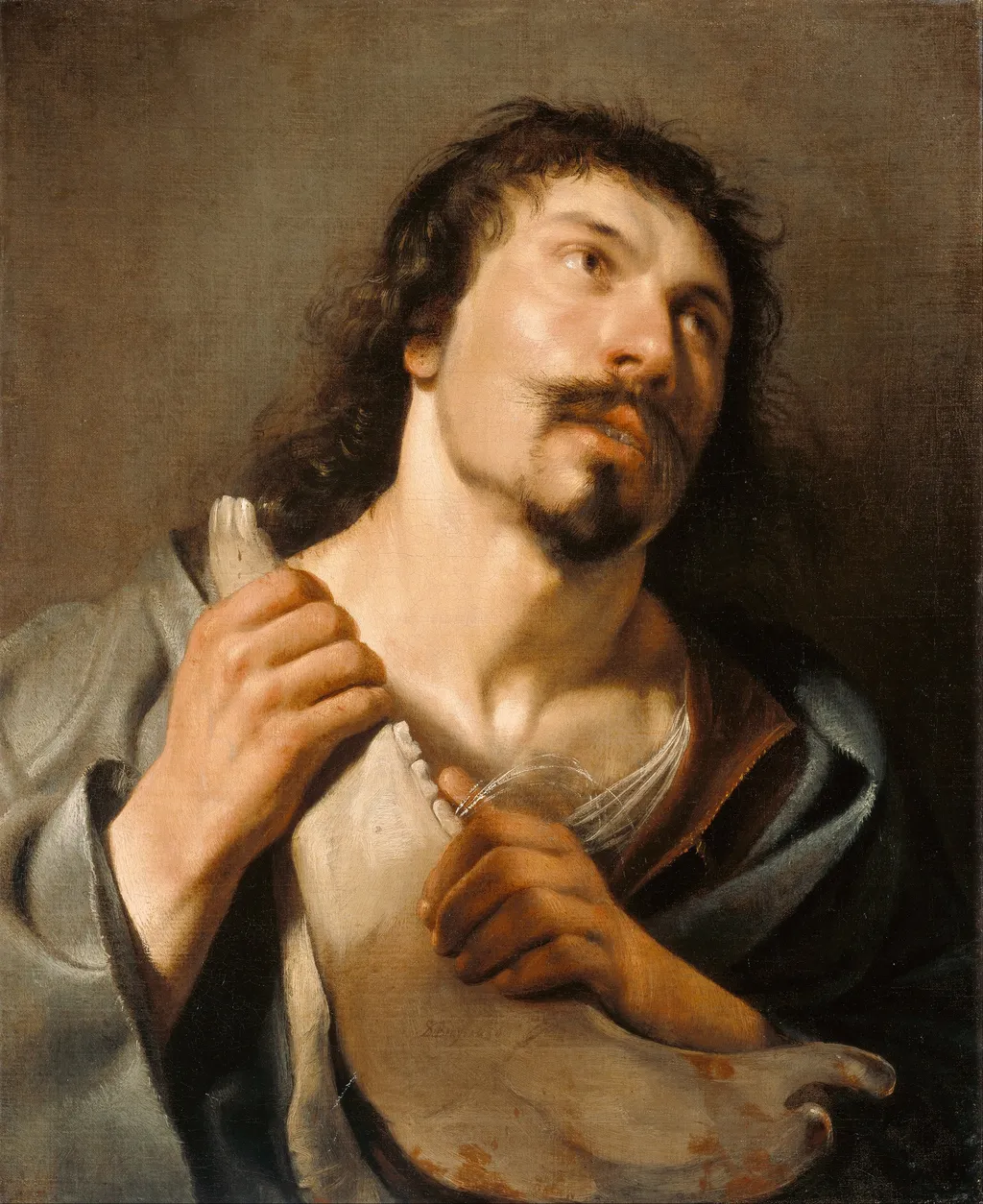
Samson with the Jawbone is an oil painting by the Dutch Golden Age artist Salomon de Bray. It dates from 1636 and is held in the collection of the J. Paul Getty Museum.
About this work
Overview
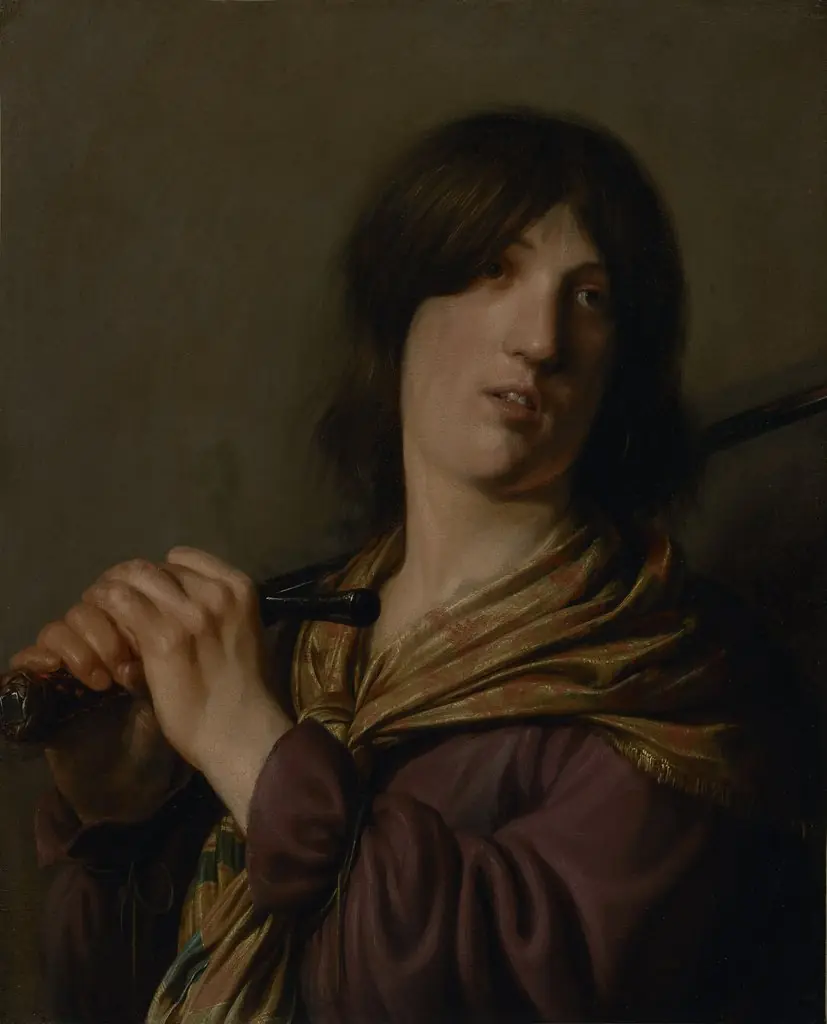
Painted in 1636 by Salomon de Bray, this oil-on-canvas work portrays the biblical figure Samson holding a human jawbone.
Painted in 1636 by Salomon de Bray, this oil-on-canvas work portrays the biblical figure Samson holding a human jawbone. The composition is tightly focused on the figure against a flat, dark brown background, eliminating distractions and emphasizing the weight and gravity of the moment. The painting is part of the J. Paul Getty Museum’s collection, where it remains a quiet example of Dutch Baroque religious narrative.
Subject & Meaning
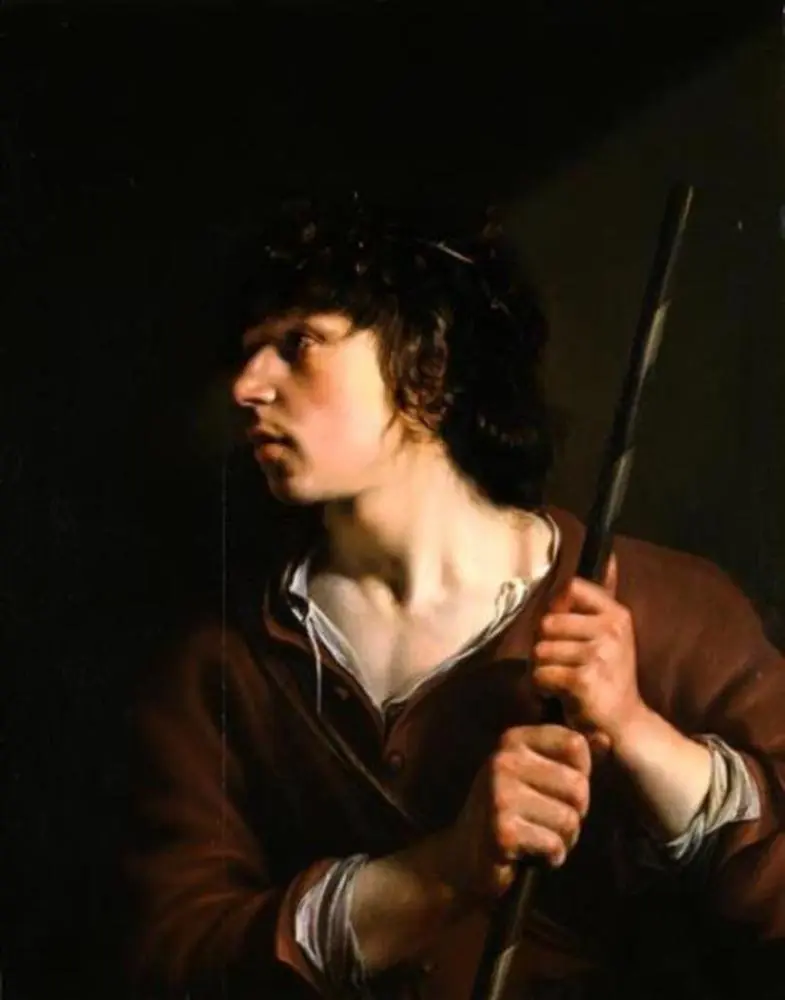
The scene illustrates Samson’s victory over the Philistines, as recounted in the Book of Judges, where he slays a thousand enemies with the jawbone of a donkey. De Bray captures the moment not in triumph, but in solemn reflection—Samson’s upward gaze suggests contemplation or prayer. The jawbone, held with both hands, becomes a symbol of divine strength channeled through human agency, rendered without spectacle or violence.
Technique & Style
De Bray employs chiaroscuro to model Samson’s form, with light falling sharply across his face and the jawbone, creating a sense of volume and texture. The gray robe and white undergarment contrast subtly against the dark background, enhancing the figure’s physical presence. Brushwork is controlled and precise, avoiding theatricality; the stillness of the pose and restrained palette contribute to an atmosphere of introspective resolve.
History & Provenance
The painting was completed during de Bray’s active period in Haarlem, a center of Protestant artistic production in the Dutch Republic. It entered the J. Paul Getty Museum’s collection in the late 20th century, having passed through private European holdings since its creation. Its survival in relatively intact condition reflects its continued recognition among collectors of 17th-century Dutch religious art.
Context
In mid-17th century Holland, biblical themes remained popular despite the Protestant rejection of ornate church decoration. Artists like de Bray turned to intimate, psychologically nuanced depictions of Old Testament heroes to satisfy private devotion and intellectual interest. Samson’s story, emphasizing divine deliverance through unexpected means, resonated with audiences valuing resilience and faith under adversity.
Legacy
Though not widely exhibited, the painting exemplifies the Dutch tendency to humanize biblical narratives through quiet dignity rather than grandeur. De Bray’s restrained approach influenced later genre scenes that prioritized emotional subtlety over spectacle. The work endures as a thoughtful meditation on strength, faith, and solitude within the broader tradition of Dutch Baroque painting.
Own this work as a print
Artist & collection