Artwork
Figure Studies (verso)
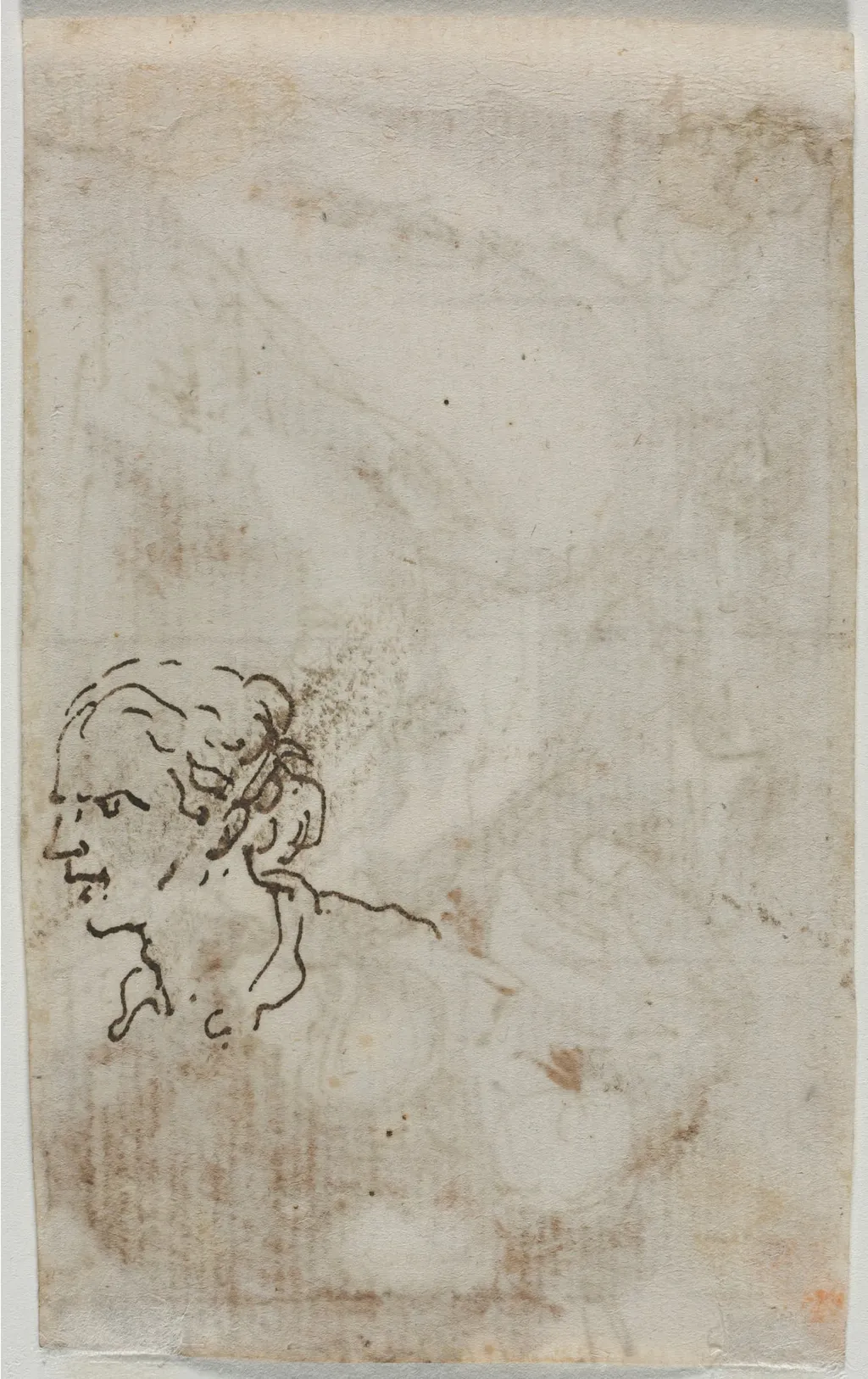
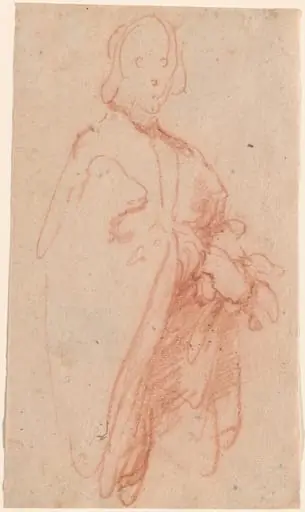
Figure Studies (verso) is a drawing by the Baroque artist Salvator Rosa. It dates from 1644 and is held in the collection of the Cleveland Museum of Art.
About this work
Overview
Created around 1644, this drawing on paper is a verso study by Salvator Rosa, an Italian artist known for his dynamic compositions and intellectual versatility.
Created around 1644, this drawing on paper is a verso study by Salvator Rosa, an Italian artist known for his dynamic compositions and intellectual versatility. Unlike his grand historical scenes, this work is intimate and unpolished, suggesting it was made in private as part of his daily artistic routine. The physical condition of the paper—worn, stained, and creased—hints at its use and age, reinforcing its function as a working sketch rather than a finished piece.
Subject & Meaning
The drawing depicts the upper torso and head of a single figure, rendered with minimal definition. No identity or narrative is given; the subject appears anonymous, possibly a model or an imagined form. Its lack of finish suggests it served as a visual exercise, capturing gesture and volume rather than conveying a story. This aligns with Rosa’s broader interest in the human form as a foundation for larger compositions.
Technique & Style
Rosa employed rapid, uneven linework, using a dry medium—likely chalk or charcoal—to suggest form without refinement. The strokes are loose and gestural, emphasizing movement over precision. Shadows are implied through smudged marks, and contours are left ambiguous. This approach reflects a Baroque emphasis on energy and spontaneity, prioritizing observation over idealization.
History & Provenance
The drawing’s origins trace to Rosa’s active years in Naples, Rome, and Florence, where he maintained a prolific output across disciplines. While its specific ownership history is undocumented, its material state and stylistic traits are consistent with his known sketchbooks. Such studies were often retained by the artist or passed within his circle, valued for their insight into his process rather than as public works.
Context
In mid-17th-century Italy, artists routinely produced figure studies to hone their skills and test compositional ideas. Rosa’s sketches stood apart for their raw expressiveness, contrasting with the more polished academic traditions of his peers. His reputation as a rebellious intellectual may have encouraged this unrefined approach, aligning his practice with a broader critique of artistic convention.
Legacy
Though unpublished and unseen in his lifetime, Rosa’s drawings like this one later informed scholarly understanding of his creative method. They reveal a mind engaged in constant visual inquiry, valuing process over presentation. Today, such works are studied not as incomplete efforts but as vital records of an artist’s direct engagement with form and movement.
Artist & collection
Artist
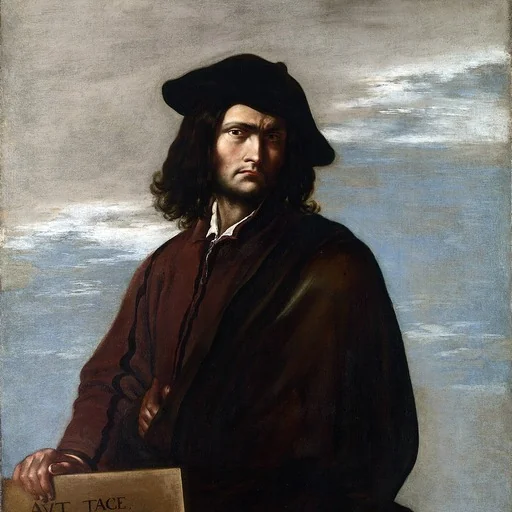
Salvator Rosa (1615 – 15 March 1673) is best known today as an Italian Baroque painter, whose romanticised landscapes and history paintings, often set in dark and untamed nature, exerted considerable influence from the 17th century into…

 A Standing Man with Cloak and Gloves
 Study of a Man
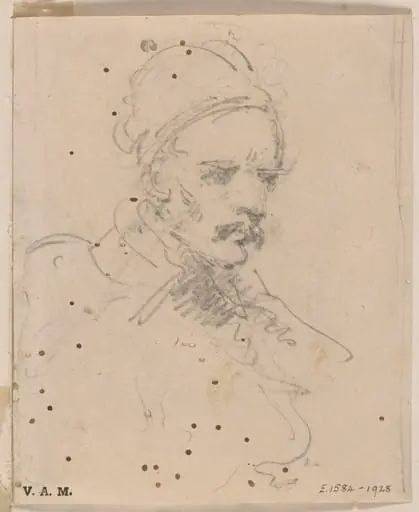 A moustachio'd man
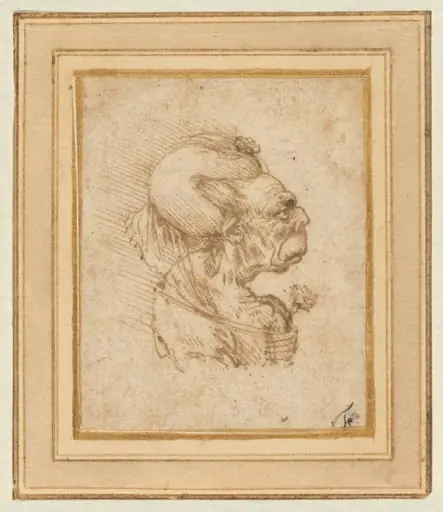 Grotesque Head of an Old Woman
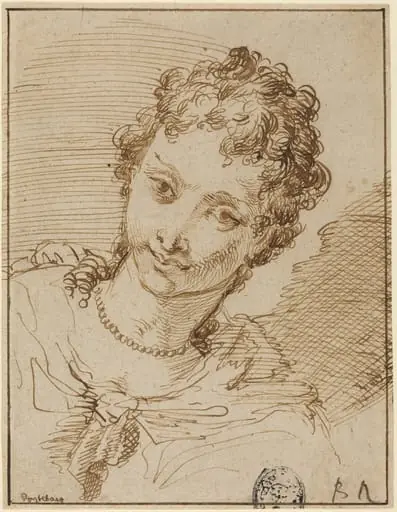 Elegant Young Woman with a Pearl Necklace
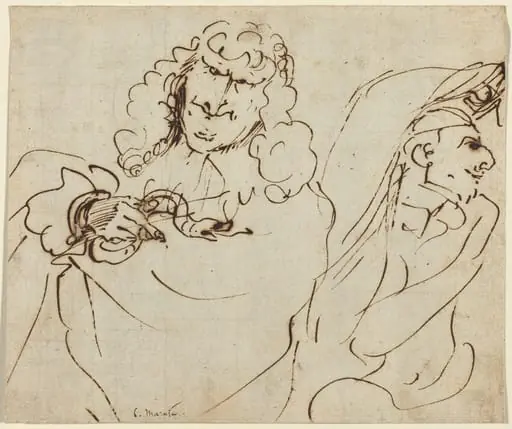 Caricature with Mola Protecting Himself from a Man Holding a Viper
 Young Woman's Head in Profile
 Nora Quinn
 Study of the head of an old man
 Two Men
![An Elegant Lady in Classical Dress [recto], by George Romney](https://artifactworldgallery.com/img/george-romney--an-elegant-lady-in-classical-dress-recto--c0f4e57cf0adb97c-w320.webp) An Elegant Lady in Classical Dress [recto]
An Elegant Lady in Classical Dress [recto]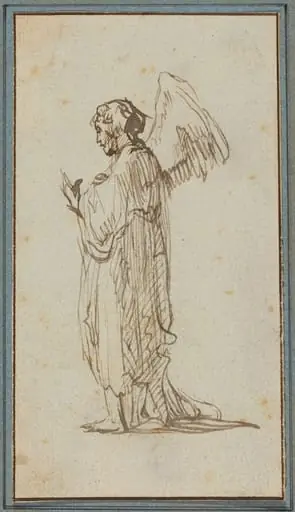 Angel Standing