Artwork
Grotesque Head of an Old Woman
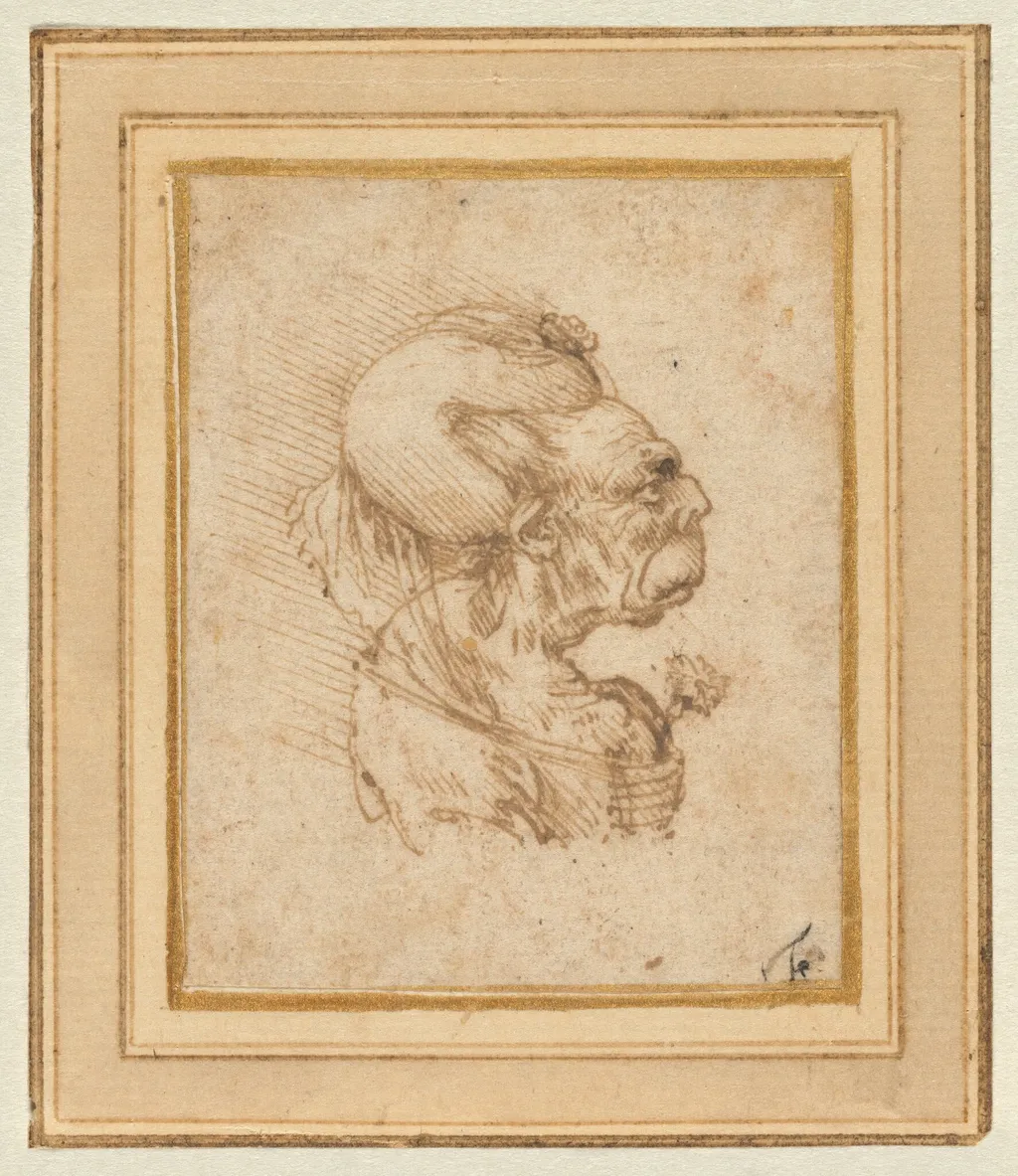
Grotesque Head of an Old Woman is an ink drawing by the Early Renaissance artist Leonardo da Vinci. It is held in the collection of the National Gallery of Art. This ink drawing, dated around 1490, depicts a stylized portrait of an elderly woman in profile.
About this work
Overview
This ink drawing, dated around 1490, depicts a stylized portrait of an elderly woman in profile. Executed in pen and brown ink on laid paper, it is mounted on a support sheet. The work is part of the National Gallery of Art’s collection in Washington, D.C., and reflects Leonardo da Vinci’s interest in human physiognomy and expressive forms beyond idealized beauty.
Subject & Meaning
Rather than portraying dignity or serenity, the image explores the physicality of aging, possibly as a study of human variation or a satirical observation.
The figure presents a non-idealized, almost caricatured visage, emphasizing age through deep wrinkles and a tightly bound cap. Rather than portraying dignity or serenity, the image explores the physicality of aging, possibly as a study of human variation or a satirical observation. Its intent remains ambiguous—perhaps a preparatory sketch for a larger composition or an independent study of character.
Technique & Style
Leonardo employed rapid, layered pen strokes to model form, using cross-hatching to suggest volume and shadow without pigment. The ink lines overlap and vary in density, creating tonal gradations across the face and cap. The paper’s texture enhances the sketch’s tactile quality, while the minimal border frames the composition without distraction, focusing attention on the head’s angular contours.
History & Provenance
The drawing entered the National Gallery of Art’s collection in the 20th century, having passed through several private holdings prior. Its attribution to Leonardo da Vinci is supported by stylistic analysis and comparison with his other graphic studies. Though its exact origin in his workshop is uncertain, it aligns with his documented investigations into facial expression and aging.
Context
Created during Leonardo’s Milanese period, the drawing reflects his broader scientific and artistic inquiries into human anatomy and expression. Contemporary notebooks reveal similar studies of elderly faces, suggesting this was part of a systematic examination of physiognomy. Such sketches were not intended for public display but served as tools for understanding natural variation.
Legacy
This drawing contributes to the understanding of Renaissance approaches to realism beyond classical ideals. It exemplifies how artists used informal studies to explore the full spectrum of human appearance. Though not widely exhibited, it remains a key reference in scholarship on Leonardo’s graphic practice and his engagement with the unidealized human form.
Artist & collection

![Ginevra de' Benci [obverse], by Leonardo da Vinci](https://artifactworldgallery.com/img/leonardo-da-vinci--ginevra-de-benci-obverse--afb6ec3a3e65f392-w320.webp)
![Wreath of Laurel, Palm, and Juniper with a Scroll inscribed Virtutem Forma Decorat [reverse], by Leonardo da Vinci](https://artifactworldgallery.com/img/leonardo-da-vinci--wreath-of-laurel-palm-and-juniper-with-a-scroll-inscribed-vi--4cdfe8467ad2438a-w320.webp)
 Figure Studies (verso)
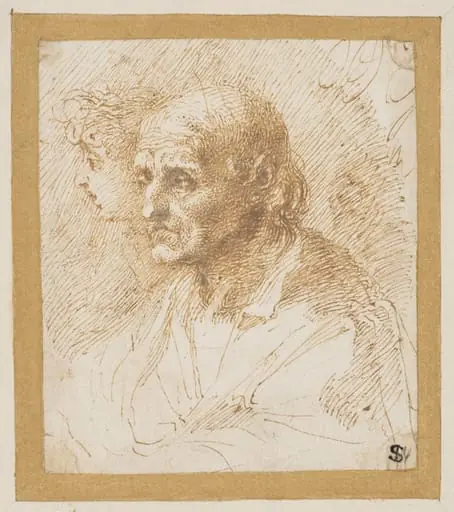 Study of the head of an old man
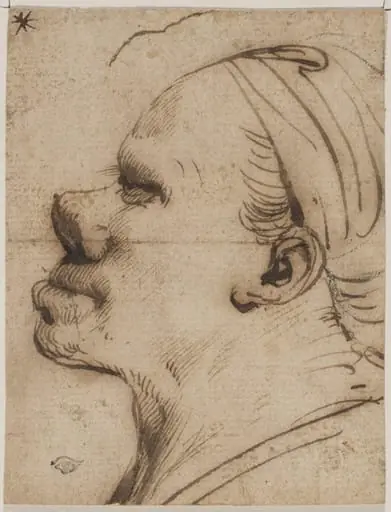 Caricature, a man's head in profile
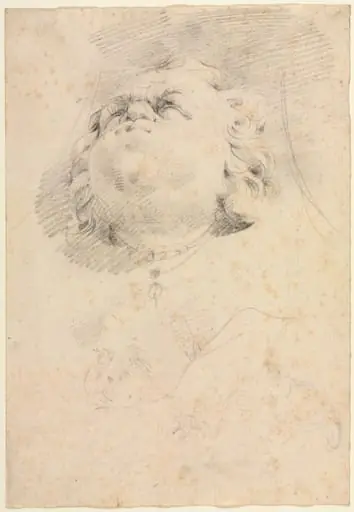 Sketch of a Heads after Giambologna's Neptune Fountain
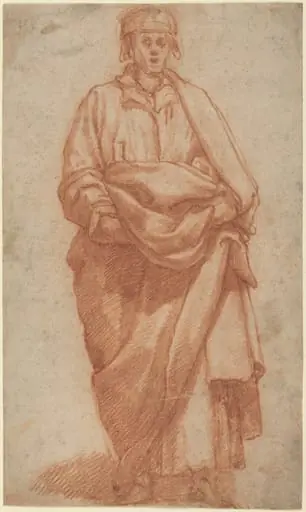 Standing Man
 Head of a Satyr (Tete de satyre)
 Study of a Man
 Profile of a Man
 Head of a Man in a Cap
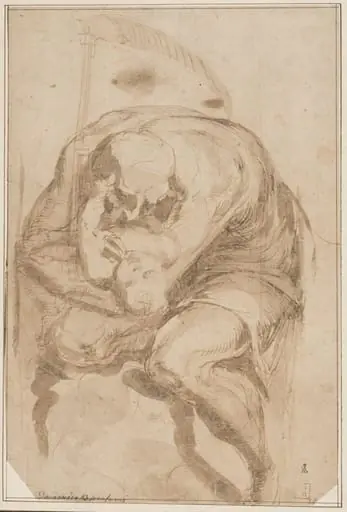 Saturn Devouring his Child
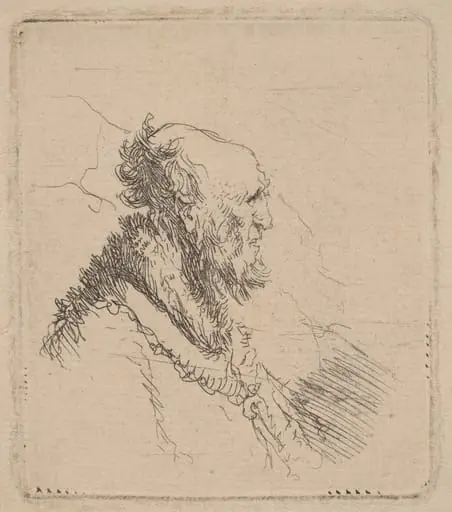 Bald Old Man with a Short Beard in Profile
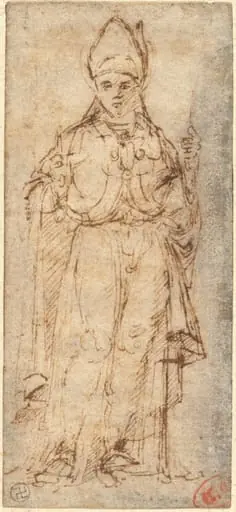 Saint Louis of Toulouse Holding a Staff