Artwork
Study of a Man
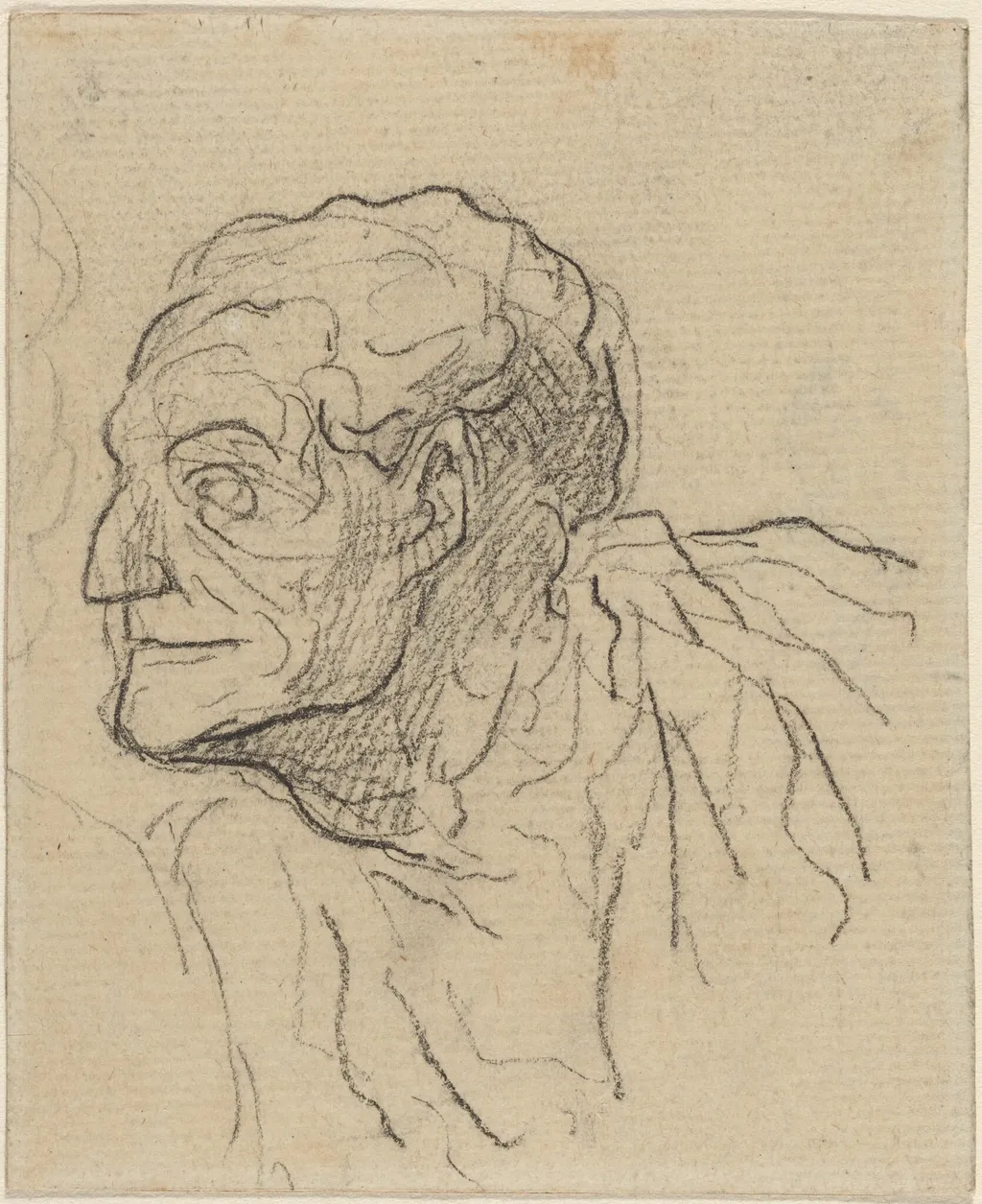
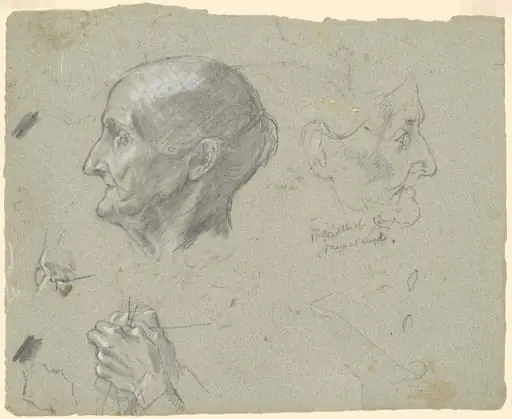
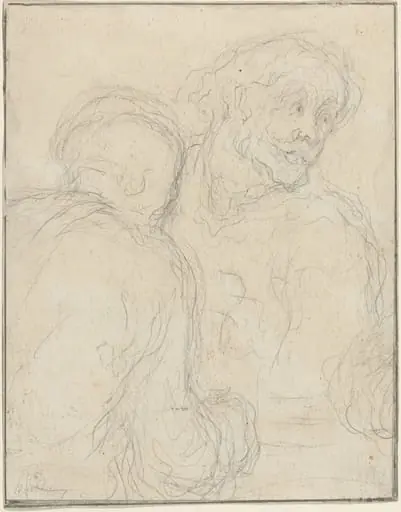
Study of a Man is a chalk drawing by the Romanticist artist Honoré Daumier. It dates from 1844 and is held in the collection of the National Gallery of Art.
About this work
Overview
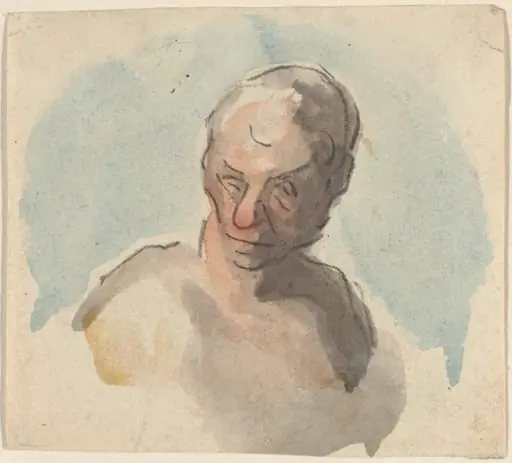
Study of a Man is a drawing created by Honoré Daumier in 1844, utilizing black chalk, black crayon, and subtle traces of graphite on laid paper. Characterized by its rough, quick lines, the work embodies Daumier's spontaneous and expressive draftsmanship.
Subject & Meaning
The drawing presents a close-up, sidelong view of a man's head and shoulders, emphasizing the topography of his aged face and hairline. While the subject's identity remains unspecified, the piece aligns with Daumier's broader practice of observing everyday individuals, often to comment on social realities of 19th-century France.
Technique & Style
Daumier's execution is marked by loose, sketchy strokes, particularly in the neck and hands, suggesting a preliminary study. The monochromatic palette of black media on laid paper contributes to a scratchy, unfinished aesthetic, prioritizing the capture of form and light over polish.
History & Provenance
Created in 1844, this drawing reflects Daumier's active period as a multifaceted artist engaged with French political and social discourse. Though specific provenance details are not provided, the work's style and date situates it within Daumier's prolific output of sketches critiquing French society.
Context
This study should be viewed within the context of Daumier's republican and democratic beliefs, which often led him to satirically depict the French monarchy, aristocracy, and clergy through his work in publications like *La Caricature* and *Le Charivari*.
Legacy
As part of Daumier's extensive body of sketches, *Study of a Man* contributes to the artist's legacy as a bold and expressive draftsman. His emphasis on capturing the everyday and the unpolished previewed modern artistic tendencies, influencing future generations of artists.
Artist & collection
Artist
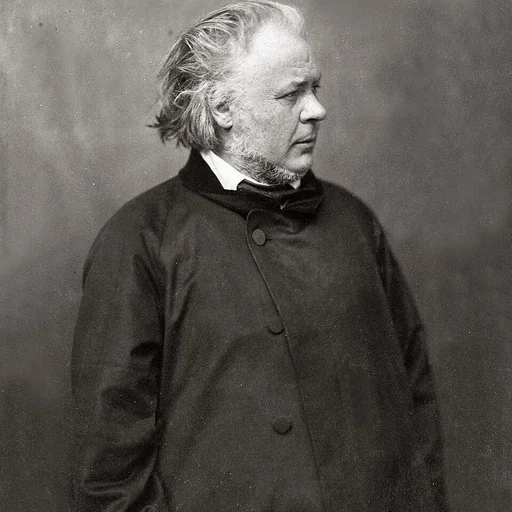
Honoré-Victorin Daumier was a French painter, sculptor, and printmaker, whose many works offer commentary on the social and political life in France, from the Revolution of 1830 to the fall of the Second French Empire in 1870.