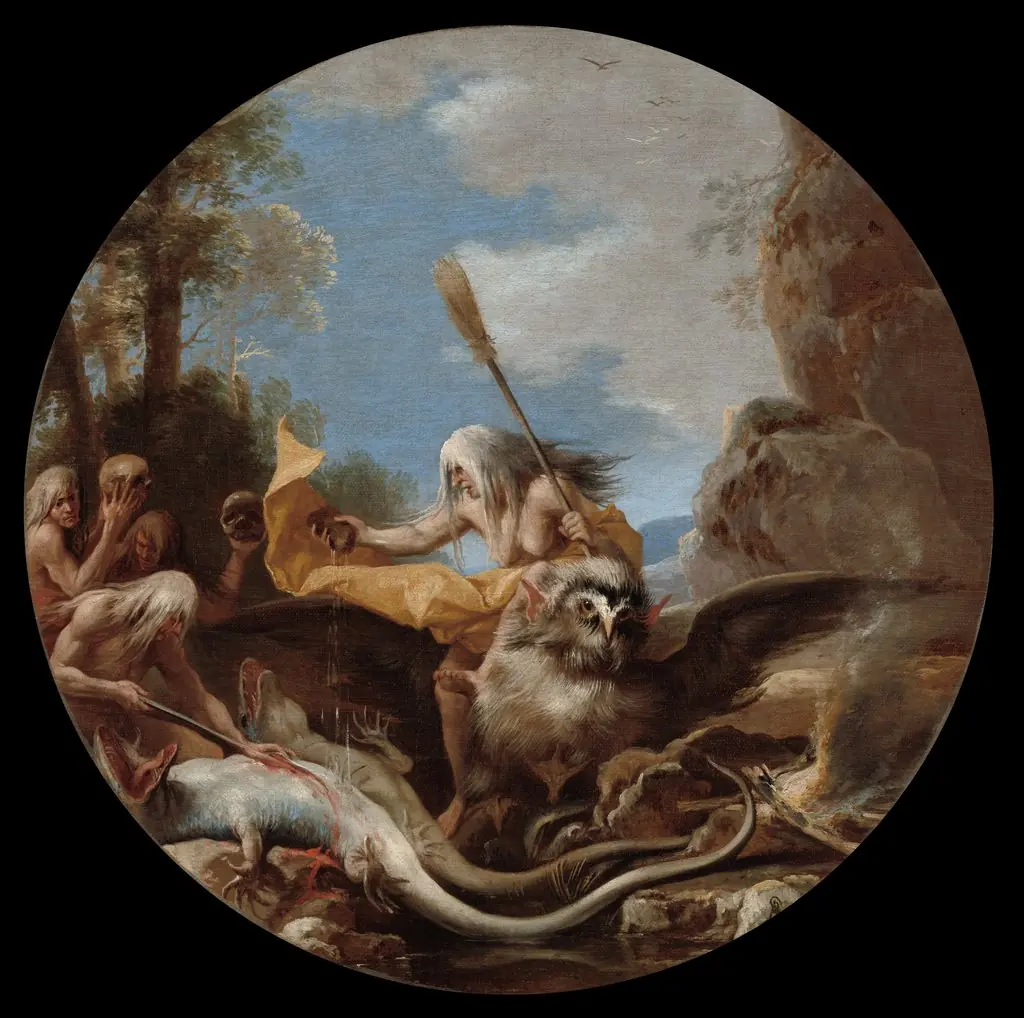
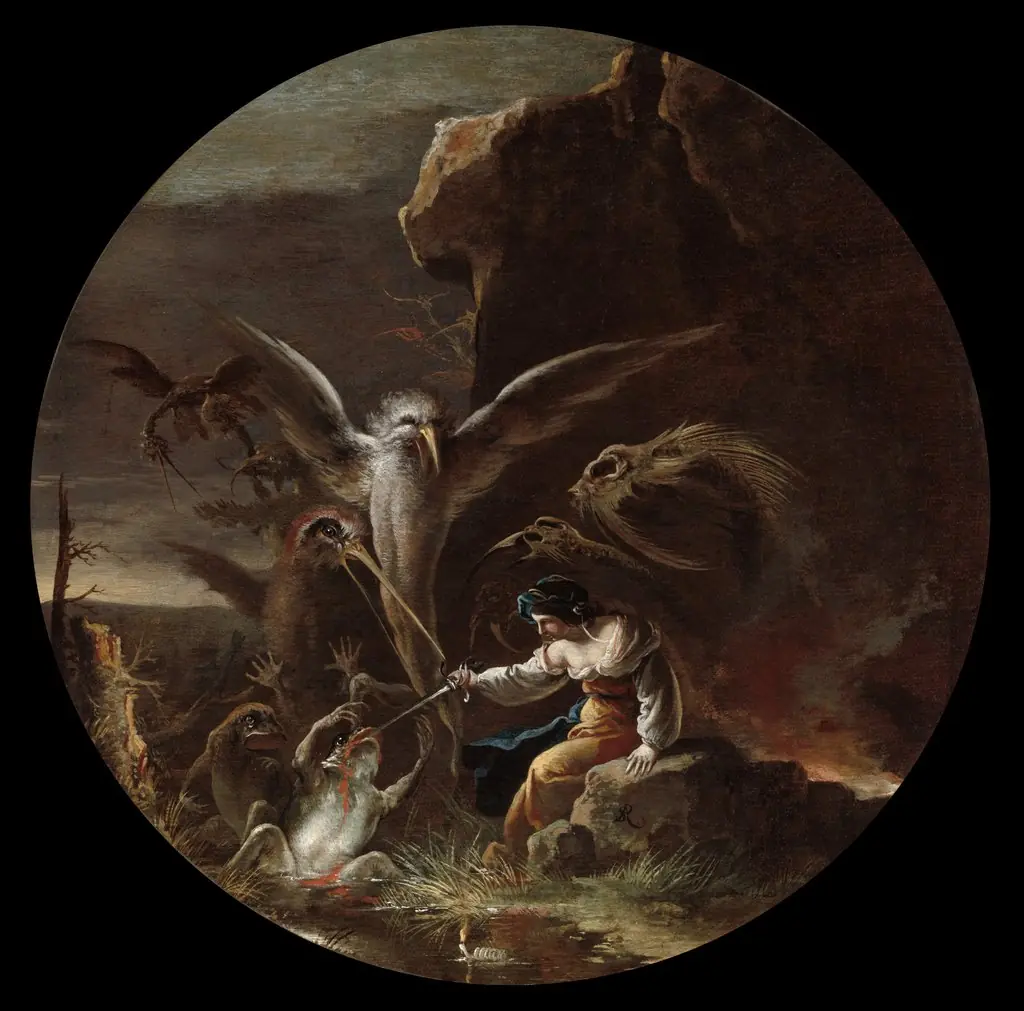
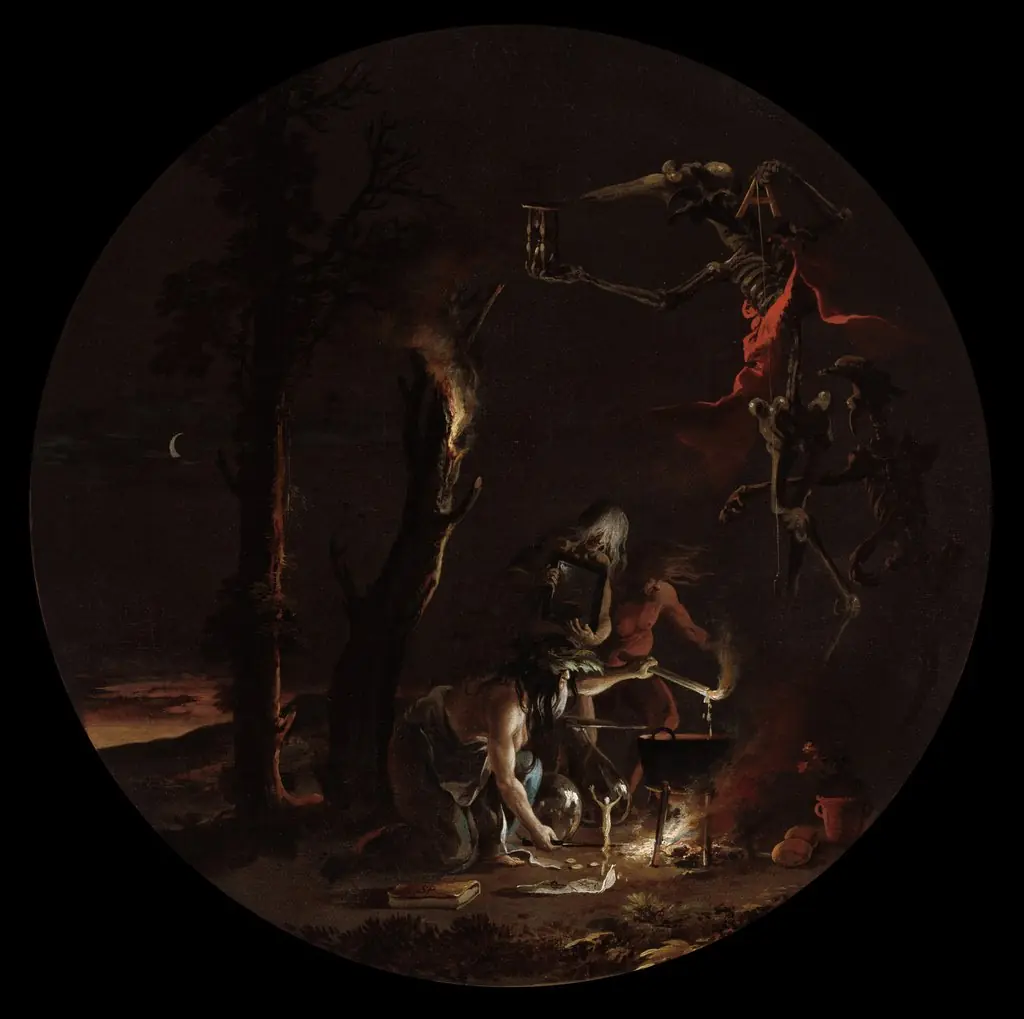
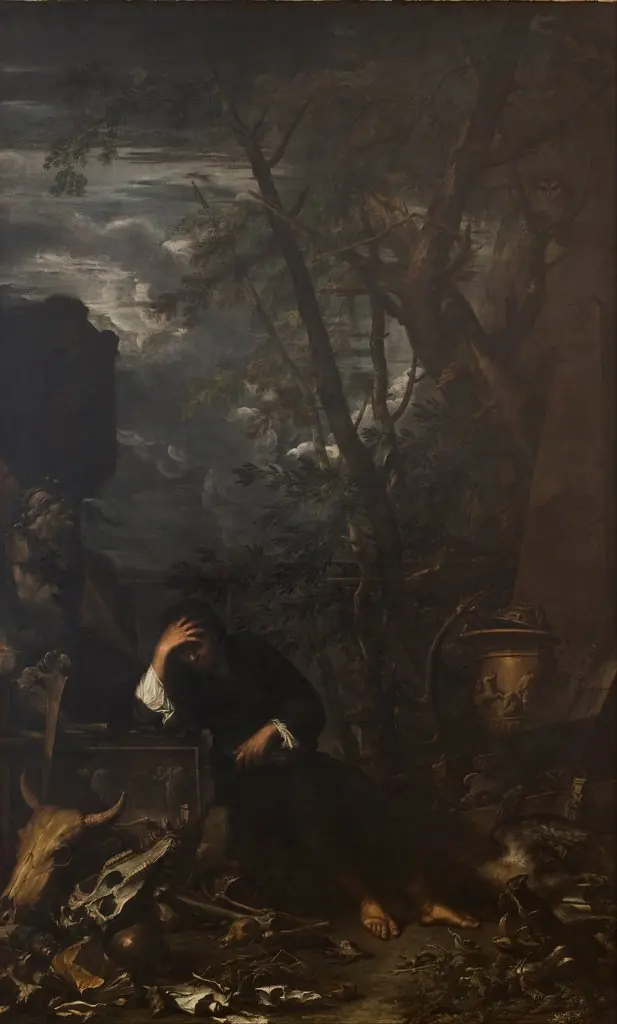
Artwork
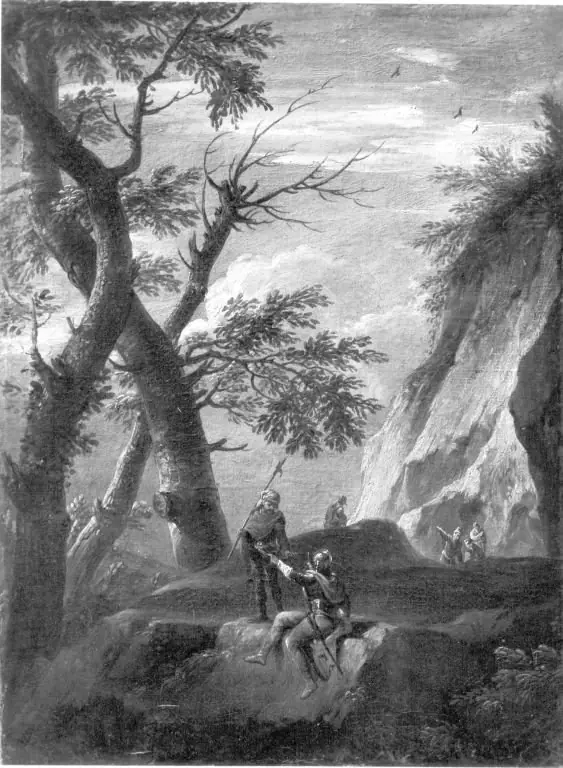
Bewaffnete Räuber in felsiger Gegend
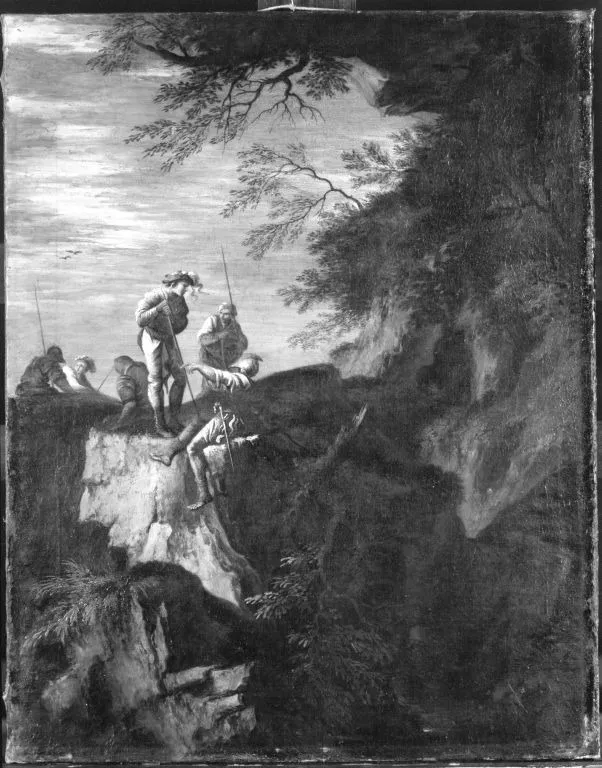
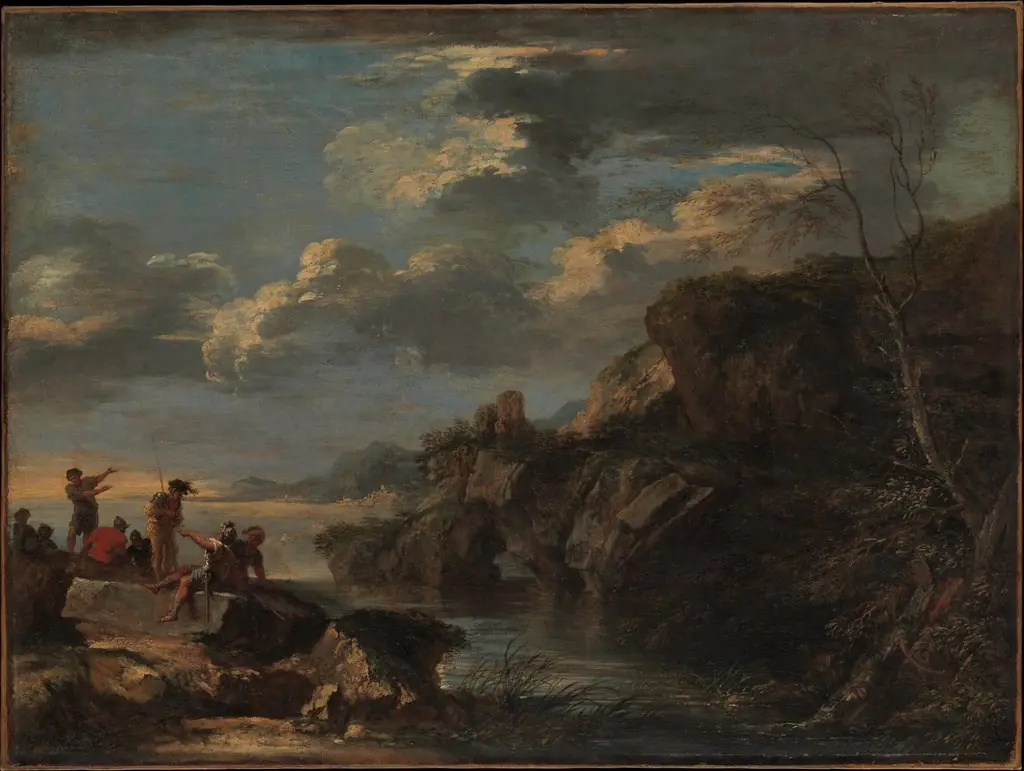
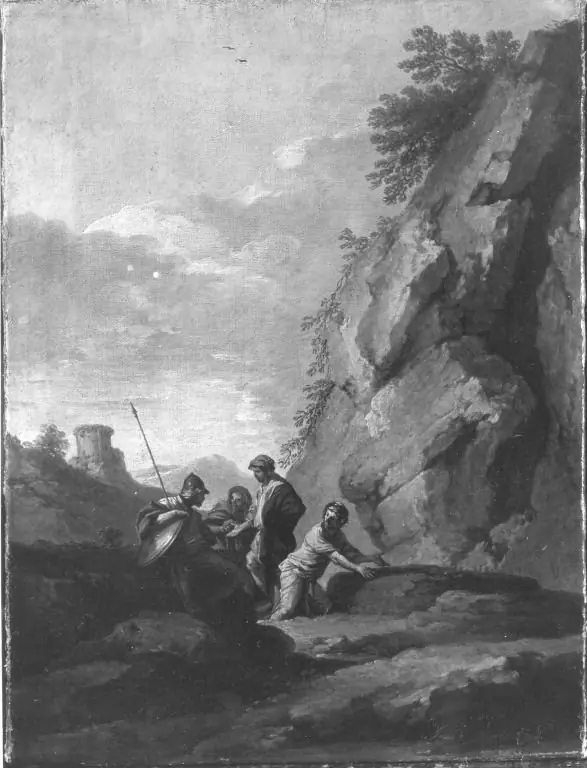
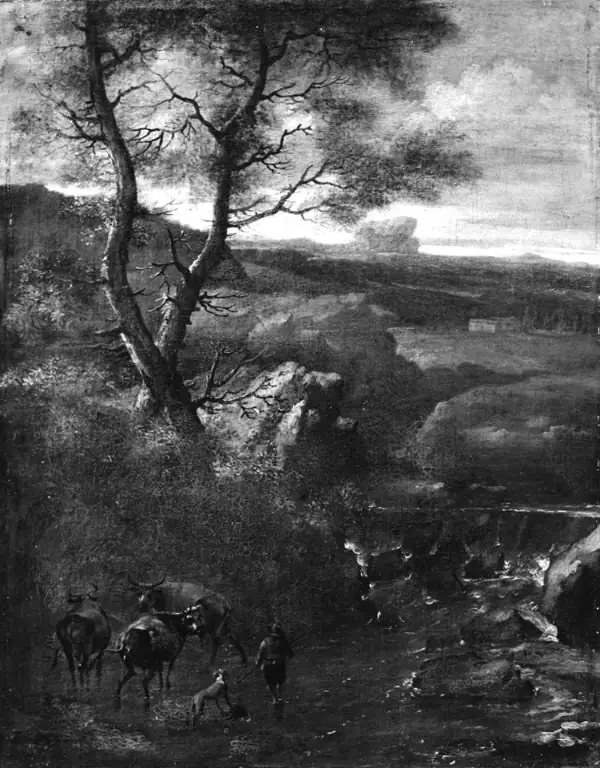
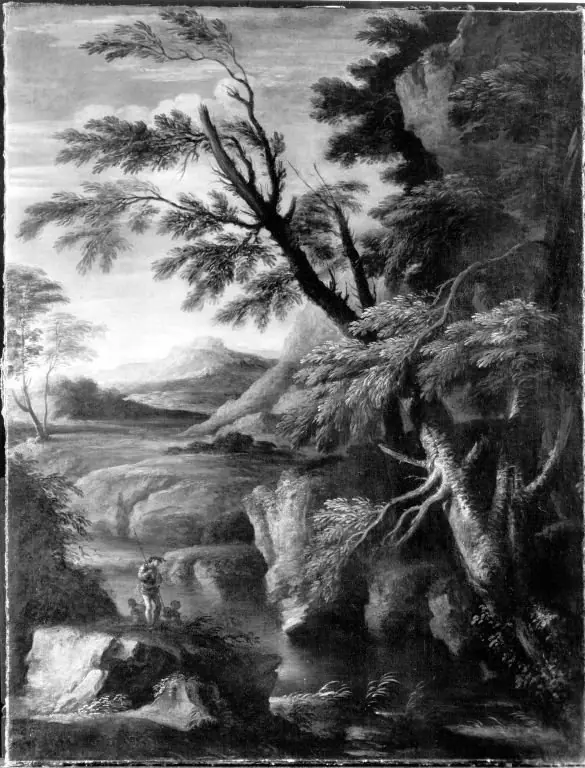
Bewaffnete Räuber in felsiger Gegend is an unspecified painting by the Early Baroque Italian artist Salvator Rosa. It dates from 1644 and is held in the collection of the Bavarian State Painting Collections.
About this work
Overview
Bewaffnete Räuber in felsiger Gegend, created by Italian Baroque painter Salvator Rosa in 1644, is a characteristic example of his dramatic and often dark depictions of natural settings, inhabited by figures engaged in intense activities.
Subject & Meaning
The painting portrays a group of armed men in 17th-century attire, positioned on a rocky outcropping, suggesting a hunting scenario. However, their contemplative stance and the serene, rugged landscape imply a nuanced exploration of human presence within untamed nature.
Technique & Style
Rosa's use of a rocky terrain, sparse vegetation, and a cloudy sky reflects his Baroque style, emphasizing dramatic lighting and intense naturalism. The composition balances action (implied hunt) with introspection, characteristic of Rosa's complex thematic approaches.
History & Provenance
Created in 1644, during Rosa's active period in major Italian art centers (Naples, Rome, Florence), the painting's provenance is not detailed here, though it aligns with Rosa's known output as a painter, poet, satirist, and printmaker of his time.
Context
This work fits within the early Italian Baroque movement, sharing themes with hunting scene specialists, yet distinguishing itself through Rosa's signature blend of drama and contemplation in wilderness settings.
Legacy
Bewaffnete Räuber in felsiger Gegend contributes to Rosa's artistic legacy, highlighting his ability to merge the intensity of human activity with the profundity of natural landscapes, influencing subsequent depictions of humans in wilderness.
Artist & collection
Artist
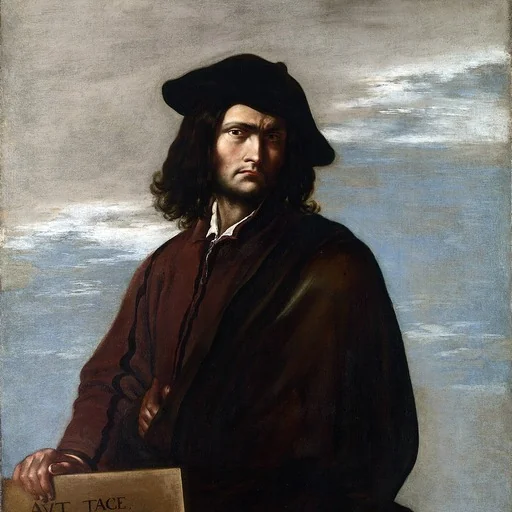
Salvator Rosa (1615 – 15 March 1673) is best known today as an Italian Baroque painter, whose romanticised landscapes and history paintings, often set in dark and untamed nature, exerted considerable influence from the 17th century into…