Artwork
Eddyville
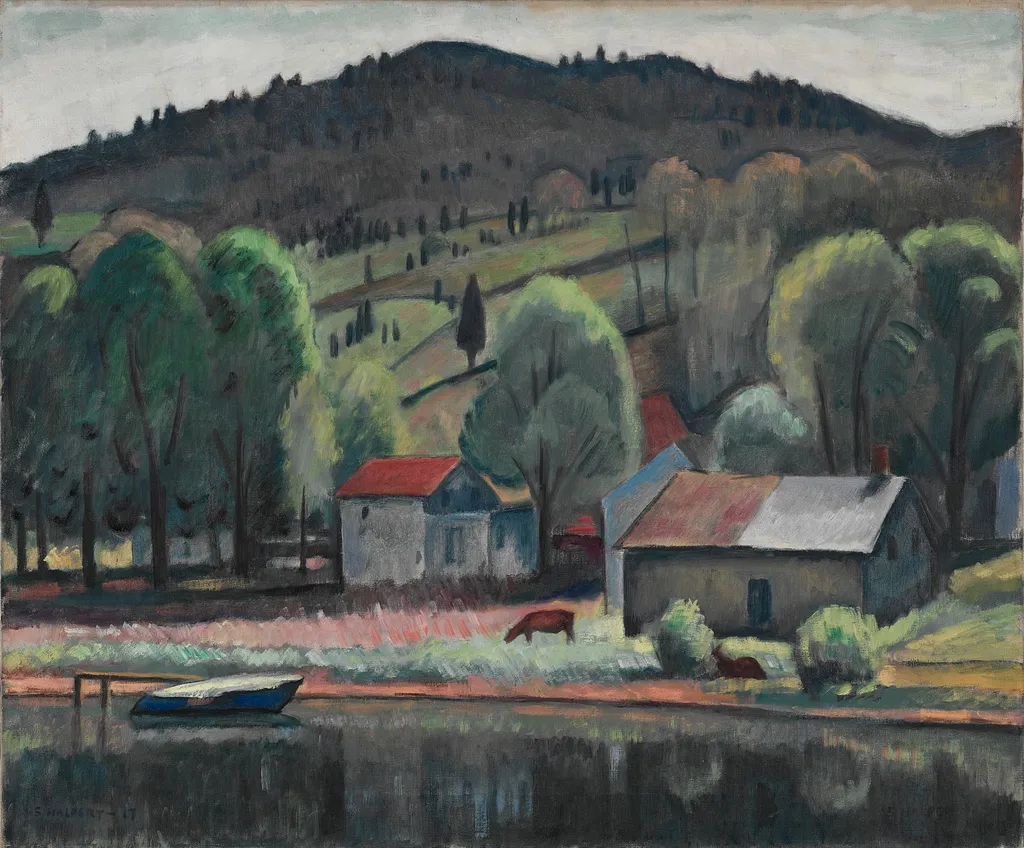
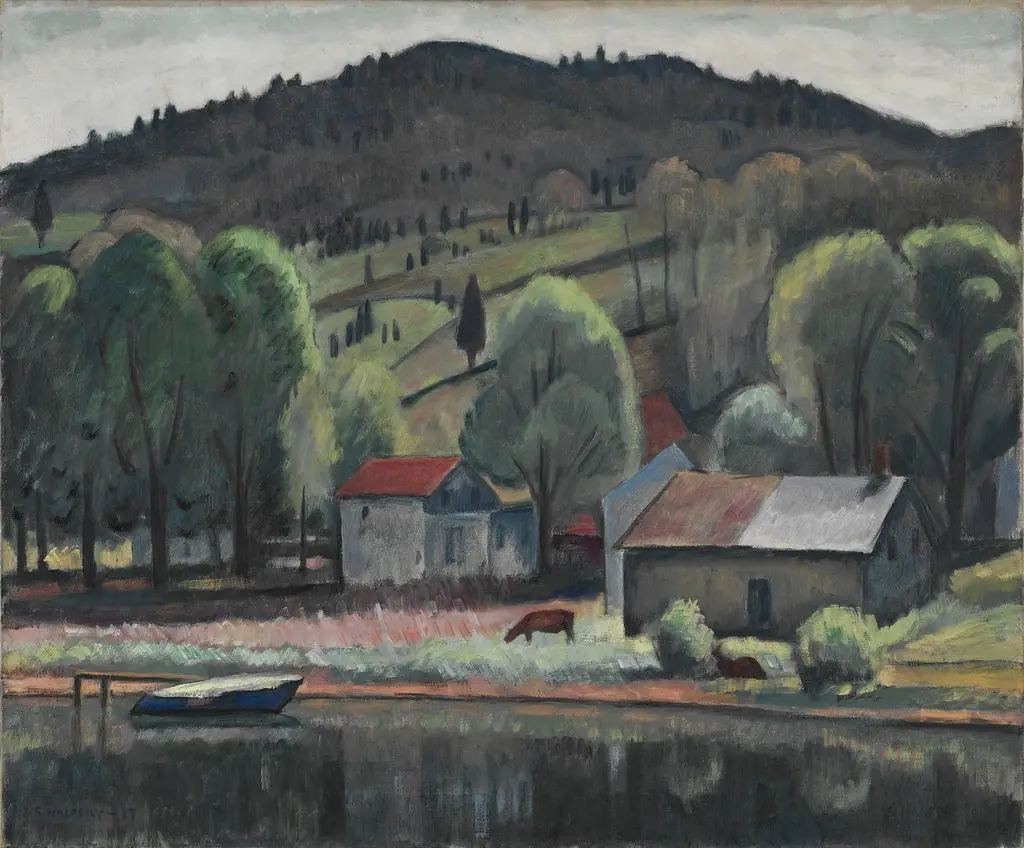
Eddyville is an unspecified painting by the American Impressionist artist Samuel Halpert. It dates from 1917 and is held in the collection of the Cleveland Museum of Art.
About this work
Overview
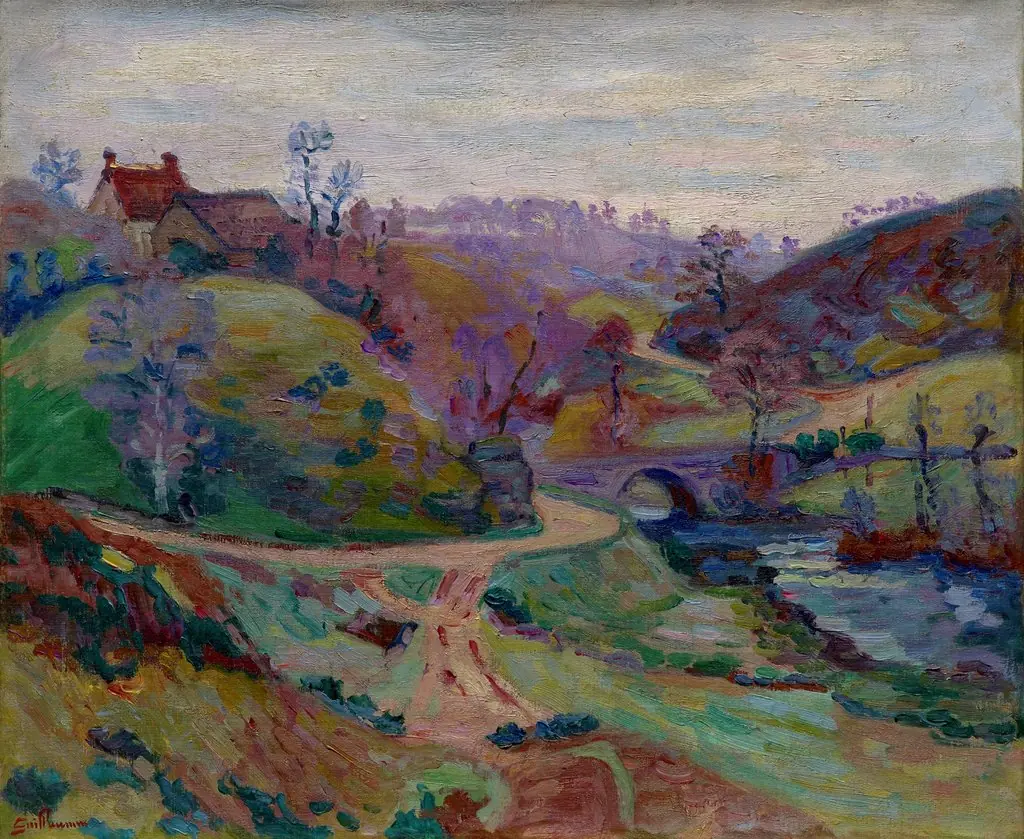
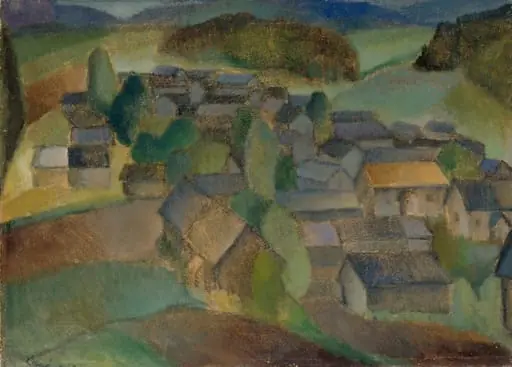
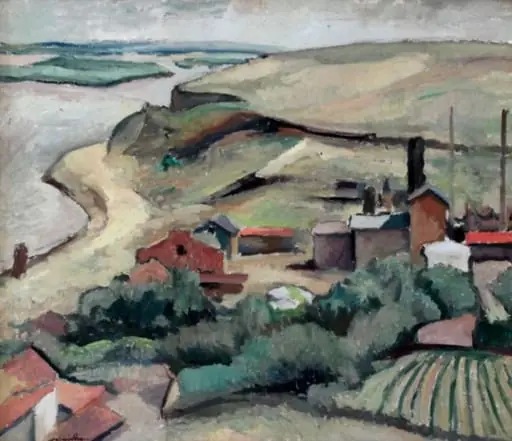
Eddyville, painted by Samuel Halpert in 1917, is a quiet rural landscape depicting a modest stretch of countryside near water. The work is part of the permanent collection at The Cleveland Museum of Art. Its composition centers on two small dwellings, a grazing cow, and a line of trees along the shore, all rendered with a deliberate emphasis on texture and subdued tonality.
Subject & Meaning
The scene captures an uneventful moment in a rural setting, free from human activity beyond the presence of a single cow and two dwellings. The absence of movement or dramatic events suggests a contemplative stillness, evoking the rhythm of everyday life in early 20th-century America. The painting offers no narrative, instead inviting quiet observation of place and atmosphere.
Technique & Style
Halpert employed thick, visible brushstrokes to build form and surface, a technique known as impasto. The paint is layered to create a tactile quality, especially in the foliage and roof surfaces. Colors are muted—soft grays, dull reds, and earth tones—conveying the diffuse light of an overcast day. The texture enhances the sense of quiet, weathered realism.
History & Provenance
Created in 1917, Eddyville was acquired by The Cleveland Museum of Art in the decades following its completion. Its provenance traces back to Halpert’s personal oeuvre during his time in the American modernist circle. The painting remained in private hands before entering the museum’s collection, where it has been preserved as an example of early American landscape interpretation.
Context
Painted during a period when American artists were redefining landscape traditions, Eddyville reflects a shift away from idealized pastoralism toward more intimate, unembellished views of rural life. Halpert’s approach aligns with contemporaries who favored emotional tone over grandeur, responding to the changing American countryside amid industrialization and urban growth.
Legacy
Eddyville stands as a quiet example of early 20th-century American realism, illustrating how artists like Halpert used texture and subdued color to convey atmosphere rather than spectacle. While not widely exhibited, it contributes to broader understandings of how regional landscapes were interpreted outside major artistic centers during the modernist era.
Own this work as a print
Artist & collection