Artwork
The Thames at the Savoy
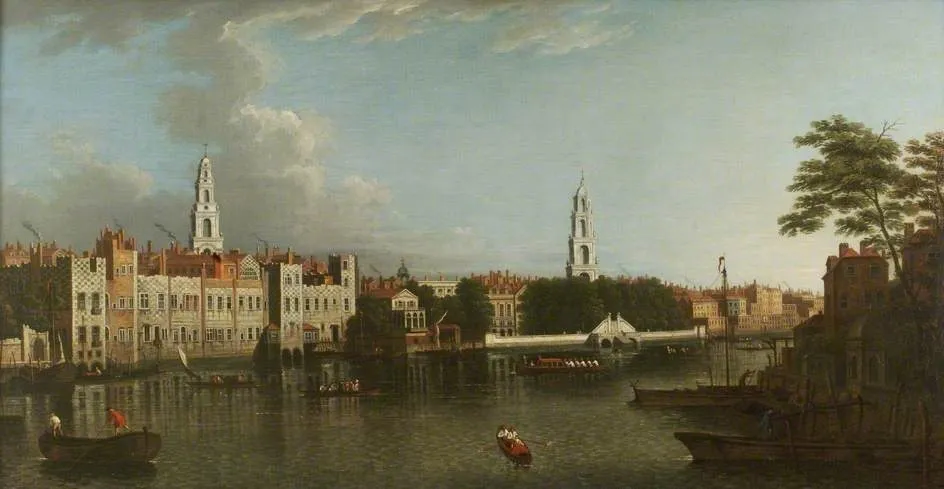
The Thames at the Savoy is an oil painting by Samuel Scott. It dates from 1747 and is held in the collection of the Ashmolean Museum.
About this work
Overview
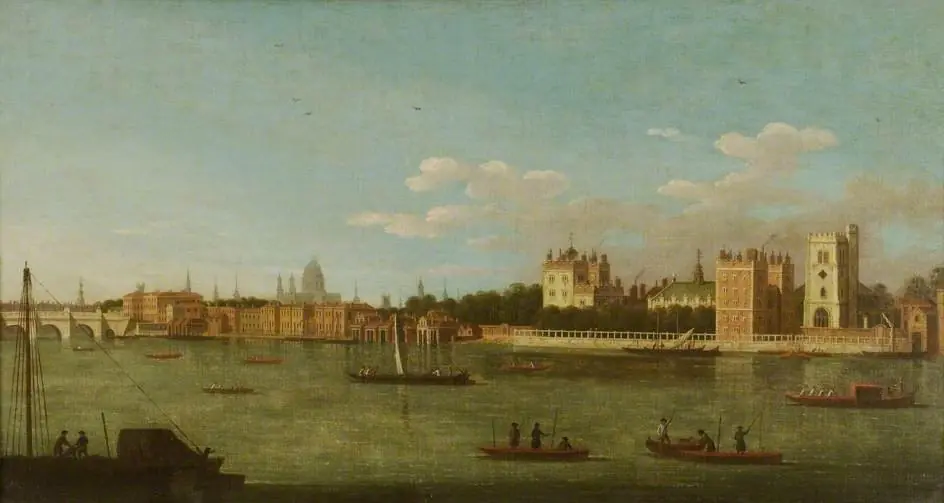
Samuel Scott’s oil on canvas, dated around 1747, depicts a tranquil stretch of the River Thames near the Savoy. The composition balances a bustling waterway populated with small vessels against a distant urban skyline, under a light‑blue sky mottled with clouds. The scene conveys a serene atmosphere, emphasizing the harmony between river traffic and the city’s architectural backdrop.
Subject & Meaning
The work captures everyday life along the Thames, showing boats laden with passengers and crew, alongside riverbank figures observing the traffic. The inclusion of prominent white towers on either side of the horizon anchors the setting in the Savoy area, suggesting a view of London’s riverfront that blends commercial activity with the city’s stately architecture.
Technique & Style
Executed in oil, the painting employs a restrained palette of whites, light blues, and muted earth tones. Scott renders water with delicate brushwork that suggests gentle ripples, while the architectural forms are outlined with crisp, linear detail. The sky’s soft cloud formations are modeled with subtle gradations, contributing to the overall calm mood.
History & Provenance
Created in the mid‑18th century, the canvas entered the collection of the Ashmolean Museum, where it remains on display. Its attribution to Scott aligns with his known focus on maritime subjects and urban vistas during this period of British art.
Artist & collection

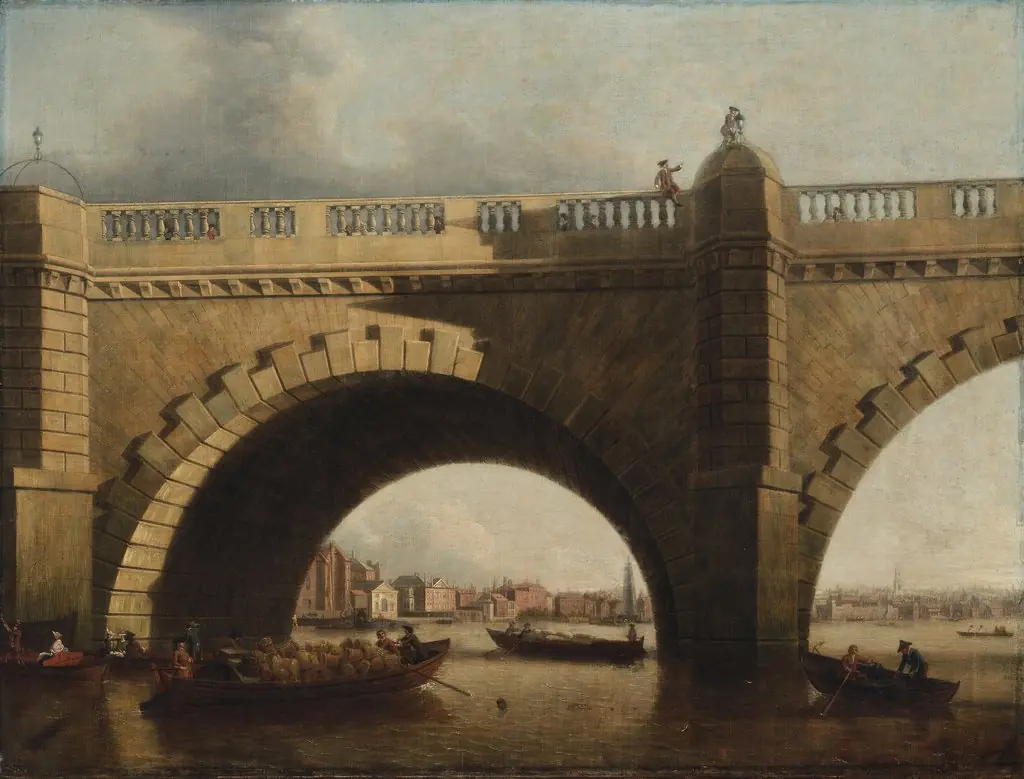
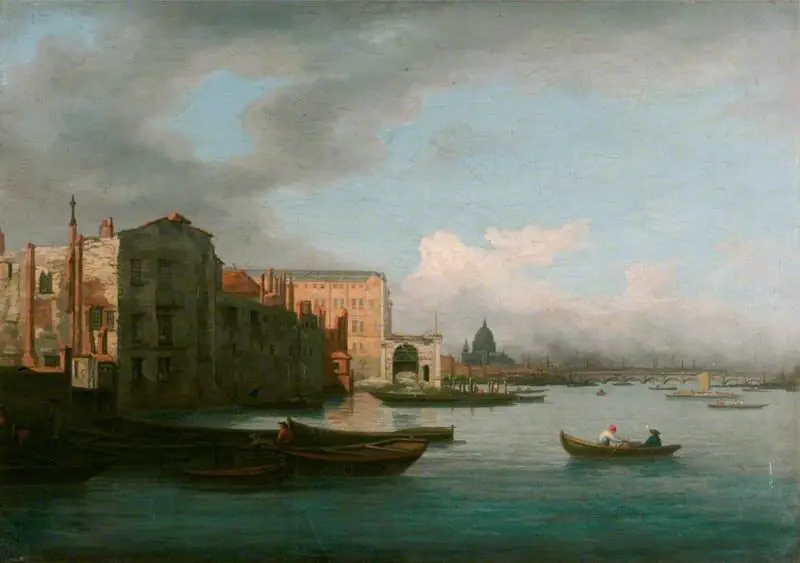 The Thames Looking Eastwards, with Somerset House
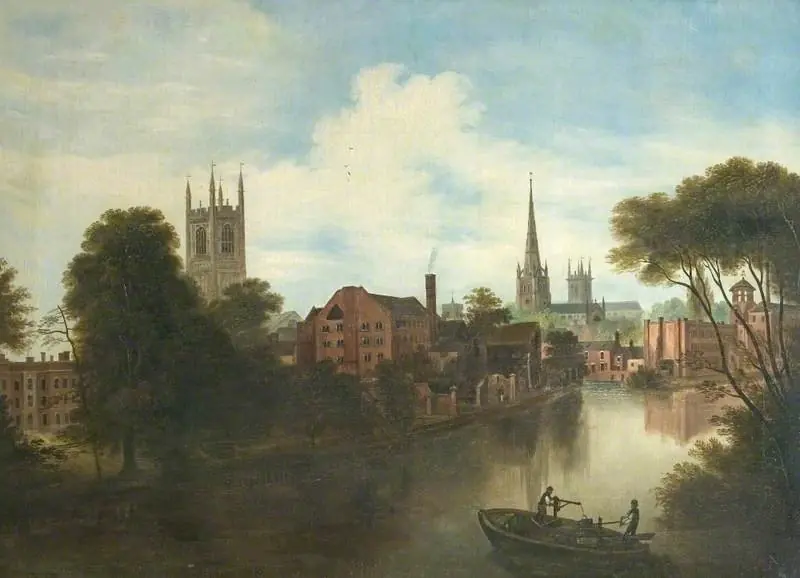 View of Derby, Showing the Derwent
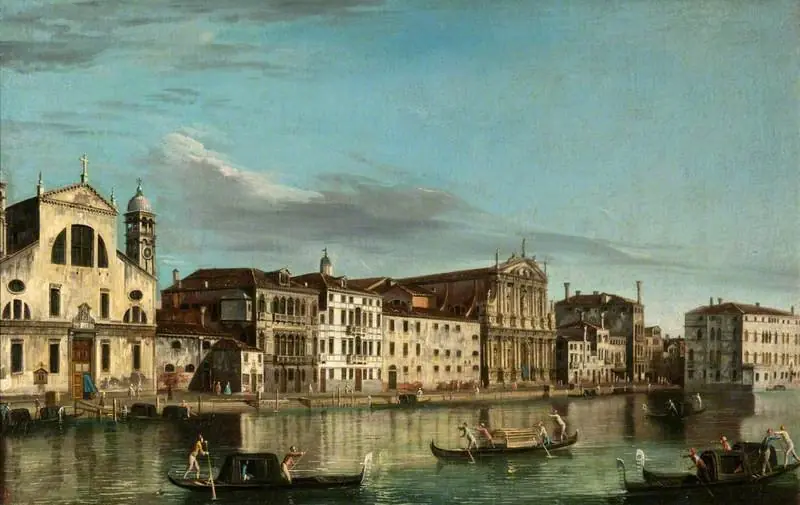 The Grand Canal: Santa Lucia and the Church of the Scalzi, Venice
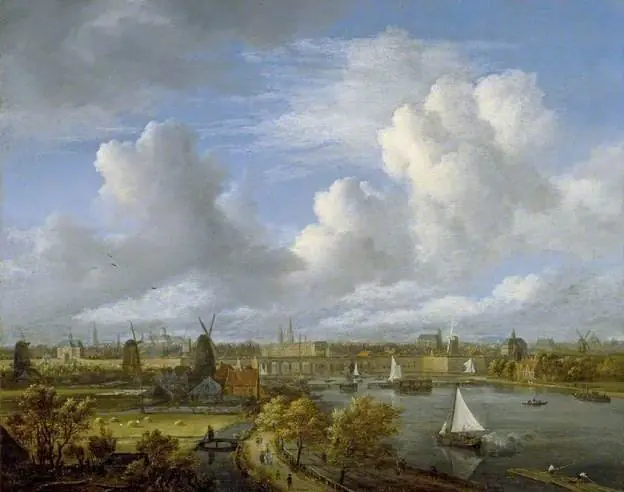 View on the Amstel Looking towards Amsterdam
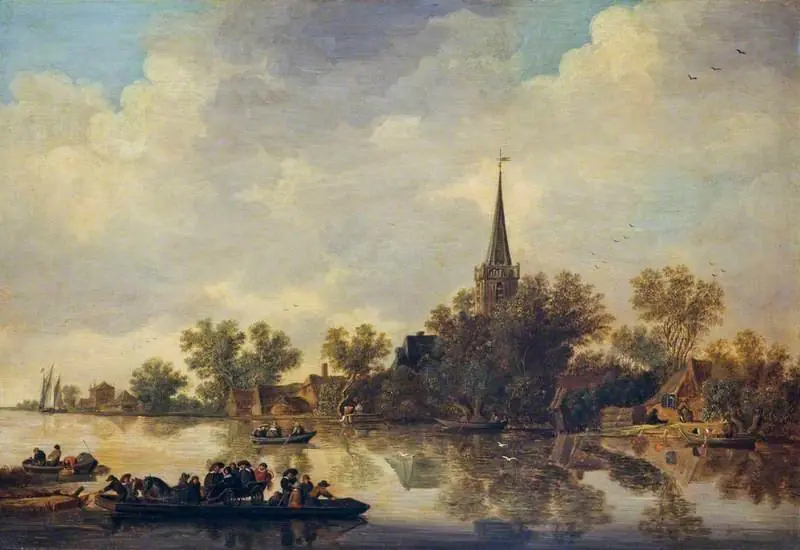 A Village with a Church
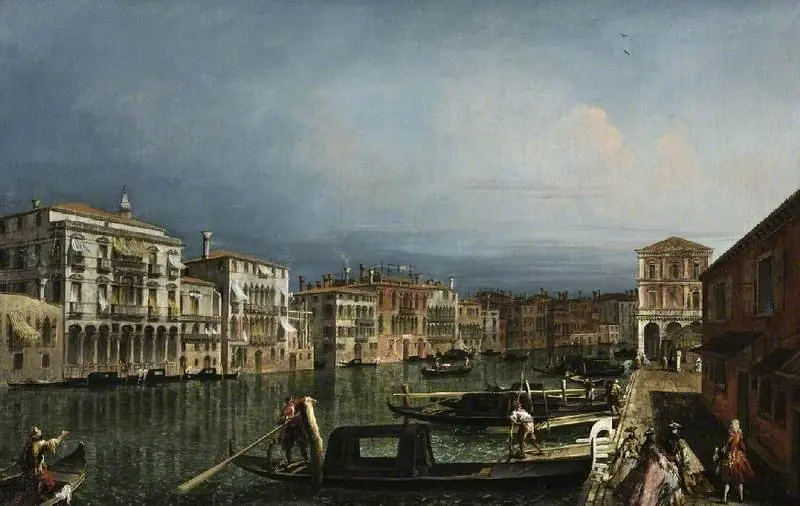 The Grand Canal, Venice, above the Rialto bridge
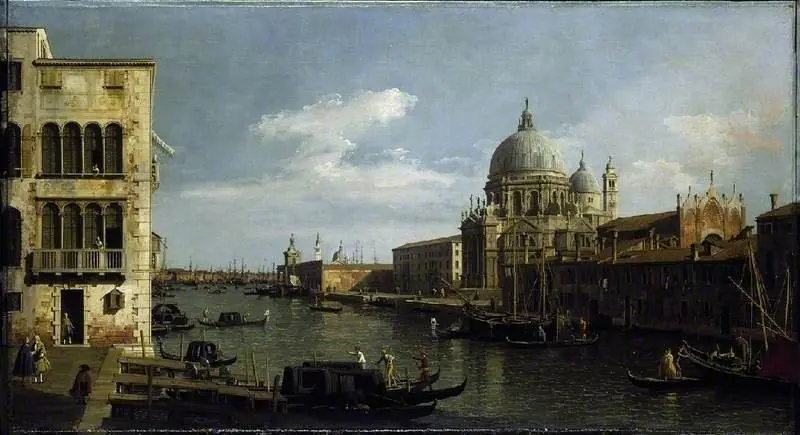 View of the Grand Canal: Santa Maria della Salute and the Dogana from Campo Santa Maria Zobenigo
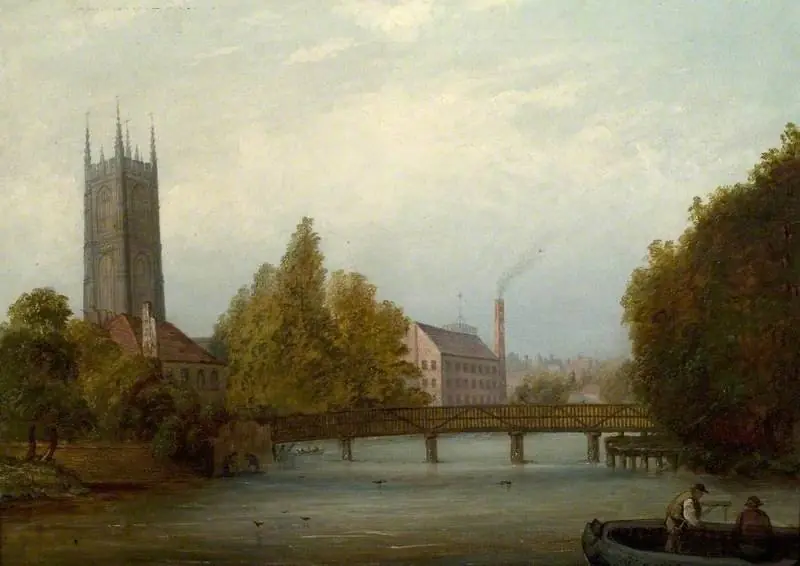 First Exeter Bridge, Derby
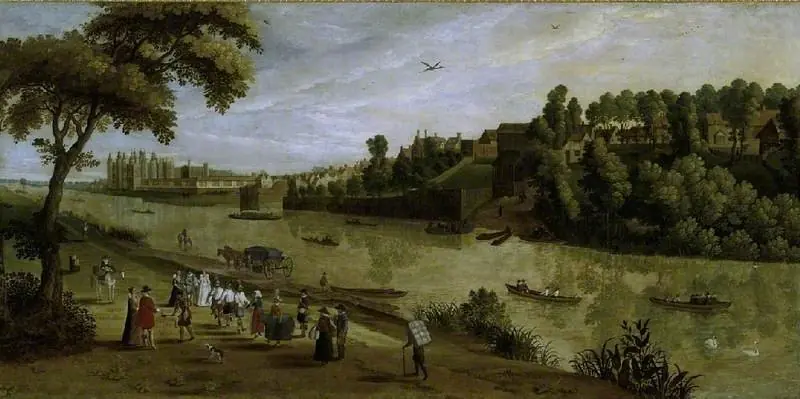 The Thames at Richmond, with the Old Royal Palace