Artwork
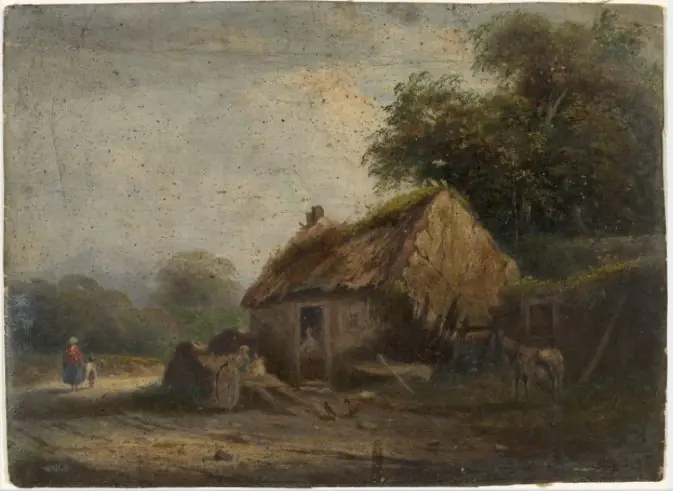
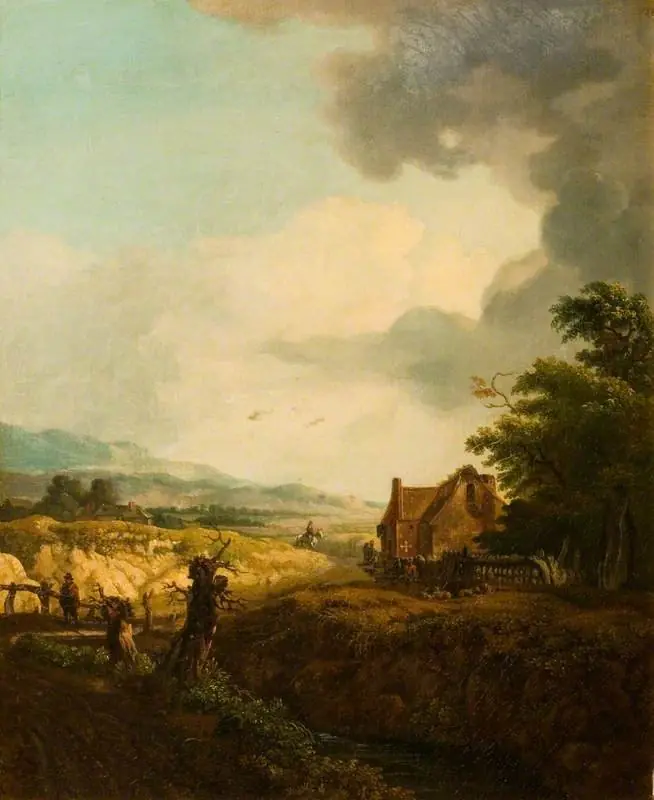
Cottage near Sandpits, Bromley, Kent
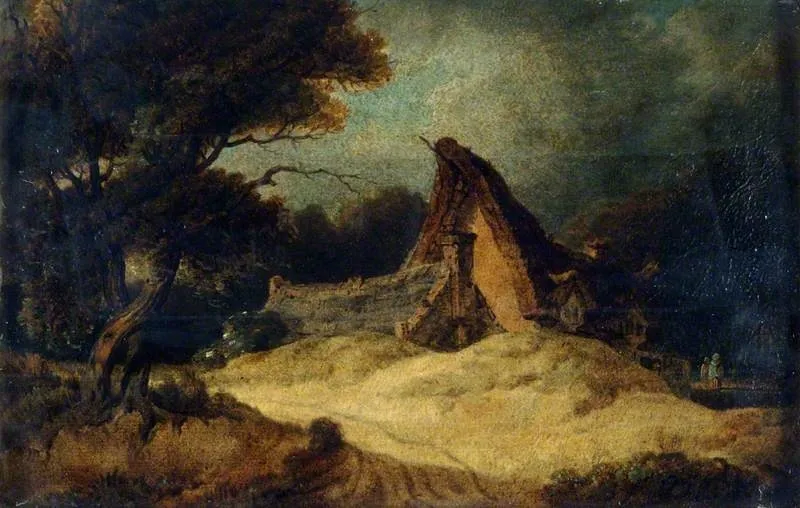
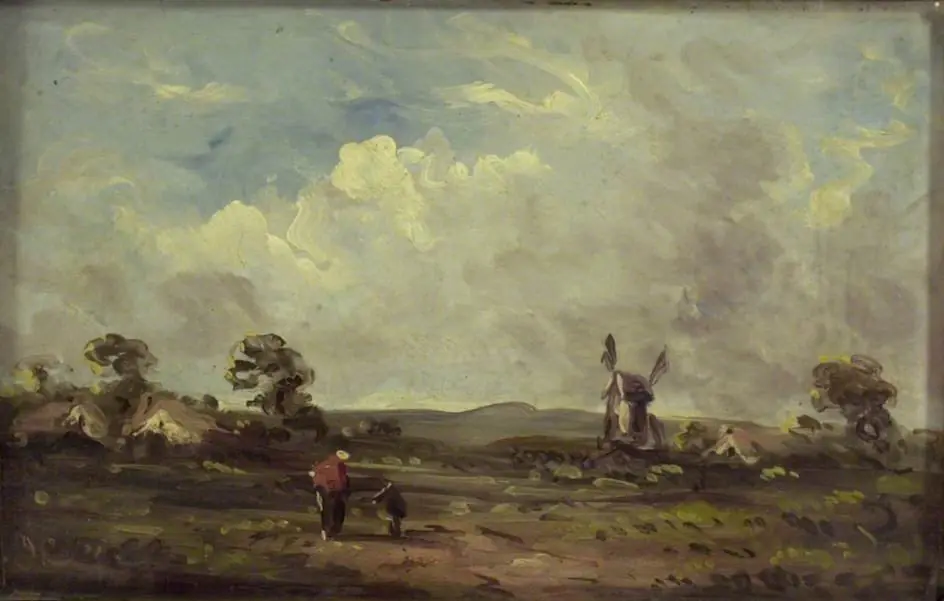
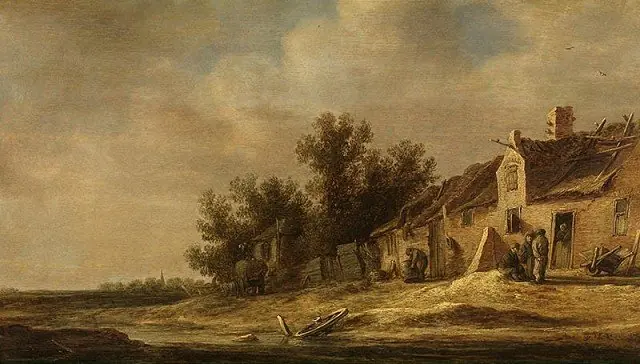
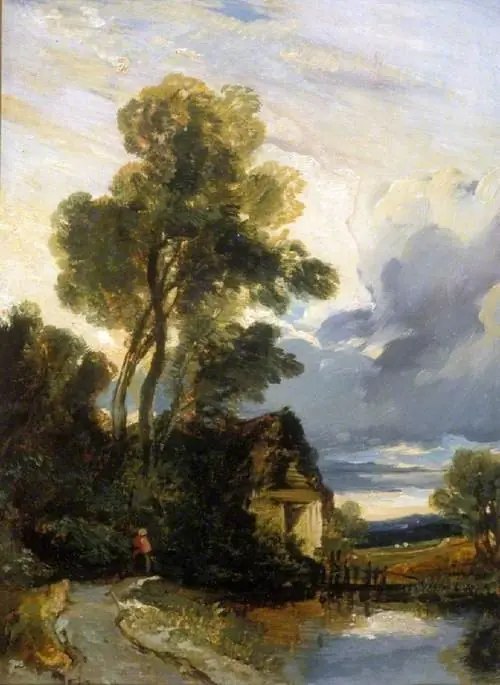
Cottage near Sandpits, Bromley, Kent is an unspecified painting by Samuel William Reynolds. It dates from 1814 and is held in the collection of the Victoria and Albert Museum.
About this work
Overview
This piece, now in the Victoria and Albert Museum’s collection, reflects his interest in quiet, unidealized natural settings near London’s outskirts.
Created around 1814, *Cottage near Sandpits, Bromley, Kent* is a landscape painting by Samuel William Reynolds, an English artist known for both engraving and painting. Though primarily celebrated for his reproductive prints, Reynolds also produced original works capturing rural English scenes. This piece, now in the Victoria and Albert Museum’s collection, reflects his interest in quiet, unidealized natural settings near London’s outskirts.
Subject & Meaning
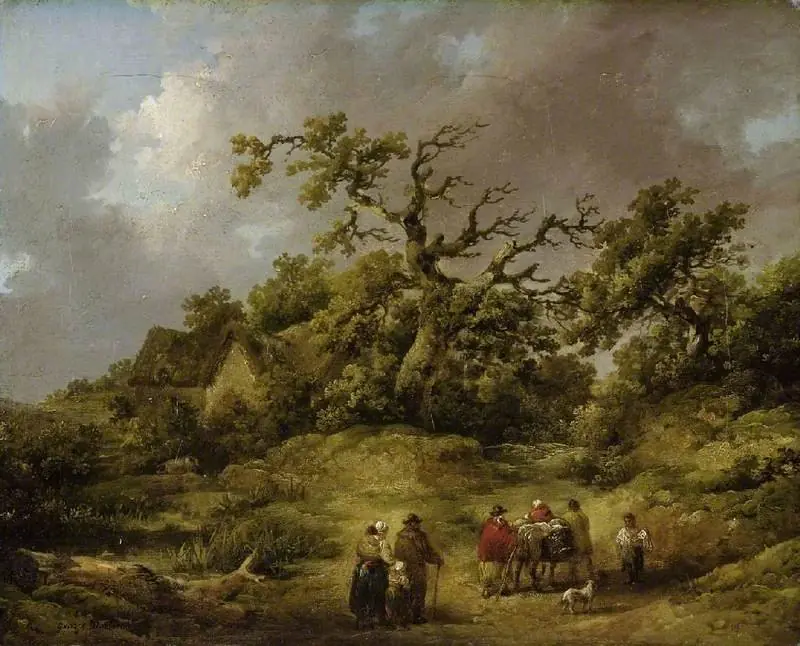
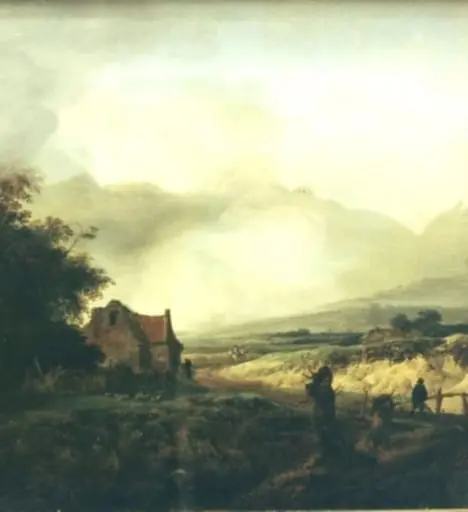
The painting portrays a modest stone cottage with a thatched roof, nestled among trees and scrubland near sandpits in Bromley. A narrow dirt path leads to the entrance, and a small cultivated garden lies before it. Smoke rises from the chimney, suggesting quiet domestic life. The scene avoids grandeur, instead honoring the ordinary rhythms of rural existence, aligning with Romantic-era values that found dignity in simplicity and nature’s quiet presence.
Technique & Style
Reynolds employs loose, expressive brushwork for the foliage, conveying a sense of natural movement and texture. In contrast, the cottage is rendered with greater precision—individual stones, roof thatch, and chimney details are carefully observed. The palette is restrained, dominated by earthy browns and muted greens, reinforcing the scene’s grounded, unadorned character. The composition directs attention to the dwelling without theatrical lighting or dramatic perspective.
History & Provenance
The painting entered the Victoria and Albert Museum’s collection as part of its broader effort to document British decorative and fine arts. While Reynolds’s engravings were widely circulated and collected, his original paintings are less common. This work remains one of the few surviving examples of his direct landscape practice, offering insight into his personal artistic interests beyond commercial printmaking.
Context
In early 19th-century England, rapid urbanization and industrial change heightened interest in rural life as a cultural counterpoint. Artists like Reynolds turned to landscapes near London—once considered peripheral—for subjects that evoked continuity and tranquility. Bromley, then a village on the city’s edge, offered a liminal space where nature and habitation coexisted, making it a fitting subject for contemplative painting.
Legacy
Though Reynolds is better remembered for his engravings, this painting contributes to a broader understanding of his artistic range. It reflects a quiet but persistent trend among British artists of the period who sought to record everyday landscapes before they vanished under development. The work stands as a modest yet significant record of regional topography and domestic life in pre-industrial Kent.
Artist & collection
Artist
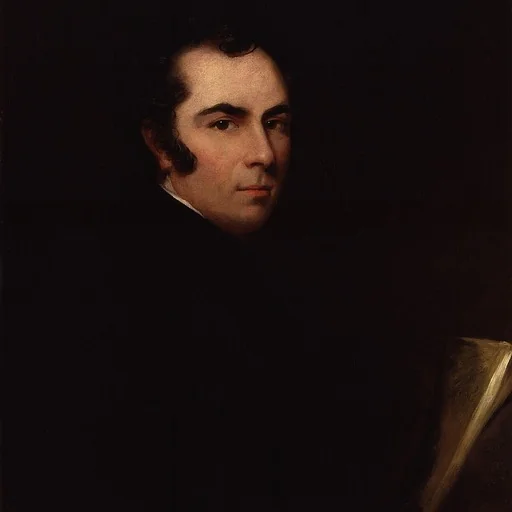
Samuel William Reynolds (4 July 1773 – 13 August 1835) was an English engraver, painter and gardener who specialised in landscape painting and landscape architecture.