Artwork
Madonna of the Magnificat
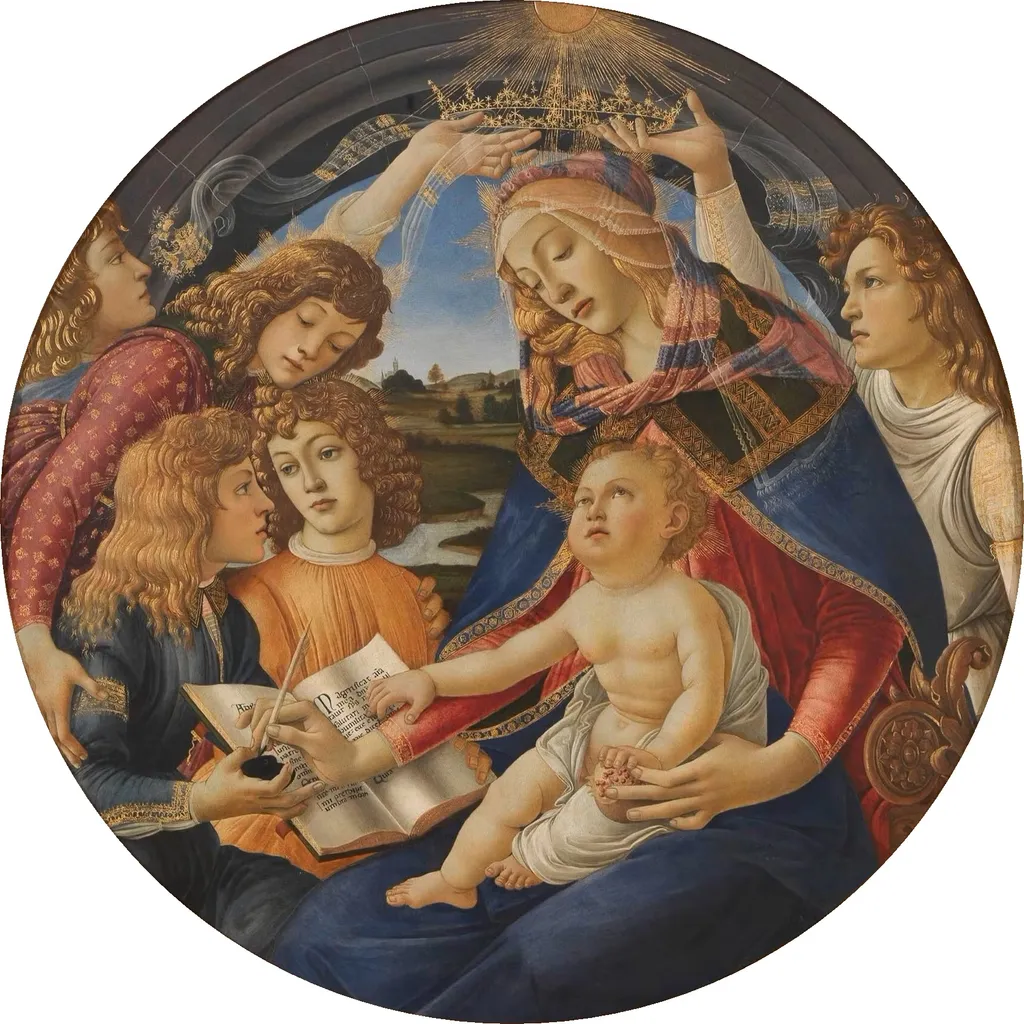
Madonna of the Magnificat is a tempera painting by the Early Renaissance artist Sandro Botticelli. It dates from 1492 and is held in the collection of the Uffizi Gallery.
About this work
Overview
Sandro Botticelli’s circular tempera composition, known as the Madonna of the Magnificat, presents the Virgin seated with the infant Christ on her lap. She is depicted in the act of writing the biblical hymn of praise, while two angels place a crown upon her head. The work is displayed in the Uffizi Gallery in Florence.
Subject & Meaning
The central figure is Mary, portrayed as both mother and scribe, holding a pomegranate that symbolizes fertility and resurrection.
The central figure is Mary, portrayed as both mother and scribe, holding a pomegranate that symbolizes fertility and resurrection. The infant Christ rests peacefully, reinforcing the theme of divine motherhood. Two attendant angels crown her, underscoring her elevated status, and a fourth angel holds an open book containing the Latin text of the Magnificat, linking the visual narrative to the liturgical prayer.
Technique & Style
Executed in egg tempera on panel, the painting exhibits Botticelli’s characteristic linear grace and delicate coloration. The tondo format creates a harmonious, enclosed space, while the gold‑leaf halo and radiant rays around Mary’s head convey a celestial aura. Fine brushwork delineates the flowing drapery of the blue robe, gold trim, and red cloak, and the distant landscape is rendered with muted, atmospheric tones.
History & Provenance
Created in the late 15th century, the work was likely commissioned for private devotion. It entered the Medici collection before being transferred to the Uffizi’s permanent holdings, where it has remained since the early modern period. Documentation traces its ownership through Florentine archives, confirming its continuous presence in the city’s artistic institutions.
Context
The painting reflects the Renaissance interest in integrating textual and visual devotion, aligning the act of writing the Magnificat with the humanist emphasis on literacy. Botticelli’s choice of a tondo format echoes contemporary domestic altarpieces, while the inclusion of angels and symbolic objects situates the work within the broader theological discourse on Mary’s role as intercessor and queen of heaven.
Artist & collection

Artist
Sandro Botticelli was a Florentine painter who loved the drama of stories—myths, saints, and ancient tales.

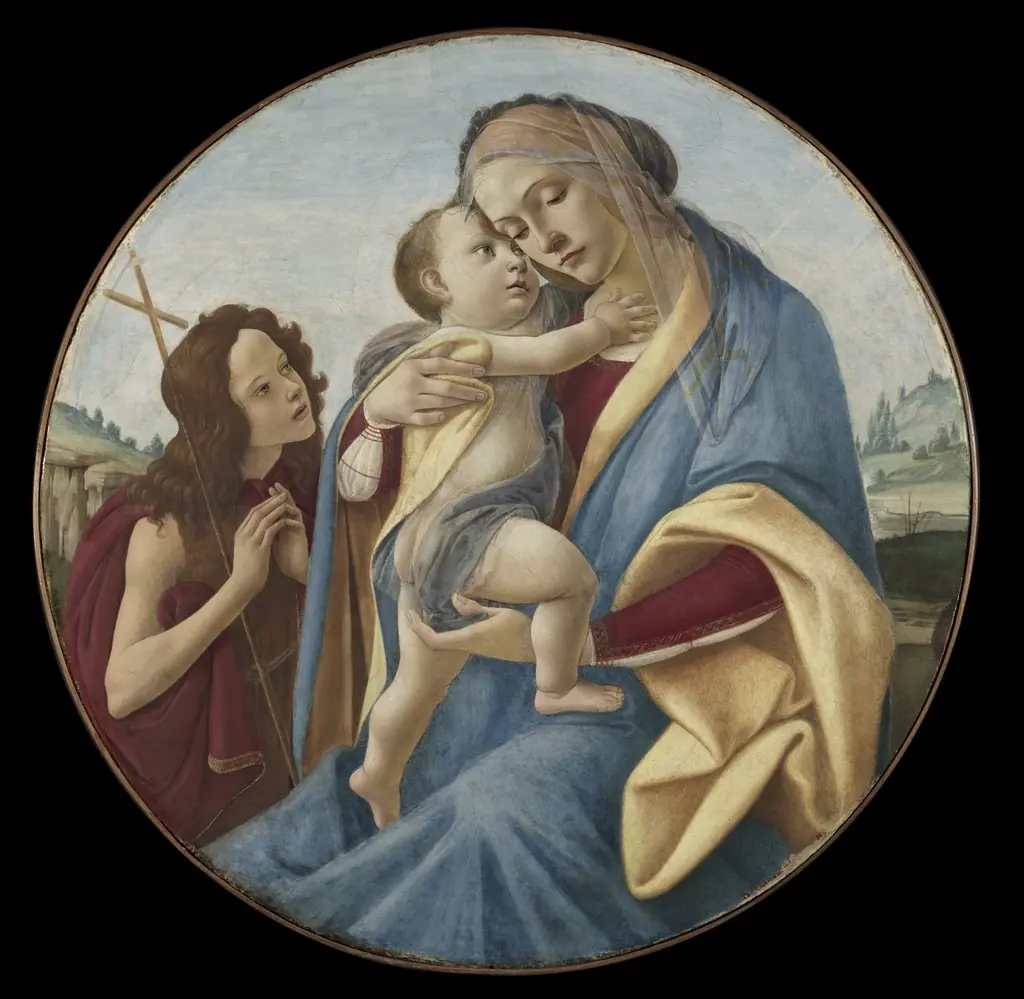
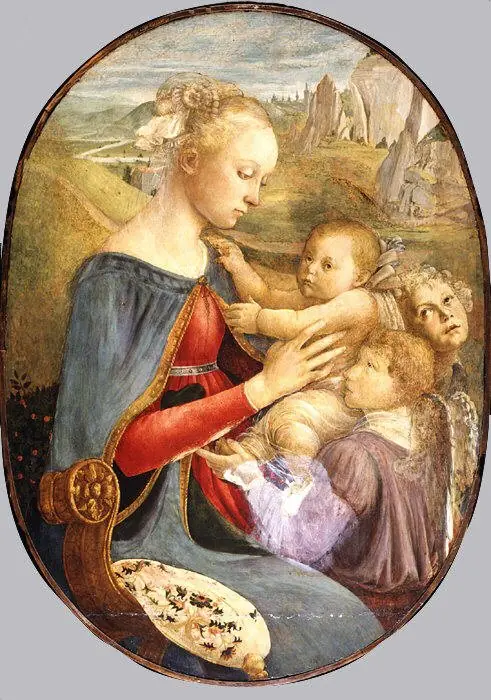
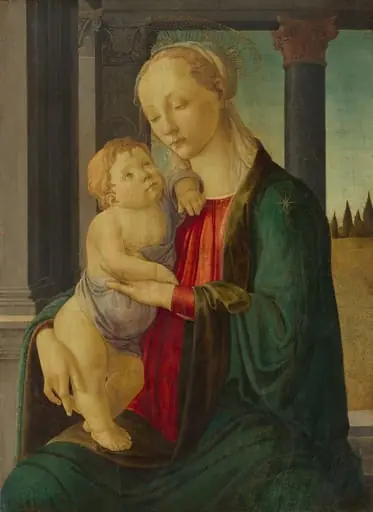
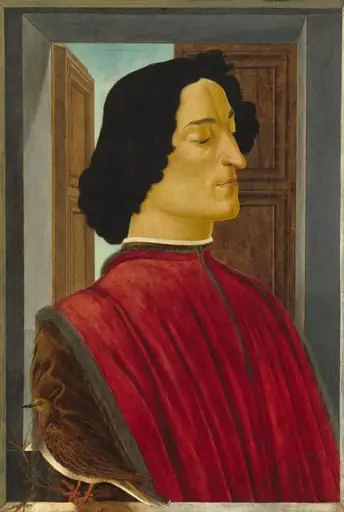
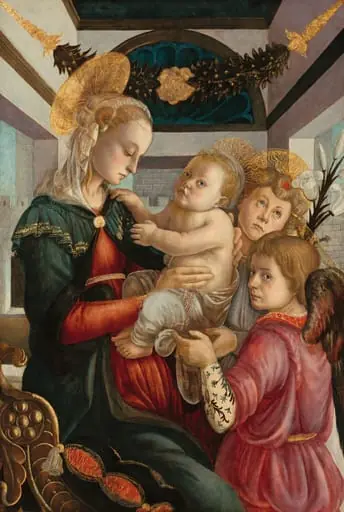
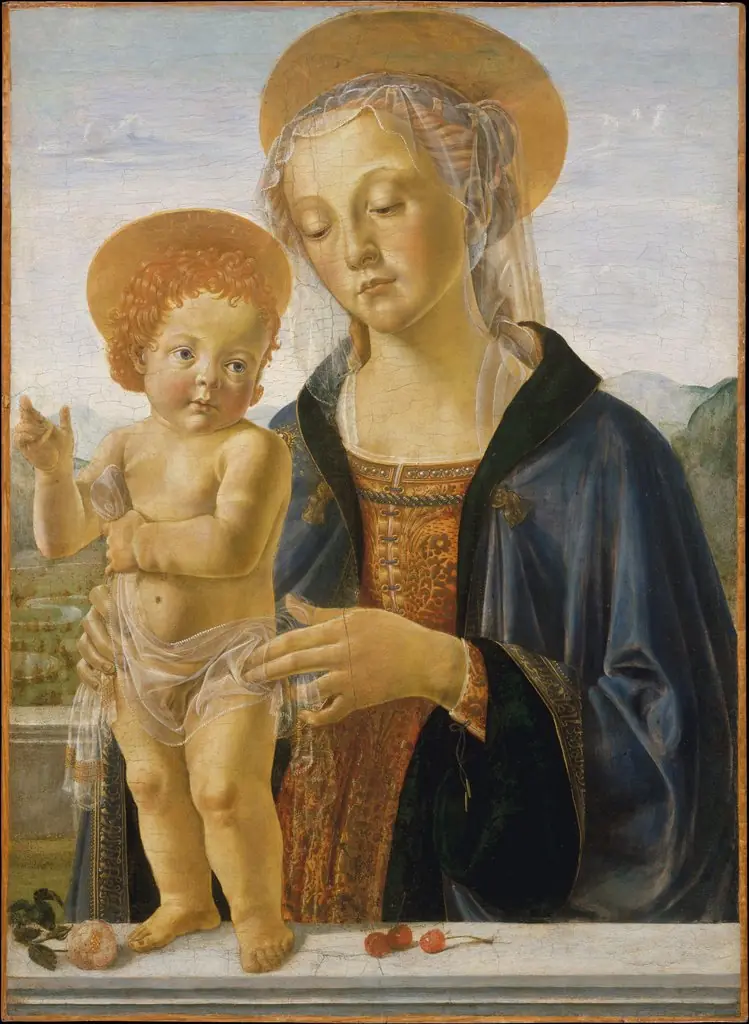 Madonna and Child
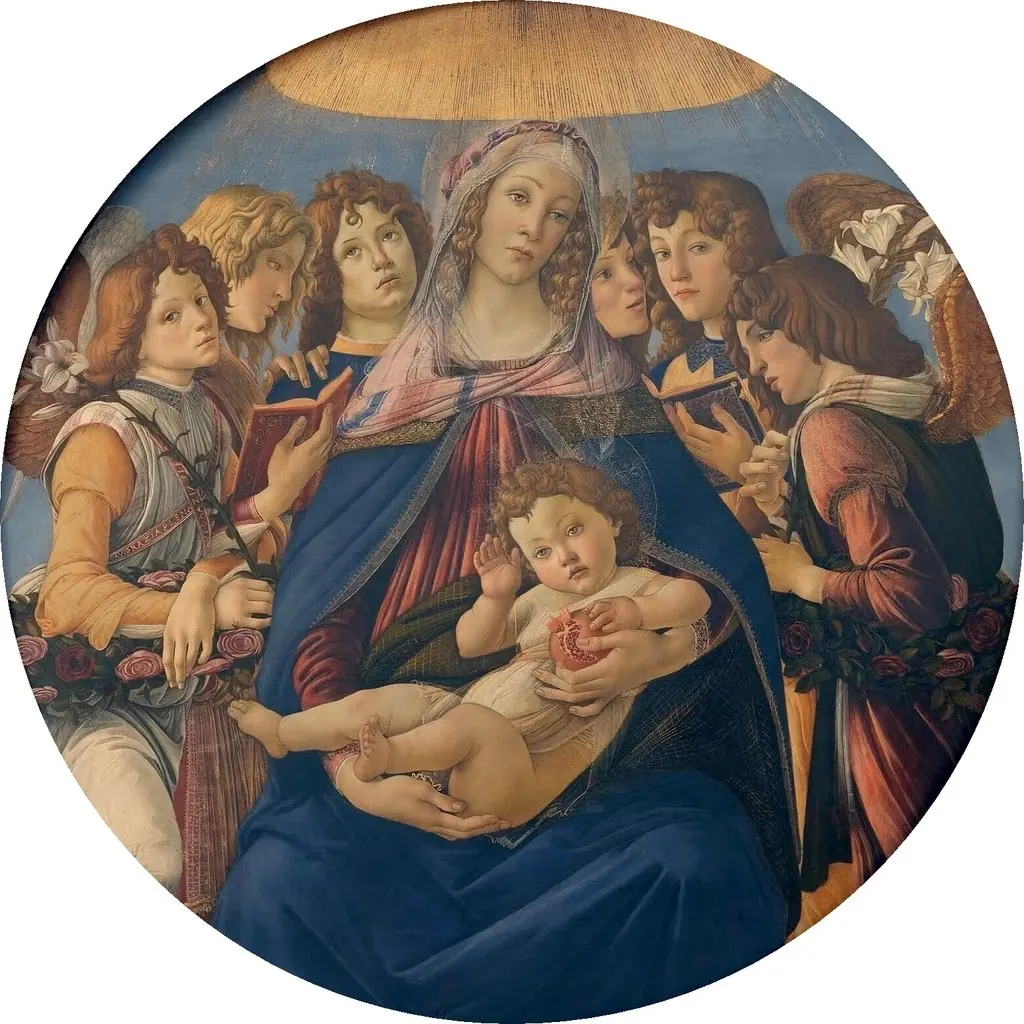 Madonna of the Pomegranate
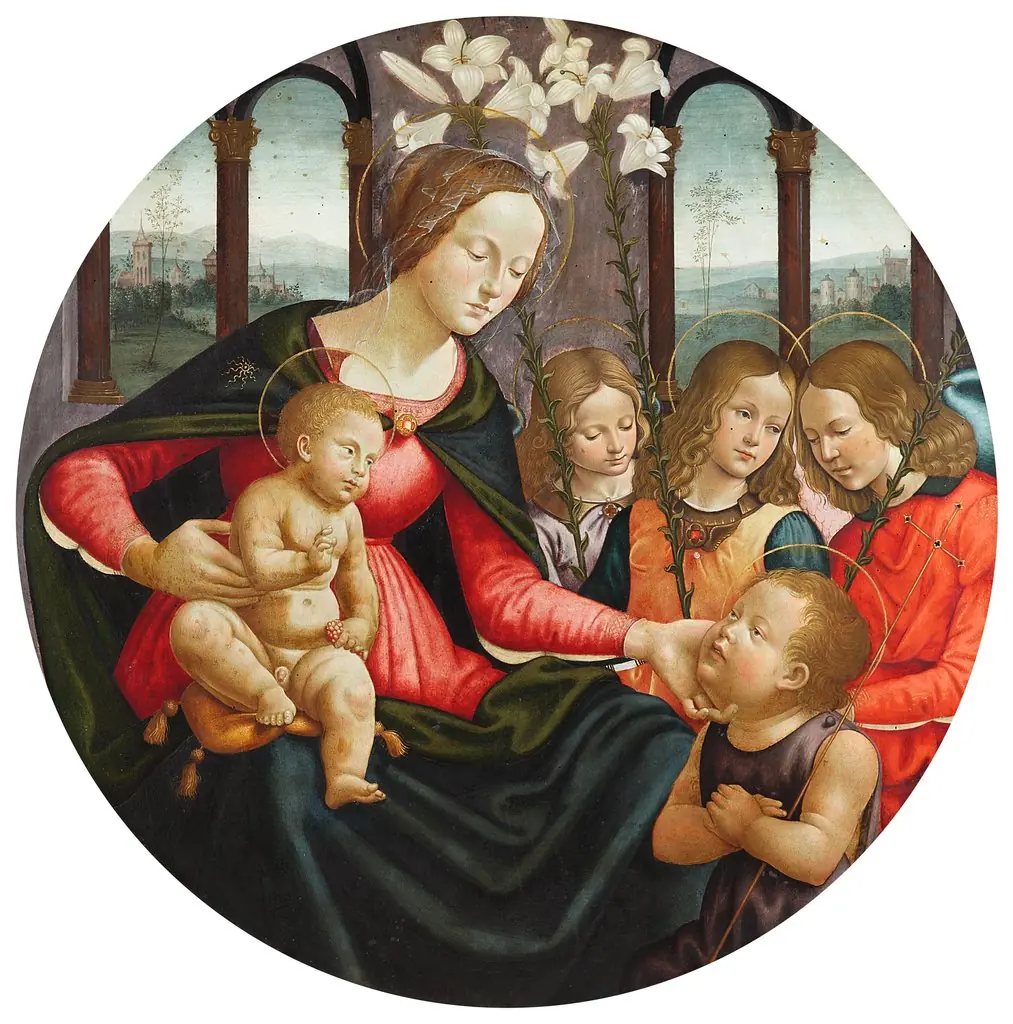 The Virgin and Blessing Child, Young St. John and three Angels
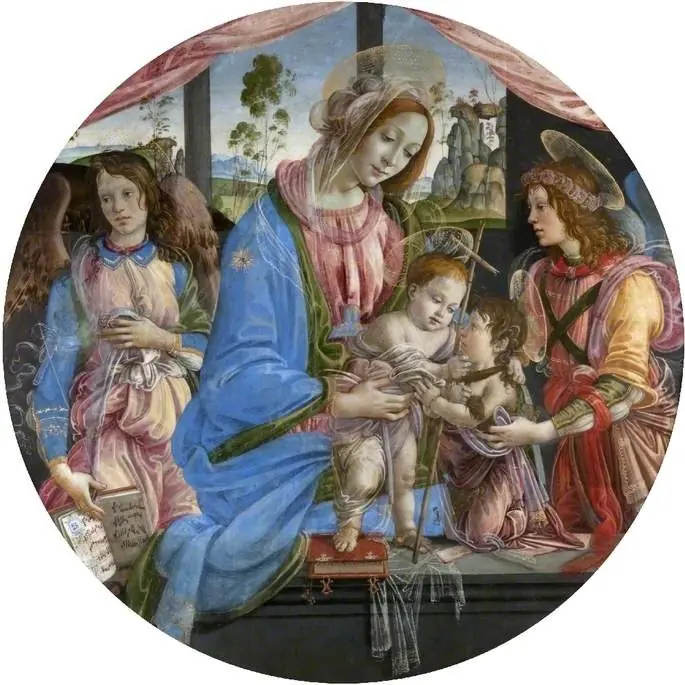 Virgin and Child with the Child Baptist and Two Angels
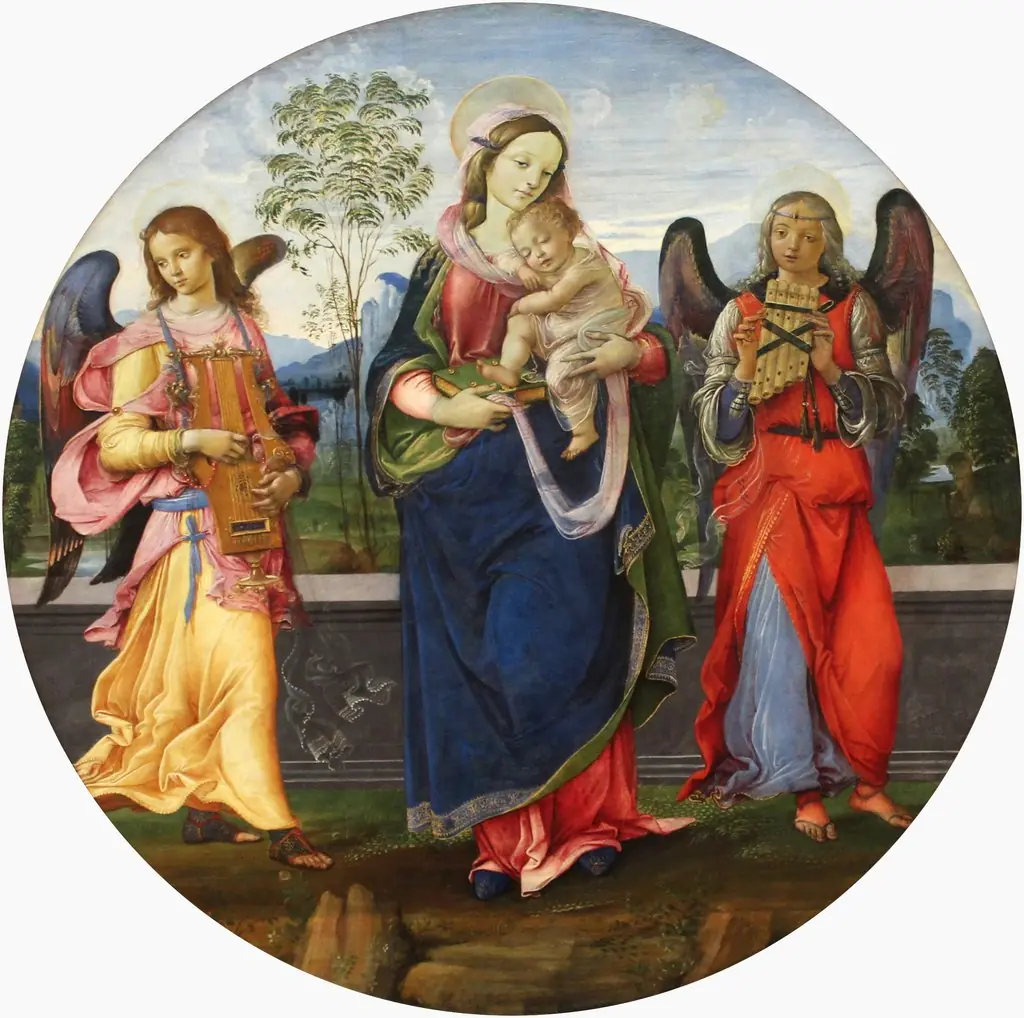 Madonna and Child with two angels playing music
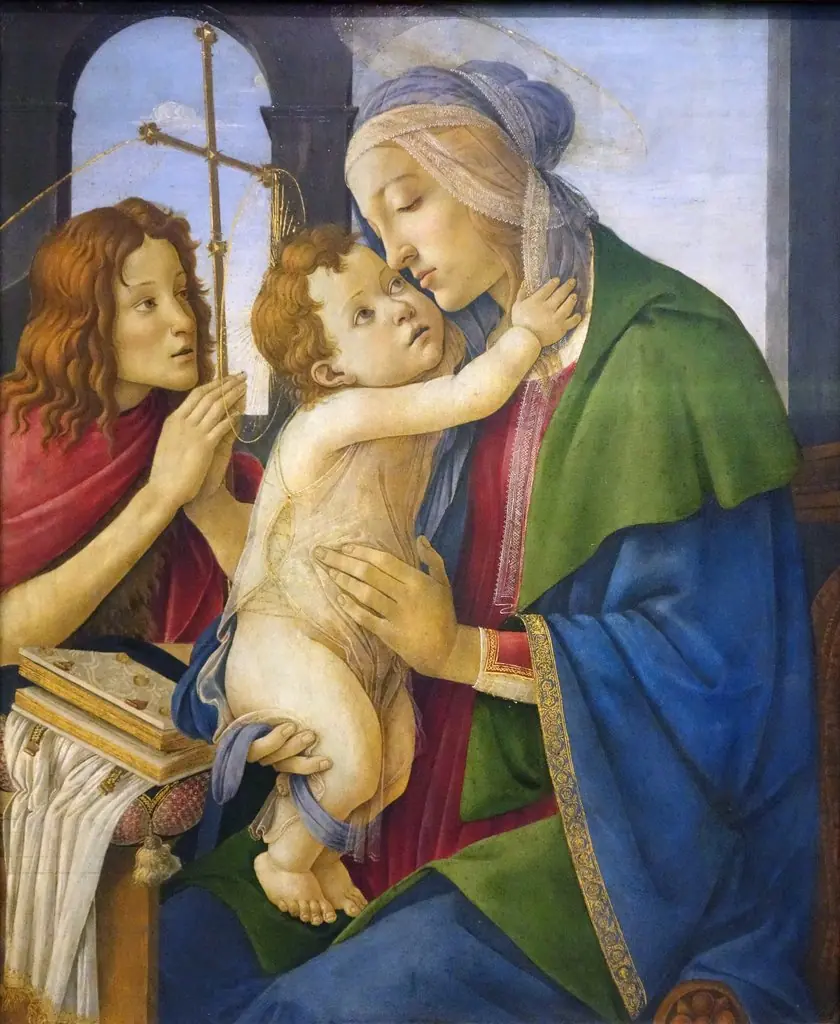 The Virgin and Child with the Young Saint John the Baptist
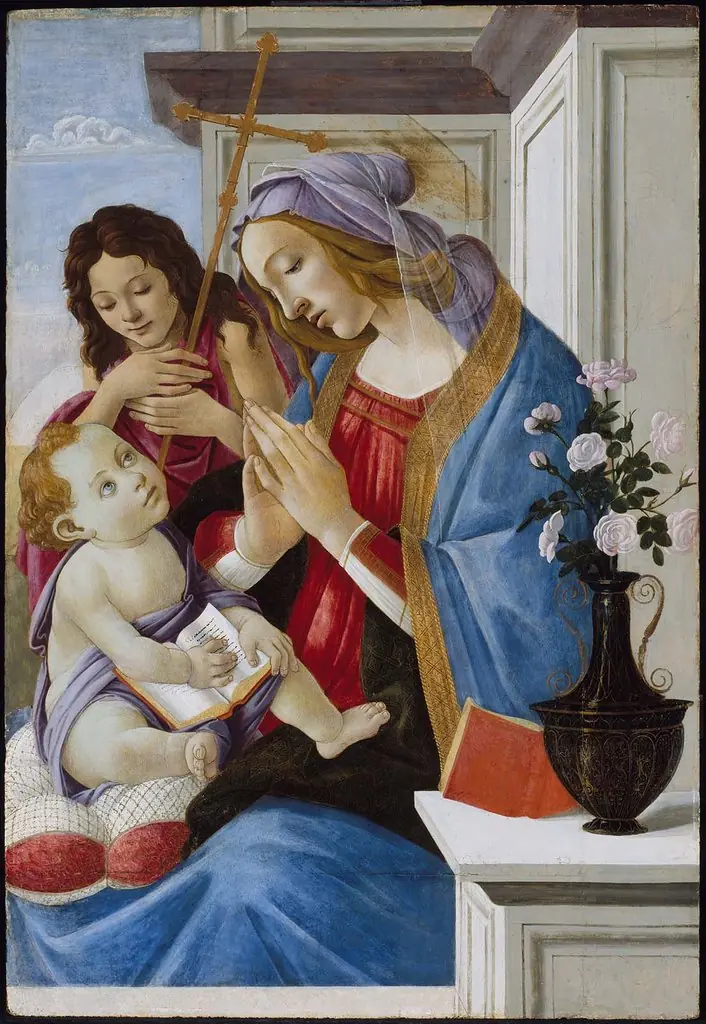 Virgin and Child with Saint John the Baptist
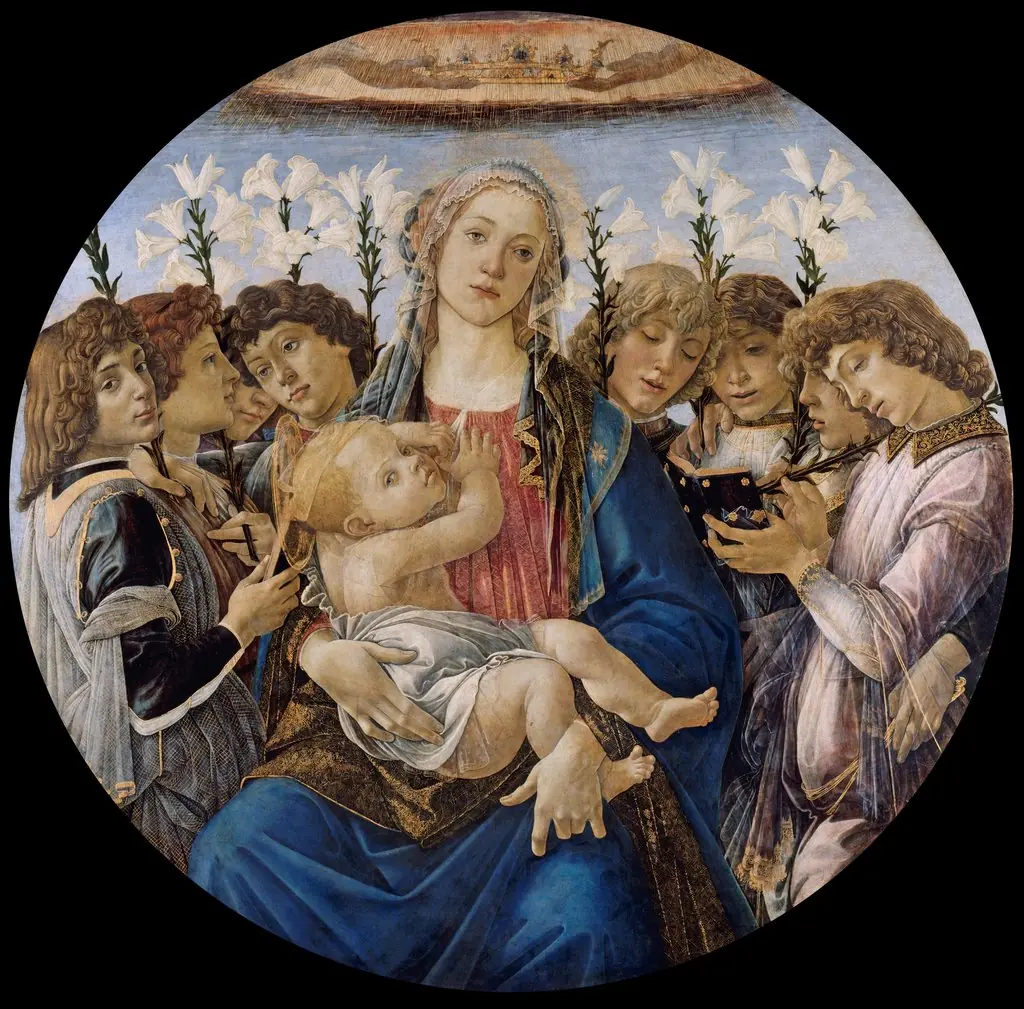 Mary with the Child and Singing Angels
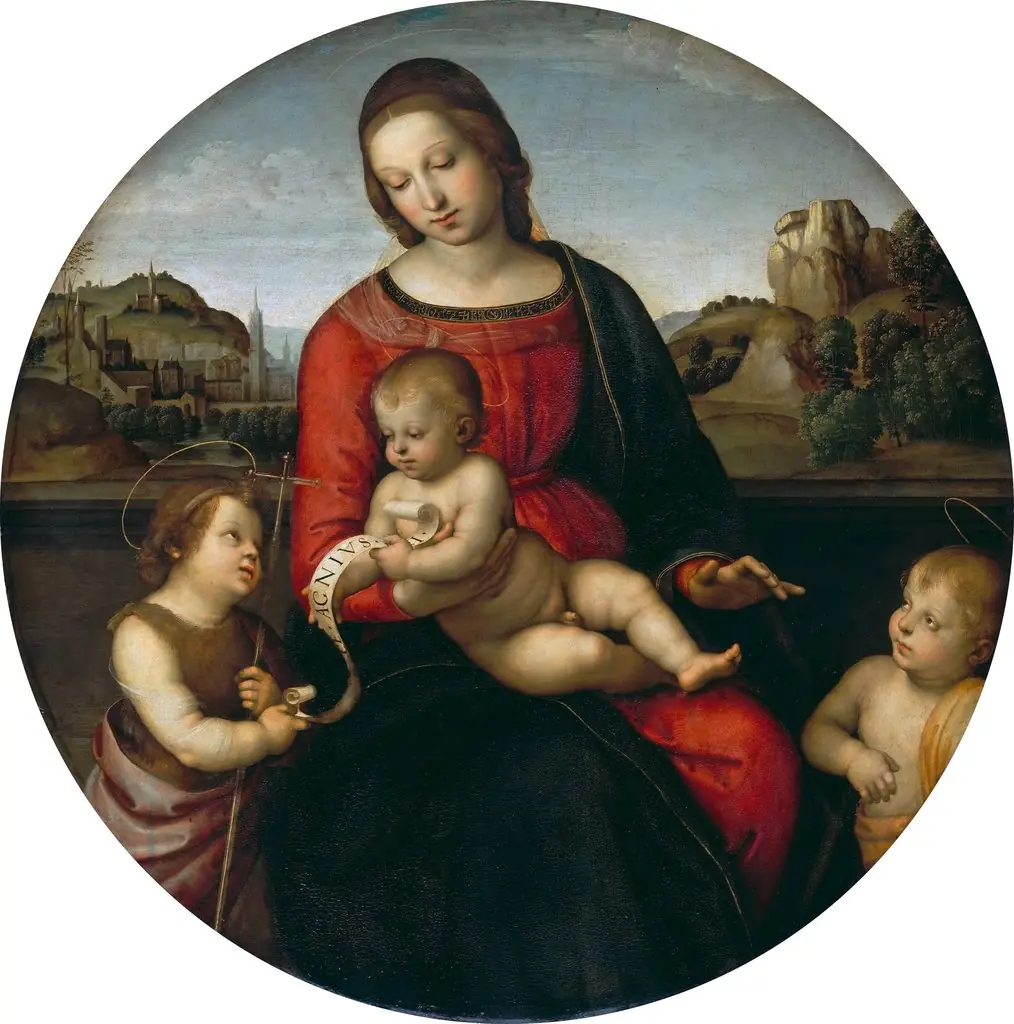 Terranuova Madonna
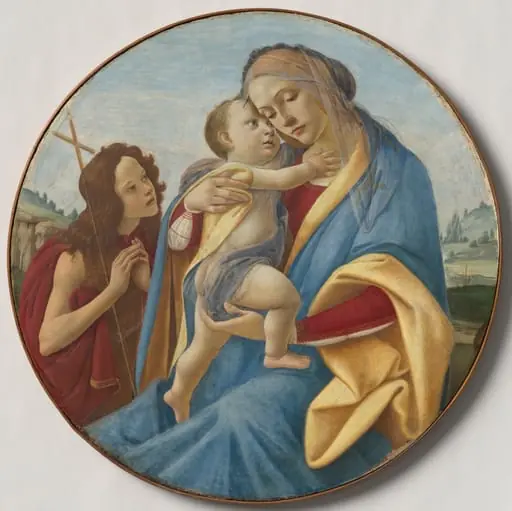 Virgin and Child with the Young Saint John the Baptist
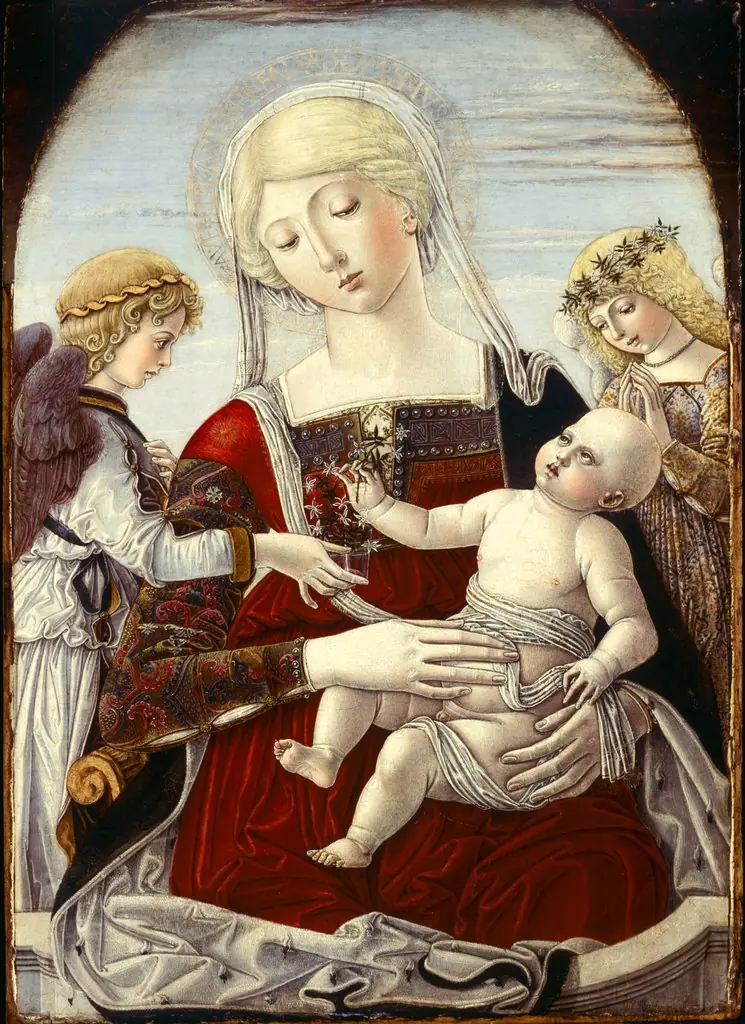 Virgin and Child with Angels