Artwork
Pallas and the Centaur
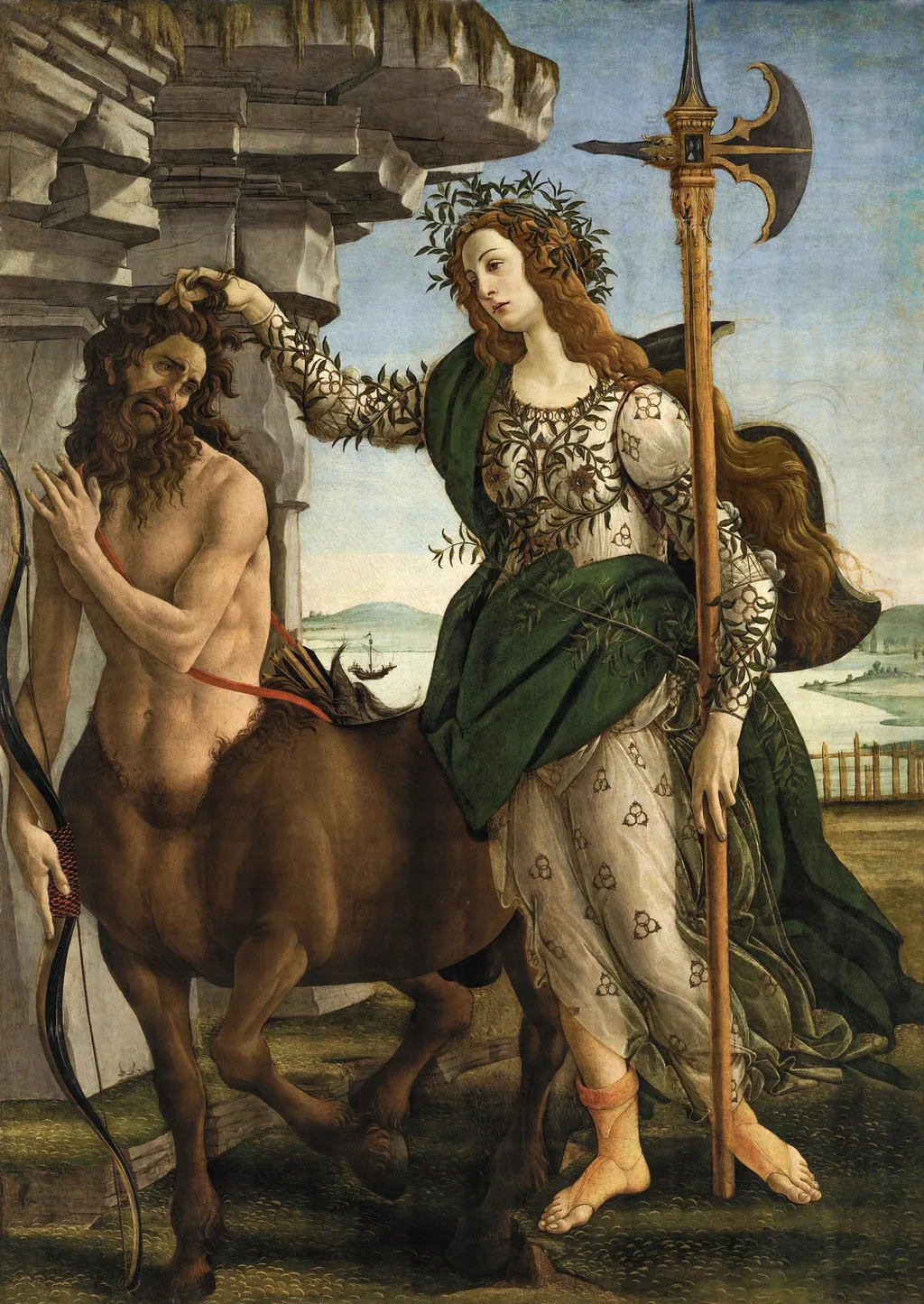
Pallas and the Centaur is an oil painting by the Early Renaissance artist Sandro Botticelli. It dates from 1492 and is held in the collection of the Uffizi Gallery.
About this work
Overview
Created around 1482, this large oil painting by Sandro Botticelli measures roughly 207 by 148 centimetres and is displayed in Florence’s Uffizi Gallery. The work depicts a life‑size encounter between a mythological centaur and a female figure, rendered in a format distinct from Botticelli’s more famous Primavera, yet often considered a thematic counterpart.
Subject & Meaning
The composition presents a centaur on the left, poised with a drawn bow, while a woman on the right grasps his hair and brandishes an ornate halberd.
The composition presents a centaur on the left, poised with a drawn bow, while a woman on the right grasps his hair and brandishes an ornate halberd. Early inventories identified the woman as Camilla, a forest‑raised huntress from Roman legend, whereas later records label her Minerva, the Roman goddess of wisdom. Scholars have also linked her to Florencia, an allegorical personification of the city of Florence, suggesting multiple layers of symbolic meaning.
Technique & Style
Executed in tempera on canvas, the painting showcases Botticelli’s meticulous handling of drapery and animal fur, with delicate folds in the woman’s garment and a finely rendered, hair‑covered centaur. The surface bears extensive later retouching, much of which has faded, yet the original chiaroscuro—contrasting light and shadow—remains evident, emphasizing the figures’ three‑dimensional presence against a distant, watery cityscape.
History & Provenance
First recorded in a 1499 inventory of the Medici collection, the work entered the Uffizi’s holdings where it remains today. The painting’s attribution to Botticelli has been consistent, though its identification of the female figure shifted from Camilla to Minerva between the 1499 and 1516 inventories, reflecting evolving interpretive frameworks within the Medici court.
Context
The piece reflects Renaissance interest in classical mythology, merging a heroic huntress or deity with the centaur—a symbol of untamed passion and primal force. The woman’s attire bears the Medici’s three‑ring emblem, linking the painting to the ruling family’s patronage and to Florence’s civic identity, while the distant cityscape underscores the work’s urban allegorical dimension.
Own this work as a print
Artist & collection

Artist
Sandro Botticelli was a Florentine painter who loved the drama of stories—myths, saints, and ancient tales.





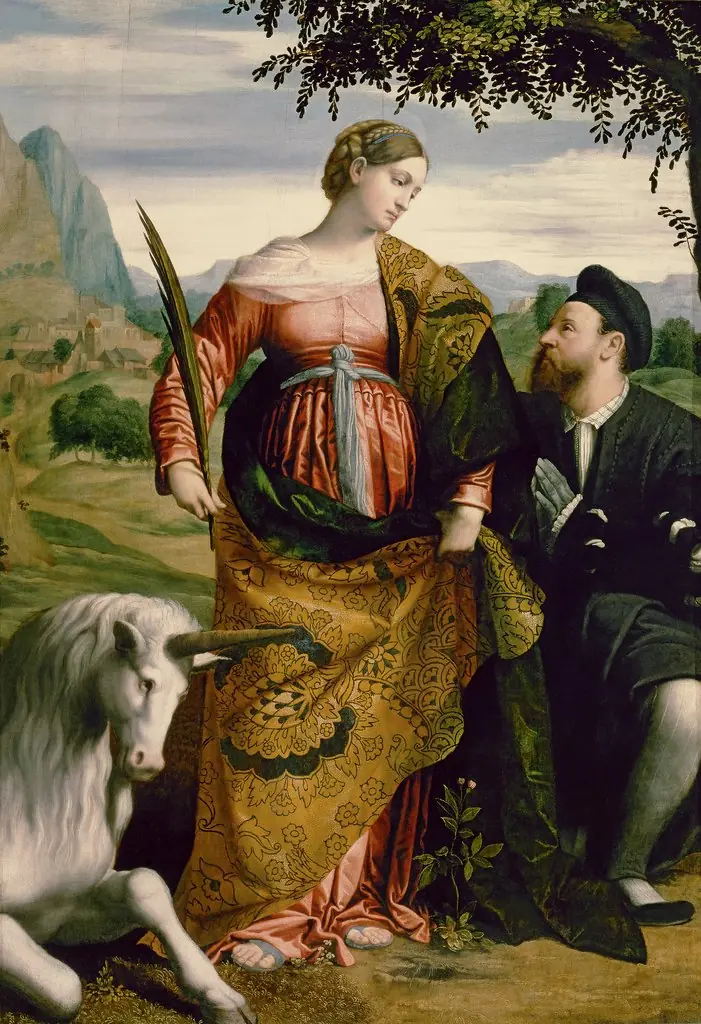 Saint Justina with the Unicorn, Venerated by a Patron
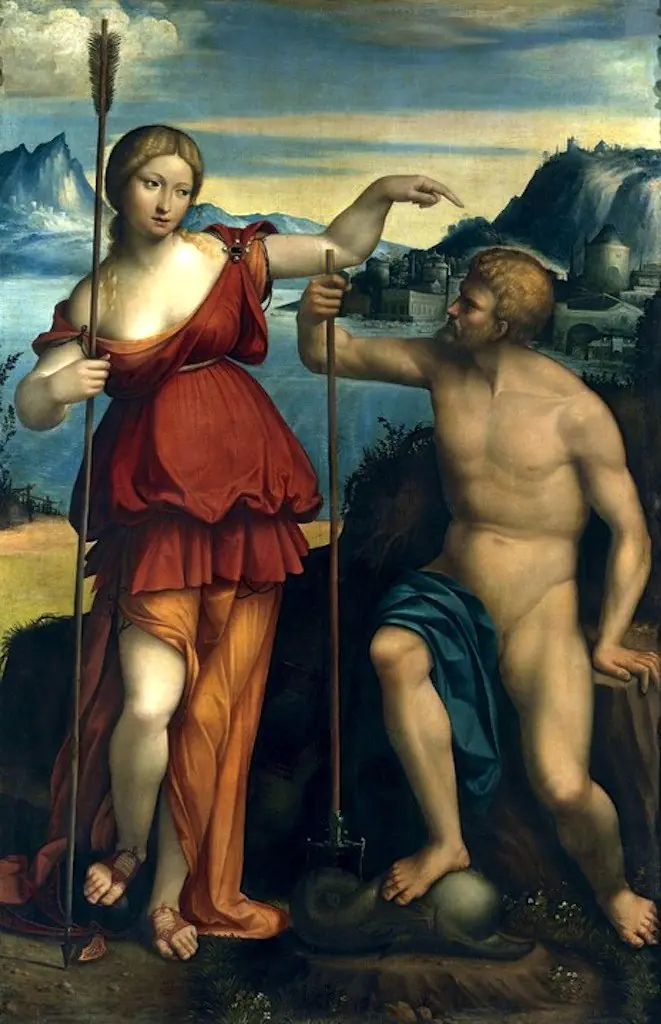 Poseidon and Athena battle for control of Athens
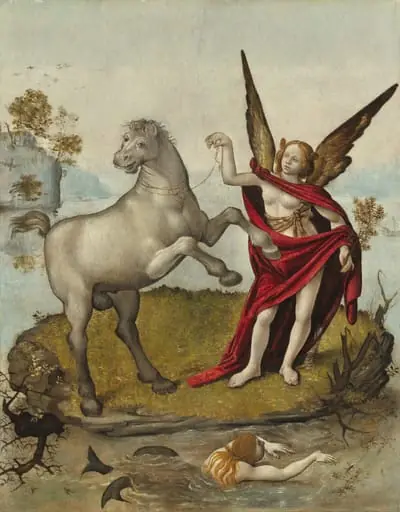 Allegory
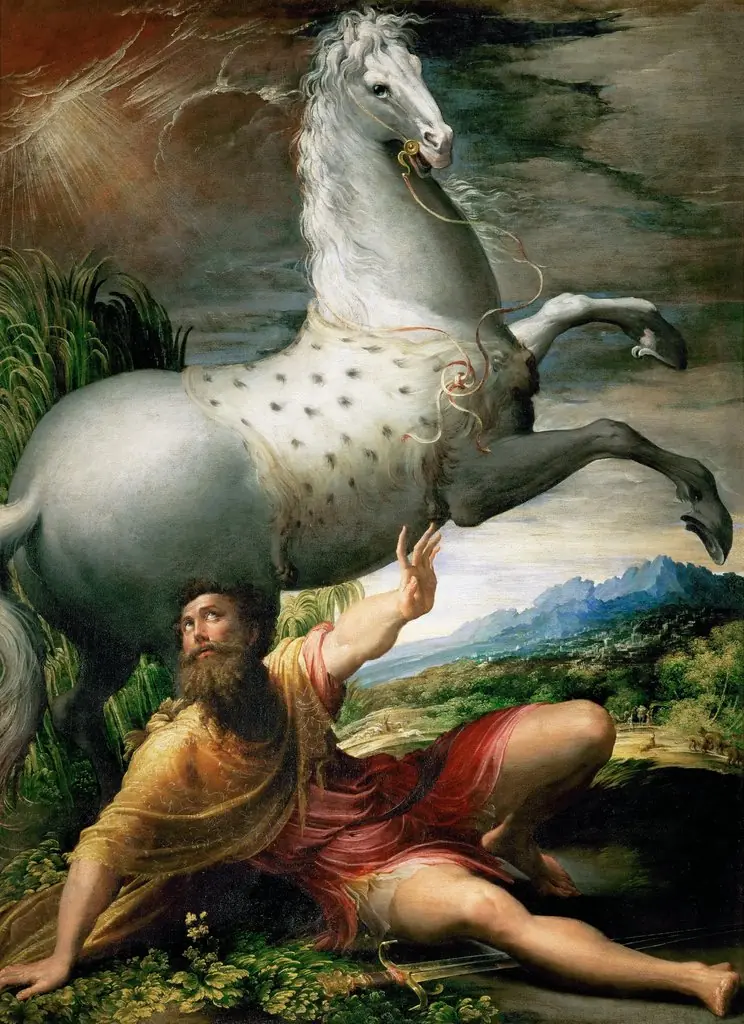 The Conversion of Saint Paul
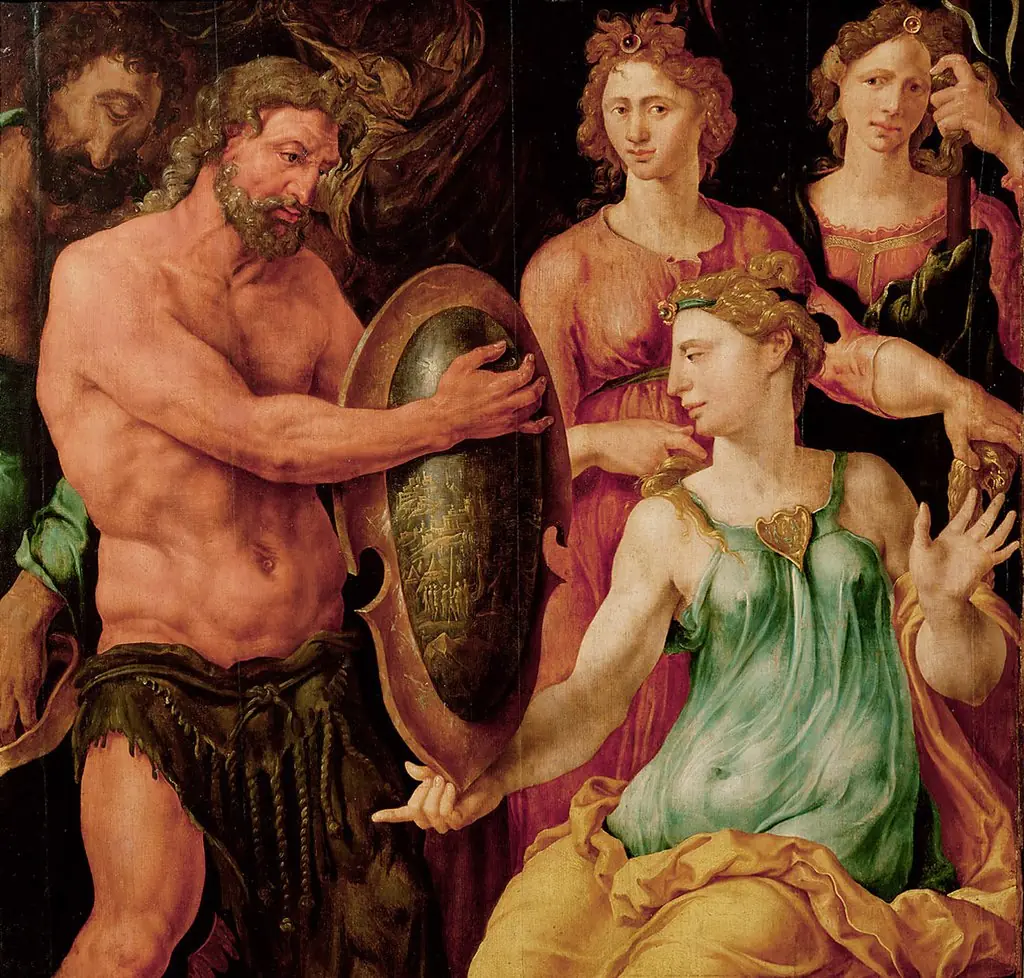 Vulcan hands Thetis the shield for Achilles
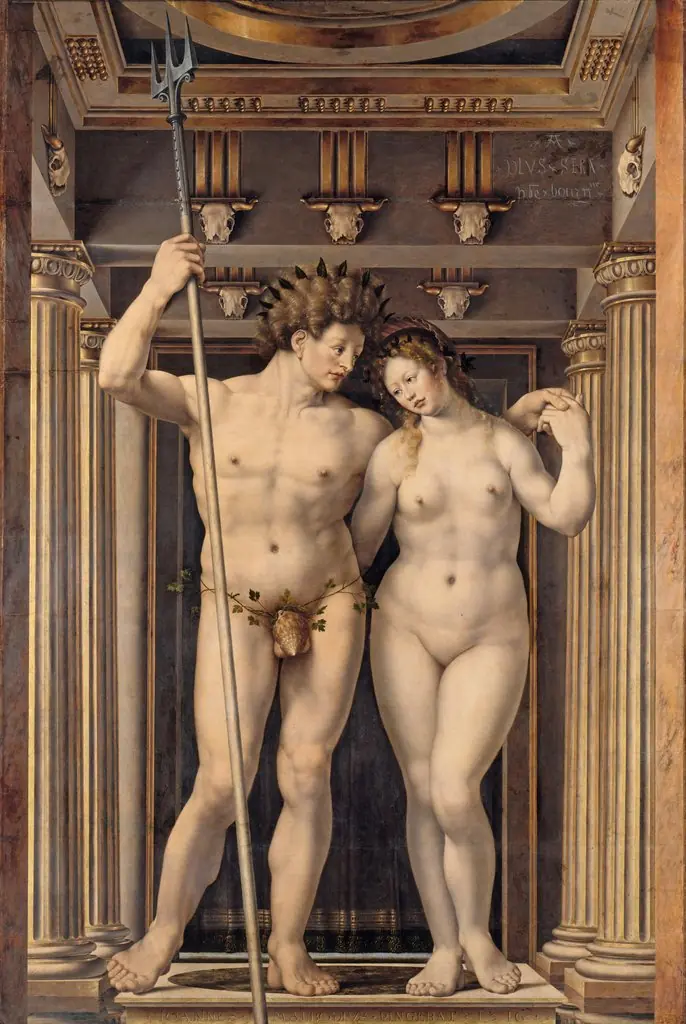 Neptune and Amphitrite
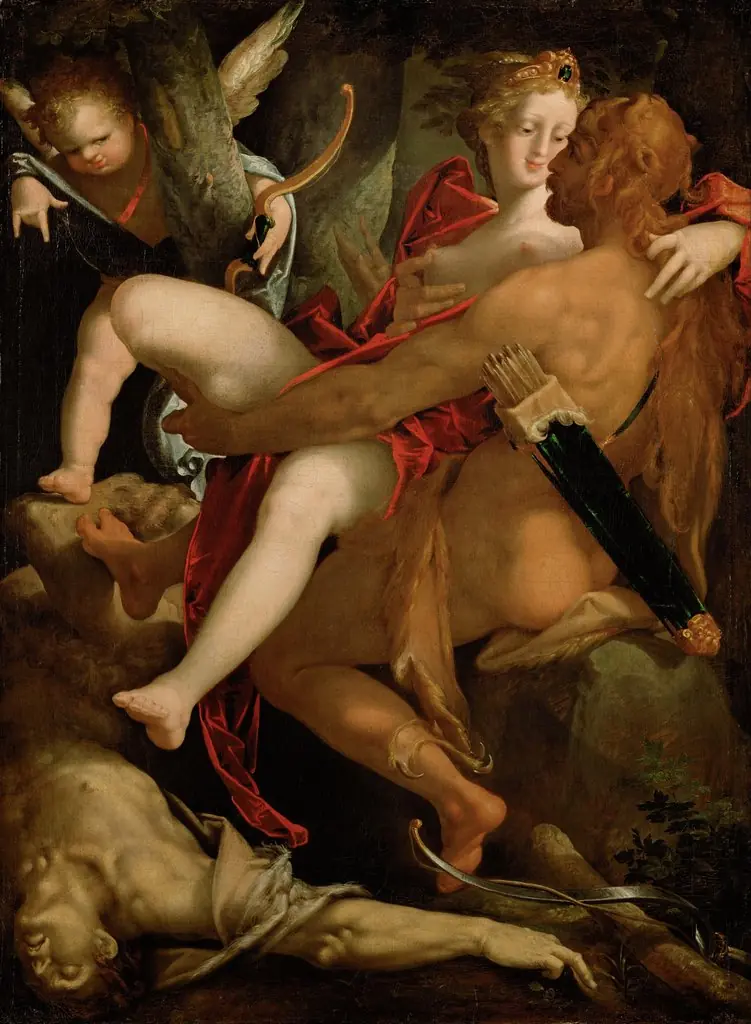 Hercules, Deianira, and Nessus
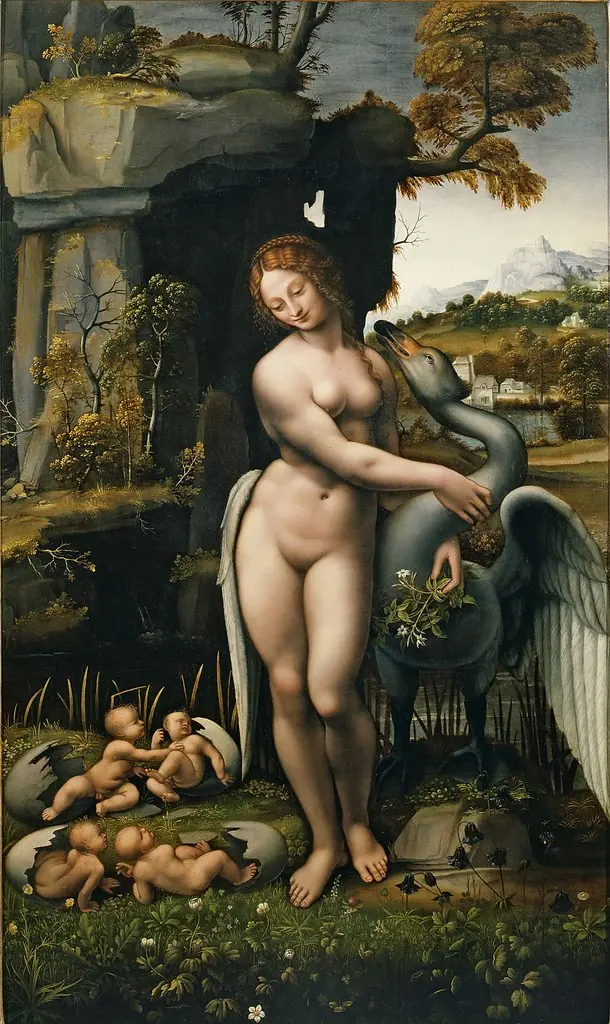 Leda and the Swan
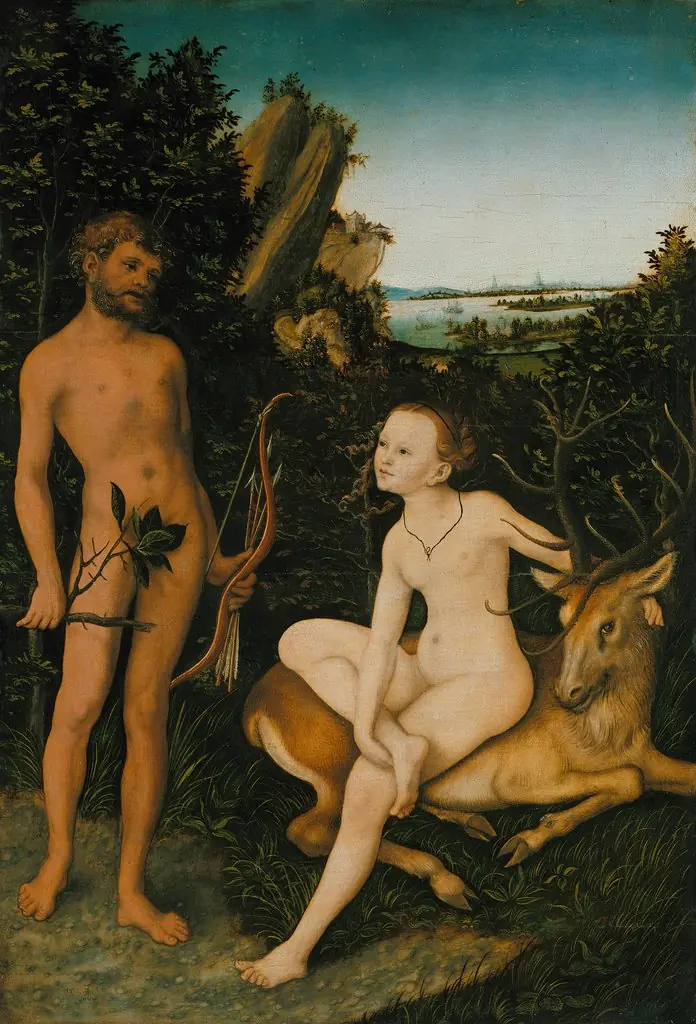 Apollo and Diana in forest landscape
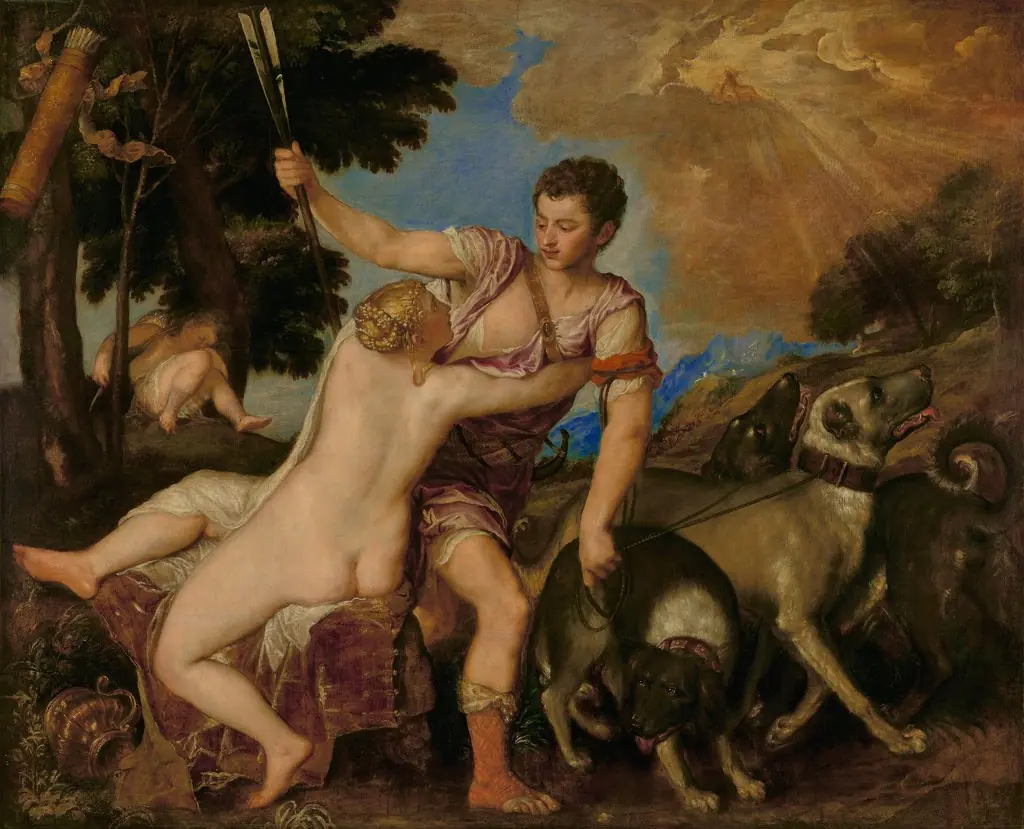 Venus and Adonis
 Venus and Adonis
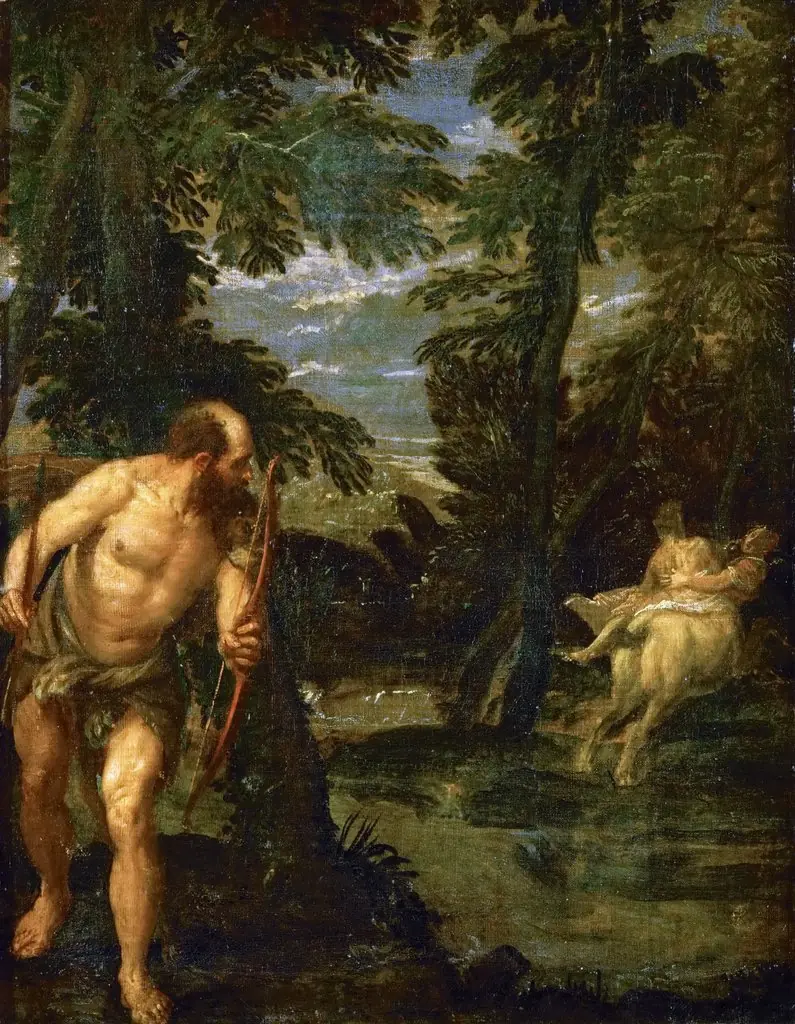 Hercules, Deianira and the Centaur Nessus