Artwork
The Adoration of the Christ Child
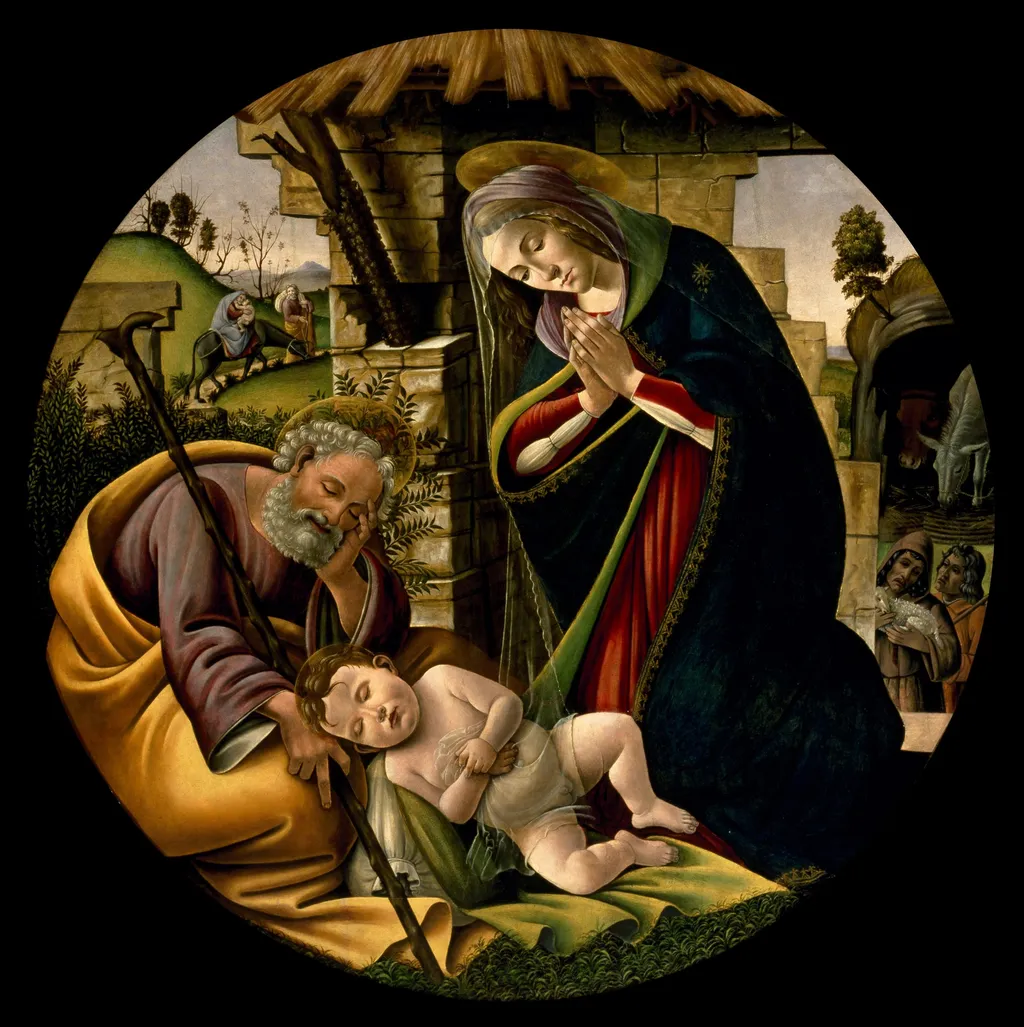
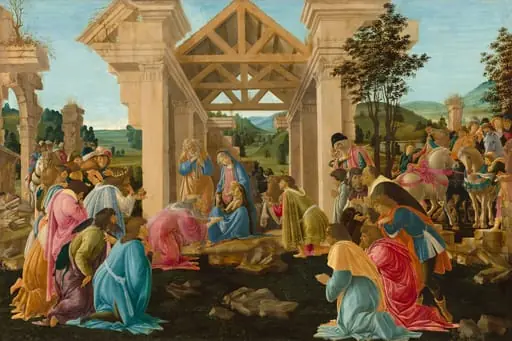
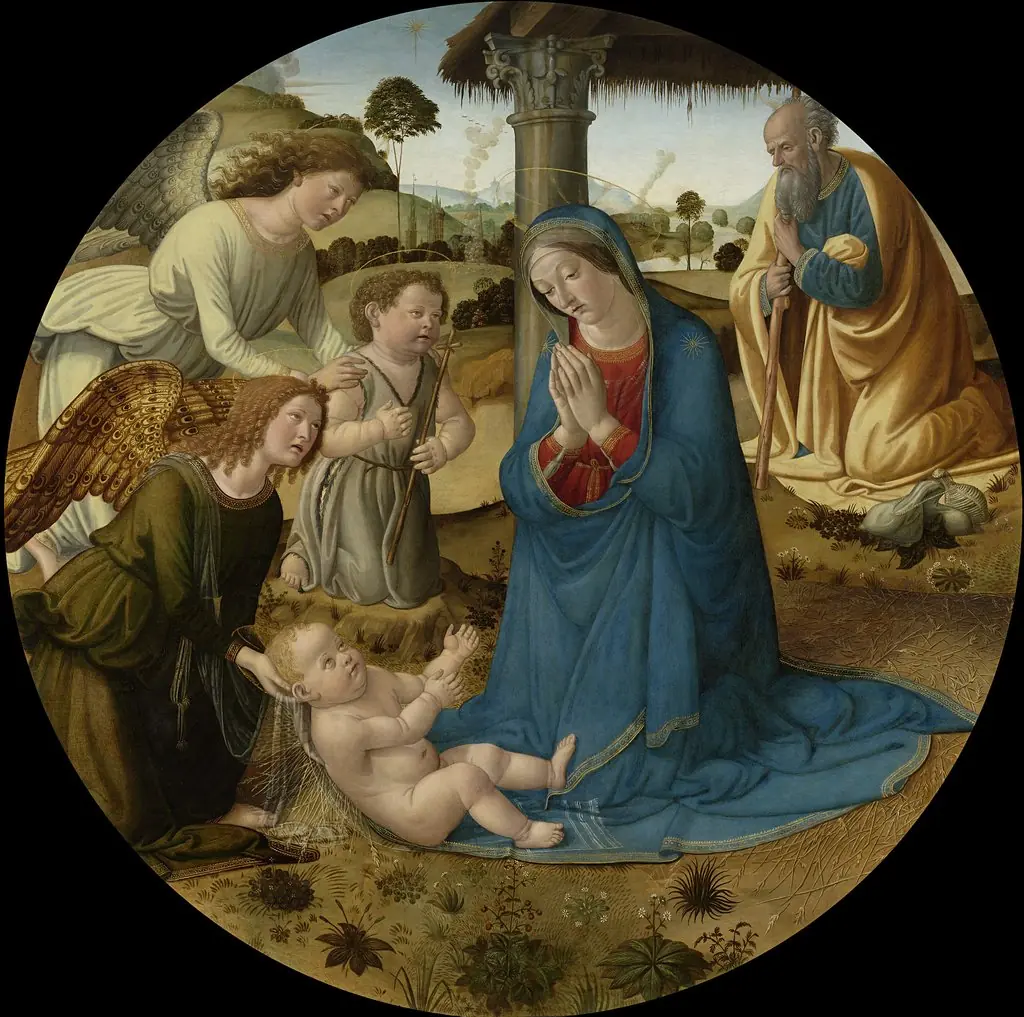
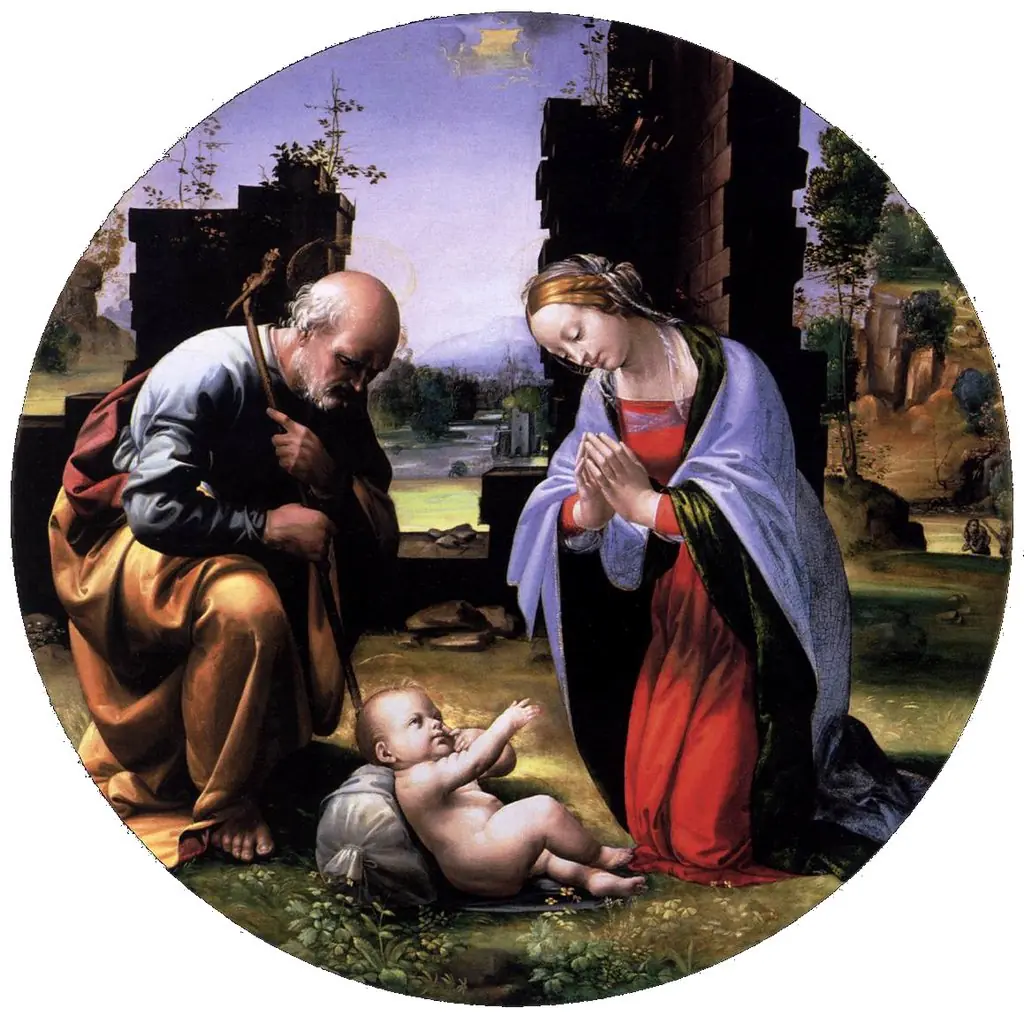
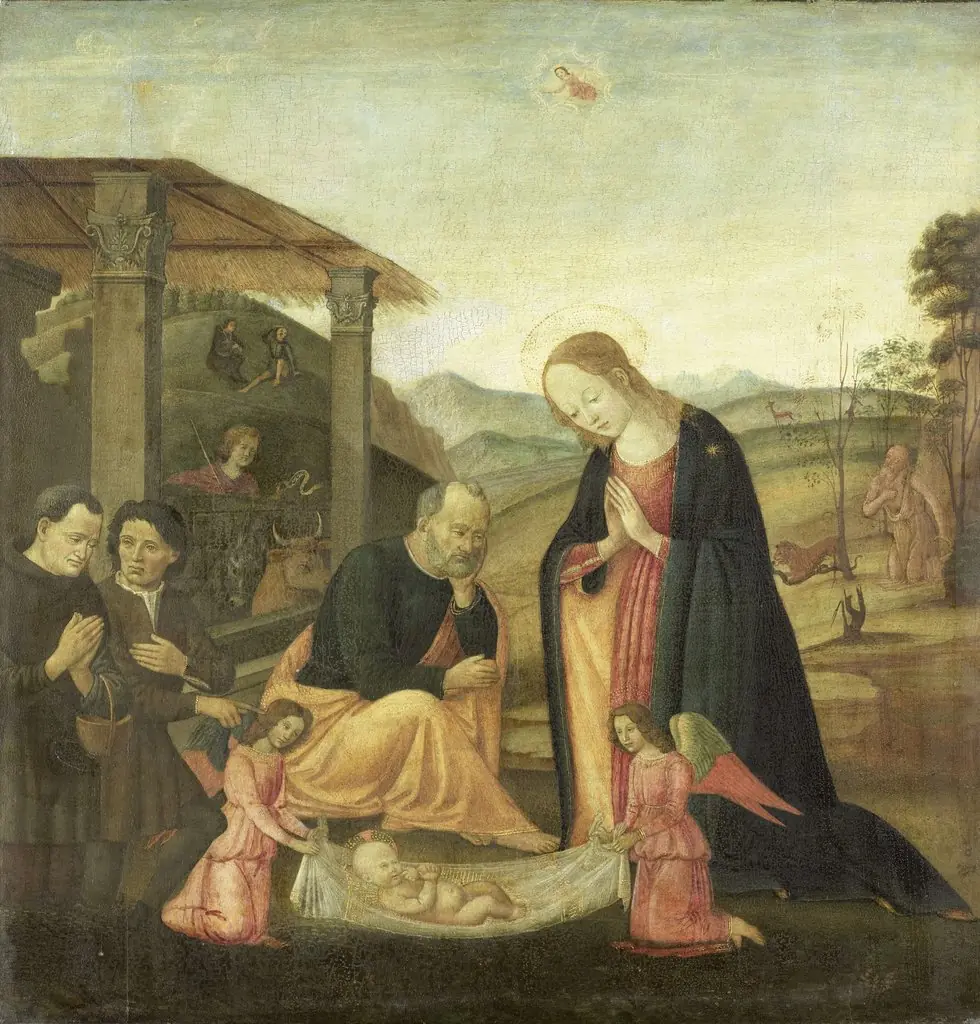
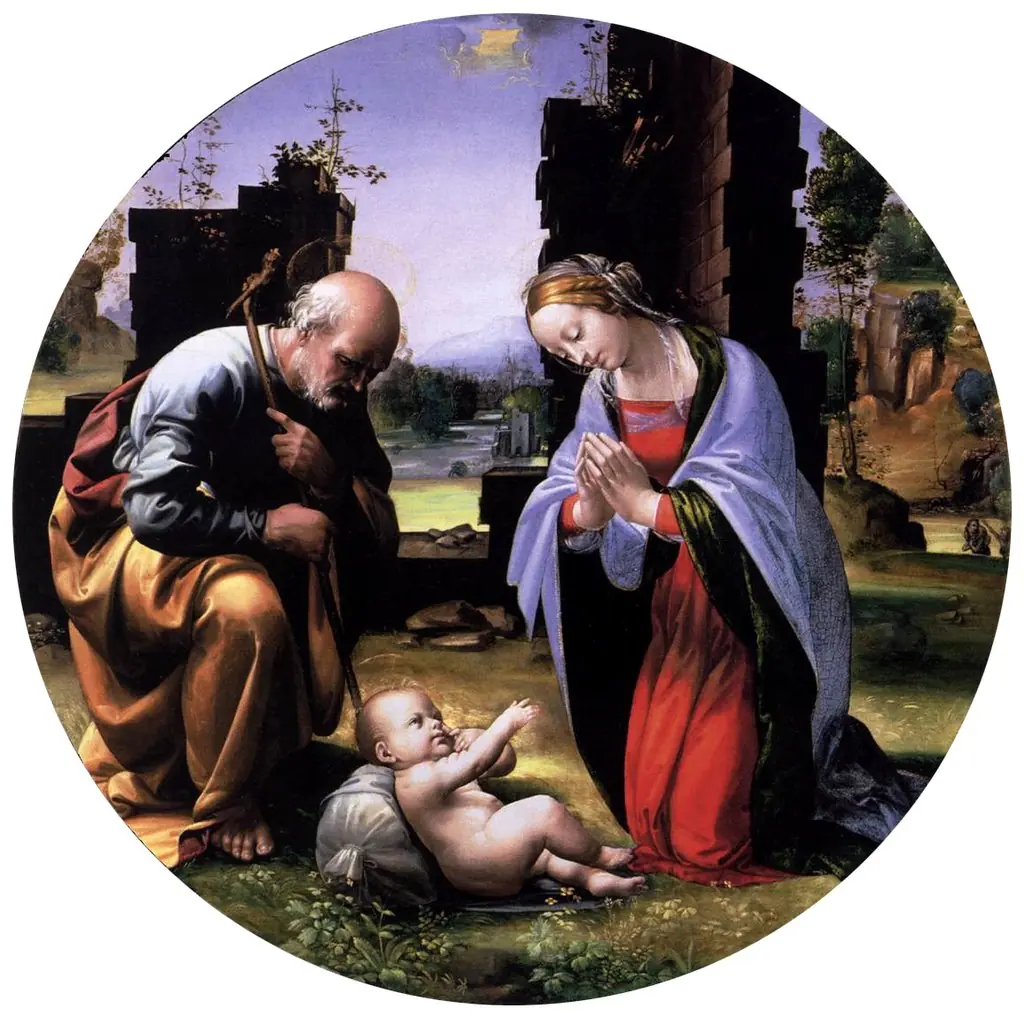
The Adoration of the Christ Child is an oil painting by the Early Renaissance artist Sandro Botticelli. It dates from 1500 and is held in the collection of the Museum of Fine Arts, Houston.
About this work
Overview
Painted around 1500 by Sandro Botticelli, this oil-on-panel work presents a quiet devotional scene centered on the infant Christ.
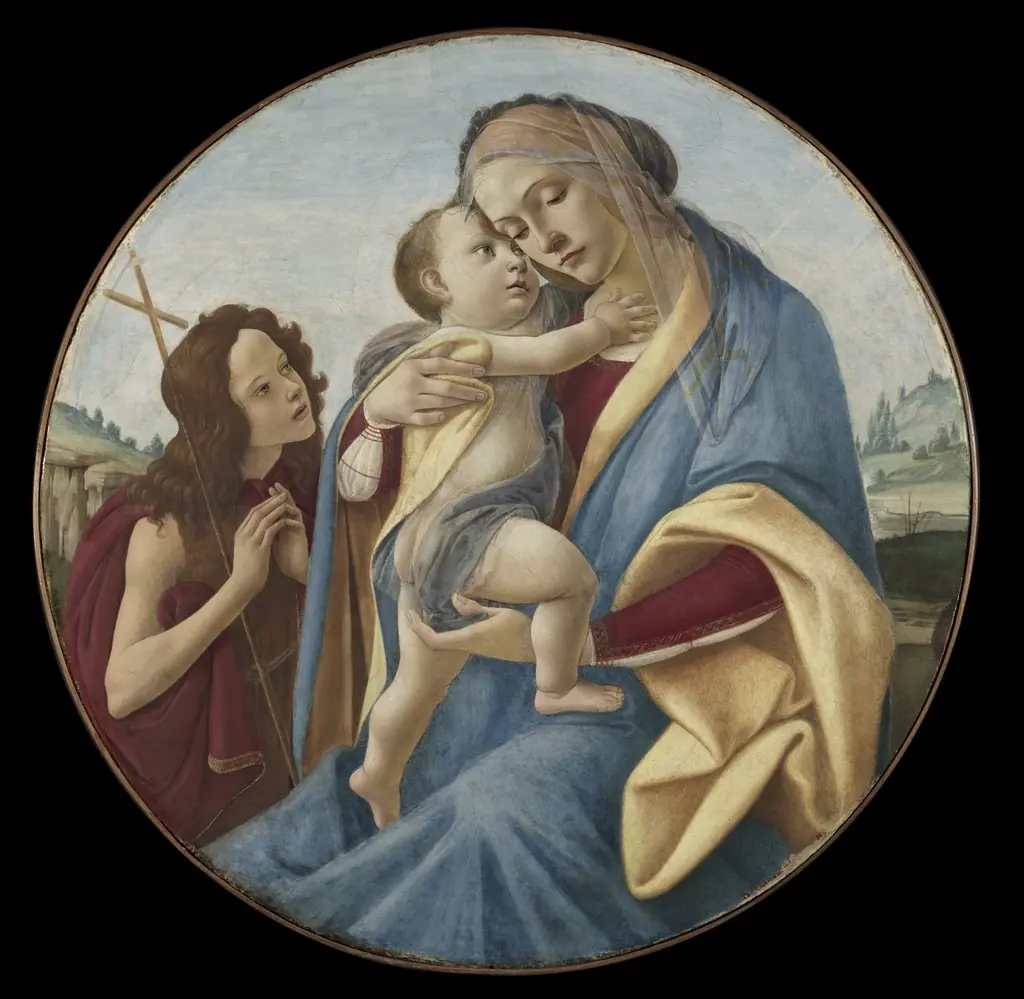
Painted around 1500 by Sandro Botticelli, this oil-on-panel work presents a quiet devotional scene centered on the infant Christ. Rendered in a circular format, the composition emphasizes intimacy and reverence. The figures are arranged within a modest interior, framed by architectural elements and a glimpse of an outdoor space. The painting’s scale and format suggest it was intended for private contemplation rather than public display.
Subject & Meaning
The scene portrays the Virgin Mary kneeling in prayer before the Christ Child, who lies on a green cloth, swaddled in white. Joseph, seated nearby, rests his head on his hand in a posture of quiet watchfulness. The absence of angels or celestial signs shifts focus to human devotion. The gesture of Mary’s prayer and Joseph’s weary stillness underscore themes of humility, guardianship, and the sacredness of ordinary moments in the Holy Family’s life.
Technique & Style
Botticelli employs oil paint with refined brushwork to render textures—fabric folds, stone surfaces, and the softness of swaddling cloth. The color palette is restrained: deep blues, muted greens, and warm earth tones dominate. The circular composition guides the viewer’s eye inward, reinforcing the painting’s meditative tone. Details are precise but not ornate, reflecting a move toward naturalism and emotional restraint characteristic of his later work.
History & Provenance
The painting entered the collection of the Museum of Fine Arts, Houston, in the 20th century, though its earlier ownership remains undocumented. It was likely created for private use, possibly in a domestic or monastic setting. No records of its commission or early history survive, but its intimate scale and devotional subject align with trends in Florentine religious art of the late 15th and early 16th centuries.
Context
Created during Botticelli’s later years, this work reflects a shift from the mythological grandeur of his earlier pieces toward more subdued religious themes. Influenced by the spiritual climate of Savonarola’s sermons in Florence, the painting emphasizes personal piety over spectacle. The inclusion of everyday details—like the thatched roof and distant figures—grounds the sacred in the tangible, aligning with emerging trends in devotional imagery.
Legacy
Though less widely known than Botticelli’s mythological works, this painting exemplifies his ability to convey spiritual depth through restraint. Its quiet composition and emotional nuance influenced later Renaissance devotional art, particularly in private settings. Today, it stands as a testament to the artist’s evolving focus on inner devotion, offering insight into the spiritual life of early 16th-century Florence.
Artist & collection

Artist
Sandro Botticelli was a Florentine painter who loved the drama of stories—myths, saints, and ancient tales.