Artwork
Portrait of Ramon Casas
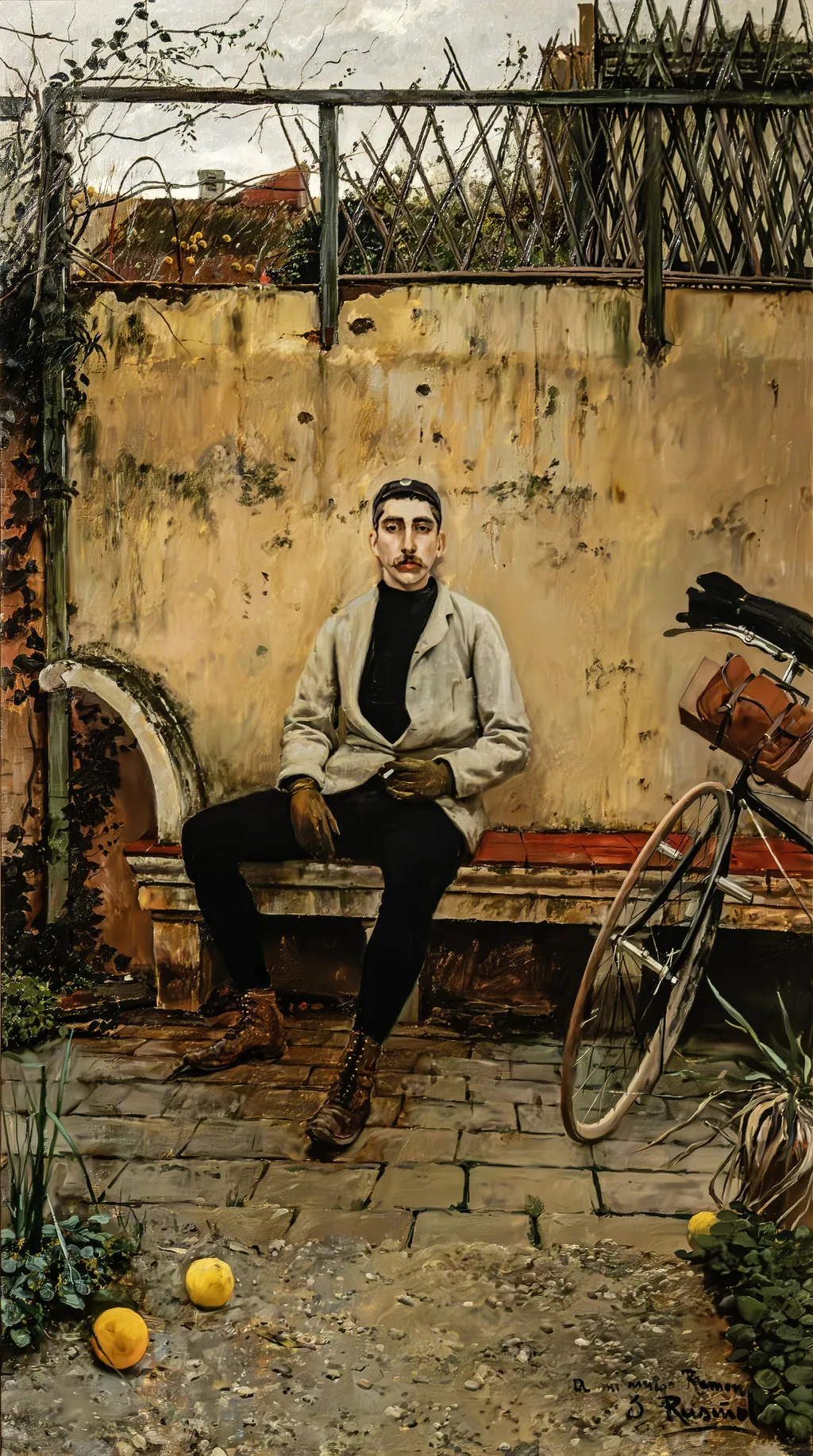
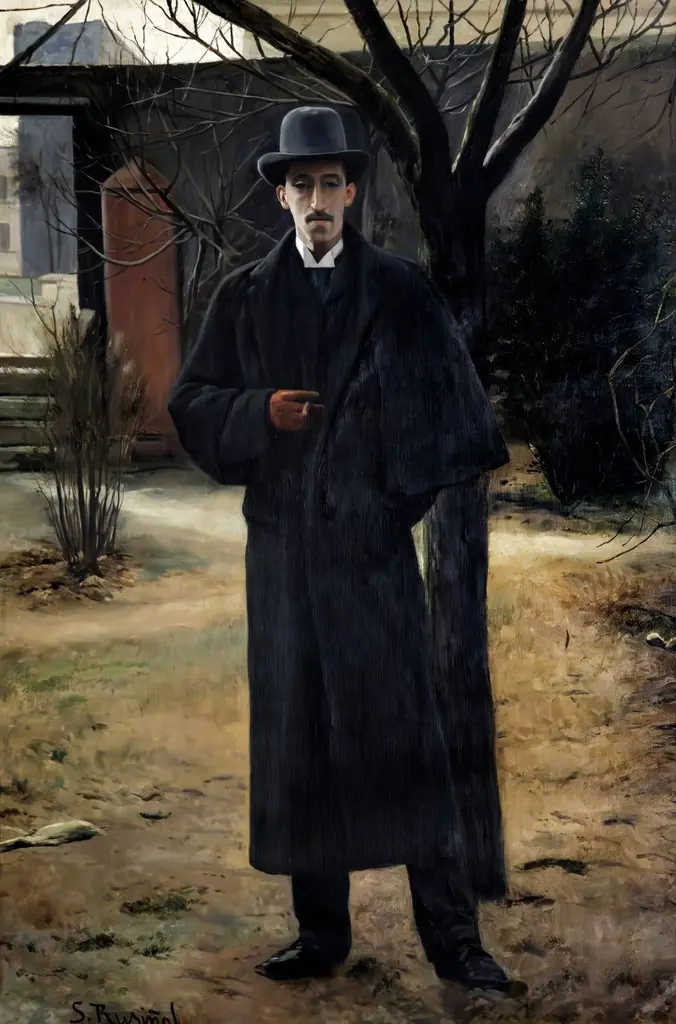
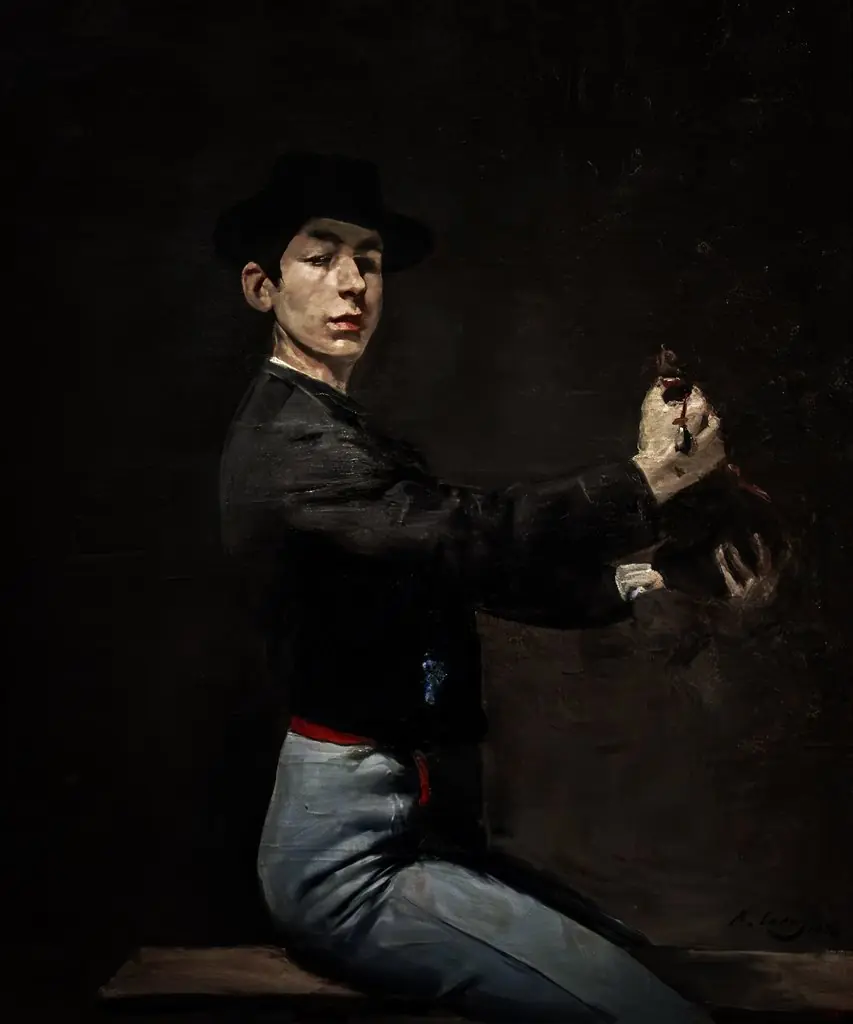
Portrait of Ramon Casas is an unspecified painting by the Post-Impressionist artist Santiago Rusiñol i Prats. It dates from 1896 and is held in the collection of the Museu Nacional d'Art de Catalunya.
About this work
Overview
Painted in 1896 by Santiago Rusiñol i Prats, this portrait captures his fellow Catalan artist Ramon Casas in a moment of quiet presence.
Painted in 1896 by Santiago Rusiñol i Prats, this portrait captures his fellow Catalan artist Ramon Casas in a moment of quiet presence. Executed in a post-impressionist manner, the work reflects the shared artistic circle of Barcelona’s modernisme movement. It is part of the permanent collection at the Museu Nacional d'Art de Catalunya, where it stands as a testament to the personal and cultural ties among Catalan intellectuals of the era.
Subject & Meaning
Ramon Casas, a central figure in Catalan cultural life, is depicted seated on a simple bench, gazing directly at the viewer. His attire—a white jacket and dark trousers—suggests an informal, everyday setting rather than formal portraiture. The composition conveys a sense of personal stillness, avoiding theatricality. The surrounding elements, including lemons and foliage, subtly ground the figure in a domestic, Mediterranean context, reinforcing a quiet intimacy between subject and observer.
Technique & Style
Rusiñol employed loose, expressive brushwork and a restrained palette of earth tones with accents of white and green. The background—a weathered wall and rusted fence—is rendered with textured strokes that emphasize materiality over detail. Light falls unevenly across the figure, creating subtle contrasts that enhance the sense of depth without artificial drama. The composition avoids symmetry, favoring a naturalistic arrangement that mirrors the spontaneity of a candid moment.
History & Provenance
The painting remained within the circle of Catalan artists and collectors after its completion. It entered the Museu Nacional d'Art de Catalunya’s collection in the early 20th century, likely through institutional acquisition or donation from a member of the modernisme network. Its preservation reflects the museum’s early commitment to documenting the region’s artistic identity, particularly the interconnected lives of its leading cultural figures.
Context
Created during the height of modernisme, the portrait reflects a broader cultural shift in Catalonia toward introspective, individual expression. Rusiñol and Casas were not only colleagues but collaborators in journals, theater, and exhibitions that sought to define a distinct Catalan artistic voice. This portrait, devoid of grandeur, aligns with the movement’s interest in everyday life and personal authenticity over academic convention.
Legacy
The portrait endures as a quiet record of mutual respect between two key figures of Catalan modernisme. It offers insight into the personal dynamics of an artistic community that valued intellectual exchange as much as aesthetic innovation. While not widely reproduced, it remains a significant reference point for understanding the intimate, non-monumental side of late 19th-century Catalan art.
Own this work as a print
Artist & collection
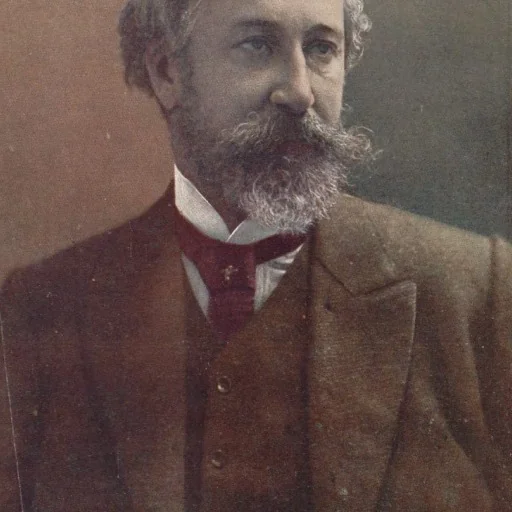
Artist
Santiago Rusiñol i Prats (Catalan: , Spanish: ; Barcelona 25 February 1861 – Aranjuez 13 June 1931) was a Spanish painter, poet, journalist, collector and playwright.