Artwork
Gun Carriages, France
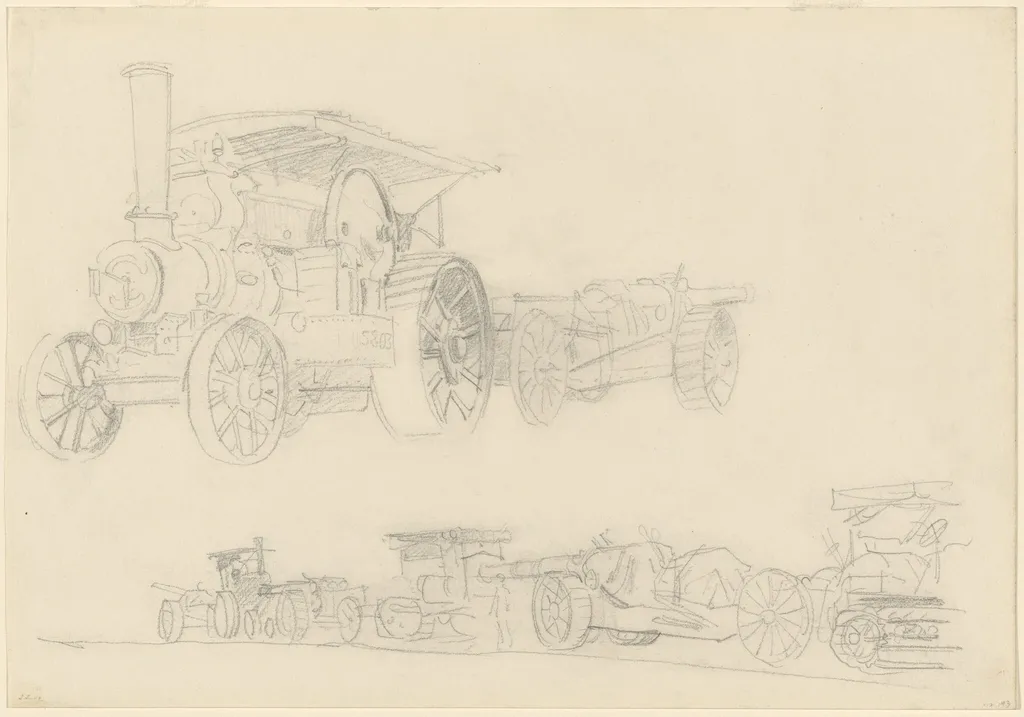
Gun Carriages, France is a graphite drawing by John Singer Sargent. It dates from 1918 and is held in the collection of the National Gallery of Art.
About this work
Check out Sargent, John Singer next time you’re at the National Gallery of Art, Washington.
You see a detailed graphite drawing of early vehicles. A steam engine with huge wheels and a tall funnel stands out. A train car and some smaller carts fill the background.
Sargent drew this in 1918 near the end of World War I. He focused on the machinery’s tight lines and shadows. The drawing shows how important these engines were for moving supplies.
Check out Sargent, John Singer next time you’re at the National Gallery of Art, Washington.
Overview
John Singer Sargent’s 1918 graphite drawing, titled “Gun Carriages, France,” records a cluster of early industrial vehicles. Rendered on wove paper, the composition centers on a massive steam engine with oversized wheels and a tall, funnel‑shaped chimney, while a railway carriage and smaller carts occupy the surrounding space.
Subject & Meaning
The work documents the mechanical apparatus that underpinned wartime logistics, emphasizing the scale and solidity of the engines that transported materiel across the French front. By isolating the machinery from human figures, Sargent draws attention to the autonomous power of industrial technology in the final year of World War I.
Technique & Style
Executed entirely in graphite, the drawing relies on precise line work and subtle tonal shading to convey the heft of metal and the play of light on curved surfaces. Sargent’s handling of tight, intersecting lines creates a sense of structural clarity, while gradated shadows suggest depth without resorting to cross‑hatching.
History & Provenance
Created near the end of the Great War, the piece entered the collection of the National Gallery of Art in Washington, D.C., where it remains on view. Its acquisition reflects the institution’s interest in Sargent’s lesser‑known graphic output alongside his more celebrated portraits.
Context
In 1918, the Allied supply chain depended heavily on rail and steam power, especially in the devastated landscapes of northern France. Sargent’s drawing captures a moment when such machinery was both a practical necessity and a symbol of modern warfare’s industrial scale.
Artist & collection
Artist
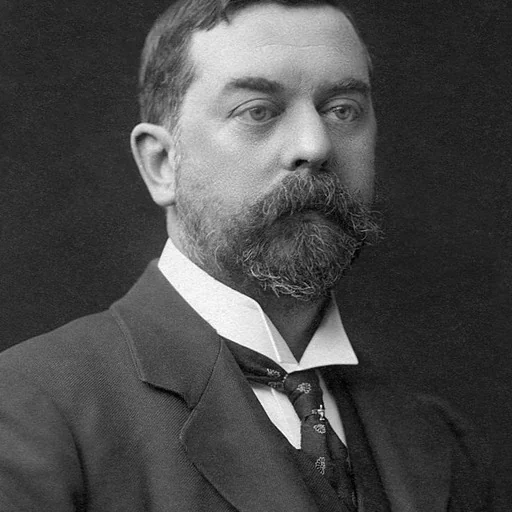
John Singer Sargent (; January 12, 1856 – April 15, 1925) was an American expatriate artist, considered the "leading portrait painter of his generation" for his evocations of Belle Époque and Edwardian-era luxury.

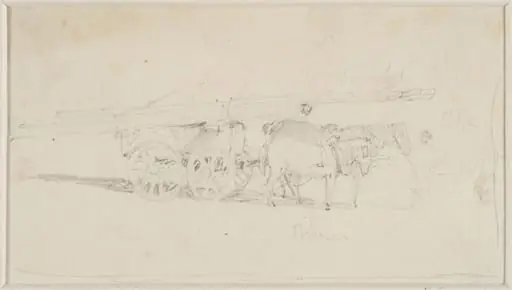 Study of two horses drawing a cart laden with timber
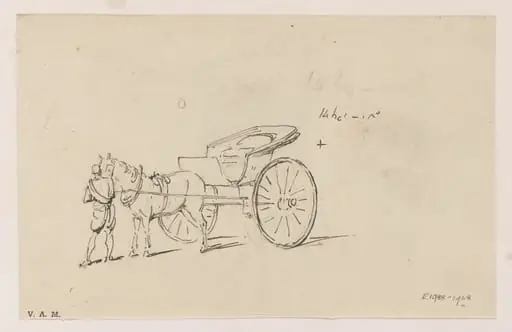 An Indian figure with a horse and carriage
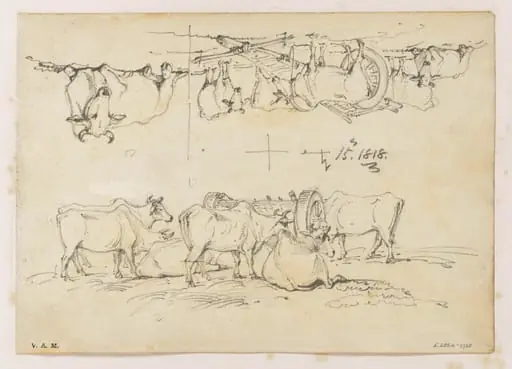 Two drawings of cattle surrounding a bullock cart
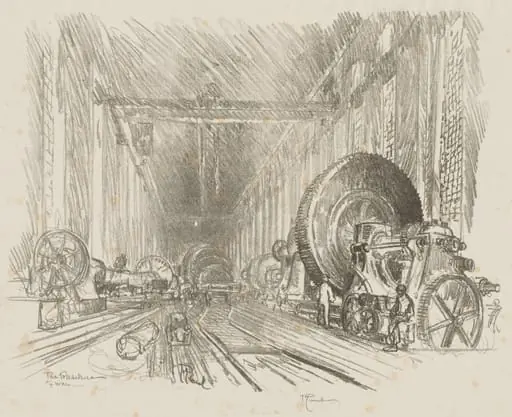 English War Work: The Basilica of War
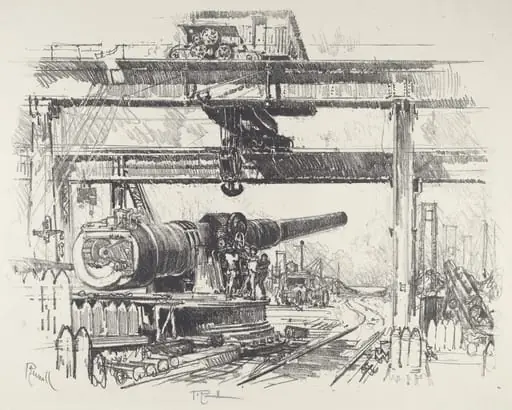 Gun-Testing
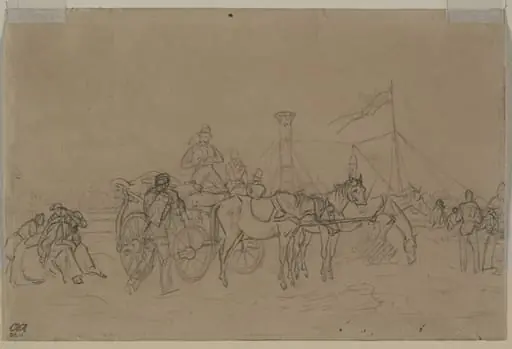 Passengers for Rhine Steamer (verso)
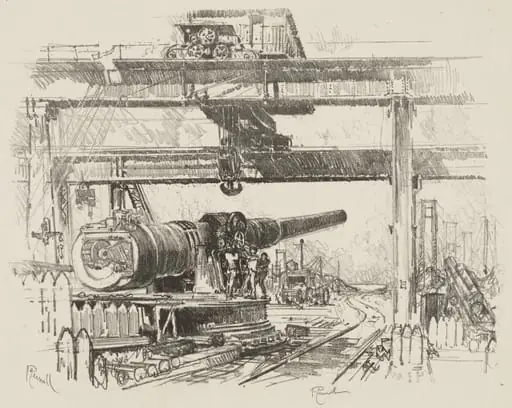 English War Work: Gun-Testing
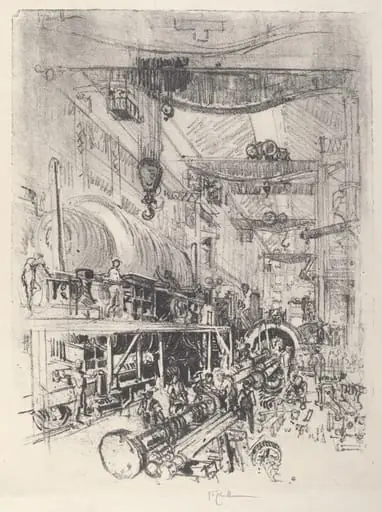 Making a Turbine Engine
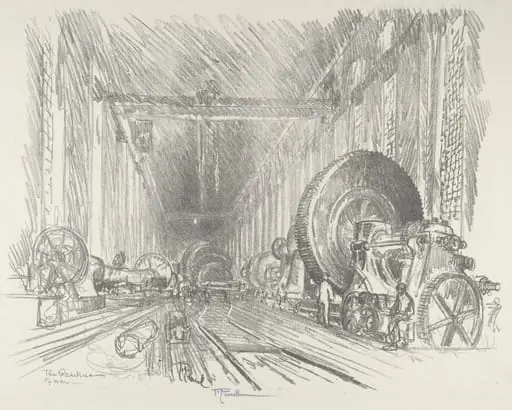 The Basilica of War
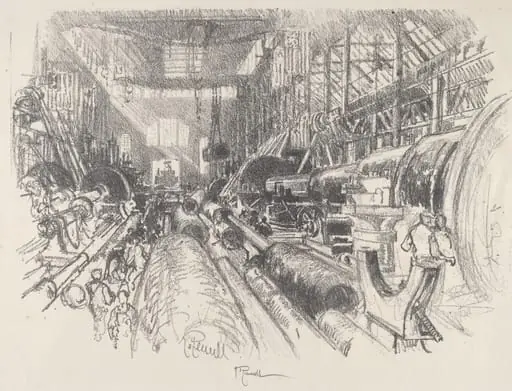 The Biggest Lathe in the World