Artwork
The Basilica of War
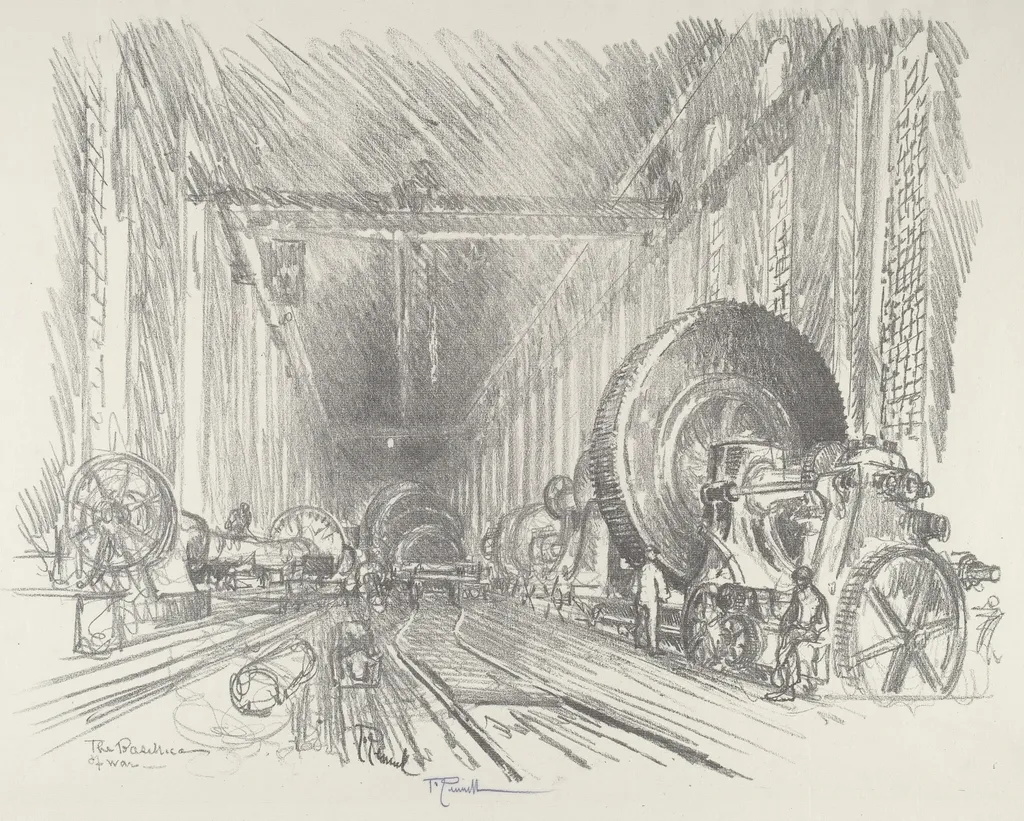
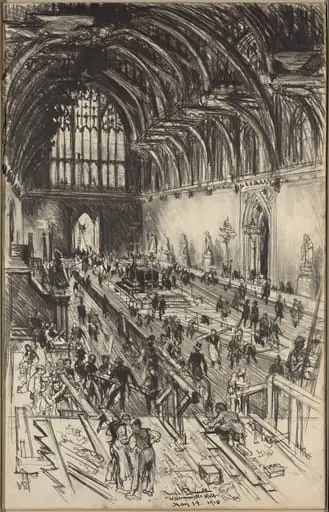
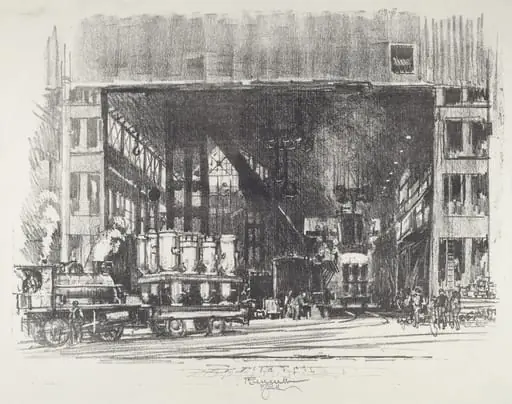
The Basilica of War is an ink print by Joseph Pennell. It dates from 1916 and is held in the collection of the National Gallery of Art.
About this work
Overview
The print reflects his longstanding interest in urban and industrial subjects, rendered with a spontaneous, sketchlike quality.
Joseph Pennell produced *The Basilica of War* in 1916 as a lithograph during the first years of World War I. The print reflects his longstanding interest in urban and industrial subjects, rendered with a spontaneous, sketchlike quality. Though traditionally associated with architectural and transportation themes, this work channels wartime urgency through its composition and title, marking a shift in his subject matter toward the conflict’s human and structural toll.
Subject & Meaning
The scene depicts a crowded railway station, its platforms filled with waiting figures and heavy, dark buildings looming overhead. The title evokes a sacred space repurposed by war, suggesting the station as a modern cathedral of mobilization. The absence of overt violence contrasts with the weight of implied movement and departure, framing transit as both logistical necessity and emotional rupture in wartime society.
Technique & Style
Pennell employed lithography to achieve rapid, expressive lines that mimic preparatory sketches. The composition relies on strong tonal contrasts and loose, gestural marks rather than fine detail, emphasizing motion and atmosphere over precision. The curved tracks receding into the distance create depth, while the heavy architecture anchors the scene in somber realism. His signature appears discreetly, consistent with his practice of understated authorship.
History & Provenance
Created during Pennell’s time in Europe as a war correspondent, the lithograph emerged from his direct observation of wartime infrastructure. He had previously studied under James Lambdin and Thomas Eakins and was influenced by Whistler’s tonal approach. Though not widely exhibited at the time, the work entered institutional collections in the decades following its creation, valued for its documentary immediacy and stylistic economy.
Context
In 1916, as industrialized warfare reshaped European society, transportation hubs became critical nodes of military logistics. Pennell’s focus on the railway station reflects broader cultural attention to the machinery of war beyond the battlefield. His choice of lithography—accessible and reproducible—aligned with the era’s demand for timely visual commentary, positioning him among artists documenting the war’s hidden rhythms.
Legacy
Pennell’s *The Basilica of War* stands as an early example of modern war reportage in print form, bridging traditional printmaking with documentary realism. Its informal style and symbolic title influenced later artists who sought to convey the quiet gravity of wartime infrastructure. Though less celebrated than his architectural works, this piece endures as a restrained yet potent record of mobilization’s human dimension.
Own this work as a print
Artist & collection
Artist
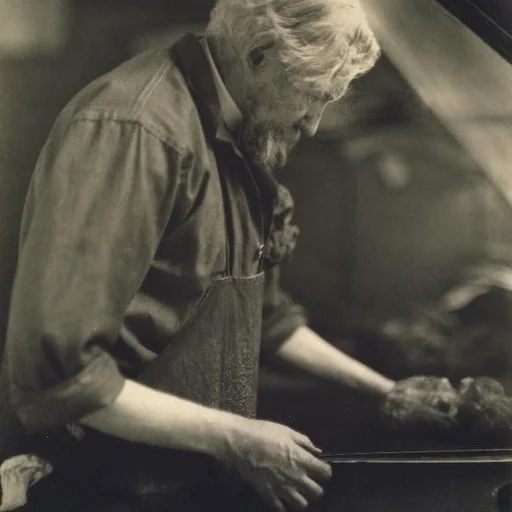
Joseph Pennell (July 4, 1857 – April 23, 1926) was an American draftsman, etcher, lithographer, and illustrator for books and magazines.

 In the Land of Brobdingnag, the Armour Plate Bending Press
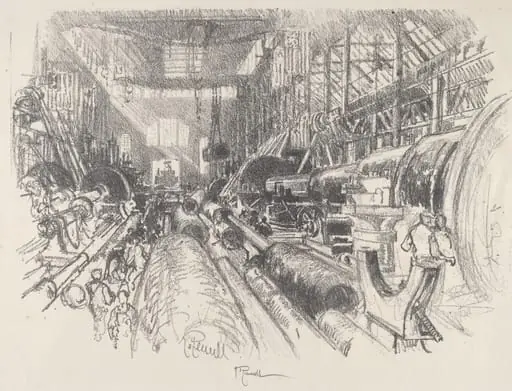 The Biggest Lathe in the World
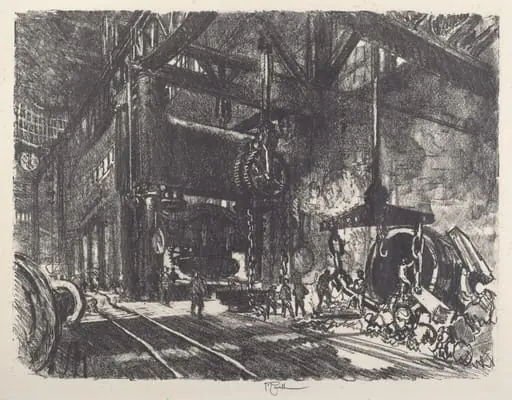
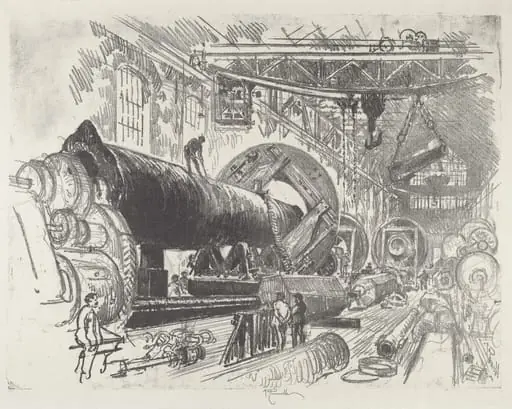 Cutting and Turning a Big Gun
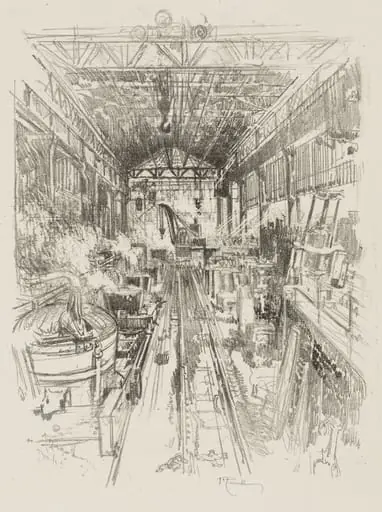 English War Work: The Cauldrons
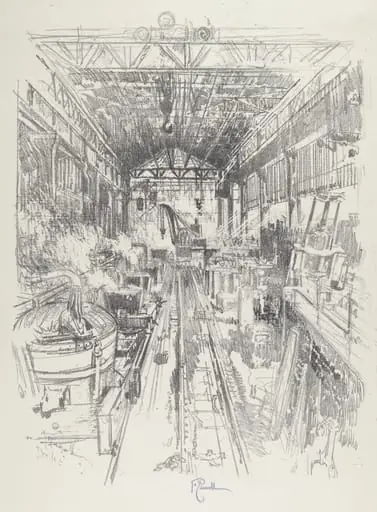 The Cauldrons
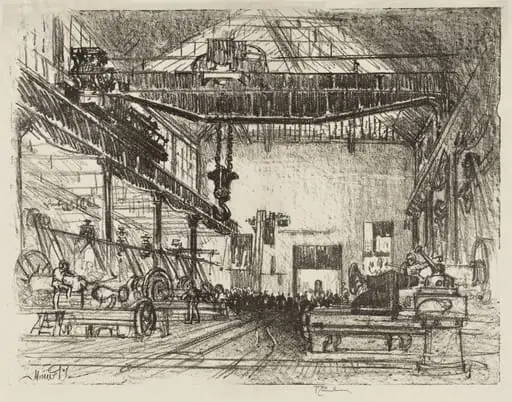 English War Work: Planing Big Shells
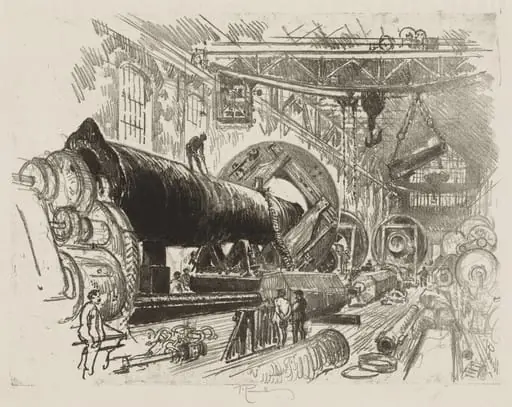 English War Work: Cutting and Turning a Big Gun
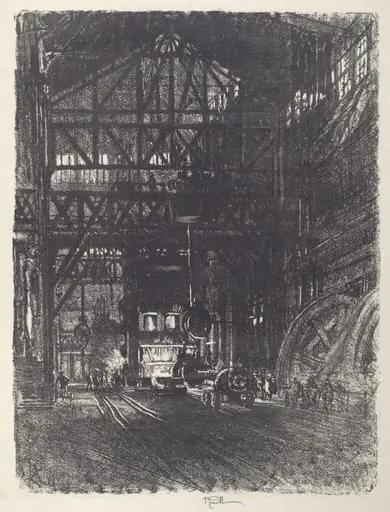 The Armour Plate Press
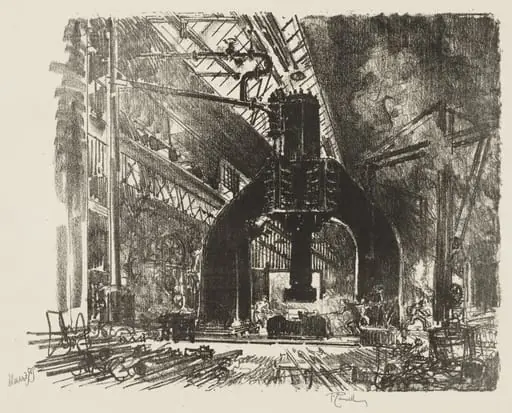 English War Work: The Great Hammer
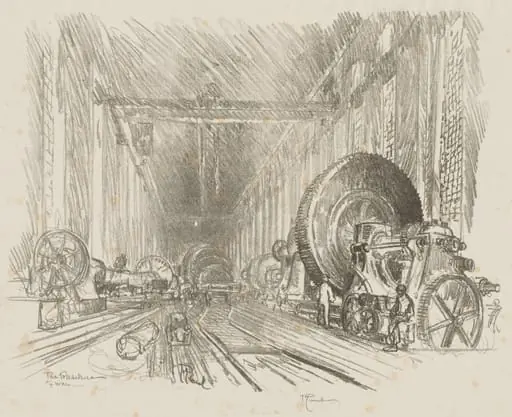 English War Work: The Basilica of War