Artwork
Studies for "Entering the War" [recto]
![Studies for "Entering the War" [recto], by John Singer Sargent, graphite, 1918](https://artifactworldgallery.com/img/john-singer-sargent--studies-for-entering-the-war-recto--358a2c3ea8bd7639-w1024.webp)
Studies for "Entering the War" [recto] is a graphite drawing by John Singer Sargent. It dates from 1918 and is held in the collection of the National Gallery of Art.
About this work
Overview
This graphite drawing by John Singer Sargent, dated 1918, presents four soldiers in profile, moving left to right across the page. Executed on wove paper, it functions as a preparatory study for a larger composition related to World War I. The work captures movement and posture with minimal detail, emphasizing the physical presence of the figures rather than narrative context.
Subject & Meaning
The soldiers are depicted in uniform, their bodies aligned in a quiet procession. Their postures convey fatigue and restraint, avoiding dramatic gestures. The absence of weapons or identifiable symbols shifts focus to the human condition under war—individuals bound by duty, moving forward without clear purpose or resolution.
Technique & Style
Sargent employs fine, fluid pencil lines to define form with economy. Shadows and contours are suggested through light hatching, avoiding heavy shading. The figures are rendered in profile to emphasize silhouette and rhythm, reflecting his training in observational drawing and his interest in the expressive potential of posture over facial detail.
History & Provenance
Created during Sargent’s commission to document the war for Britain’s Imperial War Museum, this study belongs to a series of sketches made from life at the front. It remained in the artist’s possession until his death, later entering a public collection through bequest. Its survival offers insight into his working method during a period of intense artistic transition.
Context
Sargent began this work after visiting Western Front trenches in 1918, where he observed troops preparing for battle. Unlike propagandistic imagery of the time, his studies avoided heroism, instead recording the quiet endurance of soldiers. These drawings were part of a broader effort to document the war’s human dimension beyond battlefield spectacle.
Legacy
The drawing stands as a quiet testament to Sargent’s commitment to truthful representation, even in wartime. It influenced later artists seeking to depict military life without glorification. Its preservation in institutional collections ensures continued scholarly attention to his role in shaping visual records of the Great War.
Artist & collection
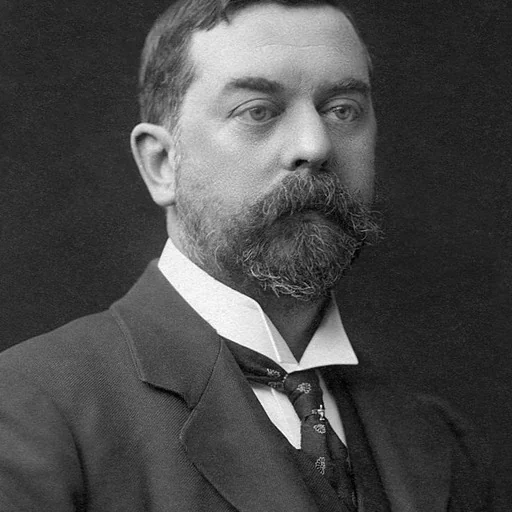
Artist
John Singer Sargent (; January 12, 1856 – April 15, 1925) was an American expatriate artist, considered the "leading portrait painter of his generation" for his evocations of Belle Époque and Edwardian-era luxury.

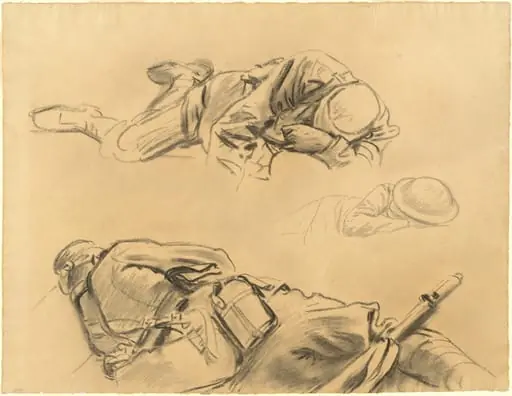 Studies for "Gassed"
![Studies for "Gassed" [recto], by John Singer Sargent](https://artifactworldgallery.com/img/john-singer-sargent--studies-for-gassed-recto--1cd4a47eb68752d0-w320.webp) Studies for "Gassed" [recto]
Studies for "Gassed" [recto]![Studies for "Gassed" [recto], by John Singer Sargent](https://artifactworldgallery.com/img/john-singer-sargent--studies-for-gassed-recto--bf7797882a33859c-w320.webp) Studies for "Gassed" [recto]
Studies for "Gassed" [recto]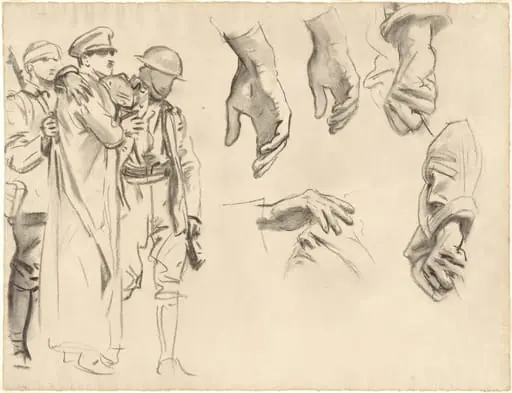 Studies for "Gassed"
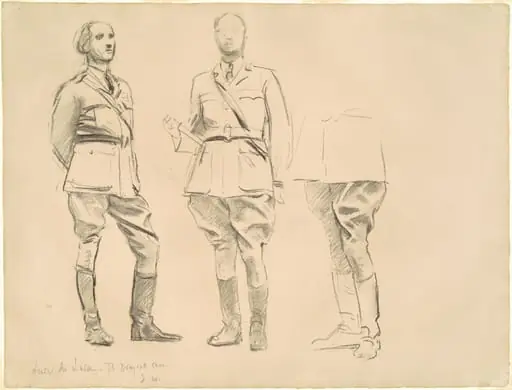 Studies for "General Officers of World War I"
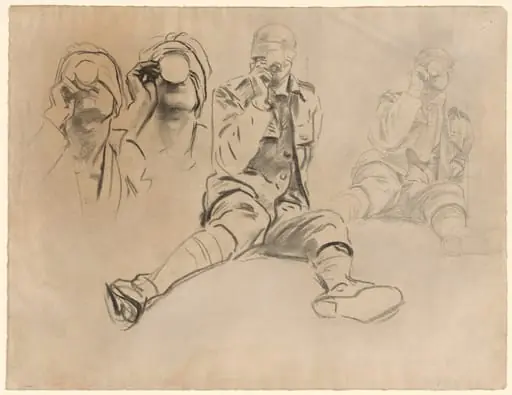 Studies of a Soldier Drinking, for Gassed (recto)
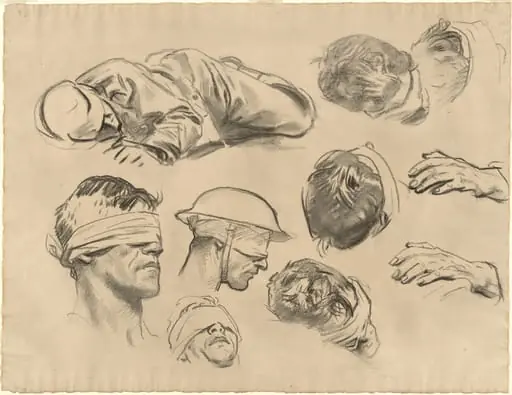 Studies for "Gassed"
![Studies of Generals Plumer and Haig for "General Officers of World War I" [recto], by John Singer Sargent](https://artifactworldgallery.com/img/john-singer-sargent--studies-of-generals-plumer-and-haig-for-general-officers-of--f81e6239baa10734-w320.webp) Studies of Generals Plumer and Haig for "General Officers of World War I" [recto]
Studies of Generals Plumer and Haig for "General Officers of World War I" [recto]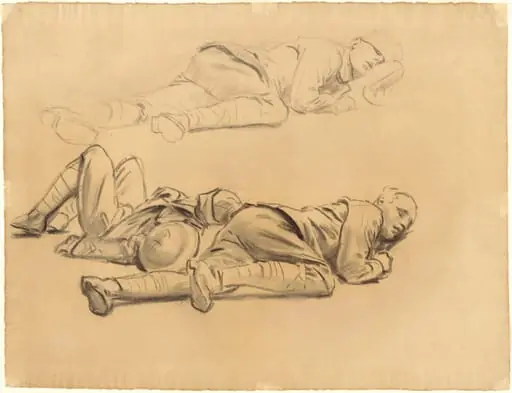 Studies for "Gassed"
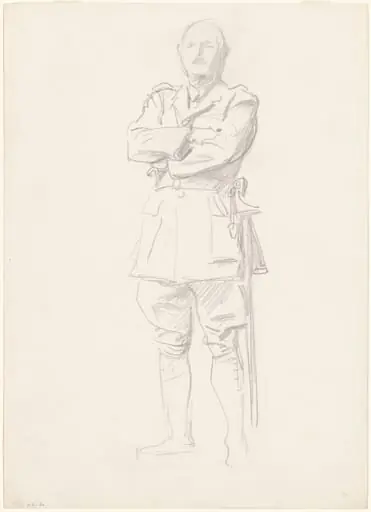 Study of General Louis Botha for "General Officers of World War I"
![Soldiers in a Devastated Landscape [recto], by John Singer Sargent](https://artifactworldgallery.com/img/john-singer-sargent--soldiers-in-a-devastated-landscape-recto--c8d14188d90fdc85-w320.webp) Soldiers in a Devastated Landscape [recto]
Soldiers in a Devastated Landscape [recto]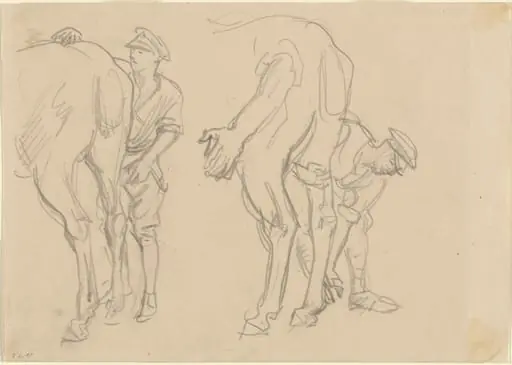 Studies for "Scots Grey"