Artwork
Studies for "Scots Grey"
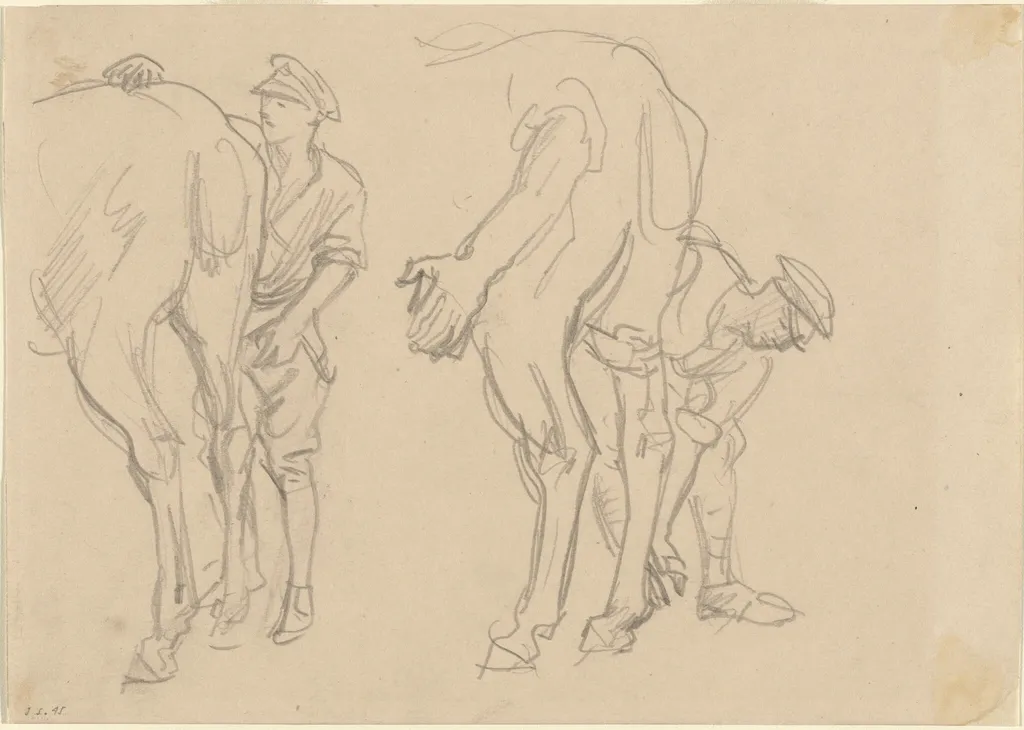
Studies for "Scots Grey" is a graphite drawing by John Singer Sargent. It dates from 1918 and is held in the collection of the National Gallery of Art.
About this work
Overview
This graphite drawing by John Singer Sargent serves as a preparatory study for a larger composition featuring a horse and two human figures.
This graphite drawing by John Singer Sargent serves as a preparatory study for a larger composition featuring a horse and two human figures. Executed on wove paper, it captures fleeting moments of interaction between the subjects with minimal, spontaneous marks. The work’s incomplete appearance reflects its function as an exploratory sketch rather than a final piece, emphasizing process over polish.
Subject & Meaning
Two figures engage with a large equine form, their postures suggesting motion and mutual awareness. The animal is not idealized but presented as a living, responsive presence. The interaction implies a quiet, unscripted moment—perhaps training, handling, or quiet companionship—where human gesture and animal movement are in subtle dialogue, revealing Sargent’s interest in naturalistic behavior.
Technique & Style
Sargent employed light, fluid pencil strokes to suggest volume and motion without definition. The lines are loose and layered, avoiding heavy outlines, allowing forms to emerge through tonal suggestion. This approach prioritizes immediacy and rhythm over detail, creating a sense of transient energy. The absence of shading techniques like sfumato underscores the drawing’s direct, observational character.
History & Provenance
The drawing is part of Sargent’s extensive archive of studies made during his travels and studio work in the late 19th and early 20th centuries. Likely created between 1880 and 1910, it was never intended for public display but preserved as a working document. Its survival reflects the artist’s habit of retaining sketches that informed later paintings.
Context
Sargent frequently turned to animal studies to understand anatomy and movement, especially as he prepared equestrian and pastoral scenes. This drawing aligns with broader 19th-century artistic practices that valued direct observation over idealization. Such studies were common among artists working in realist and impressionist traditions, who sought truth in transient moments.
Legacy
Though not a finished work, this study exemplifies Sargent’s commitment to capturing life in motion through direct observation. It has contributed to scholarly understanding of his preparatory methods and remains a valued artifact in the study of his creative process, illustrating how preliminary sketches underpinned his more polished compositions.
Artist & collection
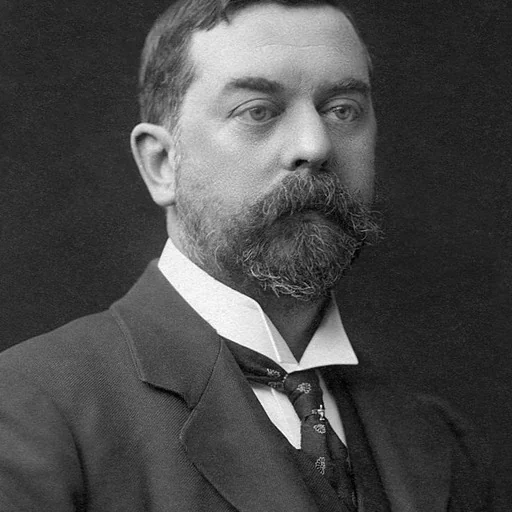
Artist
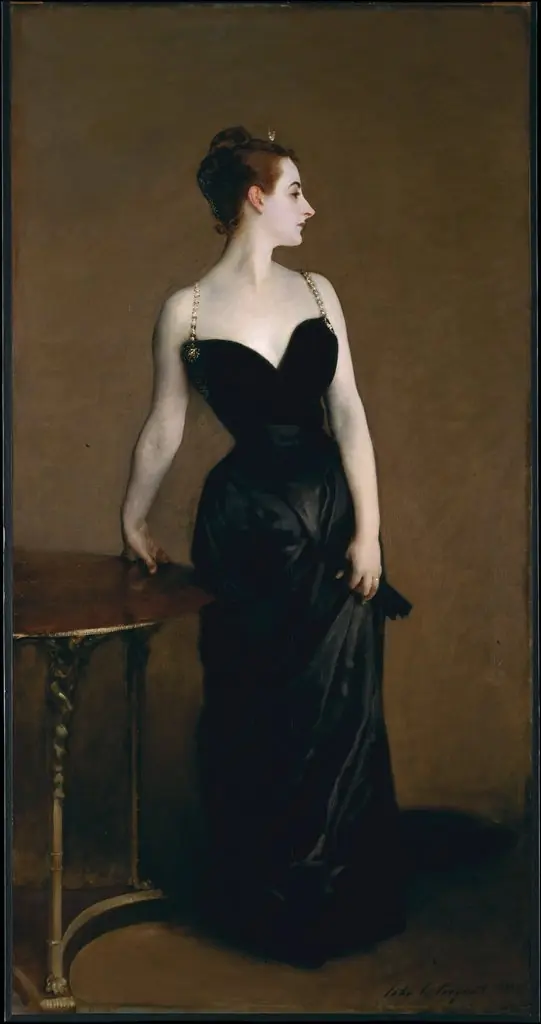
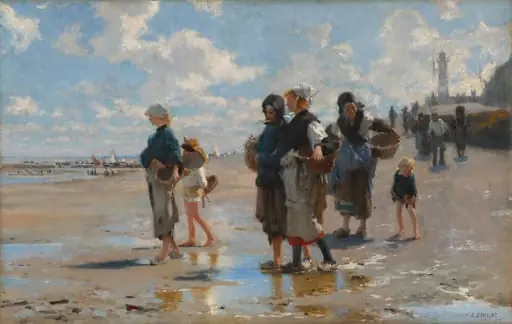
John Singer Sargent (; January 12, 1856 – April 15, 1925) was an American expatriate artist, considered the "leading portrait painter of his generation" for his evocations of Belle Époque and Edwardian-era luxury.

 Study of the Allegorical Figure Bellona in Rubens' "The Apotheosis of Henri IV"
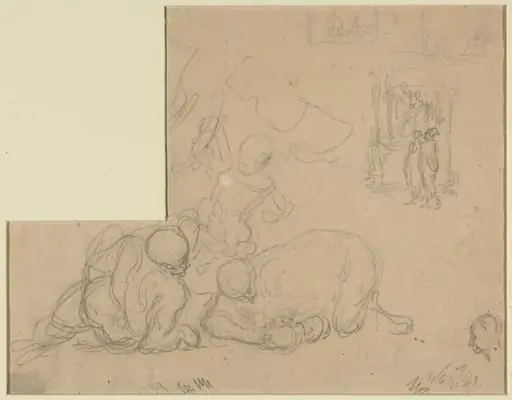 Sheet of Studies with Two Large Men on the Ground
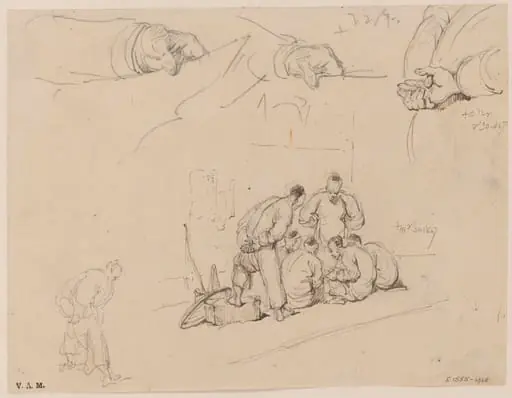 Drawings of a group of Chinese men, clasped hands, and a hand holding paper
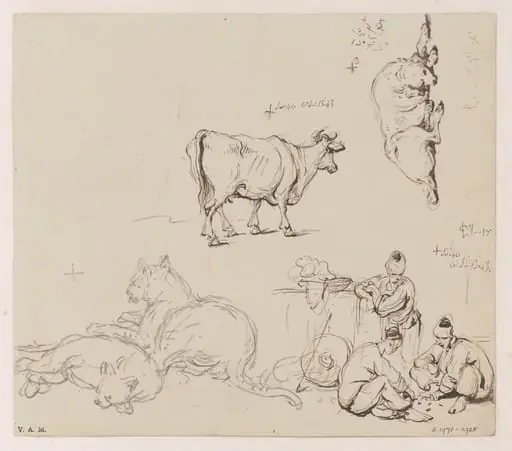 Animals, and a group of gamblers
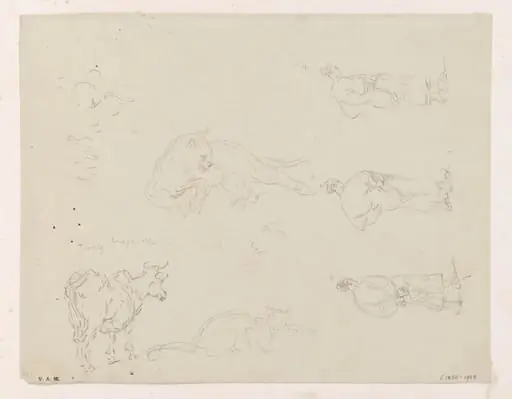 Drawings of figures and animals
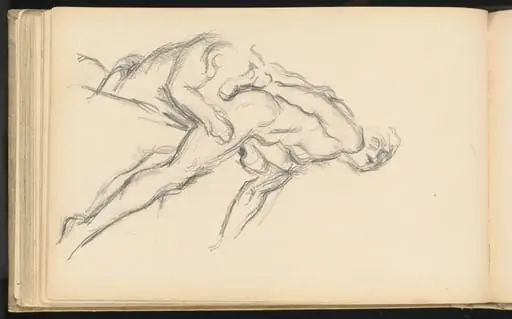 Study of Puget's "Milo of Crotona"
 Chinese figures and cattle
 Father, Son, and Donkey
 Figures at a stove, and a pig