Artwork
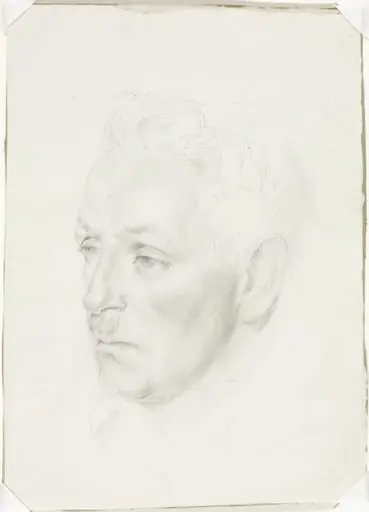
Study of Field Marshal John French for "General Officers of World War I"
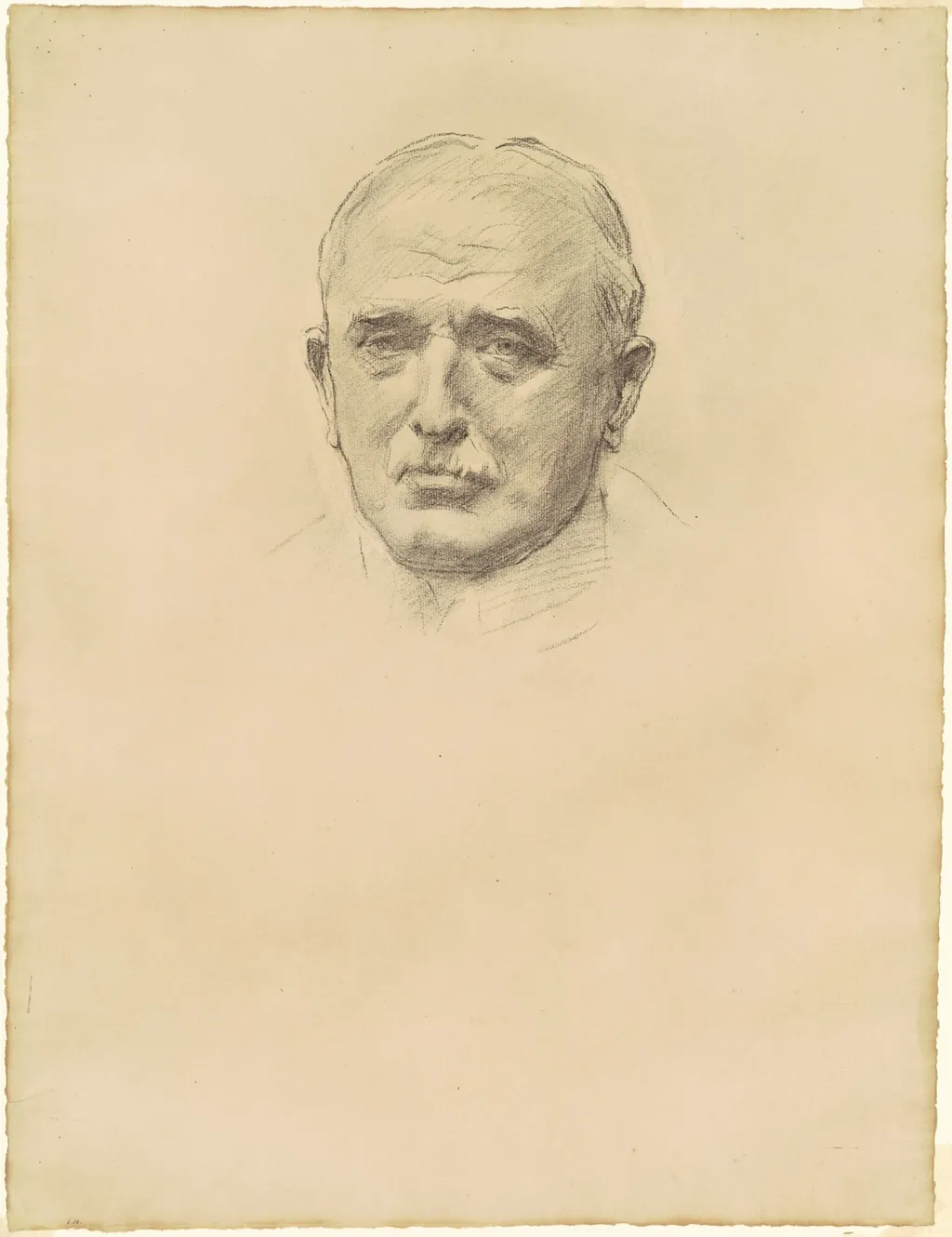
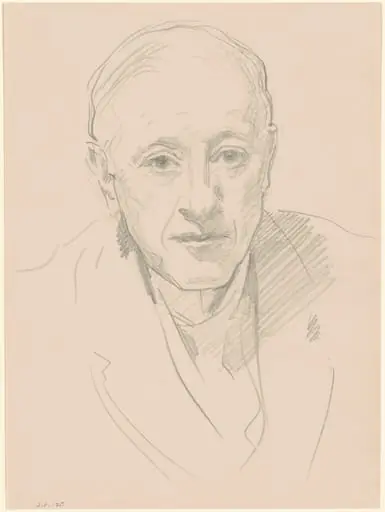
Study of Field Marshal John French for "General Officers of World War I" is a charcoal drawing by John Singer Sargent. It dates from 1921 and is held in the collection of the National Gallery of Art.
About this work
Overview
Executed on laid paper, it captures Field Marshal John French in formal uniform, emphasizing Sargent’s focus on psychological presence over detailed finish.
A charcoal drawing by John Singer Sargent, this study was prepared as a preliminary work for a larger group portrait of British military leaders during World War I. Executed on laid paper, it captures Field Marshal John French in formal uniform, emphasizing Sargent’s focus on psychological presence over detailed finish. The medium’s immediacy reveals the artist’s process of observation and refinement before committing to the final composition.
Subject & Meaning
Field Marshal John French, then Commander-in-Chief of the British Expeditionary Force, is rendered with restrained gravity. Sargent avoids heroism, instead conveying a sense of burden and introspection. The portrait reflects the weight of command during a war of unprecedented scale, presenting leadership not as triumph but as solemn responsibility, consistent with Sargent’s broader interest in the human condition beneath rank.
Technique & Style
Sargent employed charcoal with controlled precision, using soft smudging and sharp linear accents to define the contours of uniform and face. Cross-hatching builds volume in the collar and lapels, while delicate tonal gradations model the features without overworking the surface. The technique balances spontaneity with discipline, revealing his ability to distill form and character through minimal, purposeful marks.
History & Provenance
Created around 1919, the drawing was part of a commissioned series documenting senior British officers after the war. Though the full group portrait was never completed, this study survived in private collections before entering a public institution. Its survival offers rare insight into Sargent’s preparatory methods and the logistical challenges of wartime portraiture.
Context
Sargent undertook this project during a period of national reflection, as Britain sought to memorialize its military leadership. Unlike official state portraits, his approach favored psychological depth over ceremonial grandeur. The drawing aligns with broader postwar artistic trends that questioned traditional representations of authority, favoring authenticity over idealization.
Legacy
This study remains a significant example of Sargent’s late work, illustrating his transition from society portraiture to more introspective, documentary-style rendering. It informs later understandings of how artists engaged with the psychological toll of war, influencing how military figures were visually represented in the 20th century beyond conventional glorification.
Artist & collection
Artist
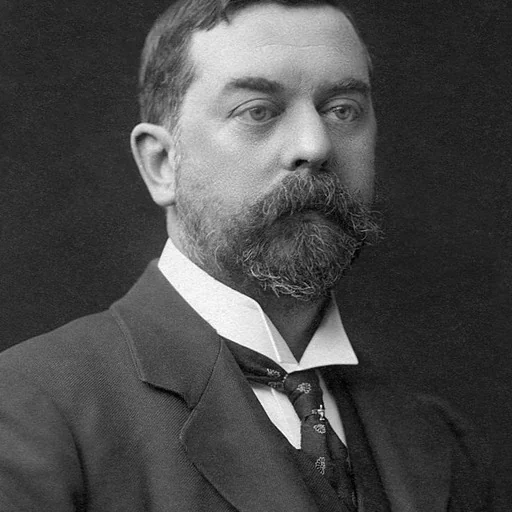
John Singer Sargent (; January 12, 1856 – April 15, 1925) was an American expatriate artist, considered the "leading portrait painter of his generation" for his evocations of Belle Époque and Edwardian-era luxury.

![Grover Cleveland [verso], by Eastman Johnson](https://artifactworldgallery.com/img/eastman-johnson--grover-cleveland-verso--d6ca9e9f025d6cbf-w320.webp)