Artwork
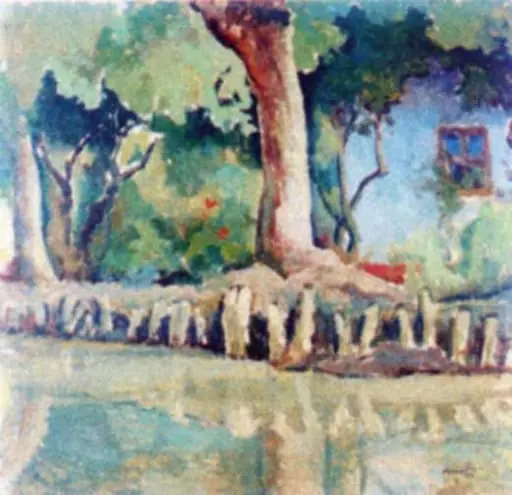
Peisaj cu pomi și apă
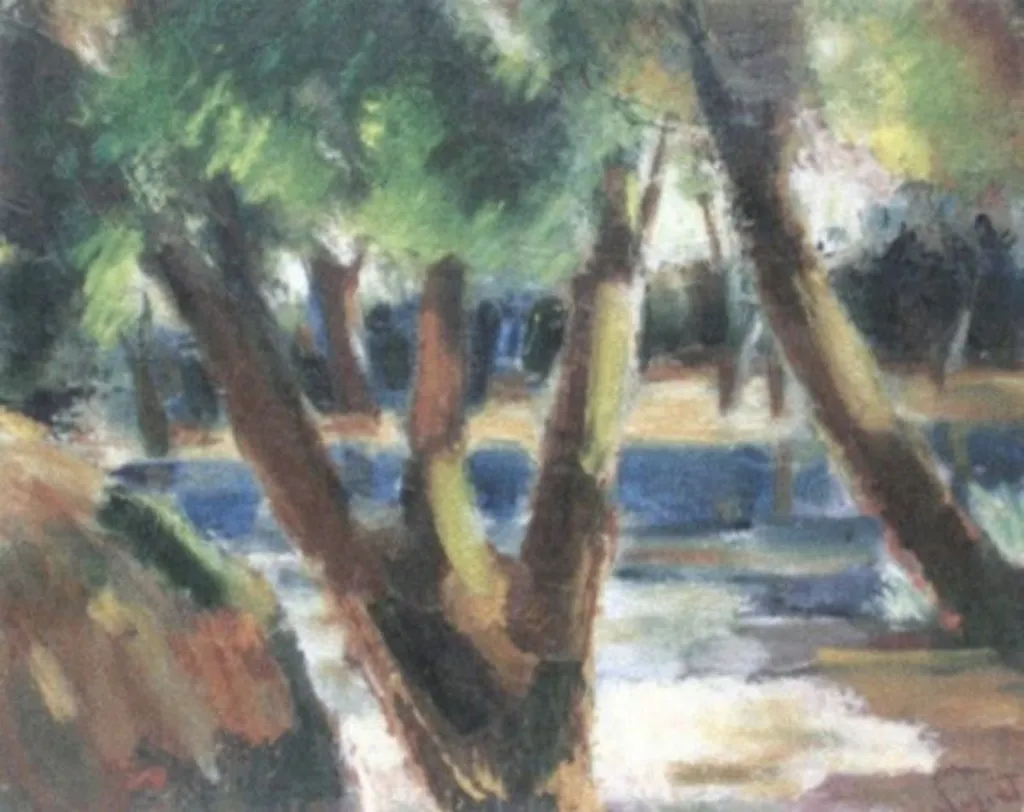
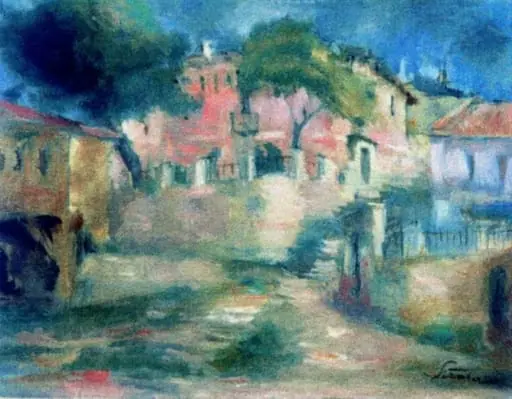
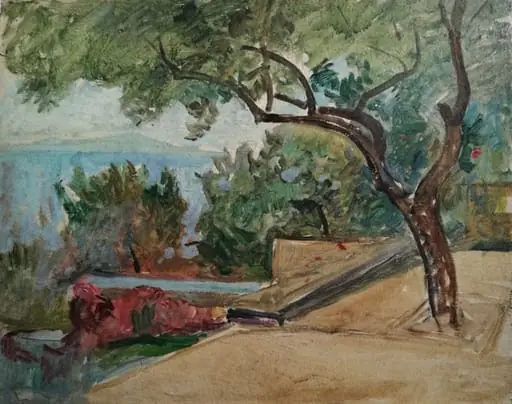
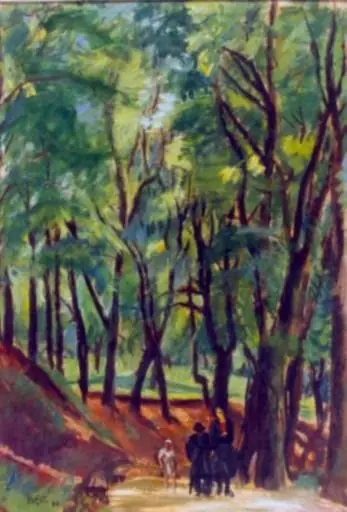
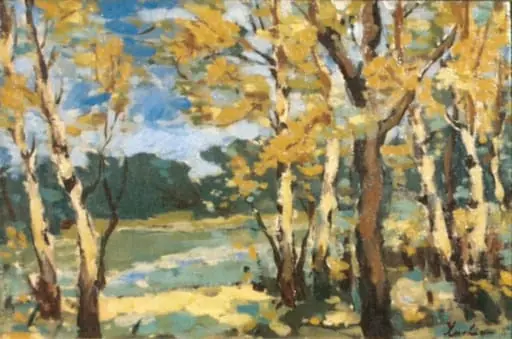
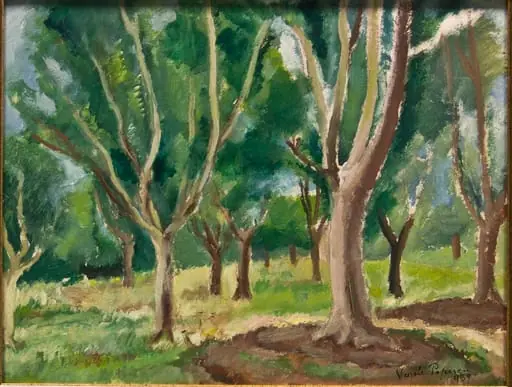
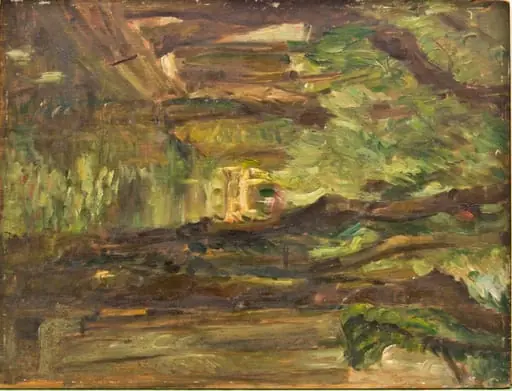
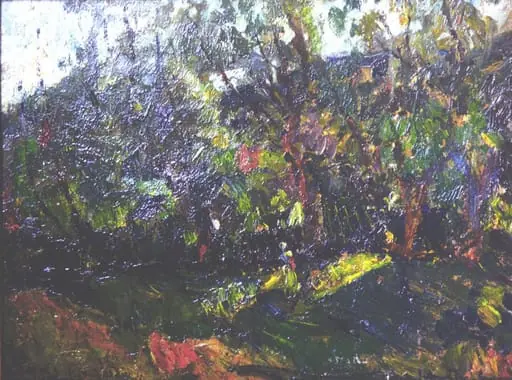
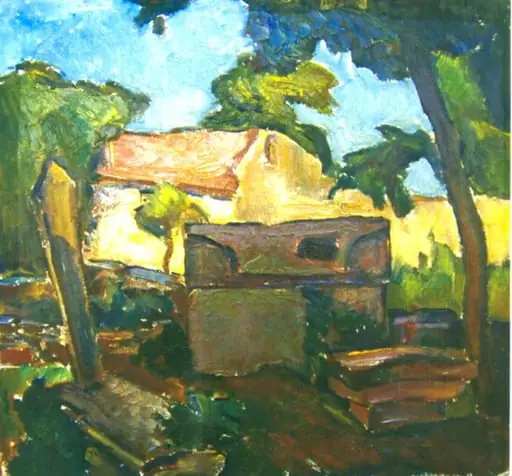
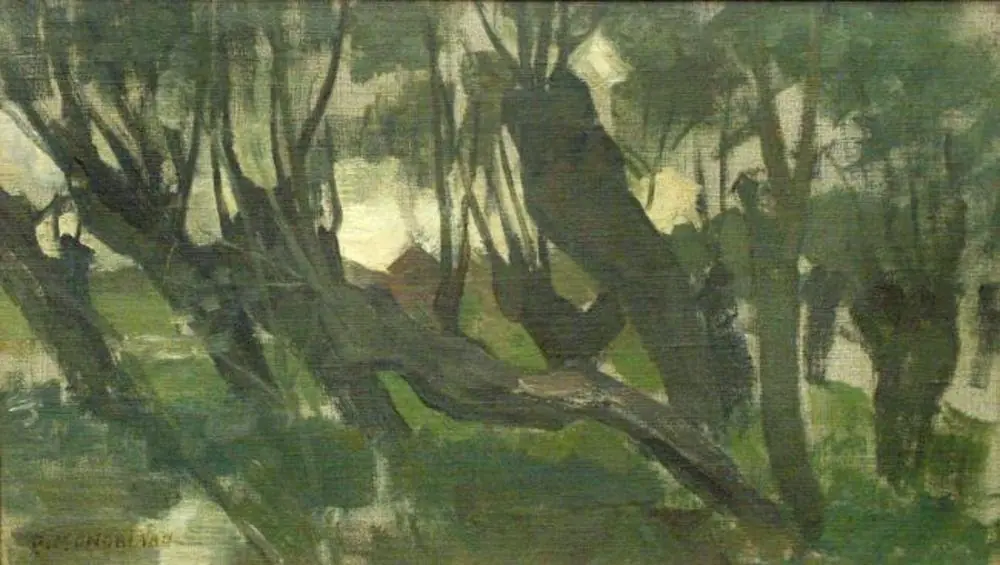
Peisaj cu pomi și apă is an unspecified painting by Francisc Șirato. It is held in the collection of the Gavrilă Simion Eco-Museum Research Institute Tulcea - Art Museum. This landscape depicts a wooded path leading toward a bridge spanning water, rendered with energetic, unblended brushwork.
About this work
Overview
This landscape depicts a wooded path leading toward a bridge spanning water, rendered with energetic, unblended brushwork.
This landscape depicts a wooded path leading toward a bridge spanning water, rendered with energetic, unblended brushwork. The composition emphasizes natural light filtering through dense foliage, casting dappled patterns on the ground. Paint is applied thickly in places, particularly in the foreground, suggesting direct observation and rapid execution. The overall effect conveys a sense of immediacy, as if captured in a single sitting under changing daylight.
Subject & Meaning
The scene presents an ordinary rural pathway, framed by tall trees and ending at a distant bridge over water. There is no human figure or narrative event, focusing instead on the quiet rhythm of nature. The path invites the viewer’s gaze inward, while the softening hues of the background suggest depth and atmosphere. The work values perception over storytelling, emphasizing the transient qualities of light and season.
Technique & Style
Thick, textured brushstrokes define the tree trunks and foliage, using impasto to build physical depth. Greens and browns dominate the foreground, while the distance dissolves into muted blues and pale yellows. The paint is left unsmoothed, preserving the artist’s hand and the materiality of the medium. This approach reflects a commitment to capturing fleeting visual impressions rather than polished finish.
History & Provenance
The painting’s origins are tied to an artist active in the late 19th or early 20th century, likely working in a region with abundant woodlands and waterways. It was probably created en plein air, consistent with contemporary practices among artists seeking direct engagement with nature. Its survival suggests it was retained within private collections, though no documented exhibition or ownership history is widely recorded.
Context
This work aligns with broader trends in European landscape painting that moved away from idealized compositions toward direct observation. Artists of the period increasingly favored open-air painting, rejecting studio conventions in favor of spontaneous responses to light and atmosphere. The emphasis on texture and unrefined brushwork reflects a shift toward modernist sensibilities, even if the subject remained traditional.
Legacy
Though not widely exhibited or reproduced, the painting exemplifies a quiet but significant strand of landscape practice that prioritized sensory experience over formal perfection. Its emphasis on materiality and immediacy anticipates later developments in modern painting, where the act of painting itself became as important as the scene depicted. It remains a testament to the value of observation in art.
Artist & collection
Artist
Francisc Șirato painted quiet scenes of people and places, often with soft light and gentle colors.
Museum
Gavrilă Simion Eco-Museum Research Institute Tulcea - Art Museum
Continue through works from the same source collection.