Artwork
`Beni-Souef "On the Nile"
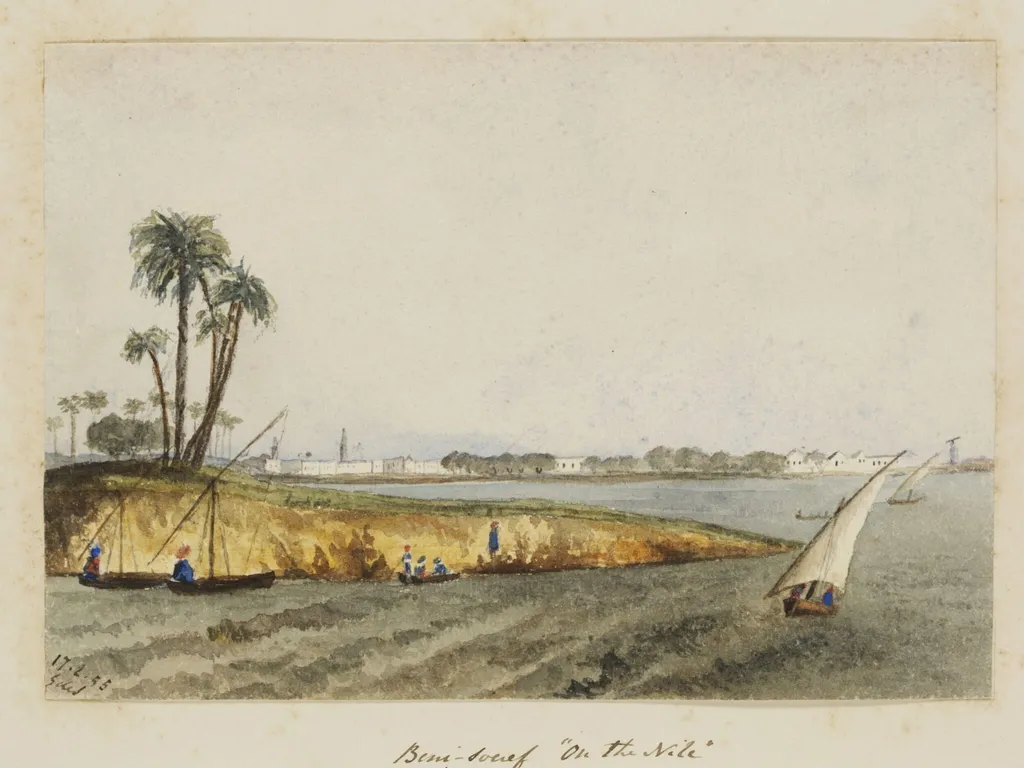
`Beni-Souef "On the Nile" is a watercolor work on paper by the Impressionist artist George de Sausmarez. It dates from 1855 and is held in the collection of the Victoria and Albert Museum.
About this work
Overview
This watercolor is one of forty-five works by George de Sausmarez, created during or shortly after his 1855 journey along the Nile.
This watercolor is one of forty-five works by George de Sausmarez, created during or shortly after his 1855 journey along the Nile. It forms part of a bound album documenting landscapes of Egypt and Nubia, compiled as a personal record of the trip. The album, housed in a crimson morocco binder stamped 'EGYPT,' contains thirty-five mounted sheets, with several left unattached, suggesting an unfinished or selectively curated collection.
Subject & Meaning
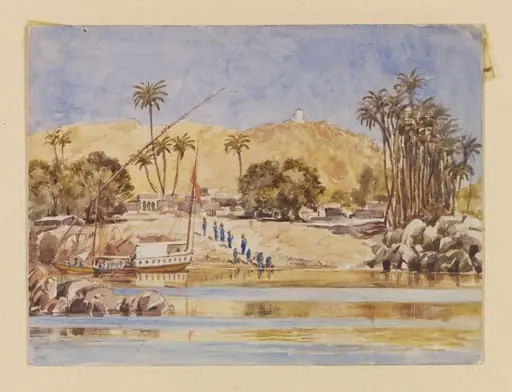
The scene captures a quiet stretch of the Nile near Beni-Souef, featuring two boats—one with a white sail gliding on the water, another moored near the bank with figures ashore. The inclusion of modest architecture and scattered trees frames daily life along the river without overt narrative. The composition emphasizes stillness and observation, reflecting a traveler’s quiet engagement with the landscape rather than a dramatic or exoticized portrayal.
Technique & Style
Executed in watercolor, the piece employs soft washes and restrained brushwork to convey atmospheric depth. The river’s surface mirrors the sky in muted tones, enhancing the sense of calm. Details like the boats and trees are rendered with light, deliberate strokes, avoiding sharp definition. The technique prioritizes mood over precision, aligning with 19th-century topographical watercolor traditions rather than later movements like Impressionism.
History & Provenance
The watercolor was produced following de Sausmarez’s 1855 expedition up and down the Nile, likely as part of a private visual diary. The album remained in personal or family hands until its acquisition by a public institution. Its binding and mounting suggest careful preservation, though the unmounted sheets indicate the collection was never formally completed. No public exhibition history is documented prior to its institutional custody.
Context
De Sausmarez’s work emerged during a period of growing European interest in Egypt’s landscapes following Napoleon’s campaign and the opening of the Suez route. Unlike official surveys or Orientalist paintings, his watercolors avoid spectacle, focusing instead on unadorned views. His approach reflects the influence of British amateur topographical artists who valued accuracy and quiet observation over dramatic interpretation.
Legacy
The album stands as a modest but valuable record of mid-19th-century travel in Egypt, offering a counterpoint to more sensationalized imagery of the region. While de Sausmarez is not widely known, his watercolors contribute to a broader understanding of how non-professional artists documented the Nile. The work remains a quiet testament to personal exploration rather than public representation.
Artist & collection
Artist
George de Sausmarez painted watercolors of Egypt’s Nile in the 1850s, recording river scenes and landmarks with quick, transparent washes.

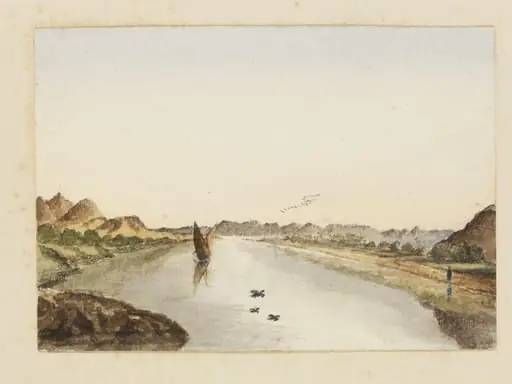 View of the Nile
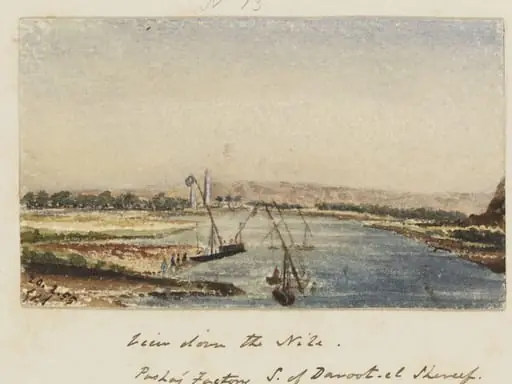 `View down the Nile. Pasha's Factory S.of Daroot-el Shereef. Upper Egypt'
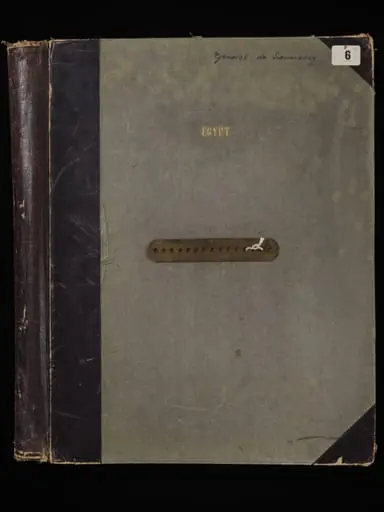 Album
Album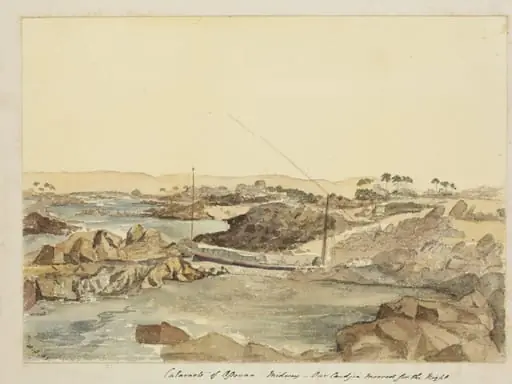 `Cataracts of Assouan. Midway. - Our Candjia Moored for the Night - On the Nile'
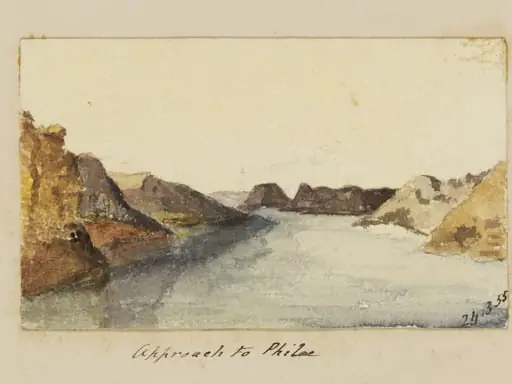 `Approach to Philae'
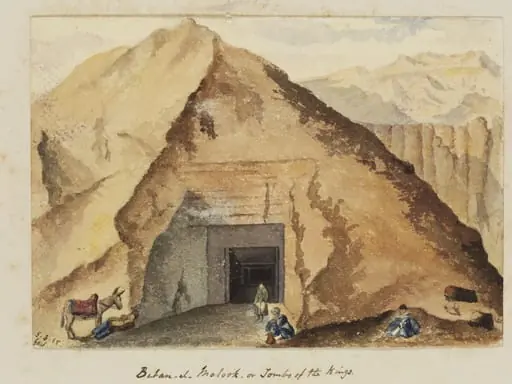 Biban-el-Molook, or Tombs of the Kings. Belzoni's Tomb. Thebes
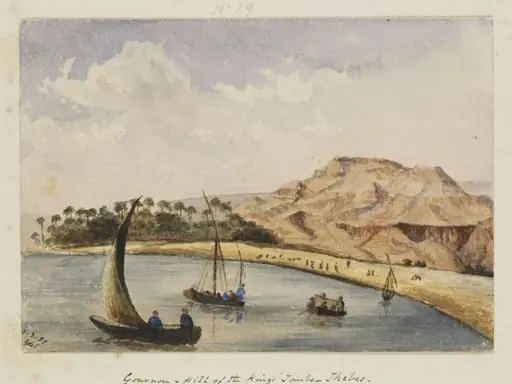 `Gournou & Hill of the Kings' Tombs - Thebes'
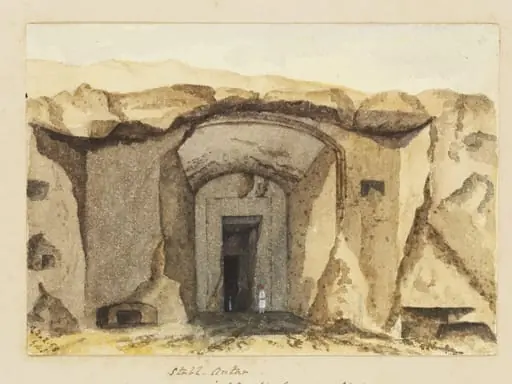 `Stabl-Antar. Ancient Egyptian Cave near Siout. Upper Egypt'
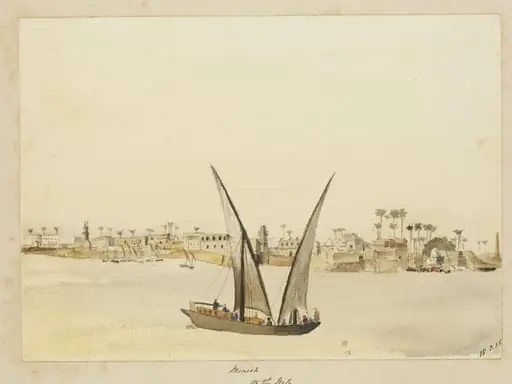 `Minieh On the Nile'
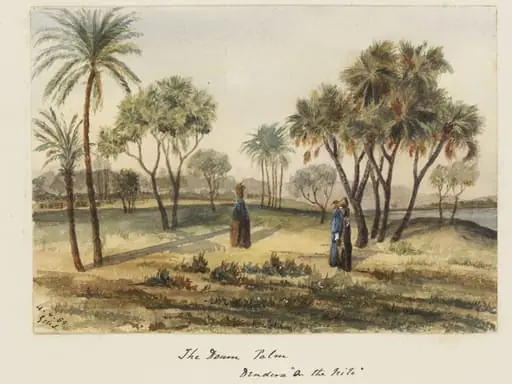 `The Doum Palm Dendera "On the Nile"
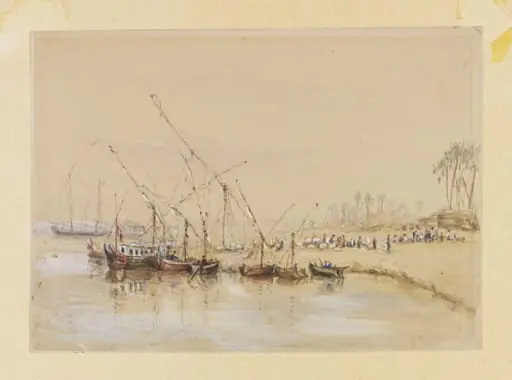 A Scene on the Nile: with dahabiyyahs and bales of cotton being loaded into feluccas
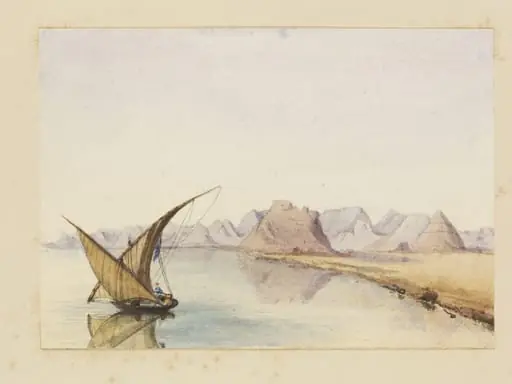 View of the Nile with boat
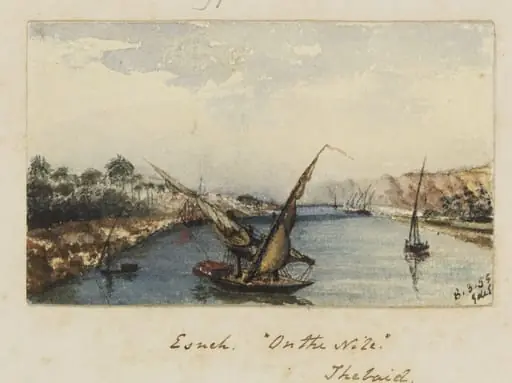 `Esneh. "On the Nile." Thebaid'
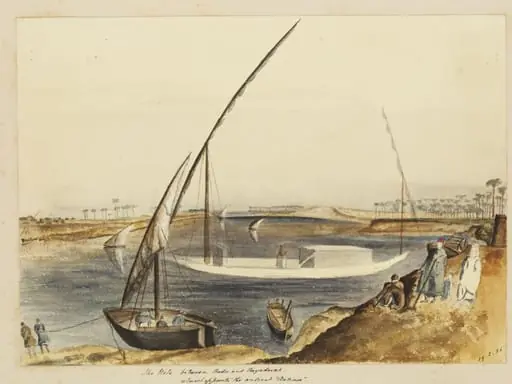 The Nile between Roda and Bayadeeah - almost opposite the antient Antinos. Now Shekh Abadeh
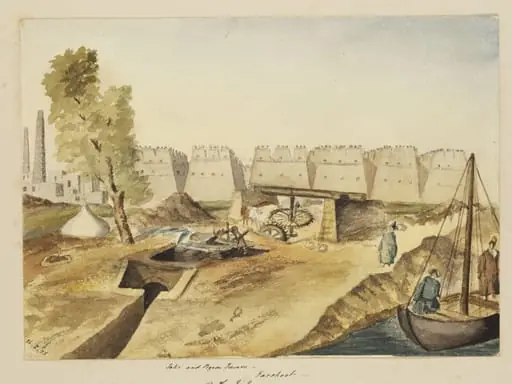 `Saki and Pigeon Towers - Farshoot - On the Nile'
 View on the Nile, opposite Aswan