Artwork
`The Doum Palm Dendera "On the Nile"
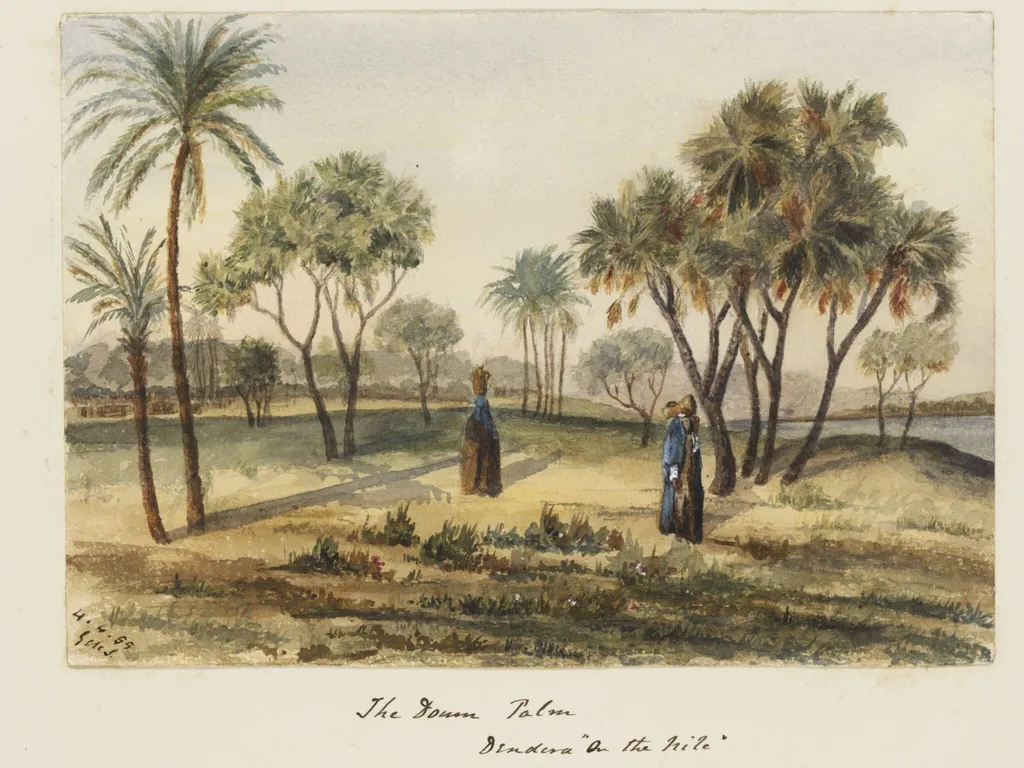
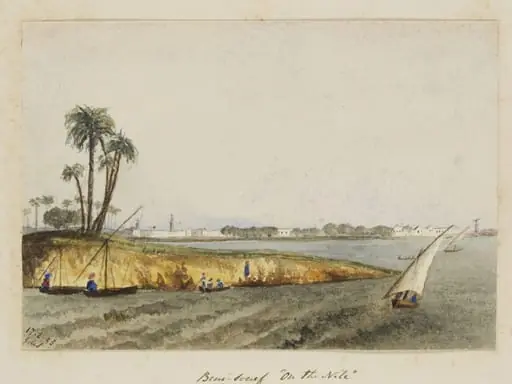
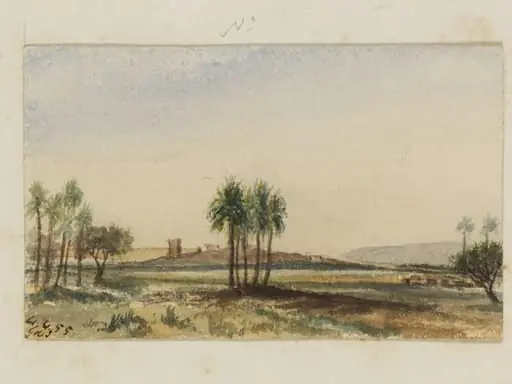
`The Doum Palm Dendera "On the Nile" is a watercolor work on paper by the Impressionist artist George de Sausmarez. It dates from 1855 and is held in the collection of the Victoria and Albert Museum. This watercolor depicts a riverside scene near Dendera, featuring two figures standing among a stand of tall doum palms along the Nile.
About this work
Overview
This watercolor depicts a riverside scene near Dendera, featuring two figures standing among a stand of tall doum palms along the Nile. The composition balances the slender trunks and soft‑green fronds with a foreground of dry grass interspersed with shallow water, creating a modest yet evocative view of an Egyptian landscape.
Subject & Meaning
The work captures a moment of everyday life on the riverbank, with a woman in a dark, flowing dress and a man in lighter attire and a hat. Their presence suggests a pause in travel or work, while the surrounding palms emphasize the fertility and distinctive vegetation of the Nile’s middle reaches.
Technique & Style
Executed in watercolor, the piece relies on loose, fluid brushwork that conveys the play of light on foliage and water. The palette is restrained, using muted greens, browns, and earth tones, allowing the delicate washes to suggest texture rather than detailed rendering, a common approach in mid‑nineteenth‑century travel sketches.
History & Provenance
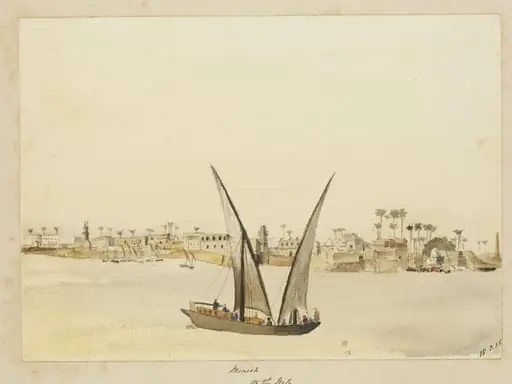
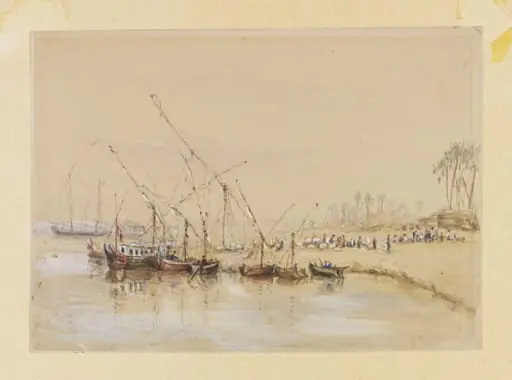
The painting belongs to a collection of forty‑five watercolors mounted on thirty‑five sheets that form an album documenting scenes from Egypt and Nubia. Created during or shortly after a 1855 expedition up and down the Nile, the album is bound in a half‑bound crimson morocco music case stamped "EGYPT" on its cover, indicating its origin as a travel record.
Own this work as a print
Artist & collection
Artist
George de Sausmarez painted watercolors of Egypt’s Nile in the 1850s, recording river scenes and landmarks with quick, transparent washes.

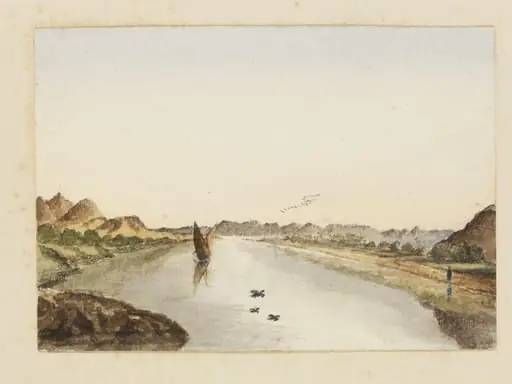 View of the Nile
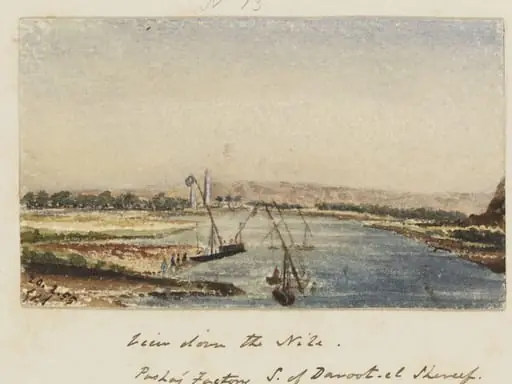 `View down the Nile. Pasha's Factory S.of Daroot-el Shereef. Upper Egypt'
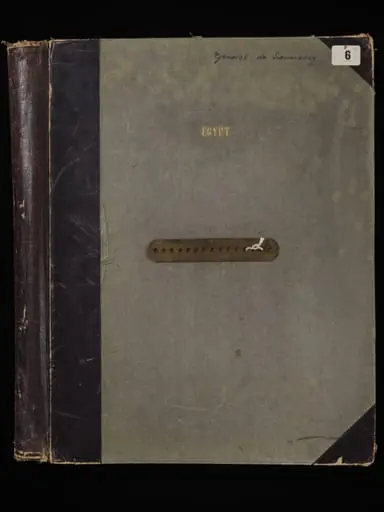 Album
Album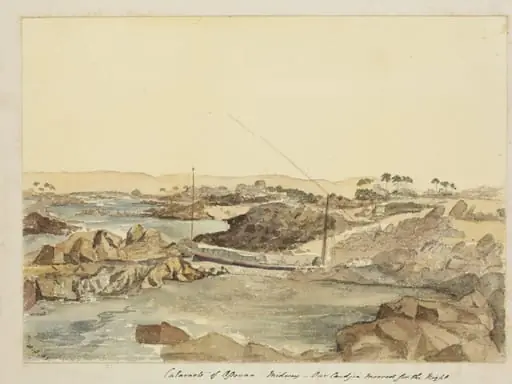 `Cataracts of Assouan. Midway. - Our Candjia Moored for the Night - On the Nile'
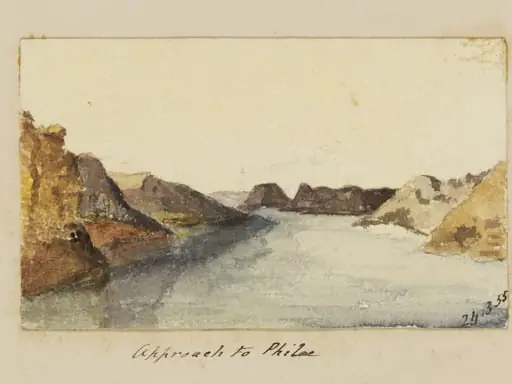 `Approach to Philae'
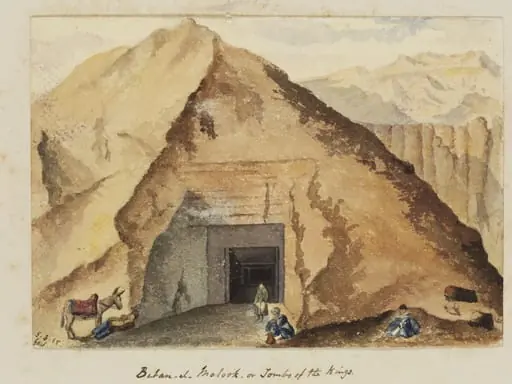 Biban-el-Molook, or Tombs of the Kings. Belzoni's Tomb. Thebes
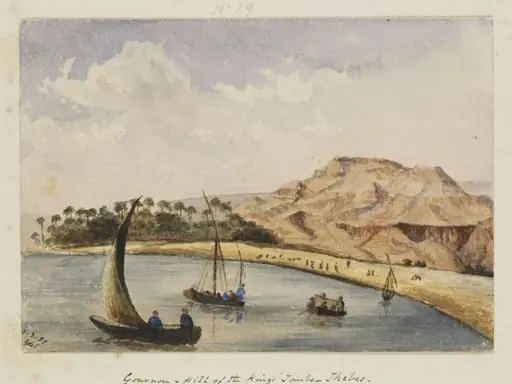 `Gournou & Hill of the Kings' Tombs - Thebes'
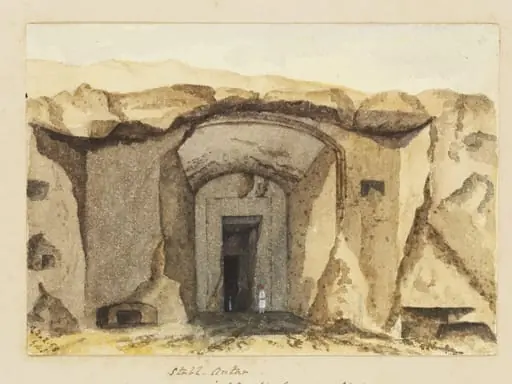 `Stabl-Antar. Ancient Egyptian Cave near Siout. Upper Egypt'