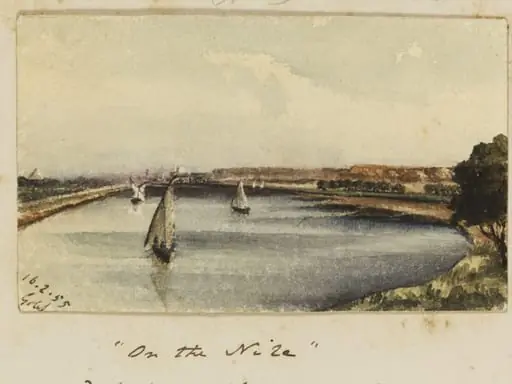
Artwork
`Luxor "On the Nile" - from the Gournou Bank'
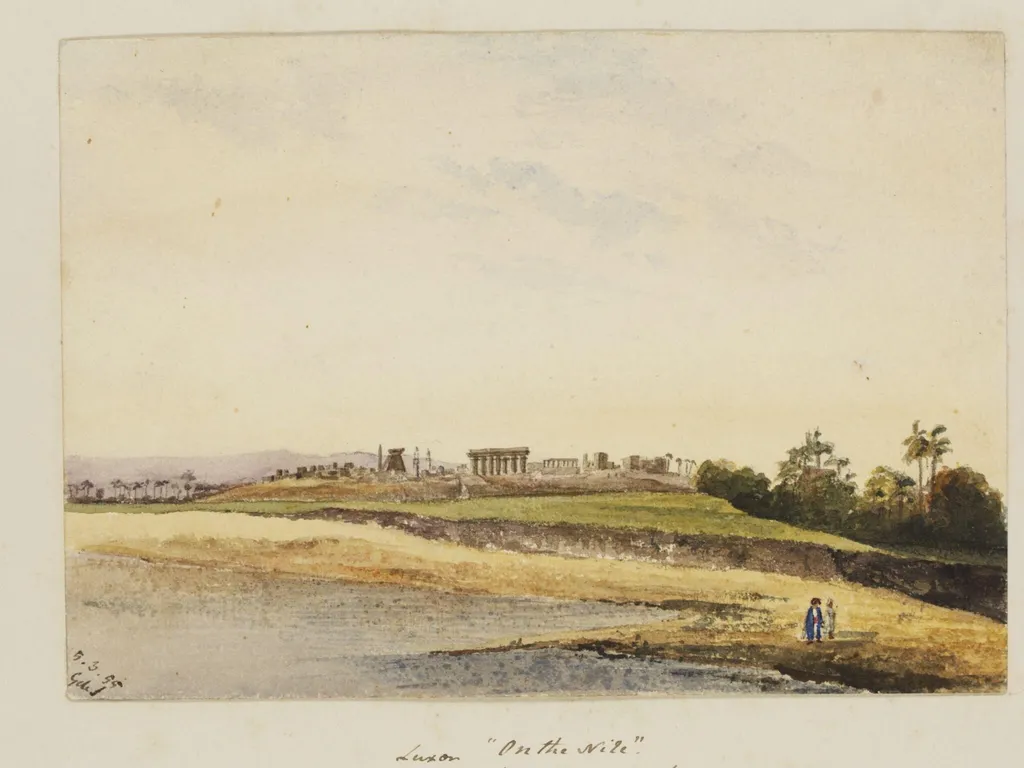
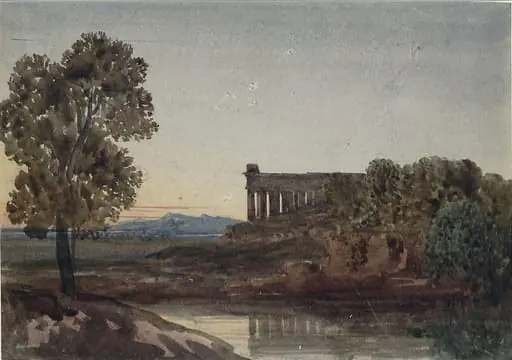
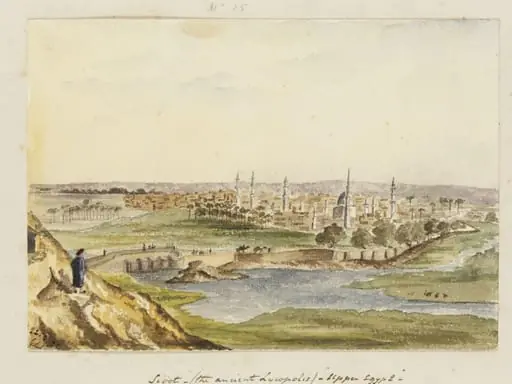
`Luxor "On the Nile" - from the Gournou Bank' is a watercolor work on paper by the Impressionist artist George de Sausmarez. It dates from 1855 and is held in the collection of the Victoria and Albert Museum.
About this work
Overview
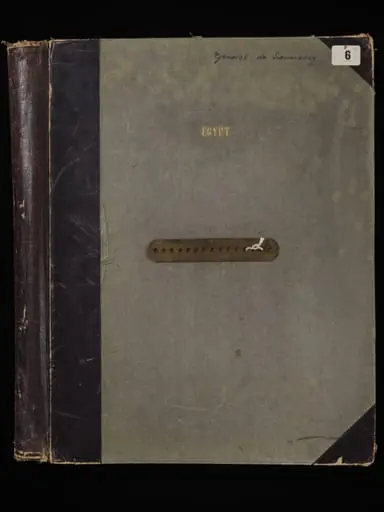
The album is housed in a simple crimson morocco binder stamped 'EGYPT,' reflecting its function as a personal record rather than a public exhibition.
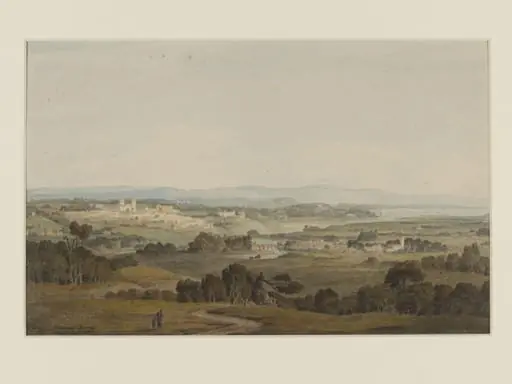
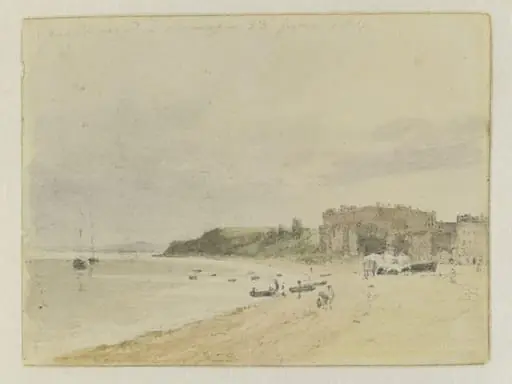
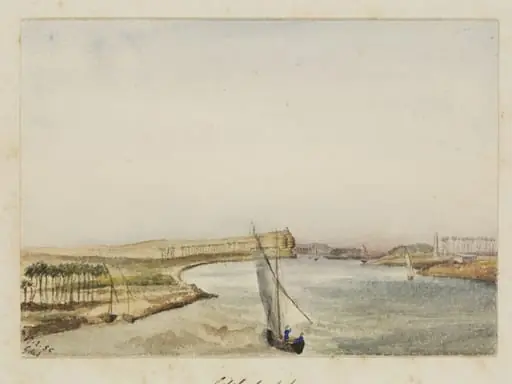
This watercolour is one of forty-five works in a bound album compiled by George de Sausmarez, documenting his travels along the Nile. Created during or after an 1855 expedition that moved both upstream and downstream, the piece belongs to a series focused on Egypt and Nubia. The album is housed in a simple crimson morocco binder stamped 'EGYPT,' reflecting its function as a personal record rather than a public exhibition.
Subject & Meaning
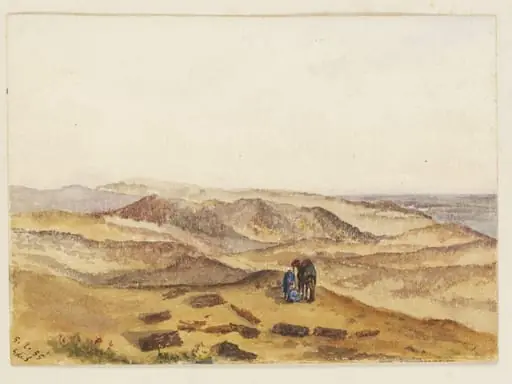
The scene captures a quiet stretch of the Nile’s Gournou Bank, where two small figures stand near the water’s edge, dwarfed by the remnants of ancient stone structures. The ruins suggest a forgotten civilization, their presence evoking time’s passage rather than narrating a specific event. The absence of grandeur or action emphasizes stillness and solitude, aligning with a contemplative approach to landscape.
Technique & Style
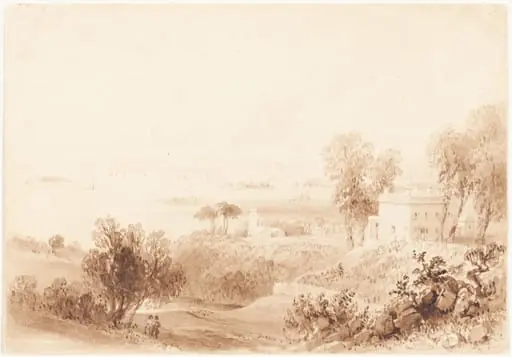
De Sausmarez employed loose, fluid brushwork to suggest form rather than define it, favoring atmospheric effect over precise detail. Soft washes of pale blue, yellow, and green convey the warmth of sunlight on dry land and water, while the muted tones impart a sense of age and fading memory. The technique prioritizes mood and light, reflecting a sensitivity to the scene’s quiet dignity.
History & Provenance
The watercolour was produced following a journey along the Nile in 1855, part of a broader European interest in documenting the region. It was compiled into a personal album, likely intended for private use. The album’s binding—a half-bound crimson morocco music binder with an 'EGYPT' stamp—indicates its origins as a curated travel record, preserved intact rather than dispersed.
Context
Created during a period when European travelers increasingly recorded Egyptian landscapes, this work reflects a shift from romanticized depictions toward more restrained, observational approaches. While not overtly archaeological, it acknowledges the presence of ancient ruins as enduring, silent witnesses. Its quiet tone aligns with emerging Realist sensibilities that valued everyday scenes and unembellished observation.
Legacy
As part of a cohesive travel album, this watercolour contributes to a historical archive of 19th-century visual documentation of Egypt. It offers insight into how non-specialist observers engaged with ancient sites—not as monuments to be glorified, but as quiet elements within a living landscape. Its preservation in original binding underscores its value as a personal, rather than commercial, artifact.
Artist & collection
Artist
George de Sausmarez painted watercolors of Egypt’s Nile in the 1850s, recording river scenes and landmarks with quick, transparent washes.

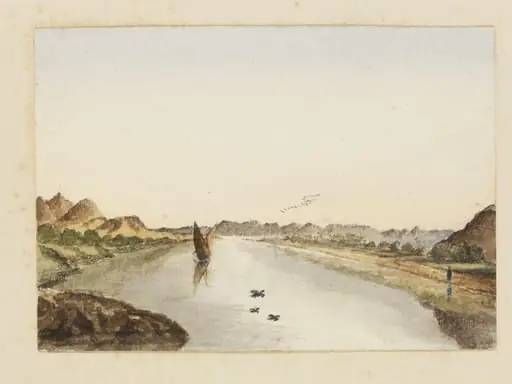 View of the Nile
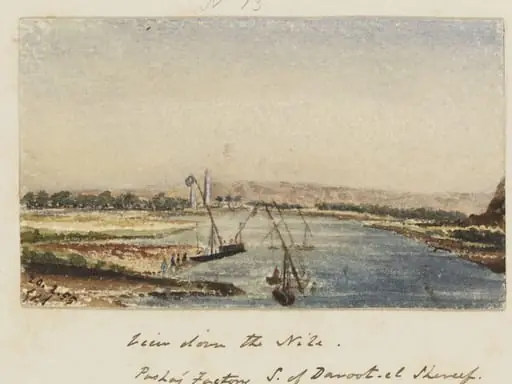 `View down the Nile. Pasha's Factory S.of Daroot-el Shereef. Upper Egypt'
 Album
Album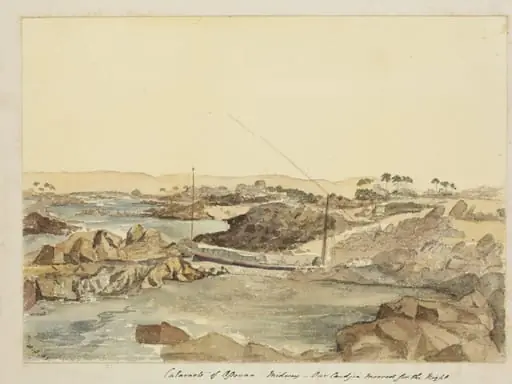 `Cataracts of Assouan. Midway. - Our Candjia Moored for the Night - On the Nile'
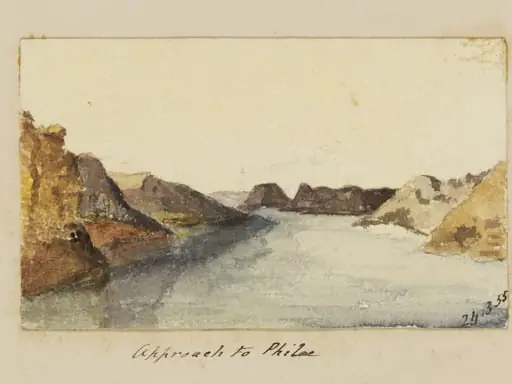 `Approach to Philae'
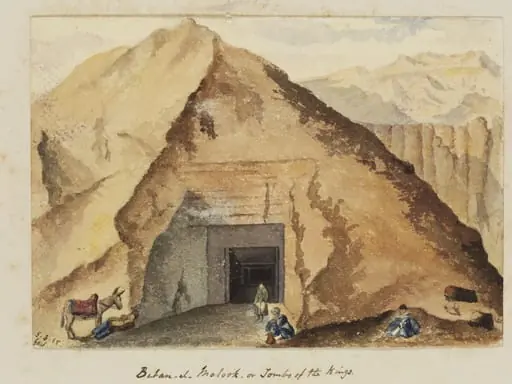 Biban-el-Molook, or Tombs of the Kings. Belzoni's Tomb. Thebes
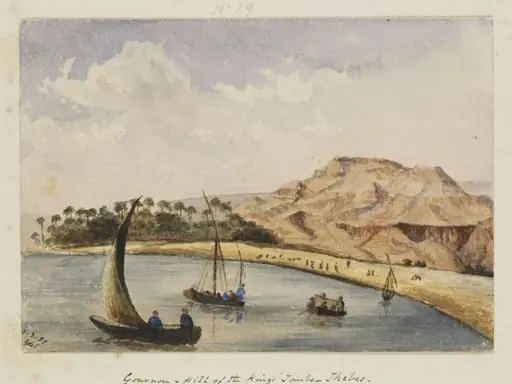 `Gournou & Hill of the Kings' Tombs - Thebes'
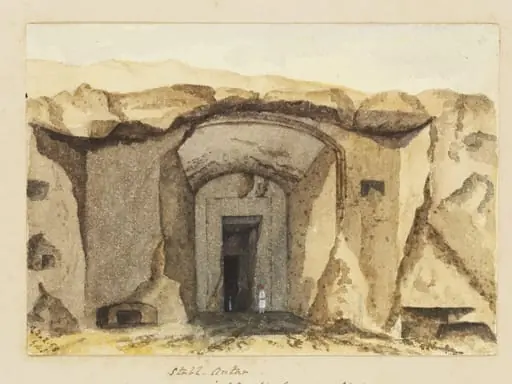 `Stabl-Antar. Ancient Egyptian Cave near Siout. Upper Egypt'