Artwork
`Petrified Forest Desert near Cairo'
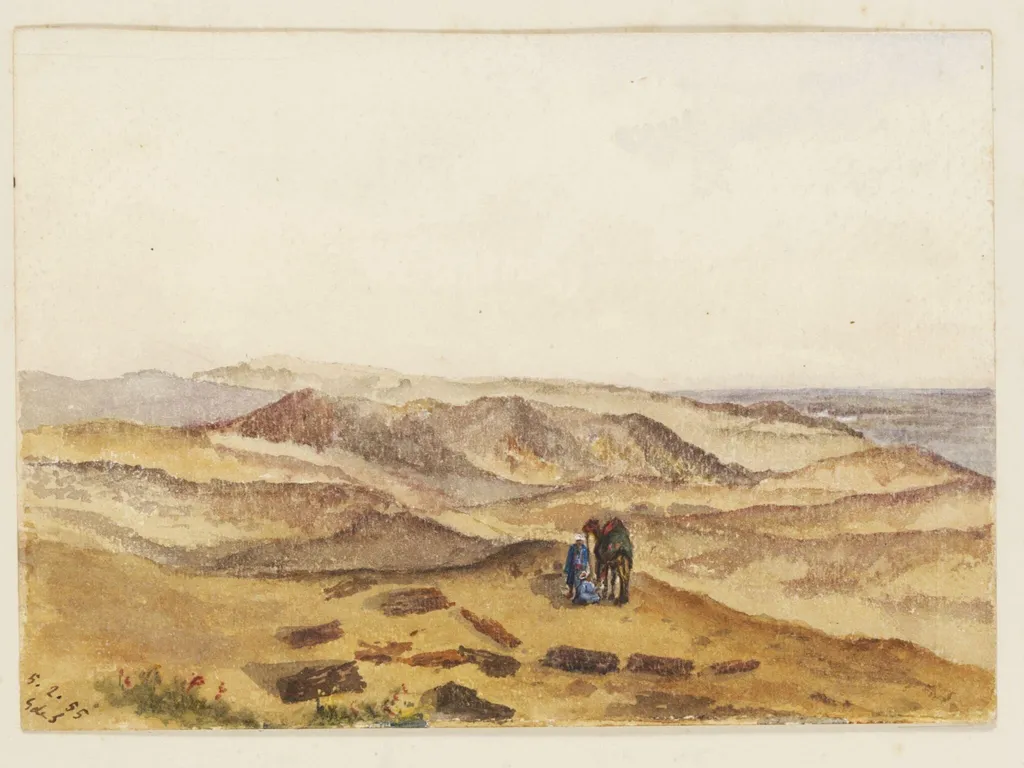
`Petrified Forest Desert near Cairo' is a watercolor work on paper by the Impressionist artist George de Sausmarez. It dates from 1855 and is held in the collection of the Victoria and Albert Museum.
About this work
Overview
Executed in delicate washes, it captures a barren, rocky terrain near Cairo, presented as a petrified forest.
This watercolor is one of forty-five works created during or following an 1855 journey along the Nile, documenting landscapes from both upstream and downstream regions. Executed in delicate washes, it captures a barren, rocky terrain near Cairo, presented as a petrified forest. The piece resides in a half-bound crimson morocco binder stamped 'EGYPT,' part of a curated album that reflects systematic visual recording of the region during the mid-nineteenth century.
Subject & Meaning
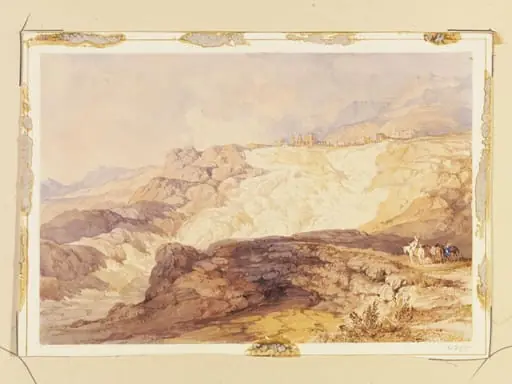
The scene portrays a desolate, eroded landscape where rock formations resemble fossilized timber, evoking the idea of a petrified forest. Three figures in dark attire stand near the foreground, observing something on the ground, suggesting quiet contemplation or geological interest. The title invites interpretation of natural decay as a kind of preserved memory, aligning with 19th-century fascination with time, geology, and the ancient past.
Technique & Style
The artist employed soft, translucent watercolor washes to model form without defined outlines, allowing subtle gradations of brown, ochre, and pale yellow to suggest the arid terrain. Sparse accents of green and red hint at resilient vegetation. Light is rendered through gentle tonal shifts rather than sharp contrasts, creating a hazy, atmospheric effect that enhances the sense of stillness and age in the landscape.
History & Provenance
The work belongs to a bound album of watercolors assembled after the artist’s 1855 travels along the Nile. The album’s binding—crimson morocco leather with an 'EGYPT' stamp—indicates deliberate curation, possibly for private or institutional use. Its current location at the Victoria and Albert Museum reflects its preservation as part of a broader collection documenting British engagement with Egyptian topography during the colonial era.
Context
Created during a period of increased European travel and scientific interest in Egypt, the image reflects a shift from romanticized depictions toward more observational, topographical recording. The notion of a 'petrified forest' aligns with contemporary geological theories about fossilization and ancient climates. Such works contributed to Western understanding of Egypt’s natural history beyond its monuments.
Legacy
This watercolor, though not widely exhibited, remains part of a significant archive of 19th-century Egyptian landscapes. It exemplifies the quiet, methodical approach to documenting terrain that preceded modern cartography and archaeology. Its preservation in a major museum collection ensures its continued role as a reference for studying visual documentation of the region during a transformative historical period.
Artist & collection
Artist
George de Sausmarez painted watercolors of Egypt’s Nile in the 1850s, recording river scenes and landmarks with quick, transparent washes.

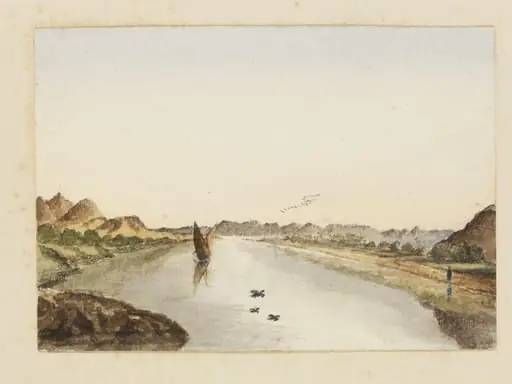 View of the Nile
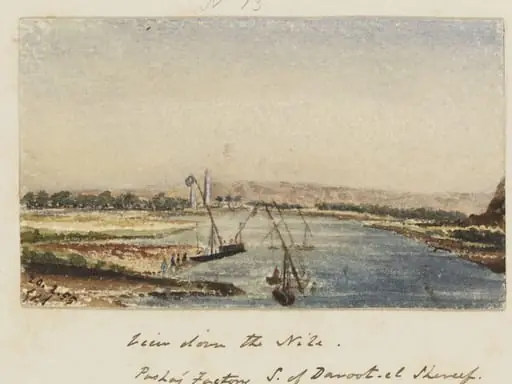 `View down the Nile. Pasha's Factory S.of Daroot-el Shereef. Upper Egypt'
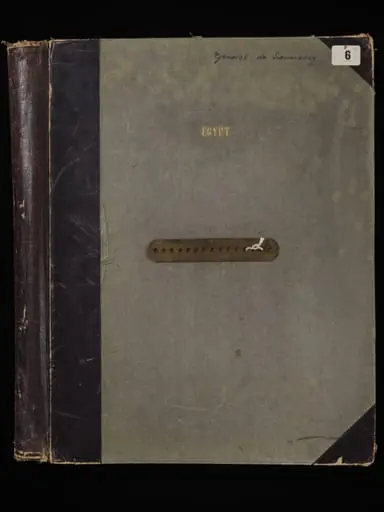 Album
Album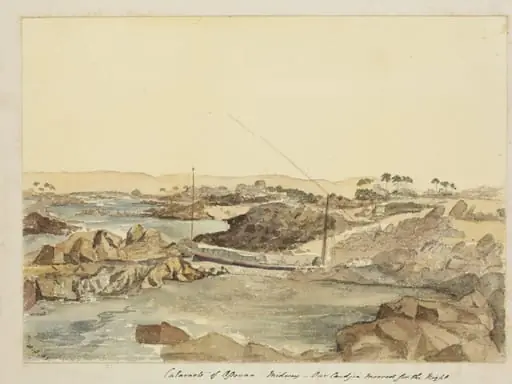 `Cataracts of Assouan. Midway. - Our Candjia Moored for the Night - On the Nile'
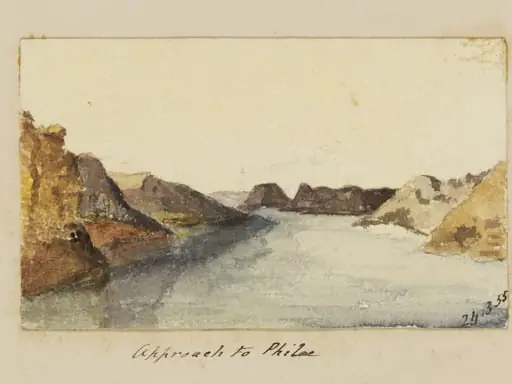 `Approach to Philae'
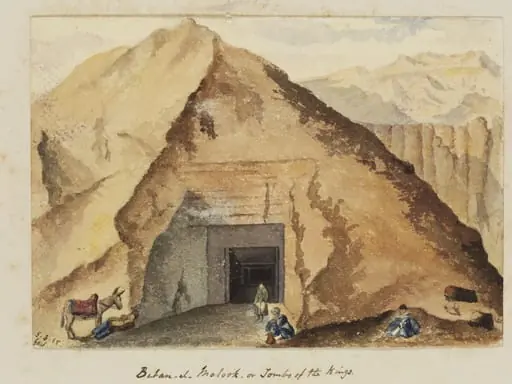 Biban-el-Molook, or Tombs of the Kings. Belzoni's Tomb. Thebes
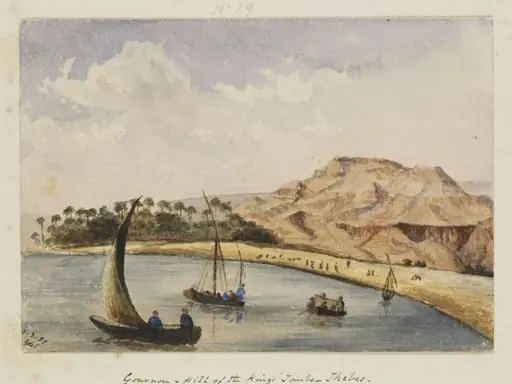 `Gournou & Hill of the Kings' Tombs - Thebes'
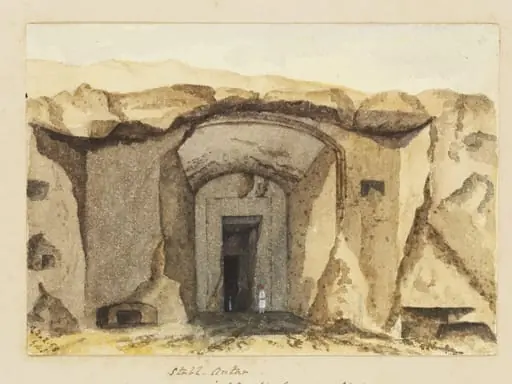 `Stabl-Antar. Ancient Egyptian Cave near Siout. Upper Egypt'
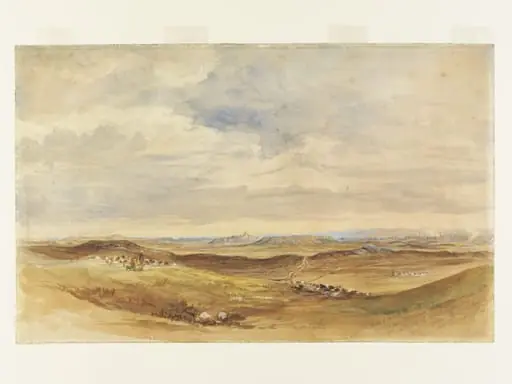 Nineveh from the North-East
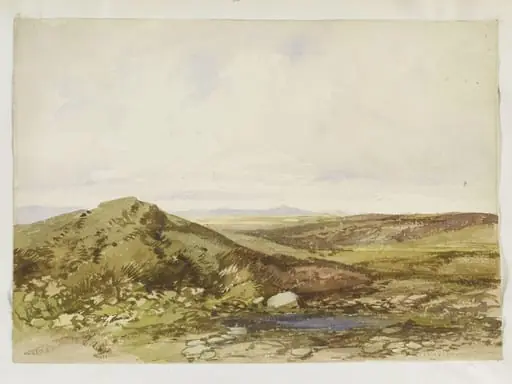 Watercolour in album of 51 drawings and watercolours by James Duffield Harding
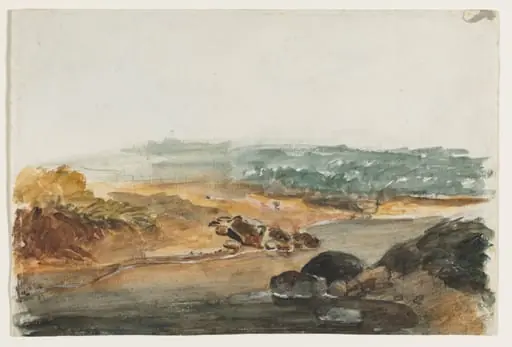 Landscape (recto)
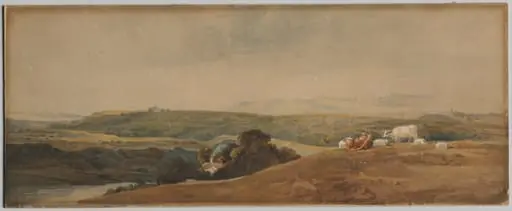 Mountains and Cattle
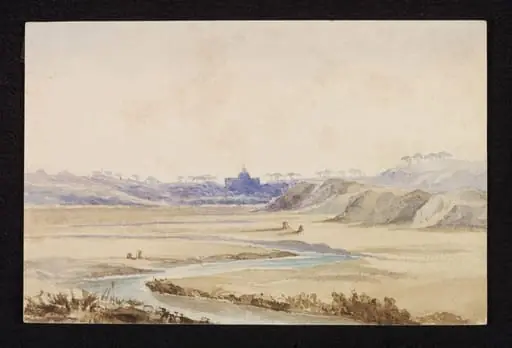 Landscape with a building, probably a tomb, in the distance
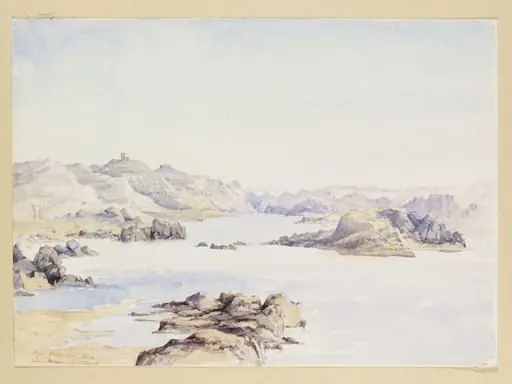 From Elephantine between Asouan and the 1st Cataract
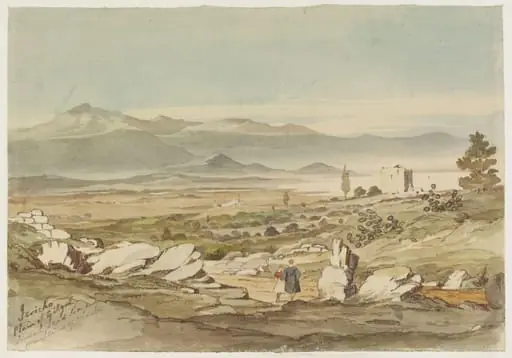 Jericho Plain of Gilgal, Jordan, Dead Sea, and Mountains of Moab
 The Ruins of Hierapolis
 The Sea of Galilee from the heights of Safad
 The Xanthus Valley, Lycia