Artwork
`Sakia or Persian wheel Nubia'
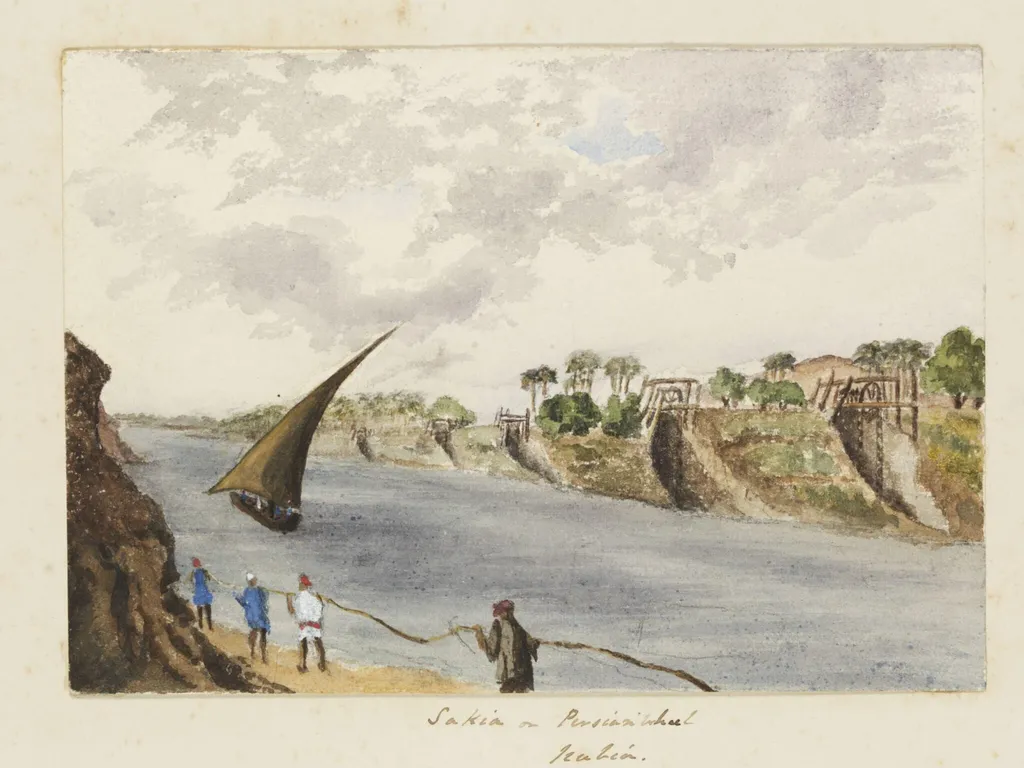
`Sakia or Persian wheel Nubia' is a watercolor work on paper by the Impressionist artist George de Sausmarez. It dates from 1855 and is held in the collection of the Victoria and Albert Museum.
About this work
Overview
This watercolour, part of a collection of forty‑five images on thirty‑five mounts, portrays a sakia—also known as a Persian wheel—situated on the Nile. The scene captures a quiet river landscape with three figures on the bank observing a sailing boat, while distant trees and structures line the curving waterway under a partly clouded sky.
Subject & Meaning
The central focus is the traditional irrigation device, illustrating the integration of agricultural technology within the Nile’s environment. The presence of the three men, dressed in modest local attire, suggests a moment of observation or perhaps supervision of the water‑lifting mechanism, emphasizing everyday life along the river.
Technique & Style
Executed in transparent watercolour on paper, the work employs delicate washes to render the river’s surface and atmospheric sky. The artist balances fine linear detail—such as the rope and figures—with broader tonal areas that convey depth and the tranquil mood of the scene.
History & Provenance
Created during or after a journey along the Nile in 1855, the image was incorporated into an album bound in half‑bound crimson morocco, stamped “EGYPT” on its cover. The album also contains several unmounted sheets, indicating it functioned as a travel sketchbook documenting the region.
Context
The depiction reflects mid‑nineteenth‑century European interest in Egyptian and Nubian landscapes, particularly the engineering feats that supported agriculture along the river. Such visual records contributed to contemporary understandings of the Nile’s geography and its cultural practices.
Artist & collection
Artist
George de Sausmarez painted watercolors of Egypt’s Nile in the 1850s, recording river scenes and landmarks with quick, transparent washes.

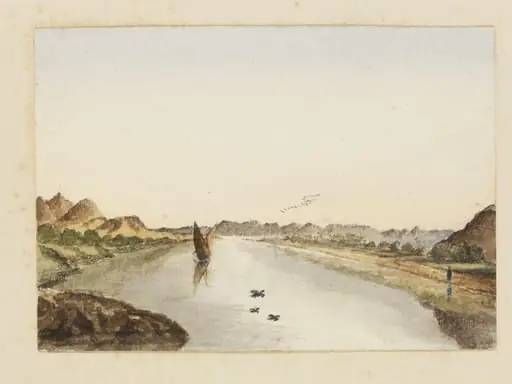 View of the Nile
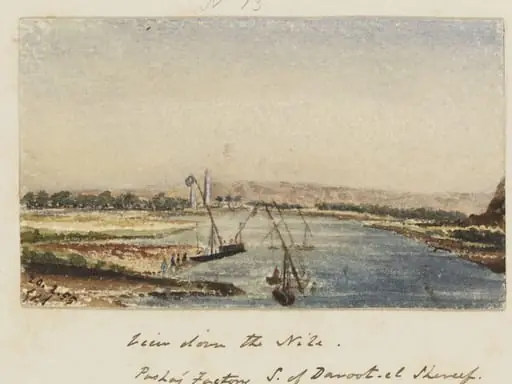 `View down the Nile. Pasha's Factory S.of Daroot-el Shereef. Upper Egypt'
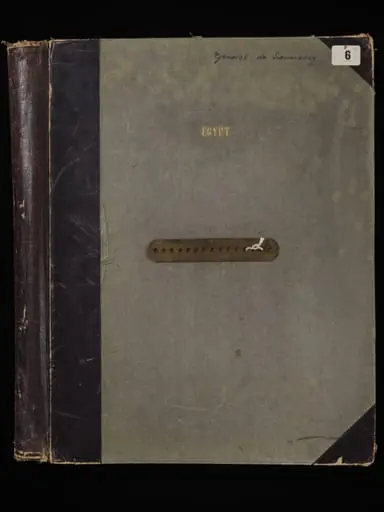 Album
Album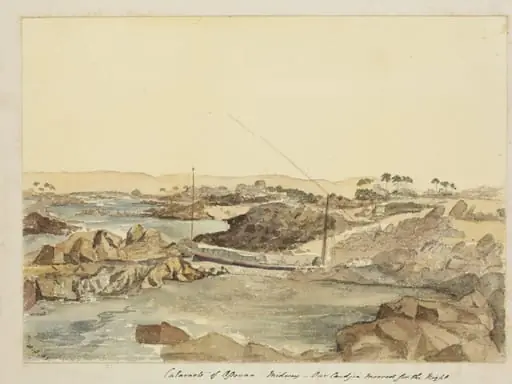 `Cataracts of Assouan. Midway. - Our Candjia Moored for the Night - On the Nile'
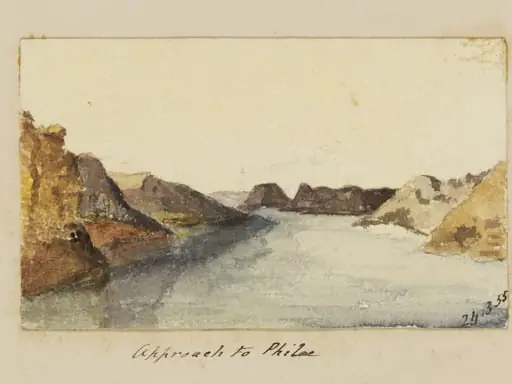 `Approach to Philae'
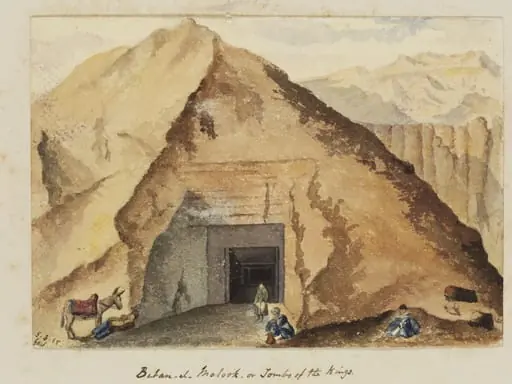 Biban-el-Molook, or Tombs of the Kings. Belzoni's Tomb. Thebes
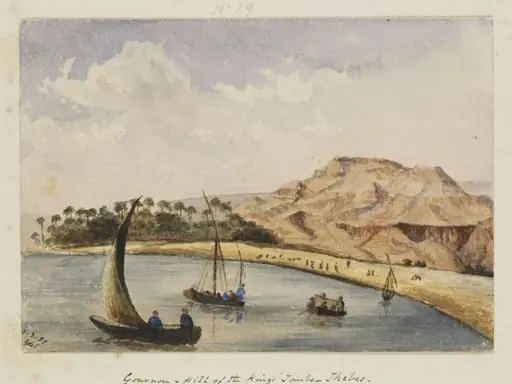 `Gournou & Hill of the Kings' Tombs - Thebes'
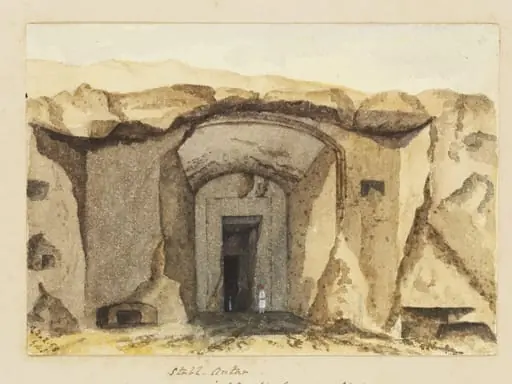 `Stabl-Antar. Ancient Egyptian Cave near Siout. Upper Egypt'
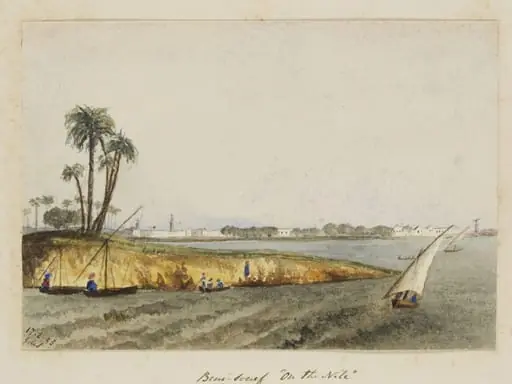 `Beni-Souef "On the Nile"
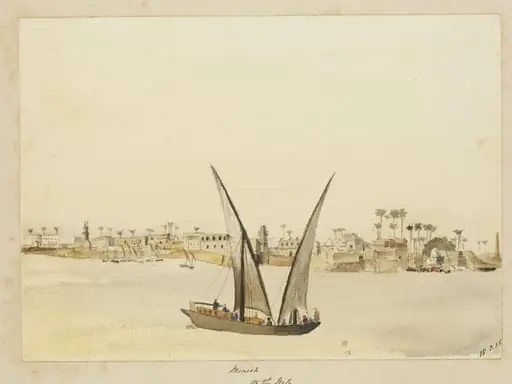 `Minieh On the Nile'
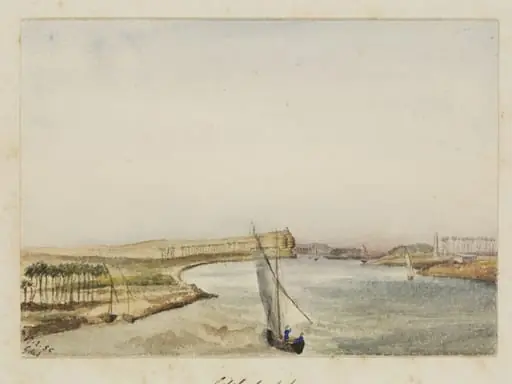 `Gibel-el-dab'
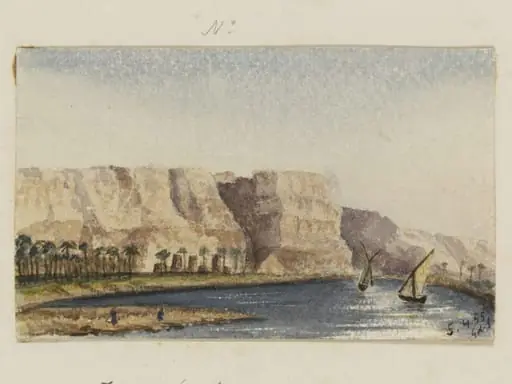 `Kusr-é-Syad. Opposite Choenoboscion. Upper Egypt'
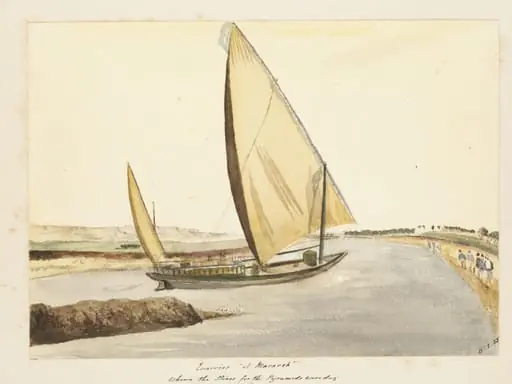 `Quarries "el. Masareh." Whence the Stones for the Pyramids were dug. On the Nile'
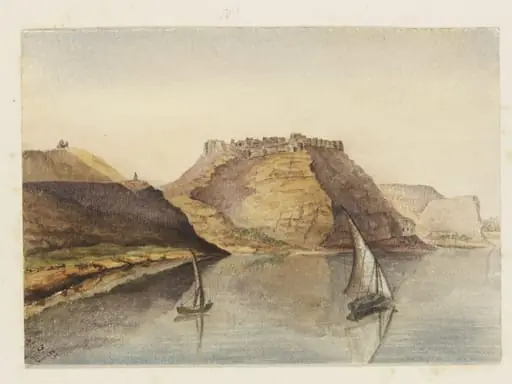 `Castle of Ibreem or Premnis, Nubia. Taken from our Boat'
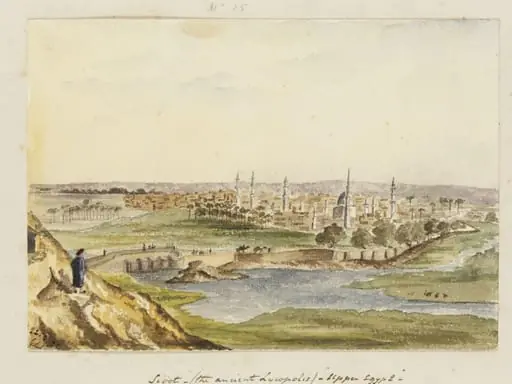 `Sioot - (the ancient Lycopolis.) - "Upper Egypt." from the Stabl-Antar Hill'
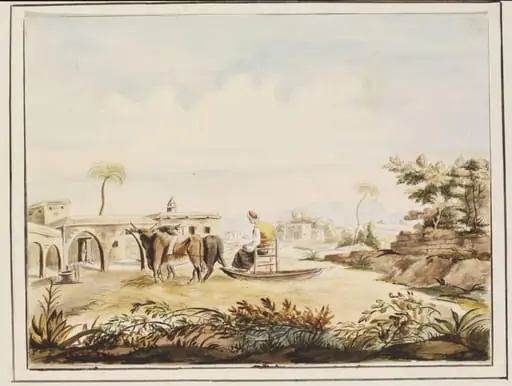 The manner of treading out the Corn
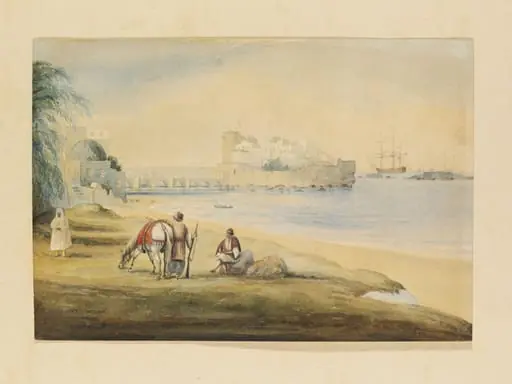 View of the Sea Castle (Sidon)
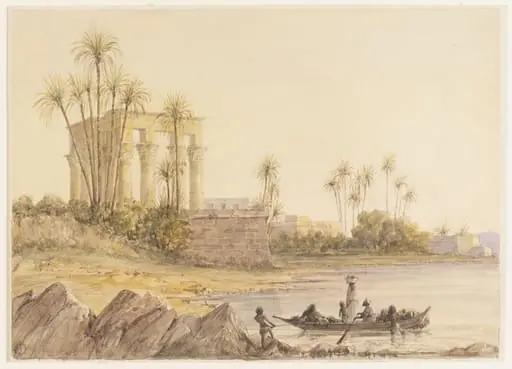 Landing Place. Philoe
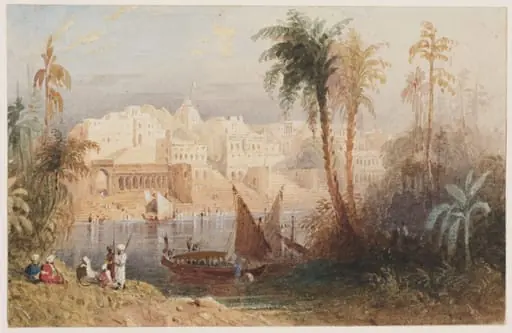 A view of an Indian city beside a river