Artwork
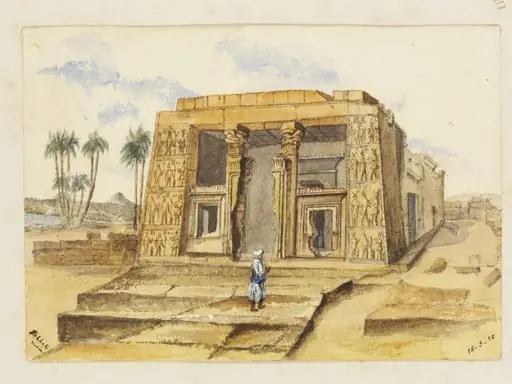
`Temple of Dakkeh. Nubia'
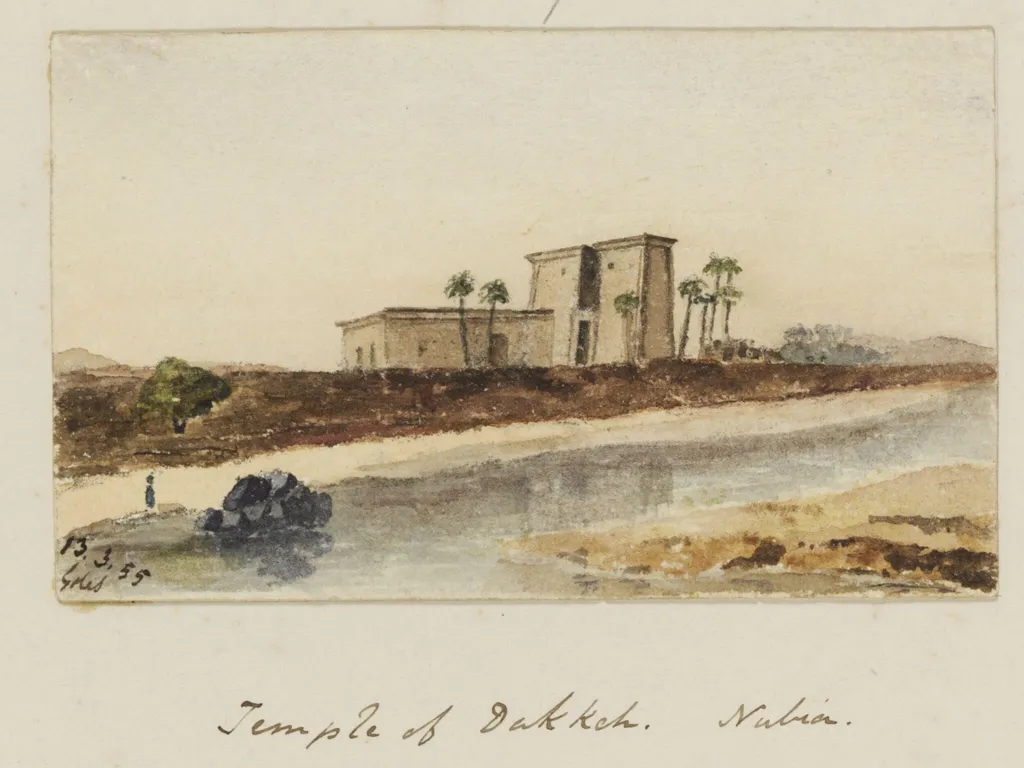
`Temple of Dakkeh. Nubia' is a watercolor work on paper by the Impressionist artist George de Sausmarez. It dates from 1855 and is held in the collection of the Victoria and Albert Museum. This watercolour, titled 'Temple of Dakkeh.
About this work
Overview
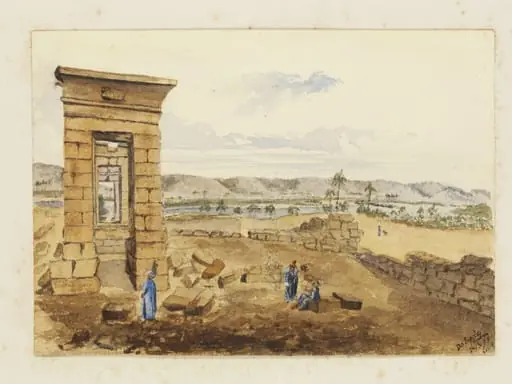
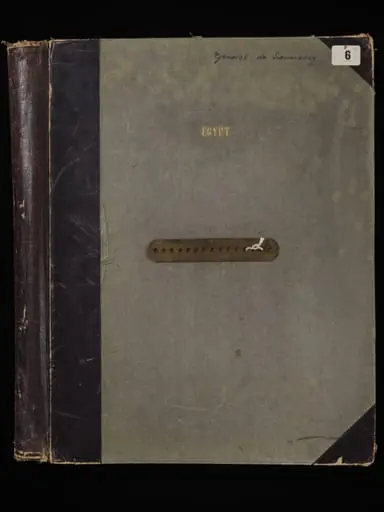
This watercolour, titled 'Temple of Dakkeh. Nubia', is one of 45 works created by George de Sausmarez following a 1855 Nile journey. It is housed in an album of Egyptian and Nubian views, bound in a crimson morocco music binder.
Subject & Meaning
The painting depicts a serene desert landscape featuring the Temple of Dakkeh in the background, characterized by simple architecture, palm trees, and a shallow pool of water in the foreground, evoking a sense of natural tranquility.
Technique & Style
Executed in soft, muted colours (light browns, pale blues, greens), the work exhibits loose, sketchy brushstrokes, conveying a spontaneous and naturalistic approach to capturing the scene. The artist's signature is present in the corner.
History & Provenance
Part of an album containing 45 watercolours from de Sausmarez's 1855 Nile expedition, with 35 mounted within the 'EGYPT'-stamped half-bound crimson morocco binder. Several watercolours, including this one, remain unmounted.
Context
Created during a period of heightened European interest in Egyptian and Nubian antiquities, this work reflects 19th-century artistic responses to these regions' landscapes and monuments.
Legacy
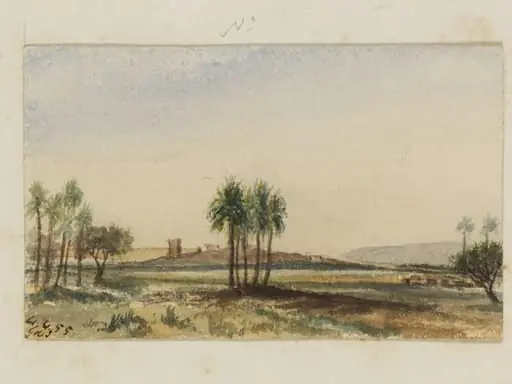
Similar works by the artist can be found at the Victoria and Albert Museum, indicating the piece's connection to a broader collection of contemporary watercolour landscapes of the region.
Artist & collection
Artist
George de Sausmarez painted watercolors of Egypt’s Nile in the 1850s, recording river scenes and landmarks with quick, transparent washes.

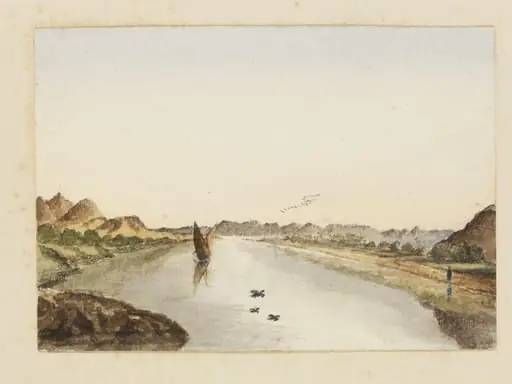 View of the Nile
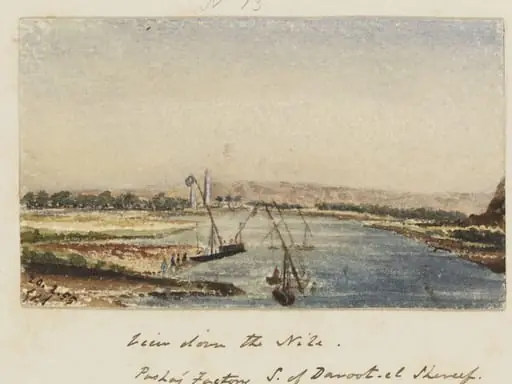 `View down the Nile. Pasha's Factory S.of Daroot-el Shereef. Upper Egypt'
 Album
Album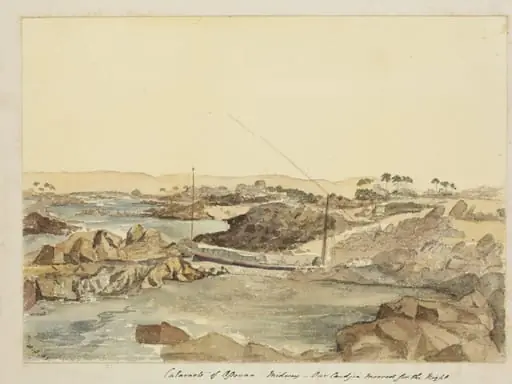 `Cataracts of Assouan. Midway. - Our Candjia Moored for the Night - On the Nile'
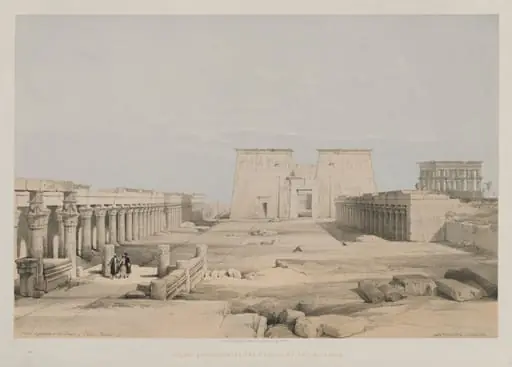
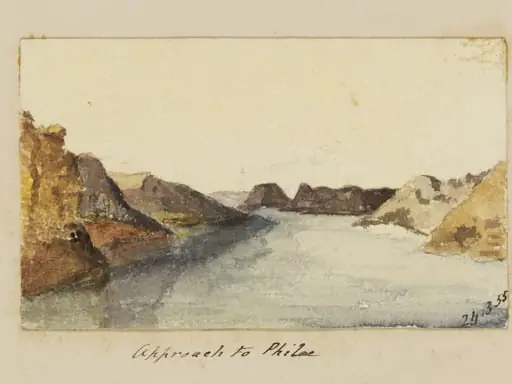 `Approach to Philae'
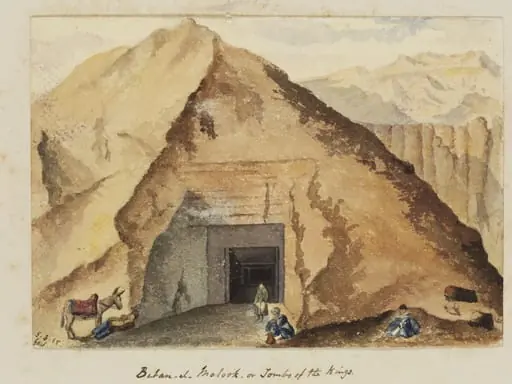 Biban-el-Molook, or Tombs of the Kings. Belzoni's Tomb. Thebes
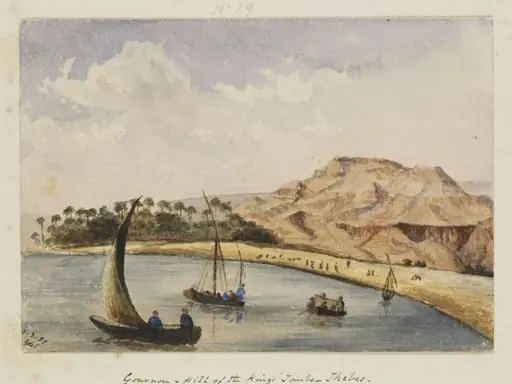 `Gournou & Hill of the Kings' Tombs - Thebes'
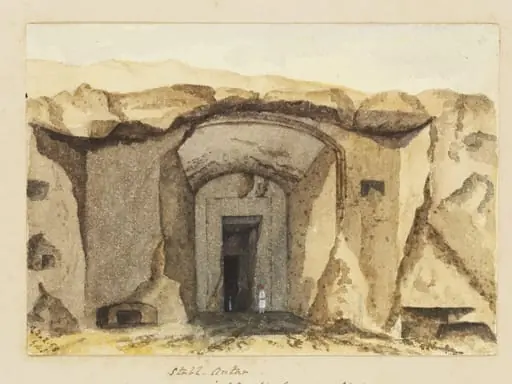 `Stabl-Antar. Ancient Egyptian Cave near Siout. Upper Egypt'