Artwork
`Dabode Nubia '
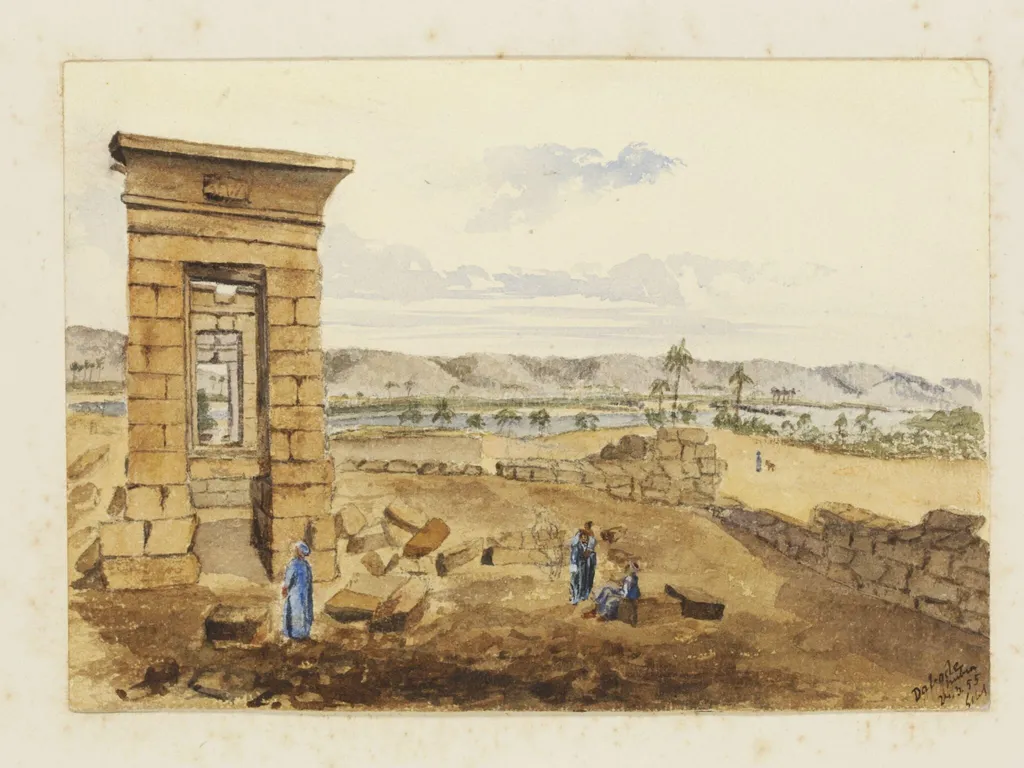
`Dabode Nubia ' is a watercolor work on paper by the British Romanticist artist George de Sausmarez. It dates from 1855 and is held in the collection of the Victoria and Albert Museum.
About this work
Overview
George de Sausmarez’s watercolour titled *Dabode Nubia* is one of a series of forty‑five similar works that document his travels along the Nile in the mid‑1850s. Executed on a mounted sheet, the picture records a ruined stone doorway set against a barren landscape, with three figures in blue garments positioned among the debris.
Subject & Meaning
The composition juxtaposes a decaying architectural fragment—a crumbling portal with a small window—against an open, desolate terrain that stretches toward a distant river and sparse trees. The three blue‑clad figures, either standing or crouching, emphasize human presence amid the ruins, suggesting a moment of quiet observation of a forgotten settlement.
Technique & Style
Rendered in watercolour on a prepared mount, the work employs a restrained palette of muted earth tones and soft, diffused light. De Sausmarez balances fine linear detail in the stonework with broader washes that convey the flatness of the surrounding ground, creating a subdued atmosphere that underscores the scene’s stillness.
History & Provenance
The watercolour was produced during or shortly after de Sausmarez’s 1855 Nile expedition, when he traveled both upstream and downstream, sketching sites in Egypt and Nubia. It now resides in a loosely bound crimson morocco music binder, stamped “EGYPT” on the cover, which holds the entire album of his Egyptian and Nubian views.
Artist & collection
Artist
George de Sausmarez painted watercolors of Egypt’s Nile in the 1850s, recording river scenes and landmarks with quick, transparent washes.

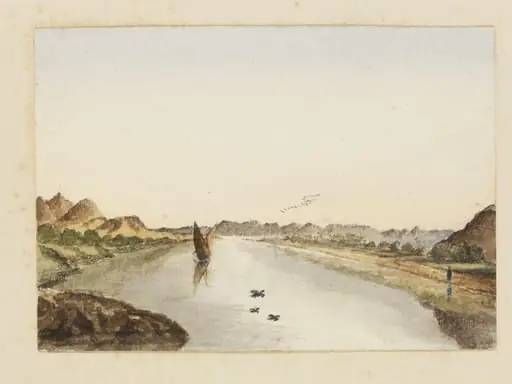 View of the Nile
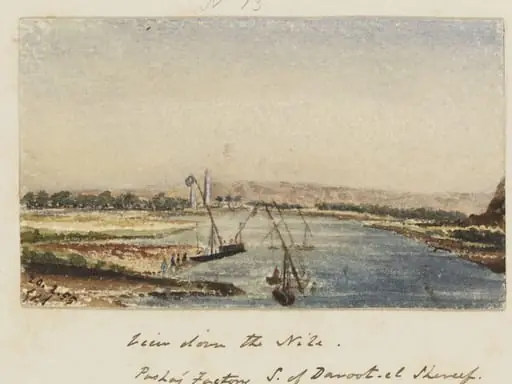 `View down the Nile. Pasha's Factory S.of Daroot-el Shereef. Upper Egypt'
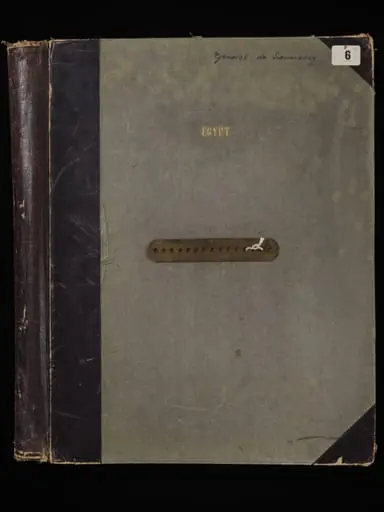 Album
Album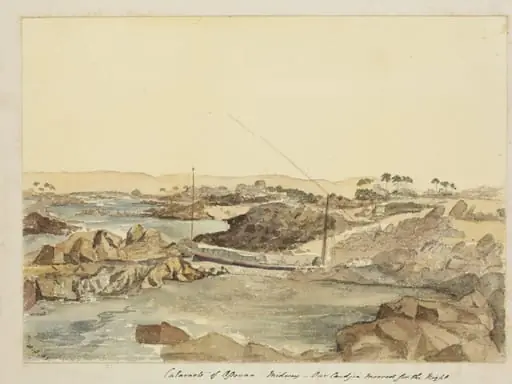 `Cataracts of Assouan. Midway. - Our Candjia Moored for the Night - On the Nile'
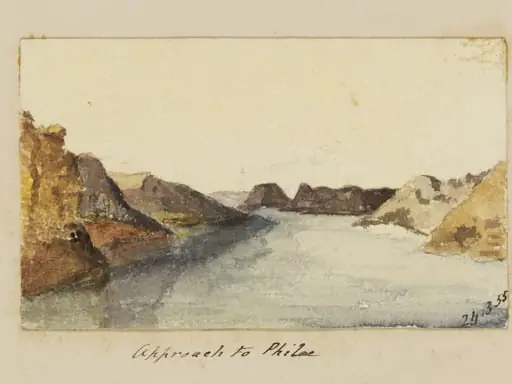 `Approach to Philae'
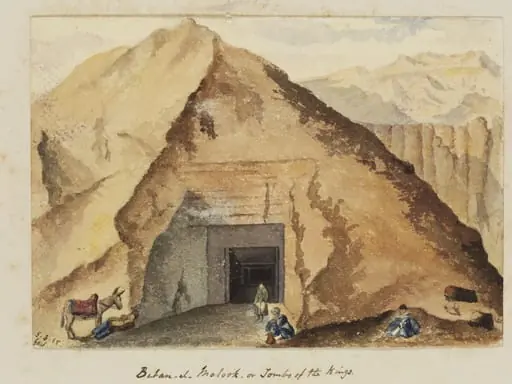 Biban-el-Molook, or Tombs of the Kings. Belzoni's Tomb. Thebes
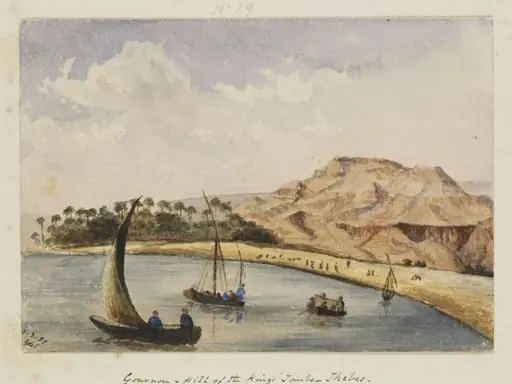 `Gournou & Hill of the Kings' Tombs - Thebes'
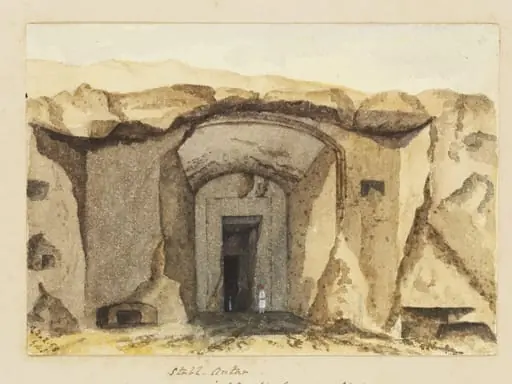 `Stabl-Antar. Ancient Egyptian Cave near Siout. Upper Egypt'
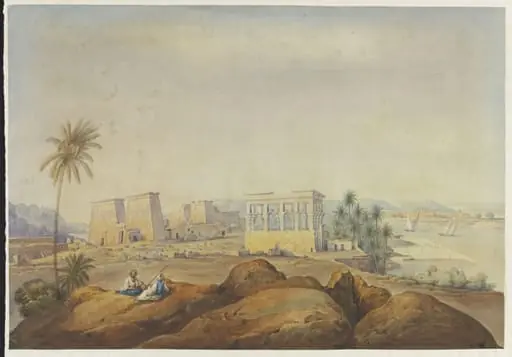 The Temple of Isis and Kiosk of Trajan on the Island of Philae
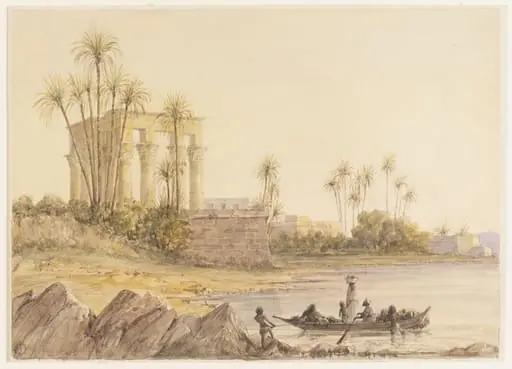 Landing Place. Philoe
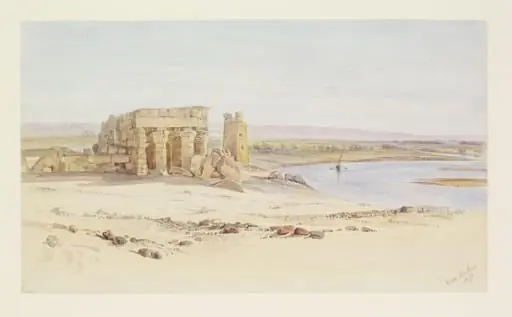 Kom Ombos
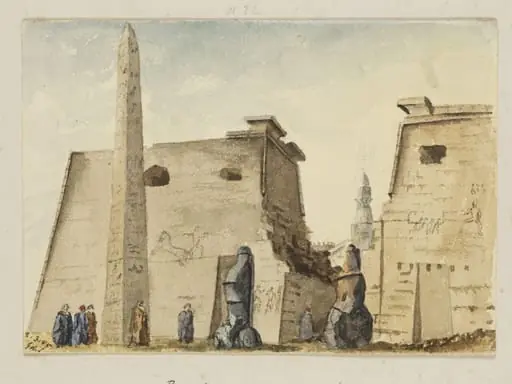 `Propyla of Great Temple. Luxor, Thebaid'
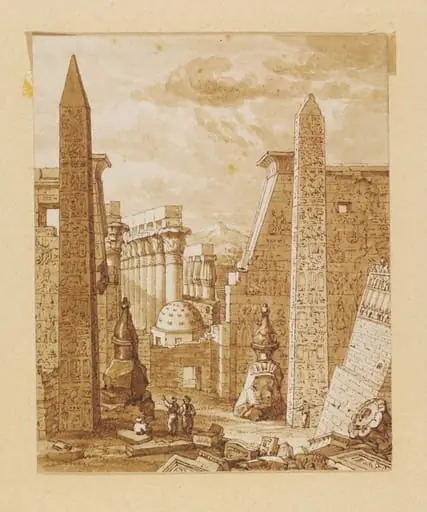 Entry of Palace of Luxor, formerly Thebes
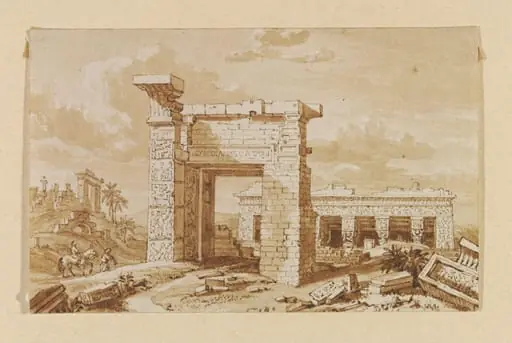 View of the Northern Gate of Dendera or Tentyra
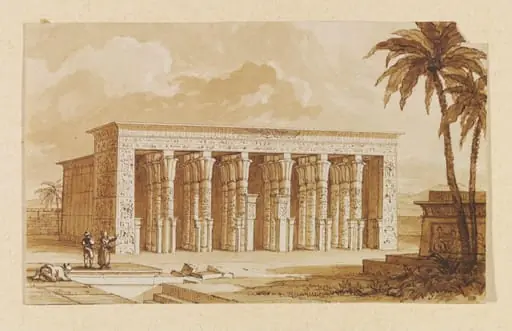 Perspective view of the Temple of Antaeopolis
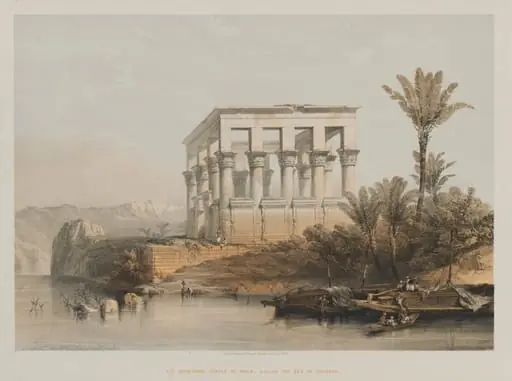 Egypt and Nubia, Volume II: The Hypaethral Temple at Philae, called the Bed of Pharaoh