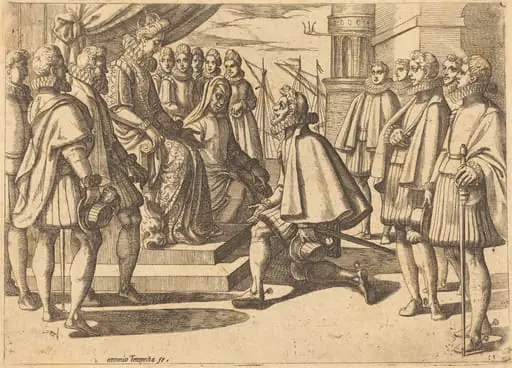
Artwork
Margaret of Austria Being Carried in a Chaise
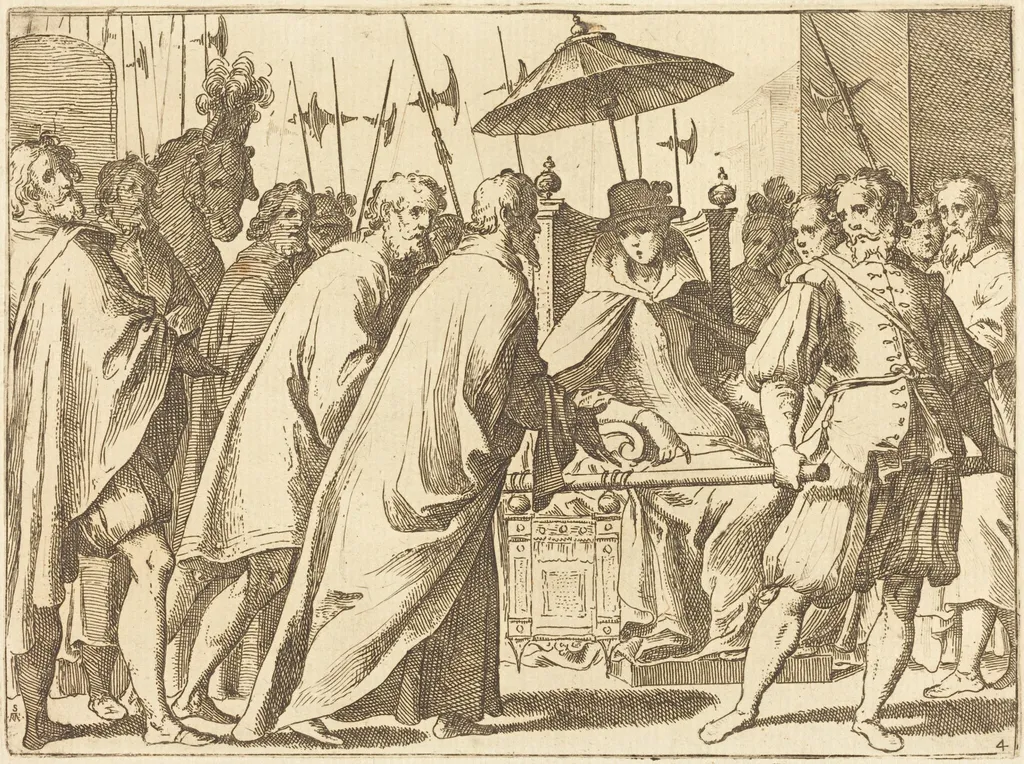
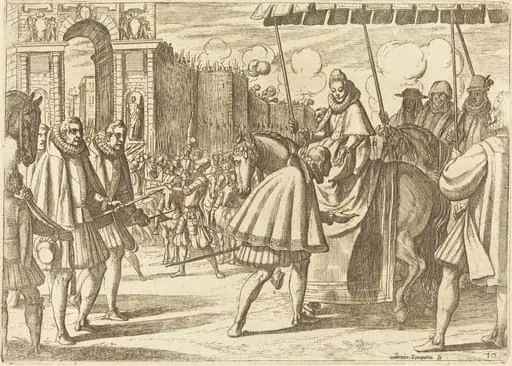
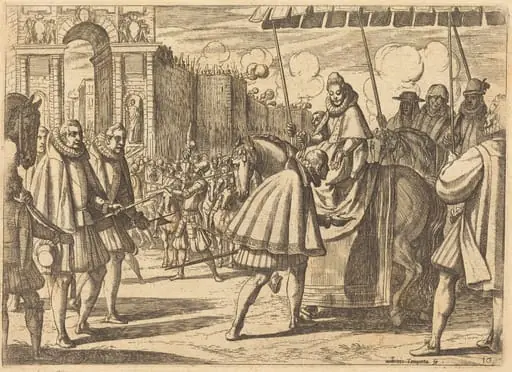
Margaret of Austria Being Carried in a Chaise is an ink print by the Baroque artist Raffaello Schiaminossi. It dates from 1612 and is held in the collection of the National Gallery of Art.
About this work
Overview
This etching, produced by Raffaello Schiaminossi in 1612, depicts Margaret of Austria being transported in a ceremonial chair.
This etching, produced by Raffaello Schiaminossi in 1612, depicts Margaret of Austria being transported in a ceremonial chair. The scene is rendered in fine linear detail on laid paper, likely a later restrike of the original plate. Figures surround the seated noblewoman, their postures and garments suggesting a formal procession. The composition conveys movement and ritual, emphasizing status through arrangement and attire.
Subject & Meaning
Margaret of Austria, a Habsburg archduchess and regent, is shown in transit, surrounded by attendants holding canopies and staffs. The presence of a small box marked with letters near her chair may reference official correspondence or documents of state, underscoring her political role. The procession format reflects the ceremonial norms of noble mobility, where even travel was a public display of authority and dignity.
Technique & Style
Schiaminossi employed etching to achieve sharp, controlled lines that define fabric folds, facial expressions, and atmospheric shadows. The contrast between light and dark enhances the drama of the scene, while the density of figures creates a sense of crowded formality. The medium’s capacity for fine detail allows for nuanced rendering of textures, from silk robes to the wooden frame of the chair.
History & Provenance
The original etching was made in 1612, and this version is a later restrike, indicating continued interest in the image beyond its initial circulation. Such restrikes were common in early modern printmaking, often produced to meet demand or preserve the artist’s design. The work likely entered private or institutional collections in Europe, though its specific provenance prior to modern holdings remains undocumented.
Context
Created during the height of Habsburg influence in Central Europe, the image aligns with the period’s emphasis on visual representation of power. Processional imagery was frequently used to reinforce the legitimacy and visibility of ruling women, especially those in regency roles. Schiaminossi’s work reflects broader trends in courtly portraiture, where ceremonial acts were documented as symbols of governance.
Legacy
Though not widely reproduced in modern scholarship, the print remains a rare visual record of Margaret’s public presence. It contributes to the understanding of how noblewomen’s authority was visually encoded in early 17th-century Europe. As an example of Italian printmaking influenced by Northern European court culture, it bridges regional artistic traditions of the period.
Artist & collection


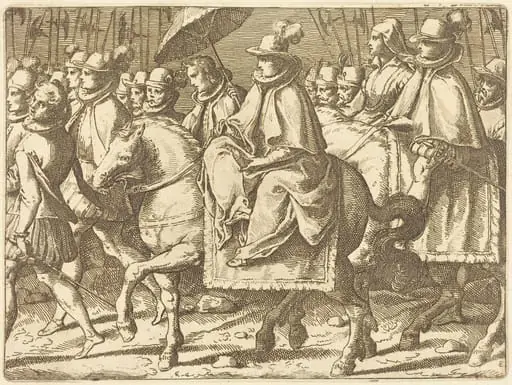
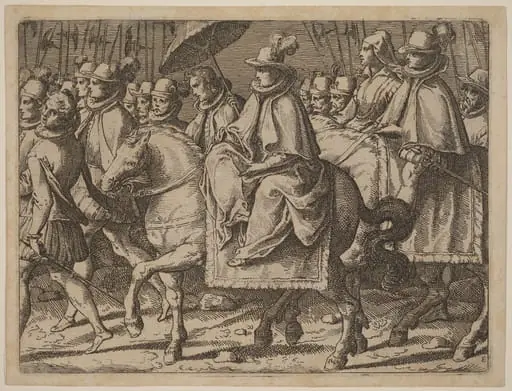 Margaret of Austria on Horseback
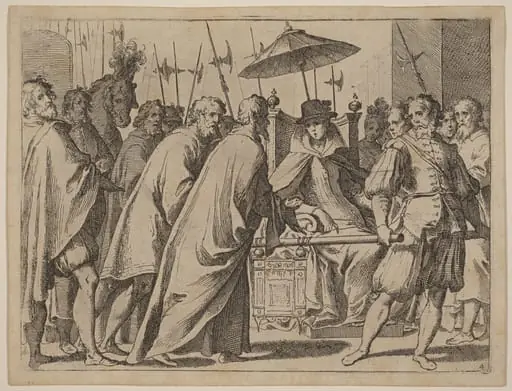 Margaret of Austria Being Carried in a Chaise
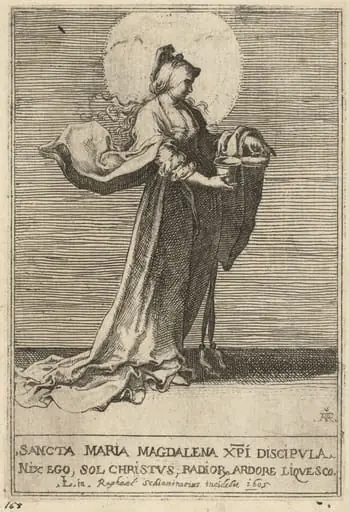 Saint Mary Magdalene
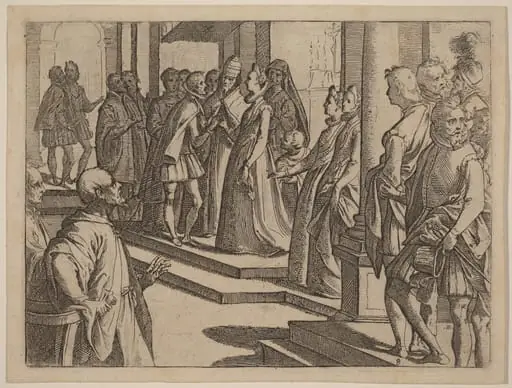 The Betrothal of Margaret of Austria to Philip III, King of Spain
![The Betrothal of Margaret of Austria to Philip III, King of Spain [verso], by Raffaello Schiaminossi](https://artifactworldgallery.com/img/raffaello-schiaminossi--the-betrothal-of-margaret-of-austria-to-philip-iii-king-of-s--509229b9feb3b80f-w320.webp) The Betrothal of Margaret of Austria to Philip III, King of Spain [verso]
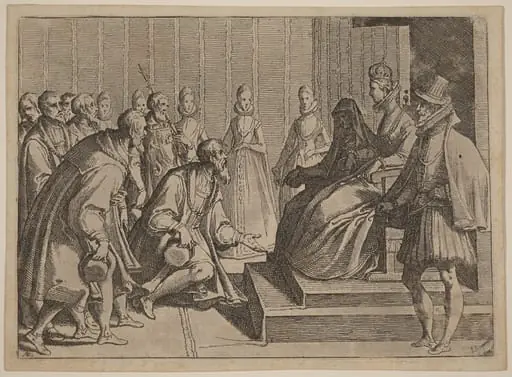
The Betrothal of Margaret of Austria to Philip III, King of Spain [verso]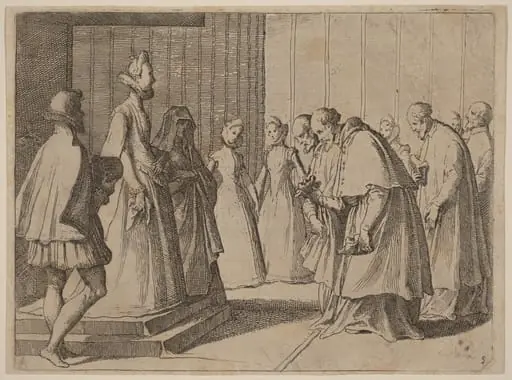 Margaret of Austria Receiving the Homage of Cardinals and Prelates
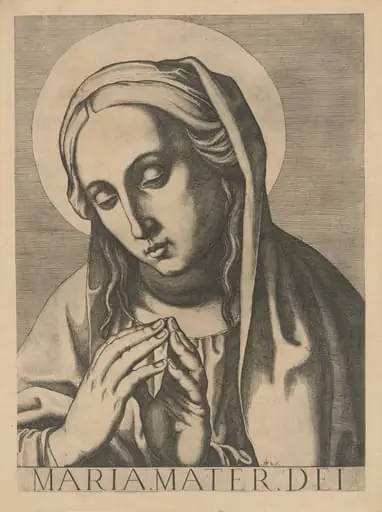 Bust of the Virgin
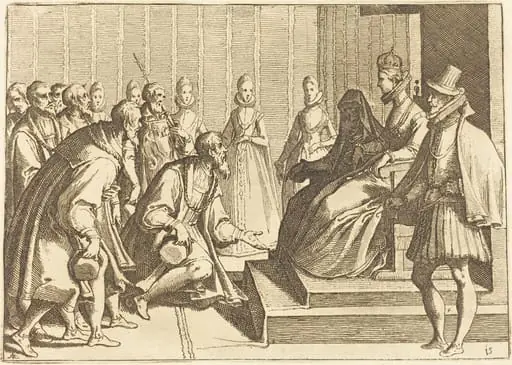 Margaret of Austria Giving Audience to a Nobleman
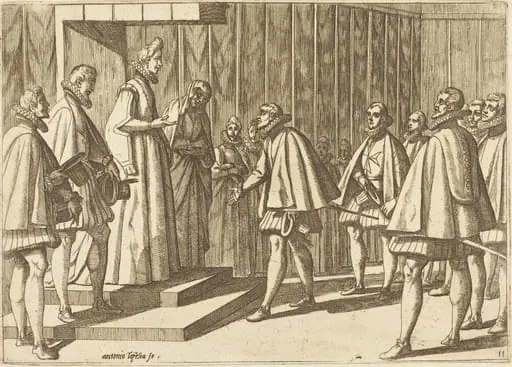
![Margaret of Austria Giving Audience to a Nobleman [verso], by Raffaello Schiaminossi](https://artifactworldgallery.com/img/raffaello-schiaminossi--margaret-of-austria-giving-audience-to-a-nobleman-verso--86ac2347af277f00-w320.webp)