Artwork
Bust of the Virgin
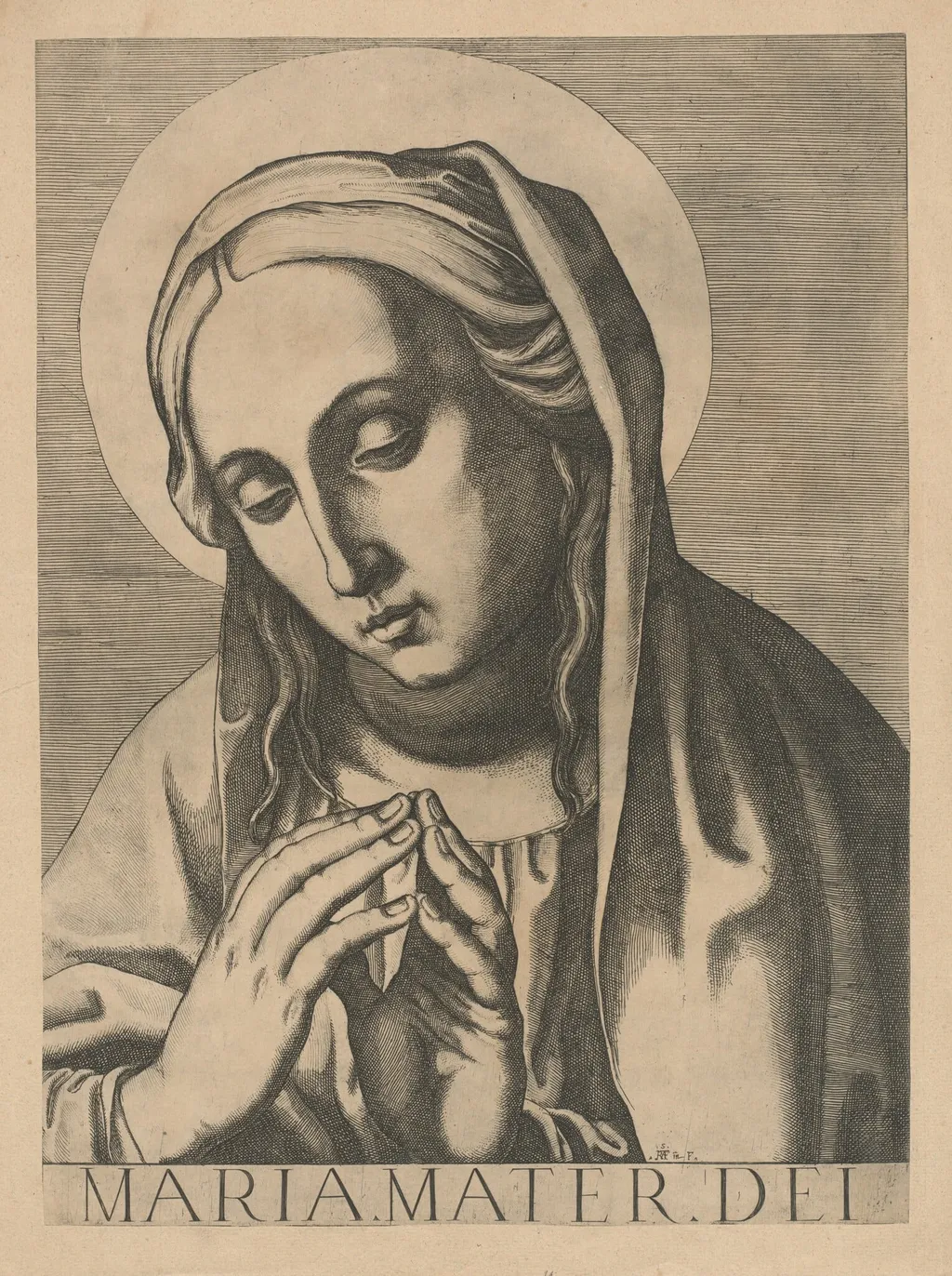
Bust of the Virgin is an ink print by the Baroque artist Raffaello Schiaminossi. It dates from 1606 and is held in the collection of the National Gallery of Art.
About this work
Overview
Raffaello Schiaminossi’s 1606 print, titled Bust of the Virgin, presents a half‑length portrait of the Virgin Mary rendered in black and white on laid paper. The composition isolates the figure against a neutral gray ground, emphasizing her serene expression and modest posture. The work exemplifies early‑17th‑century devotional imagery intended for private contemplation.
Subject & Meaning
The image depicts Mary from the shoulders upward, her head inclined slightly to the right and eyes lowered in a gesture of humility. She wears a simple headscarf over long hair and a loose robe, while her hands are joined before her chest, suggesting prayerful devotion. The subdued pose conveys quiet reverence rather than dramatic narrative.
Technique & Style
Executed through a combination of etching and engraving, the print relies on fine lines and delicate cross‑hatching to model the Virgin’s features and the folds of her garment. The laid paper’s textured surface enhances tonal variation, while the restrained shading creates a sense of depth without resorting to the exuberant chiaroscuro typical of later Baroque prints.
History & Provenance
Created in 1606, the bust belongs to Schiaminossi’s early output as a printmaker active in Tuscany. Though specific ownership records are scarce, the work circulated among devotional collectors of the period, reflecting the broader demand for portable religious images in post‑Council of Trent Italy.
Artist & collection


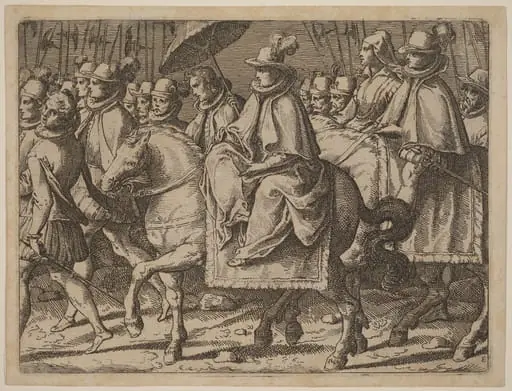 Margaret of Austria on Horseback
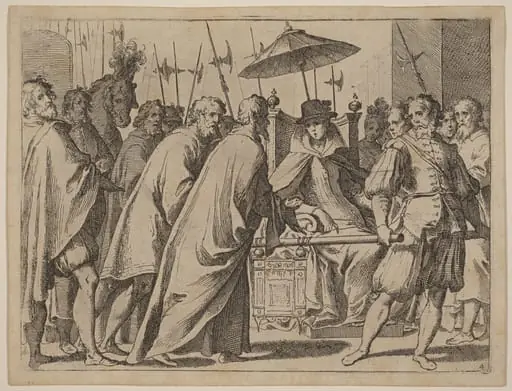 Margaret of Austria Being Carried in a Chaise
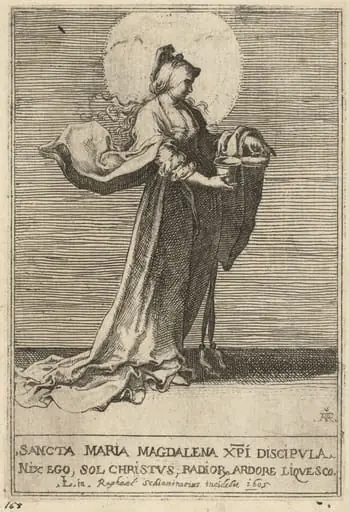 Saint Mary Magdalene
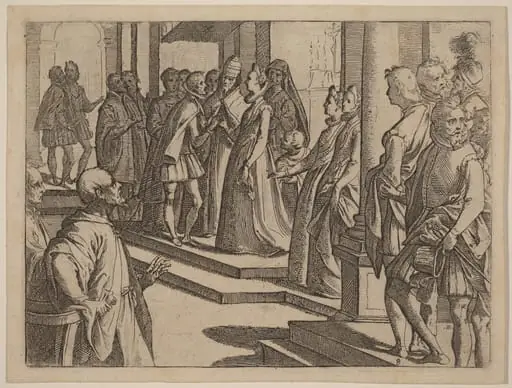 The Betrothal of Margaret of Austria to Philip III, King of Spain
![The Betrothal of Margaret of Austria to Philip III, King of Spain [verso], by Raffaello Schiaminossi](https://artifactworldgallery.com/img/raffaello-schiaminossi--the-betrothal-of-margaret-of-austria-to-philip-iii-king-of-s--509229b9feb3b80f-w320.webp) The Betrothal of Margaret of Austria to Philip III, King of Spain [verso]
The Betrothal of Margaret of Austria to Philip III, King of Spain [verso]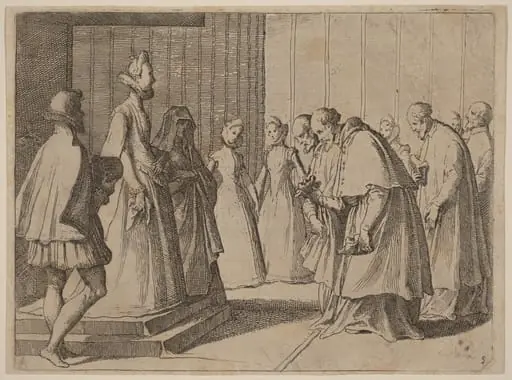 Margaret of Austria Receiving the Homage of Cardinals and Prelates
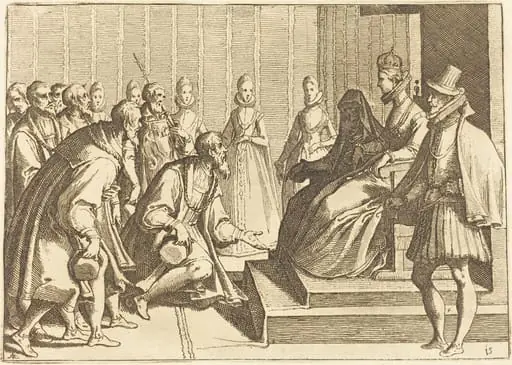 Margaret of Austria Giving Audience to a Nobleman
![Margaret of Austria Giving Audience to a Nobleman [verso], by Raffaello Schiaminossi](https://artifactworldgallery.com/img/raffaello-schiaminossi--margaret-of-austria-giving-audience-to-a-nobleman-verso--86ac2347af277f00-w320.webp) Margaret of Austria Giving Audience to a Nobleman [verso]
Margaret of Austria Giving Audience to a Nobleman [verso]
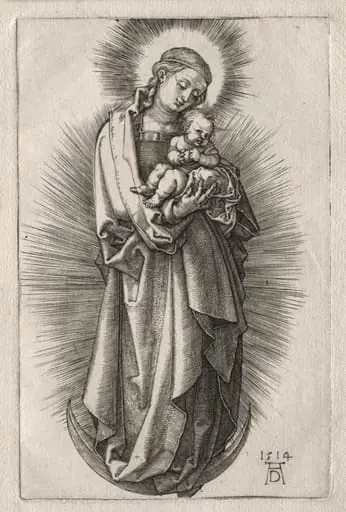 The Virgin with Hairband on a Crescent Moon
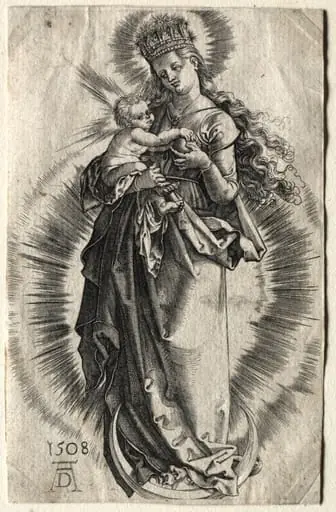 Virgin on a Crescent with a Starry Crown
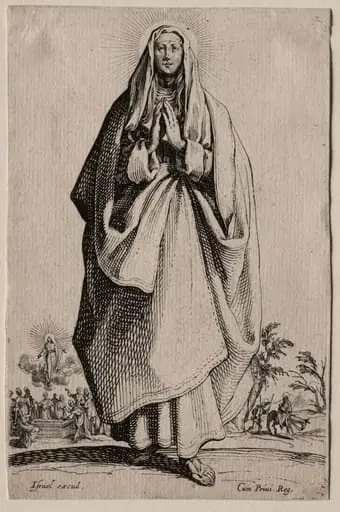 Salvatoris Beatae Mariae Virginis Sanctorum Apostolorum Icones/Les Grands Apôtres (The Large Apostles): La Sainte Vierge (The Holy Virgin)
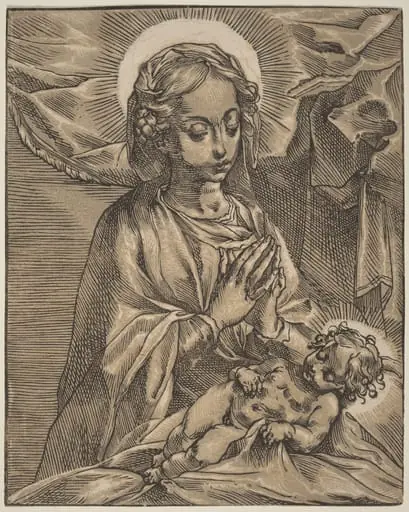 Madonna and Child
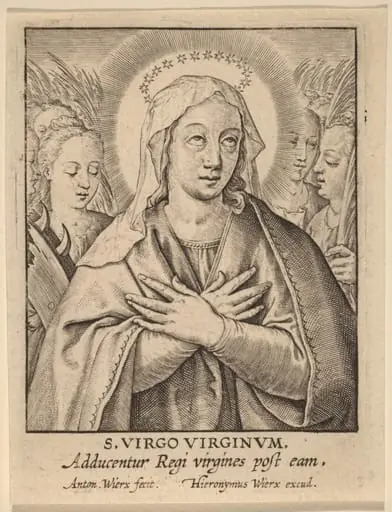 S. Virgo Virginum
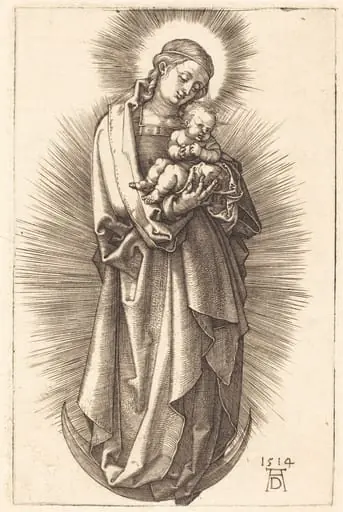 The Virgin and Child on a Crescent with a Diadem
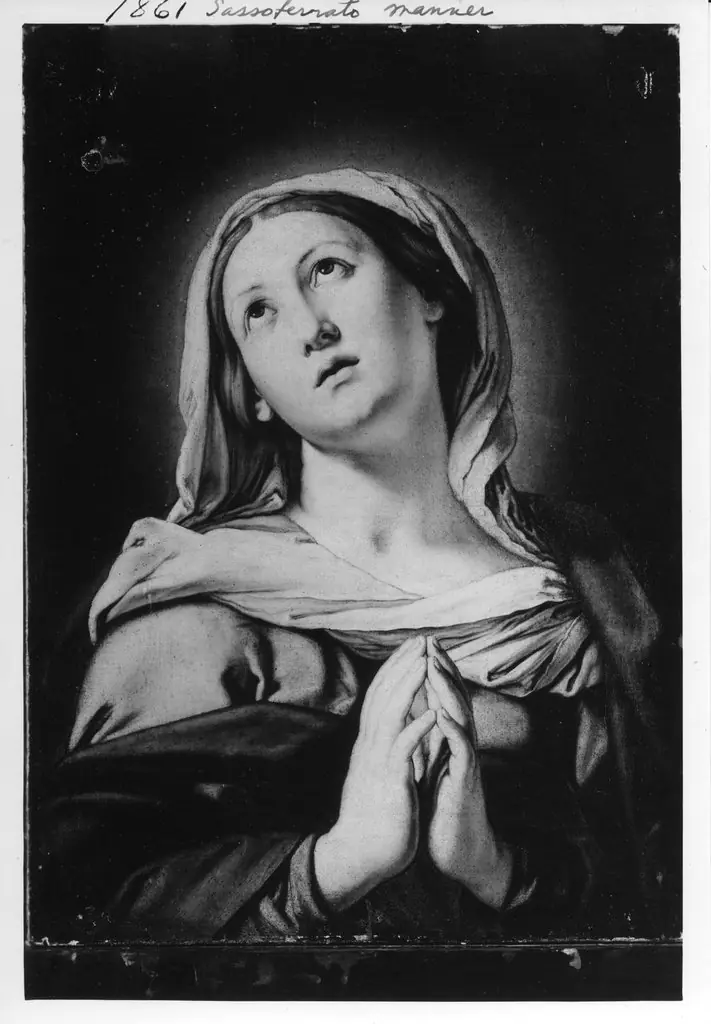 The Virgin in Prayer
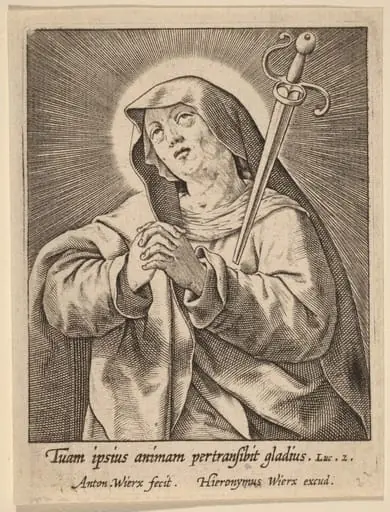 Tuam ipsius animam ...