Artwork
Entombment of Christ
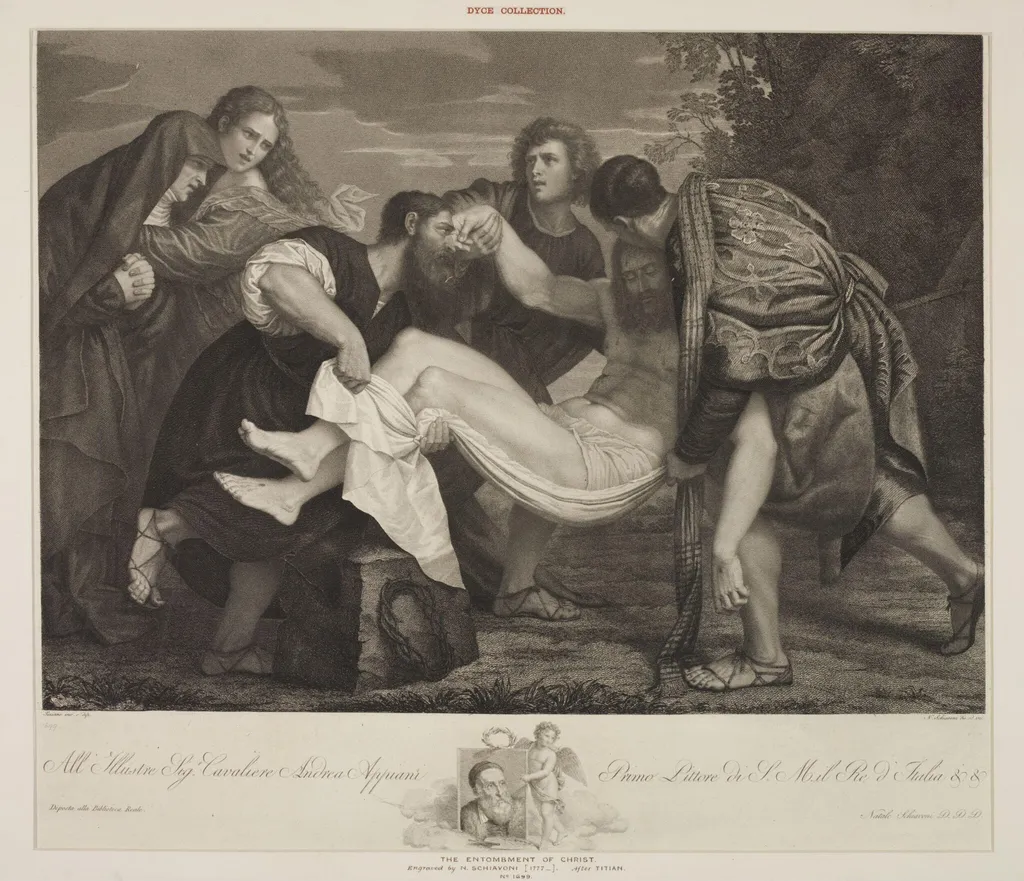
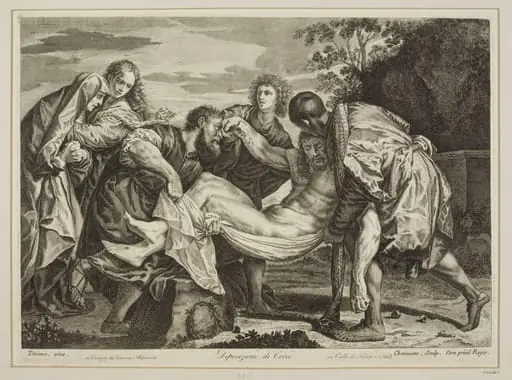
Entombment of Christ is a print by Natale Schiavoni. It dates from 1850 and is held in the collection of the Victoria and Albert Museum.
About this work
Overview
Executed through reproductive printmaking, it translates the painterly composition into a graphic medium, preserving the emotional gravity of the scene.
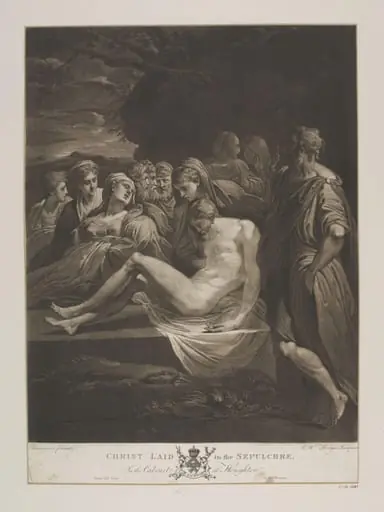
This print on paper reproduces the Entombment of Christ, originally composed by Titian. Executed through reproductive printmaking, it translates the painterly composition into a graphic medium, preserving the emotional gravity of the scene. The image captures the moment Christ’s body is lowered into a tomb, rendered with attention to gesture and spatial depth, typical of 16th-century print traditions that sought to disseminate major religious subjects beyond original paintings.
Subject & Meaning
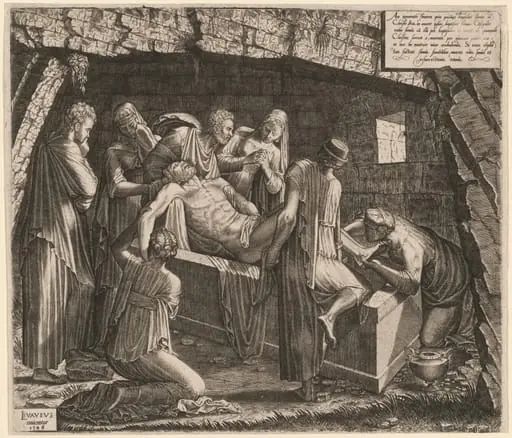
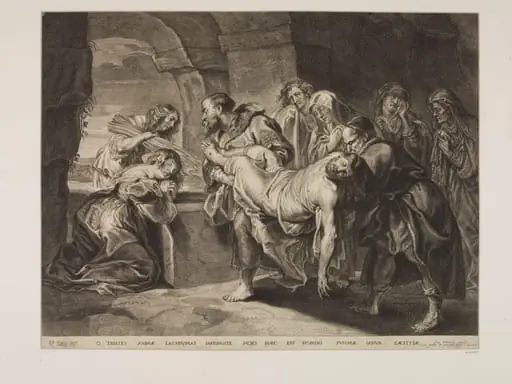
The scene depicts the burial of Christ, a pivotal moment in Christian narrative following the Crucifixion. Figures surround the wrapped body, each engaged in the solemn act of interment. Their postures convey urgency and reverence, emphasizing human participation in divine sacrifice. The inclusion of raised hands and draped garments suggests ritual and mourning, reinforcing the theological weight of Christ’s death and the communal response to it.
Technique & Style
The print employs chiaroscuro to model form and heighten emotional tension, using stark contrasts between light and shadow to define the figures and architecture. Lines are deliberate and expressive, capturing the weight of the body and the texture of fabric through hatching and tone. The technique reflects the influence of Italian engraving traditions, where graphic precision served to emulate the dramatic effects of oil painting in a reproducible format.
History & Provenance
Created as a reproductive print after Titian’s painting, this work likely dates to the late 16th or early 17th century, when such prints circulated widely across Europe. It was produced to meet demand for devotional imagery among collectors and religious institutions unfamiliar with the original. While the specific engraver remains unconfirmed, the style aligns with workshops active in Venice or Rome, known for translating Titian’s compositions into prints.
Context
During the Counter-Reformation, images of Christ’s burial served as tools for spiritual reflection and doctrinal reinforcement. The Entombment was a favored subject in both painting and print, offering viewers a meditative focus on mortality and redemption. This print reflects broader trends in Catholic visual culture, where accessible imagery helped sustain faith and devotion among diverse audiences.
Legacy
As a reproductive print, this work contributed to the dissemination of Titian’s compositional ideas beyond the confines of elite collections. It preserved the emotional intensity of the original for wider audiences, influencing later interpretations of the Entombment in both print and painting. Its survival offers insight into how religious imagery was reproduced, circulated, and consumed in early modern Europe.
Artist & collection
Artist
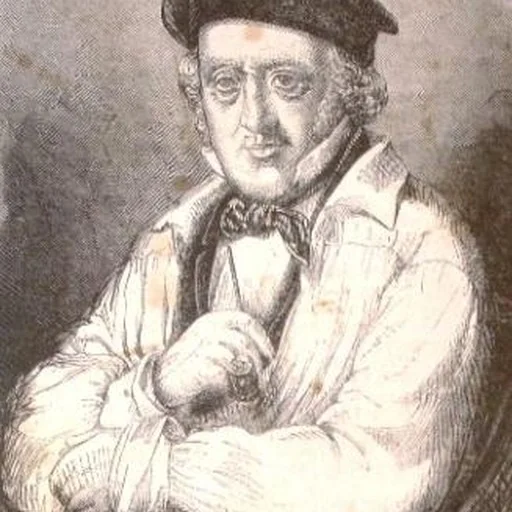
Natale Schiavoni (25 April 1777 – 15 April 1858) was an Italian painter and engraver, specializing in history and portraits. Many of his paintings depict seductive nubile women.