Artwork
Henry Thornely
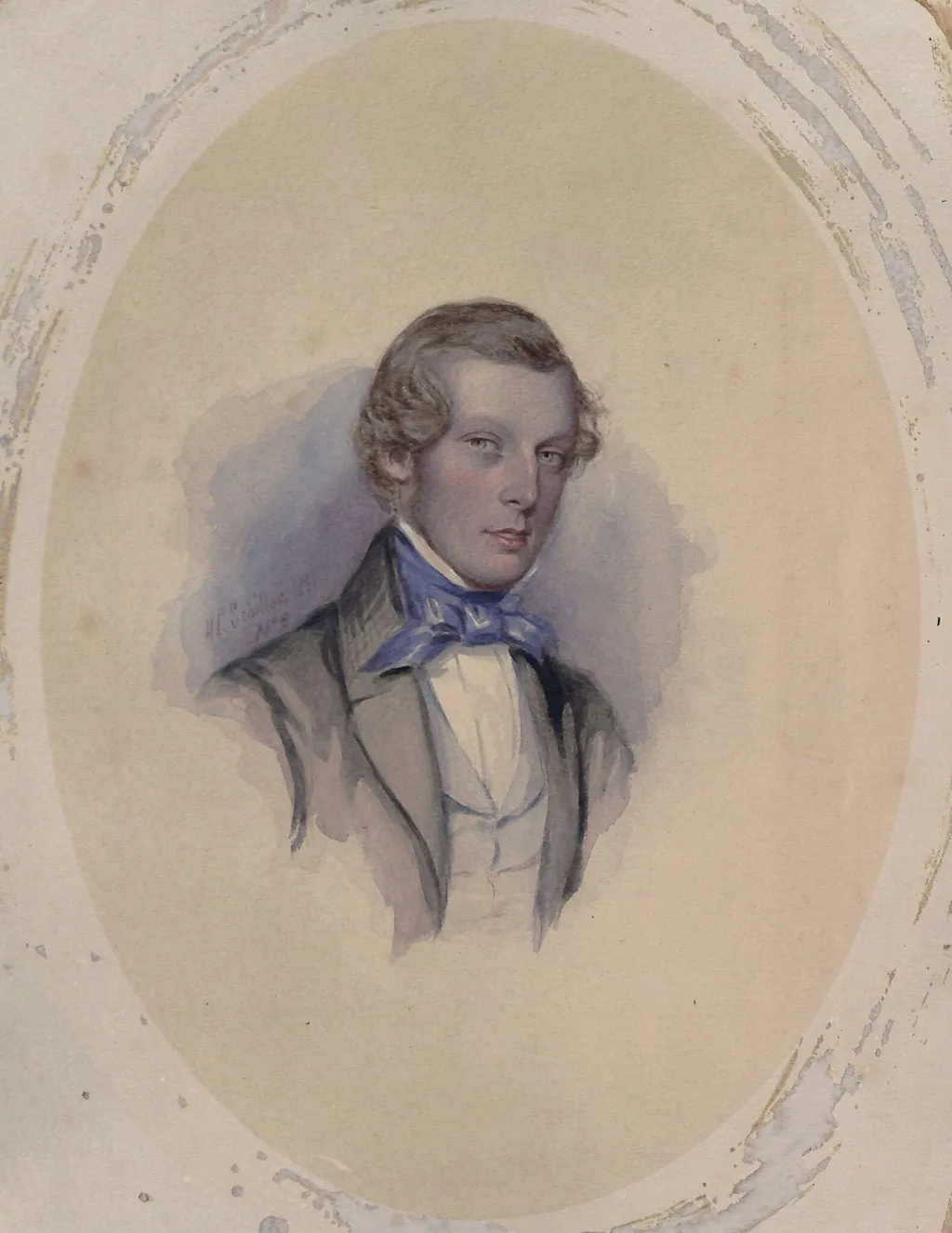
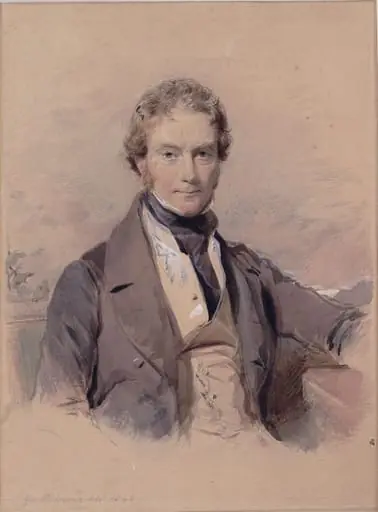
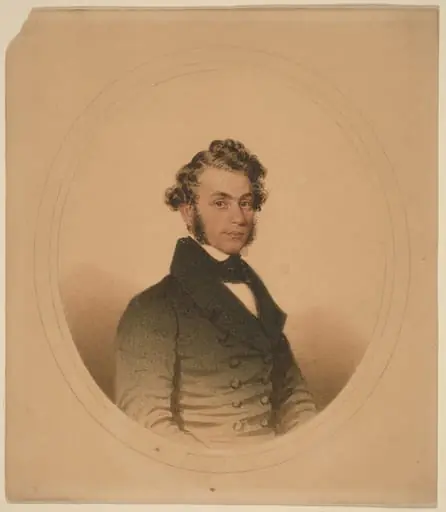
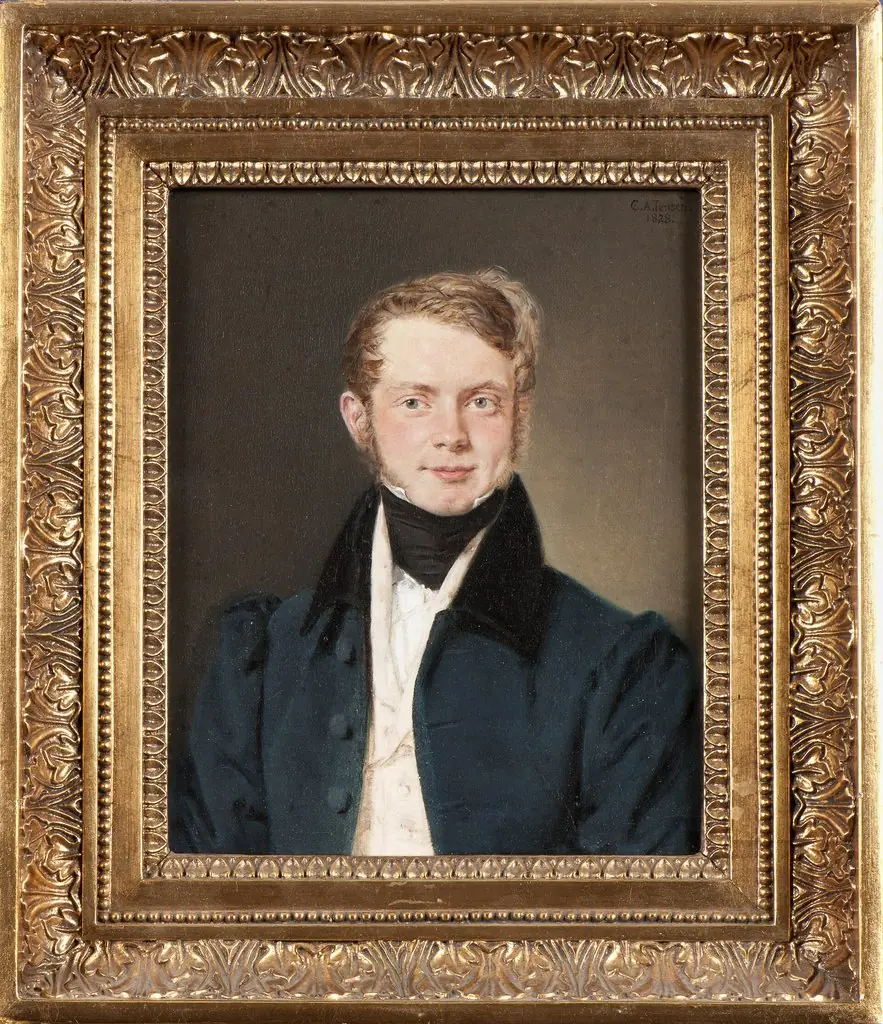
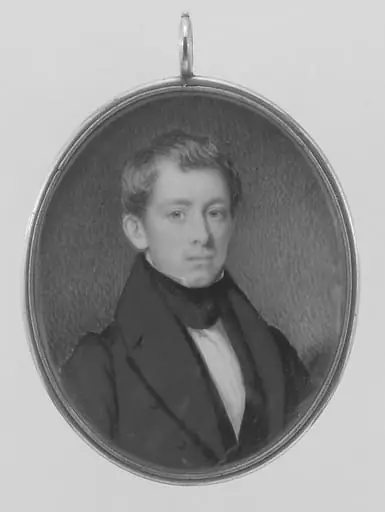
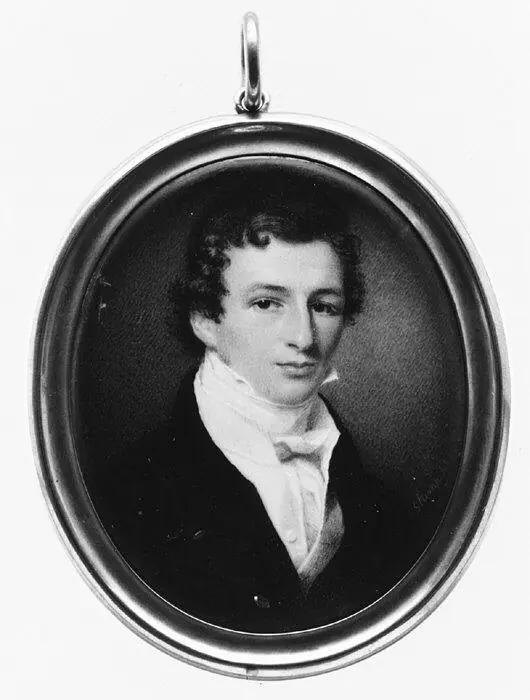
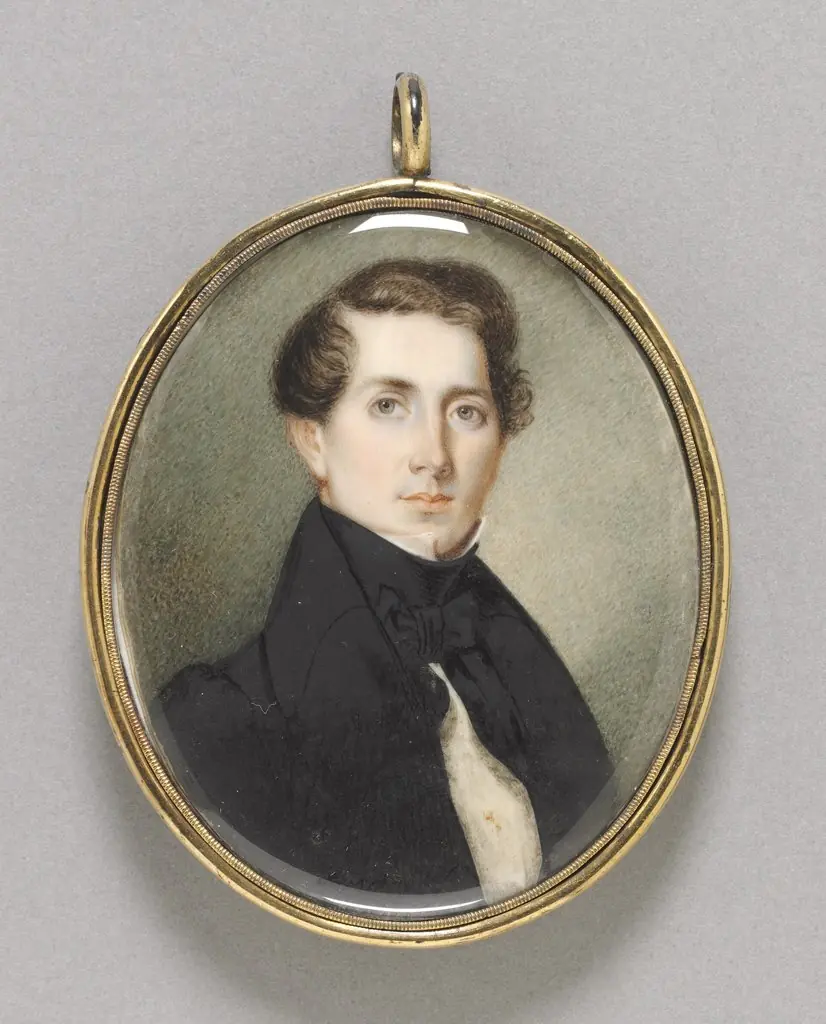
Henry Thornely is a watercolor work on paper by the Biedermeier artist H. Carl Schiller. It dates from 1851 and is held in the collection of the Victoria and Albert Museum.
About this work
Overview
The medium’s delicacy and restrained palette reflect a quiet, intimate approach to portraiture common in mid-19th-century British watercolour practice.
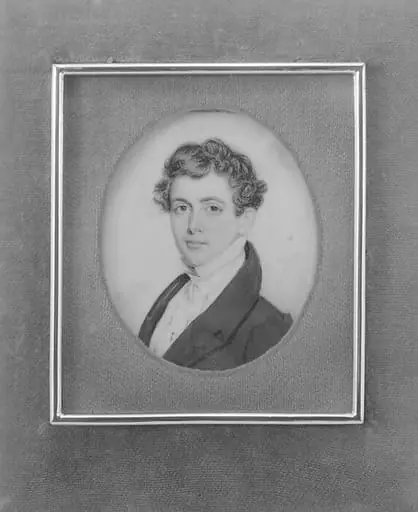
This 1851 watercolour portrait depicts Henry Thornely, rendered in an oval format by artist H. Carl Schiller. The work is signed and dated on the front, with an additional numeral '8' likely indicating a catalog or series reference. The reverse bears the subject’s name and a Peel Street address, anchoring the portrait in a specific time and place. The medium’s delicacy and restrained palette reflect a quiet, intimate approach to portraiture common in mid-19th-century British watercolour practice.
Subject & Meaning
Henry Thornely is portrayed with a composed, neutral expression, his gaze directed slightly away from the viewer, suggesting introspection rather than engagement. His attire—a white shirt and dark jacket, paired with a blue bow tie—conveys modest formality, typical of middle-class Victorian men. The absence of props or symbolic elements focuses attention on the individual’s presence, emphasizing personal dignity over social status or narrative context.
Technique & Style
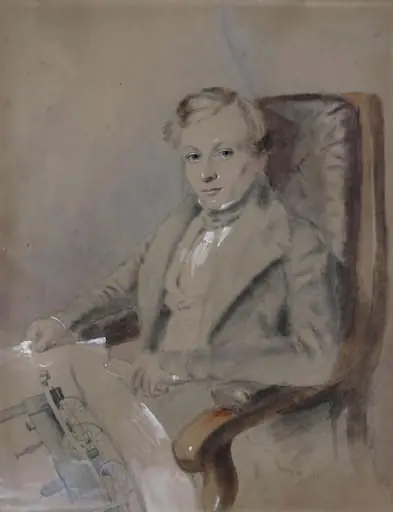
Schiller employs subtle gradations of watercolour to model the face and clothing, using soft transitions between light and shadow to suggest volume. The muted tones—beige background, greyed blues and browns—create a calm, unified atmosphere. While not overtly dramatic, the handling of light recalls chiaroscuro principles, lending depth without theatricality. The brushwork is precise yet unobtrusive, prioritizing clarity and restraint over expressive flourish.
History & Provenance
The portrait’s inscription on the reverse confirms Thornely’s residence on Peel Street, likely in London, situating the work within a specific urban context of the early 1850s. The presence of a date and signature on the front suggests it was intended as a finished, personal commission rather than a study. Its survival with original inscriptions indicates careful preservation, possibly within the family, though no further ownership history is documented.
Context
In the 1850s, watercolour portraiture flourished among British artists and amateurs as a refined, accessible alternative to oil. Schiller’s work aligns with a tradition of quiet, intimate likenesses favored by middle-class patrons. Unlike grand academic portraits, these works emphasized subtlety and personal character, reflecting broader cultural values of modesty and domesticity in Victorian society.
Legacy
This portrait contributes to a broader archive of 19th-century watercolour portraiture that prioritized understated realism over grandeur. While Schiller is not widely known, works like this preserve the visual culture of ordinary individuals in an era when personal representation became increasingly accessible. Its preservation offers insight into the aesthetics and social norms of middle-class life in mid-Victorian Britain.
Artist & collection
Artist
This British artist painted intimate watercolours of sitters in the 1850s, keeping their identities modest and the backgrounds plain.