Artwork
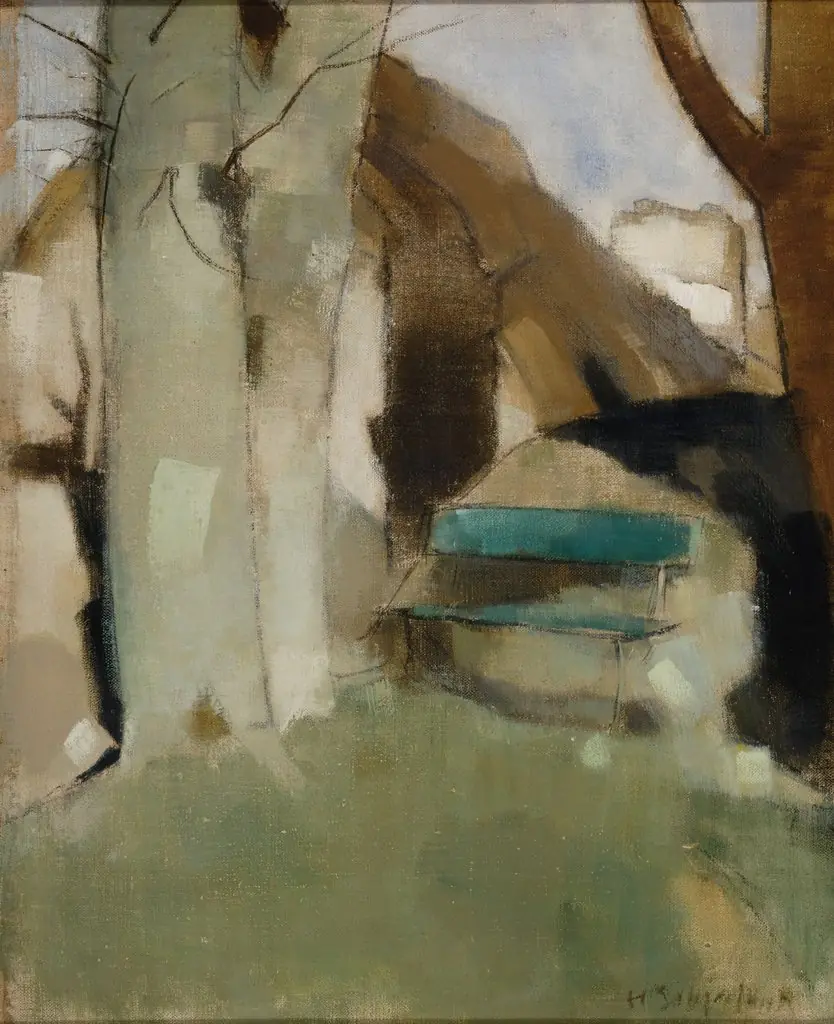
Varjo muurilla II (Vihreä penkki)
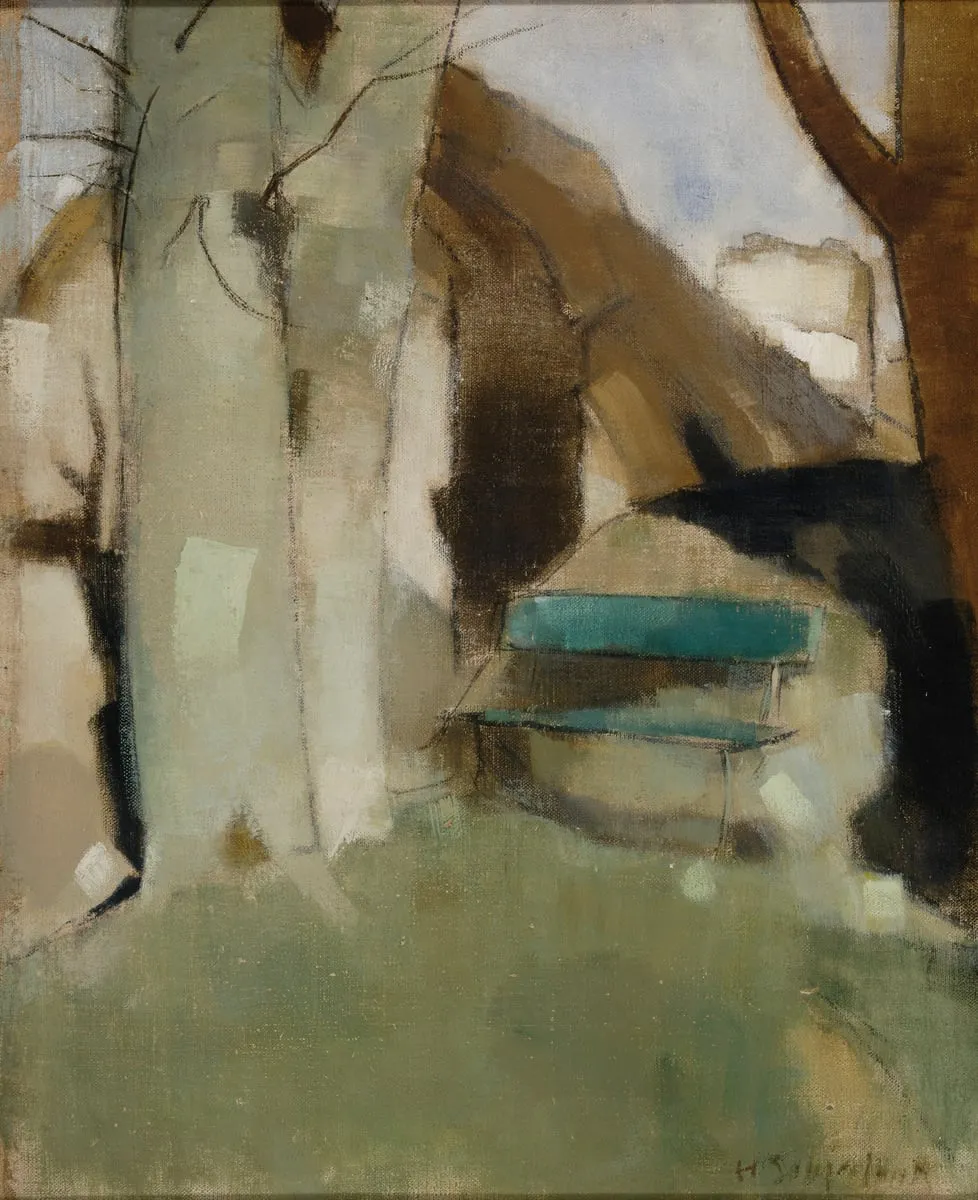
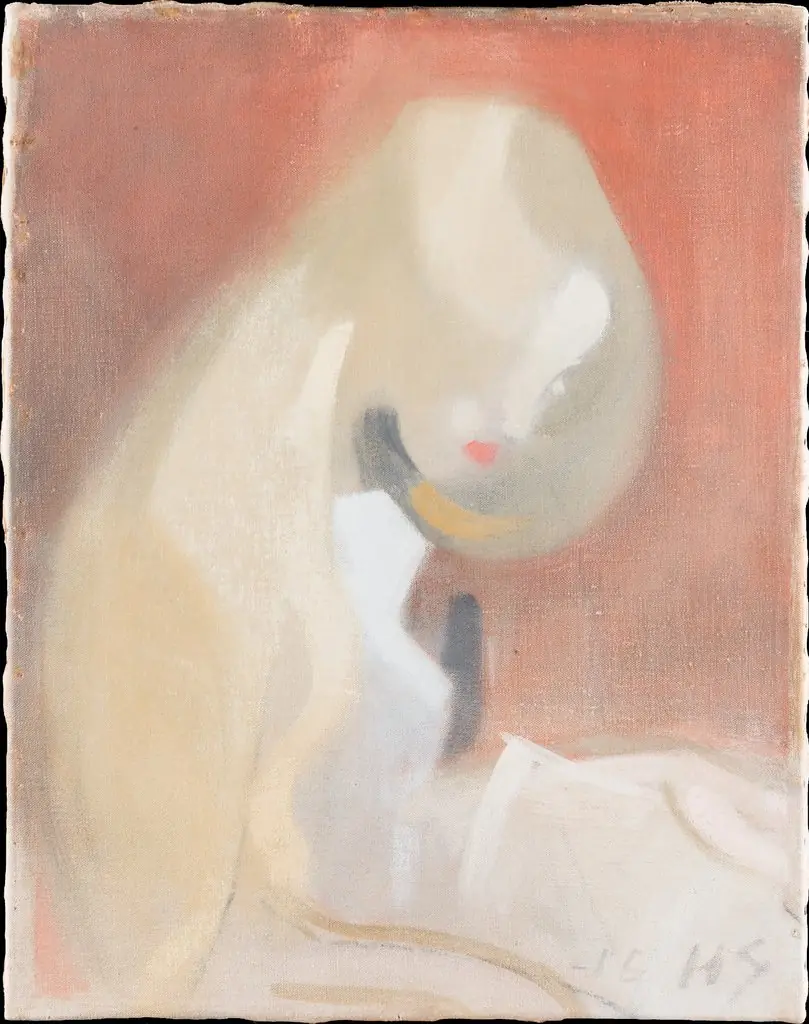
Varjo muurilla II (Vihreä penkki) is an unspecified painting by Helene Schjerfbeck. It is held in the collection of the Finnish National Gallery.
About this work
Overview
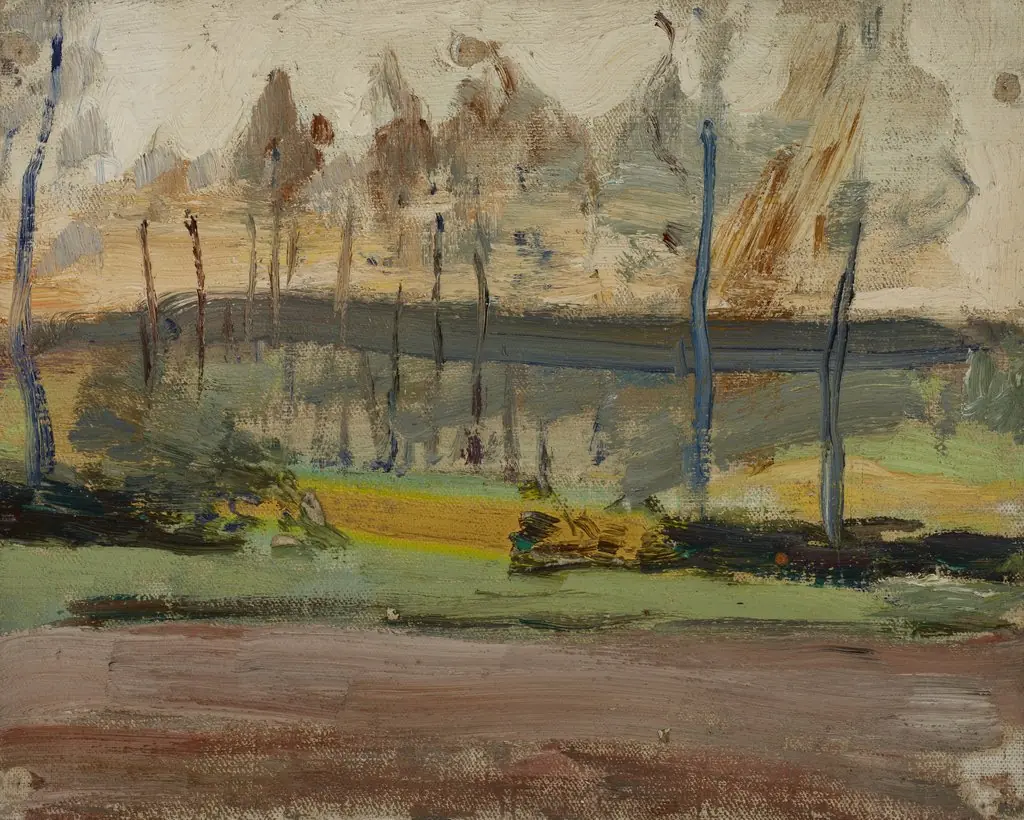
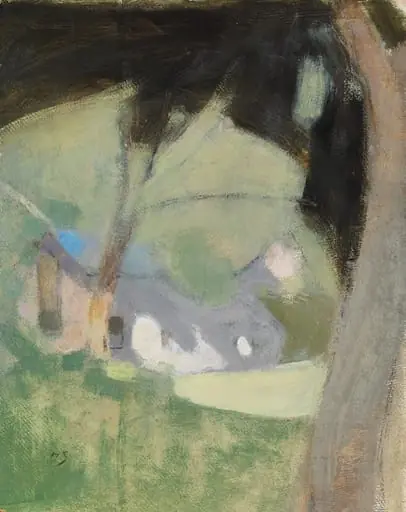
This painting by Helene Schjerfbeck depicts a solitary green bench positioned before a tall tree, its branches extending upward to the canvas’s upper edge. The composition is restrained, with no figures or overt narrative. A muted palette and soft transitions between tones create a quiet, contemplative atmosphere, emphasizing stillness over action.
Subject & Meaning
The bench and tree form the sole subjects, their simplicity inviting reflection rather than storytelling. The absence of human presence suggests solitude or quiet observation. The bench, neither ornate nor inviting, feels integrated into the landscape, as if part of the natural order—evoking themes of patience, time, and the quiet persistence of nature.
Technique & Style
Schjerfbeck employs subtle gradations of green and neutral tones to build depth without sharp contrasts. Brushwork is deliberate but unobtrusive, with soft edges that blur boundaries between bench, tree, and background. The texture emerges through layered washes rather than impasto, reinforcing the painting’s hushed, meditative quality.
History & Provenance
Created in the early 20th century, this work belongs to Schjerfbeck’s later period, when her style grew increasingly sparse and introspective. It was likely painted in Finland, where she spent much of her later life. The painting’s provenance traces through Finnish collections before entering public ownership, reflecting its recognition within national art circles.
Context
Schjerfbeck’s work during this time responded to broader European trends toward modernist simplification, yet retained a distinctly Nordic sensitivity to light and mood. Unlike urban scenes favored by contemporaries, she turned to quiet, rural motifs—trees, benches, empty rooms—as vessels for emotional resonance, aligning with Finnish cultural introspection.
Legacy
This painting exemplifies Schjerfbeck’s mature approach: reducing form to essentials while preserving psychological depth. It has influenced later Finnish artists drawn to minimalism and emotional restraint. Though not widely exhibited internationally, it remains a touchstone in Finnish modernism for its quiet authority and unadorned beauty.
Artist & collection
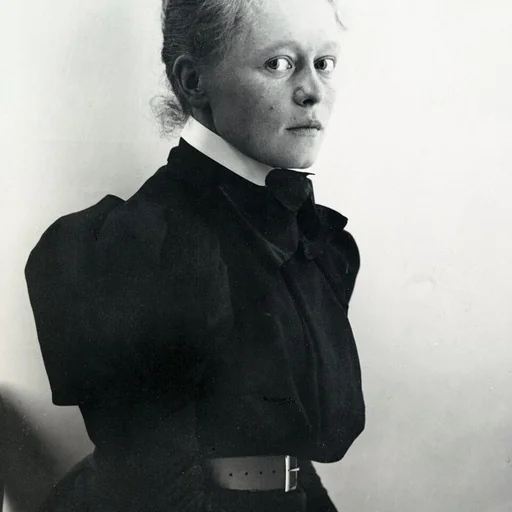
Artist
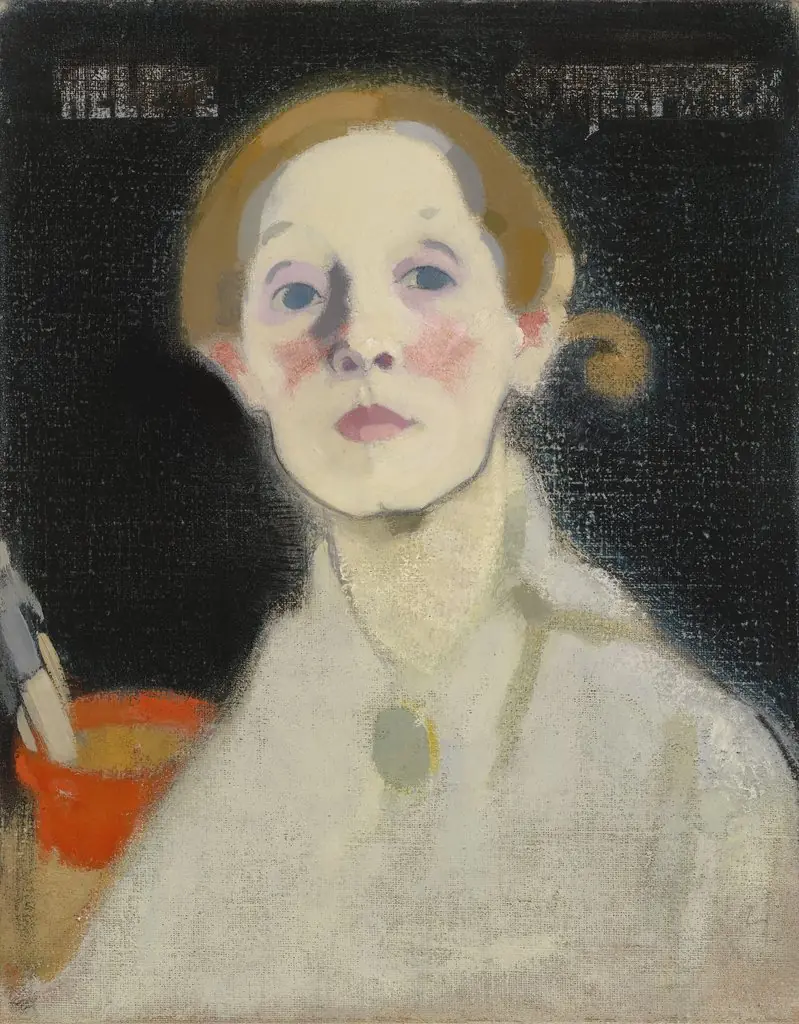
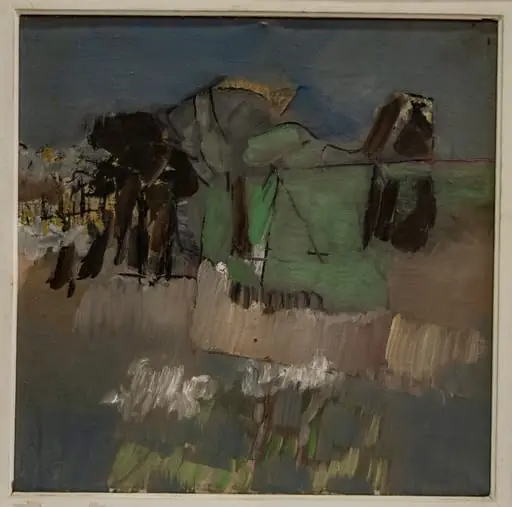
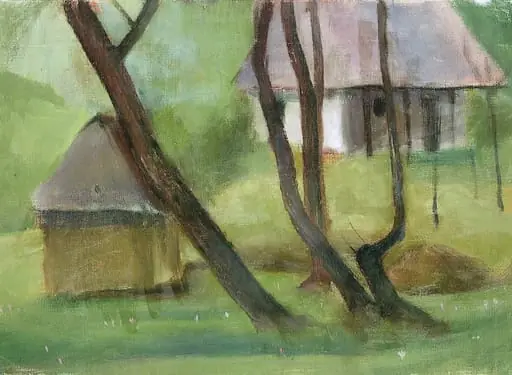
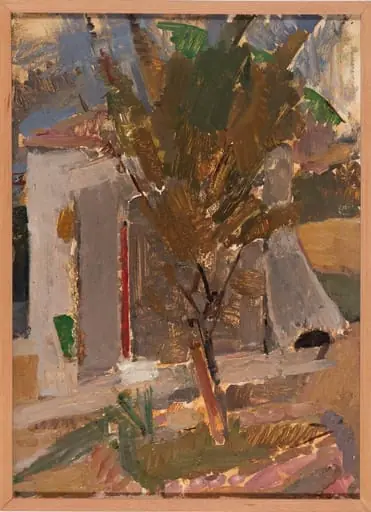
Helena Sofia (Helene) Schjerfbeck (pronounced ; July 10, 1862 – January 23, 1946) was a Finnish modernist painter known for her realist works and self-portraits, and also for her landscapes and still lifes.