Artwork
Gefängnis für die Schaubühne
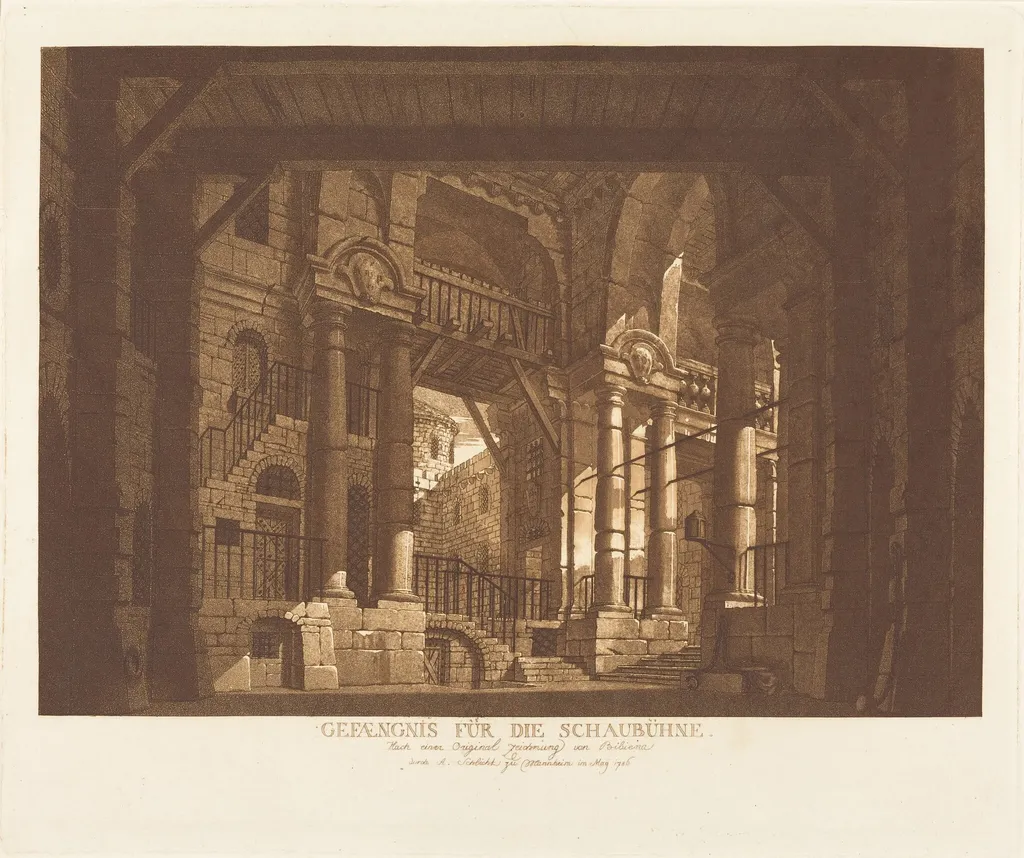
Gefängnis für die Schaubühne is an ink print by the Romanticist artist Abel Schlicht. It dates from 1786 and is held in the collection of the National Gallery of Art.
About this work
Overview
Gefängnis für die Schaubühne is a 1786 print by Abel Schlicht, executed in etching and aquatint on laid paper. Rendered in brown ink, the work presents an architectural fantasy resembling a theater-associated prison. Its sepia tones and textured surface reflect the technical possibilities of aquatint, emphasizing atmosphere over literal representation.
Subject & Meaning
The image depicts a monumental stone structure with arched openings and grand staircases, evoking a theatrical prison rather than a real detention facility. Its exaggerated scale and dramatic entry suggest symbolic confinement—perhaps a metaphor for the constraints of performance, societal roles, or the artificiality of staged narratives common in Enlightenment-era theater.
Technique & Style
Schlicht employed etching for precise linear details and aquatint to achieve gradations of tone. The resulting chiaroscuro enhances the building’s volume and depth, lending it a somber, theatrical mood. The soft transitions between light and shadow align with emerging Romantic sensibilities, prioritizing emotional resonance over topographical accuracy.
History & Provenance
Created in 1786, the print belongs to a period when German artists increasingly explored architectural fantasies as vehicles for psychological or philosophical themes. While specific early ownership records are scarce, its survival in institutional collections suggests it was valued within artistic circles for its technical finesse and evocative imagery.
Context
The work emerged during a time when theater and architecture were frequently intertwined in cultural discourse. German-speaking regions saw growing interest in stage design and the symbolic power of built environments. Schlicht’s print reflects this trend, merging architectural fantasy with the introspective tone characteristic of late Enlightenment visual culture.
Legacy
Though not widely reproduced, Gefängnis für die Schaubühne remains a notable example of late 18th-century German printmaking that bridges Neoclassical form with Romantic mood. It contributes to the understanding of how artists used architectural imagery to explore abstract ideas of control, spectacle, and inner confinement.
Artist & collection


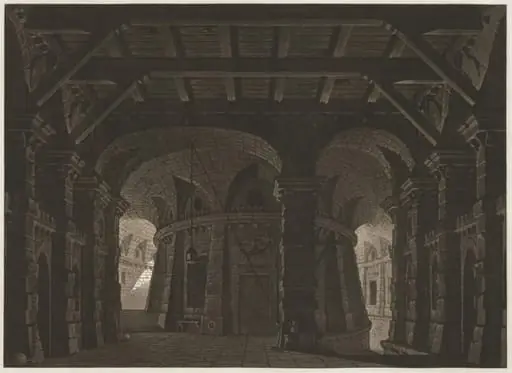 Subterranean Jail for the Stage
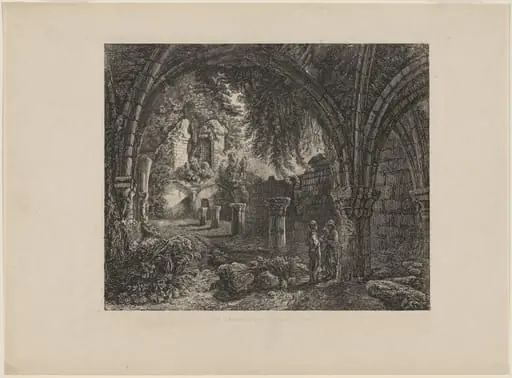 The Chapterhouse, Fountains Abbey
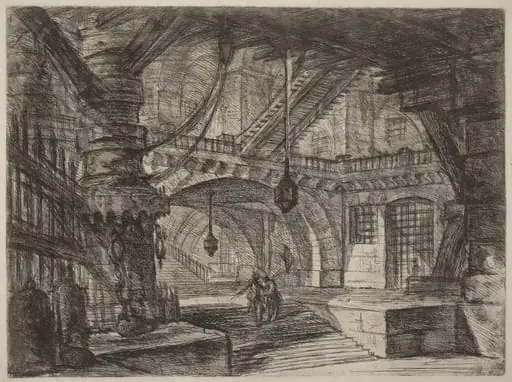 The Pier with Chains
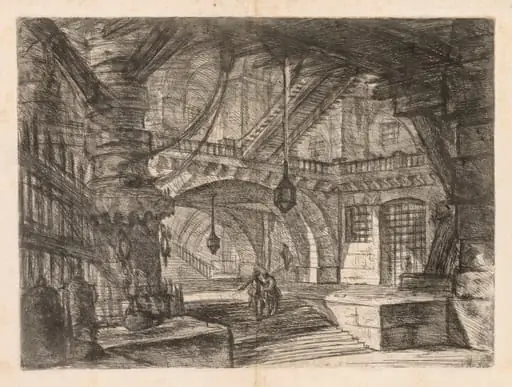 The Prisons: A Wide Hall with Lanterns
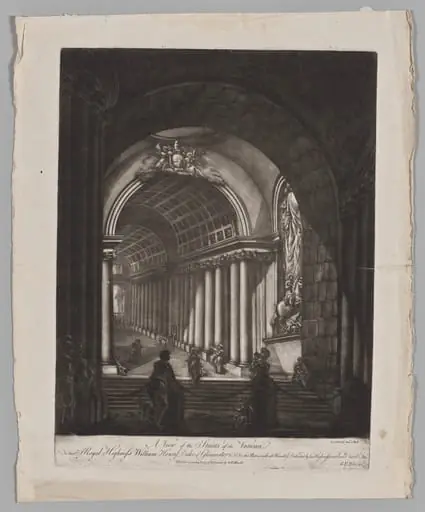 A View of the Stairs of the Vatican
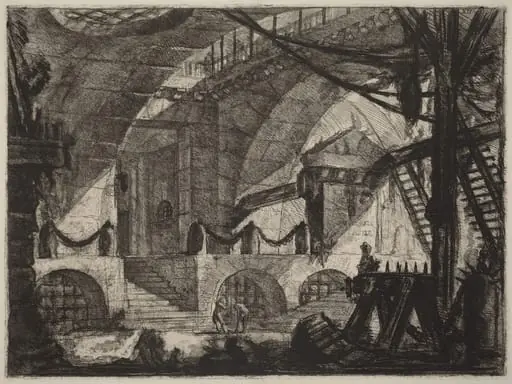 The Sawhorse
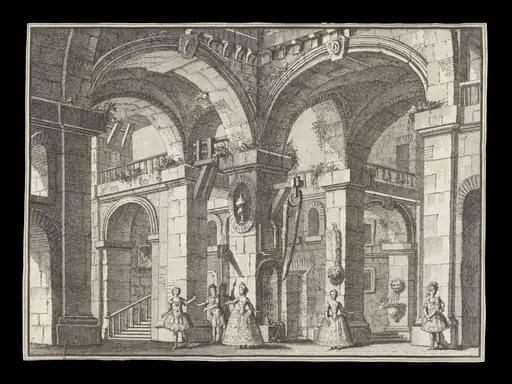 H Beard Print Collection
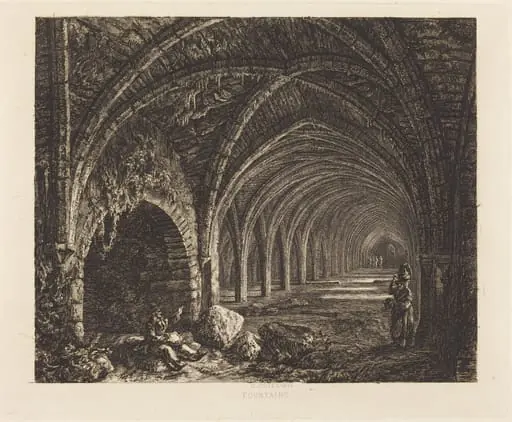 Fountains
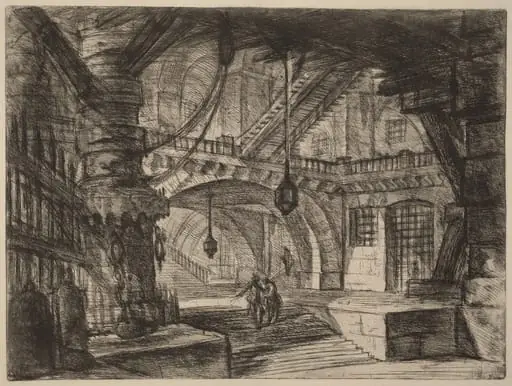 The Pier with Chains
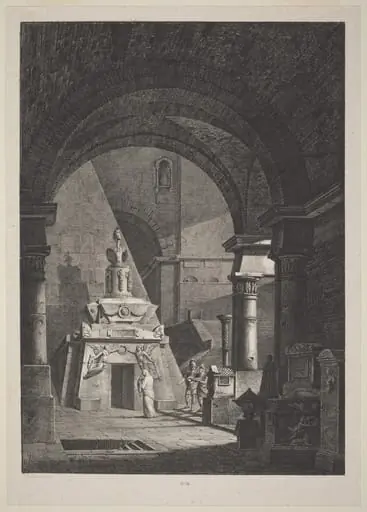 Interior of an Ancient Roman Sepulchre
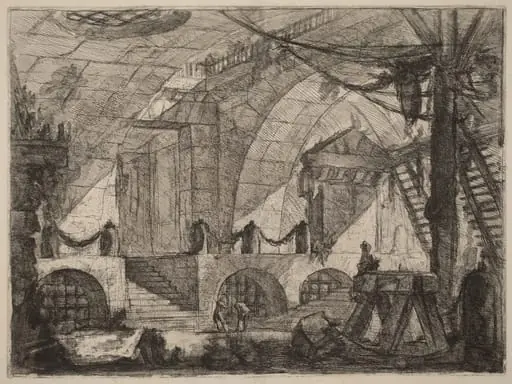 The Sawhorse
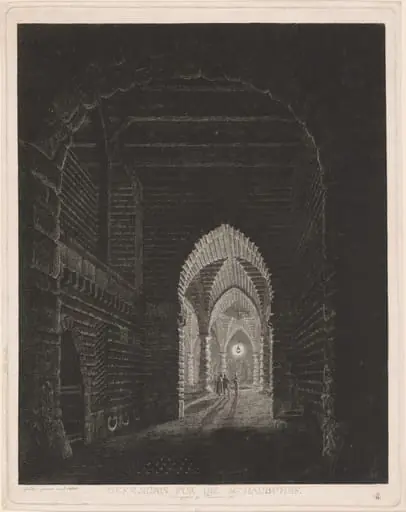 Gefængnis für die Schaubühne (Scenographic Design for a Prison)