Artwork
The Pier with Chains
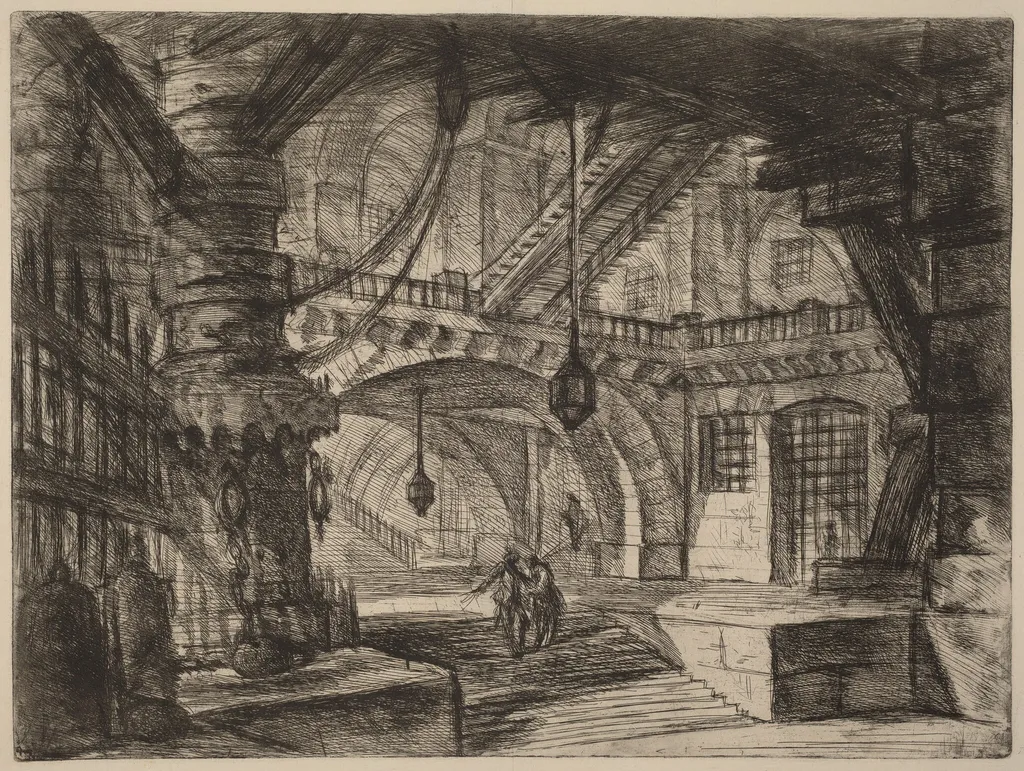
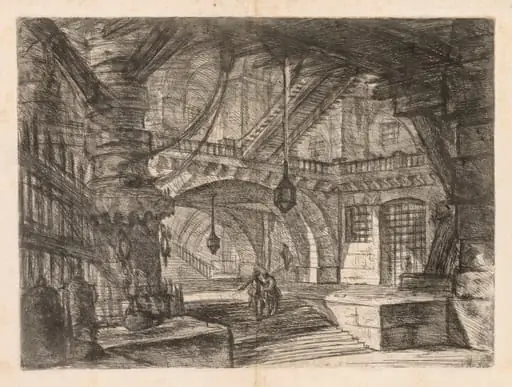
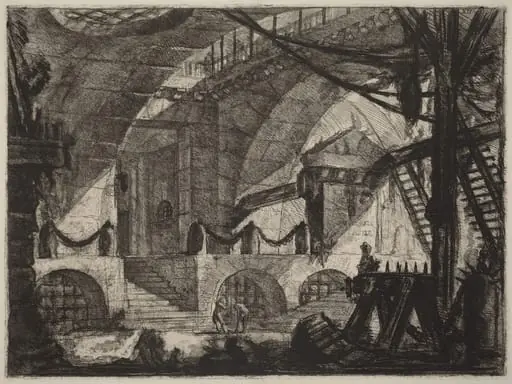
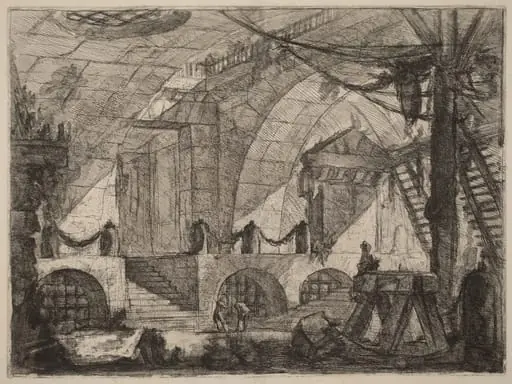
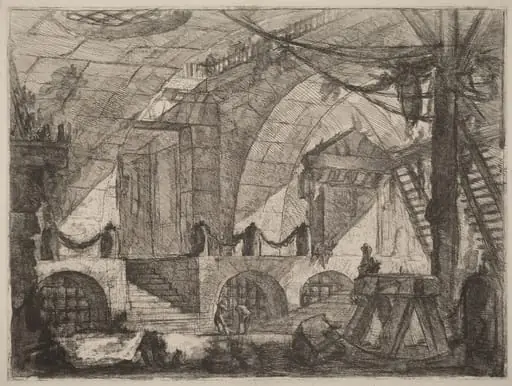
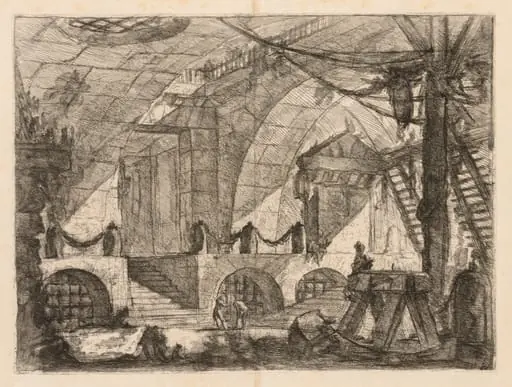
The Pier with Chains is an ink print by the Baroque artist Giovanni Battista Piranesi. It dates from 1750 and is held in the collection of the National Gallery of Art.
About this work
Overview
Created in 1750 by Giovanni Battista Piranesi, this print combines etching, engraving, sulphur tint, and burnishing to produce a dense, monochromatic scene.
Created in 1750 by Giovanni Battista Piranesi, this print combines etching, engraving, sulphur tint, and burnishing to produce a dense, monochromatic scene. It depicts an architectural interior that feels both real and invented, blending observed Roman structures with speculative elements. The work is part of Piranesi’s broader exploration of space, weight, and ruin, executed with technical precision and a sense of psychological tension.
Subject & Meaning
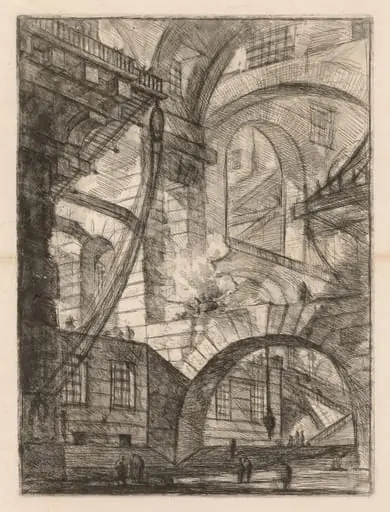
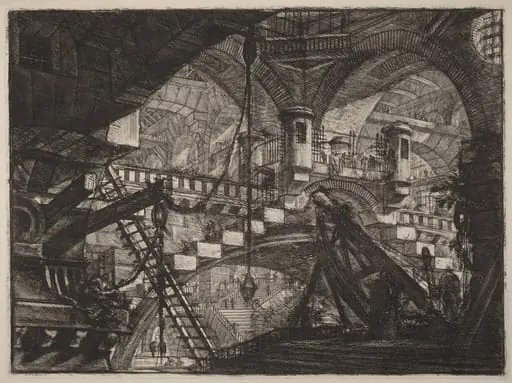
The scene presents a subterranean pier lined with towering columns and draped chains, evoking a sense of confinement and antiquity. Two figures near a staircase and a third seated below suggest human presence amid overwhelming structure. The shelves cluttered with unknown objects and the single hanging lamp imply a forgotten, functional space—perhaps a storage area, prison, or ritual site—where scale and shadow obscure purpose, inviting contemplation rather than narrative.
Technique & Style
Piranesi employed fine etched lines to define architectural forms, while engraving added sharp contrast and texture. Sulphur tint created soft, atmospheric gradations across surfaces, and burnishing smoothed areas to suggest reflected light. The dense network of lines generates depth and visual complexity, mimicking the weight of stone and metal. The absence of color heightens the mood, emphasizing form, shadow, and spatial disorientation.
History & Provenance
Produced during Piranesi’s early years in Rome, this print emerged from his study of ancient ruins and his growing reputation as a printmaker. It was likely part of a series exploring architectural interiors, circulated among collectors and architects. The work reflects his personal fascination with Roman engineering and the psychological impact of monumental space, predating his more famous Carceri series.
Context
In mid-18th century Rome, antiquarian interest in classical architecture was widespread, but Piranesi diverged by emphasizing emotional resonance over archaeological accuracy. His prints responded to Enlightenment debates about ruins and memory, while also anticipating Romanticism’s preoccupation with sublimity and decay. This work sits between documentation and fantasy, offering a vision of the past shaped by imagination and sensation.
Legacy
Piranesi’s technique and atmospheric compositions influenced later artists and architects, particularly those drawn to the Gothic and the uncanny. *The Pier with Chains* contributed to a visual language of oppressive, labyrinthine interiors that resonated in 19th-century literature and design. Its fusion of precise draftsmanship with psychological unease remains a touchstone for prints exploring architecture as a carrier of memory and mystery.
Artist & collection

Artist
Giovanni Battista (or Giambattista) Piranesi (Italian pronunciation: ; also known as simply Piranesi; 4 October 1720 – 9 November 1778) was an Italian classical archaeologist, architect, and artist, famous for his…