Artwork
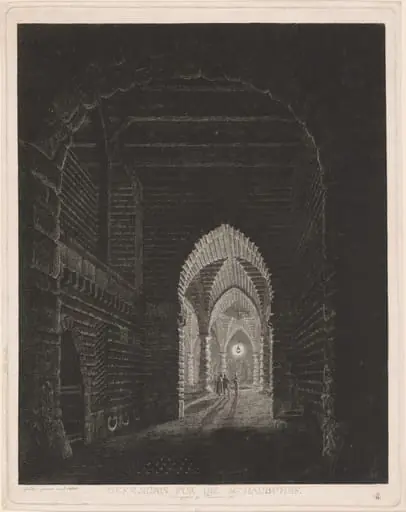
Subterranean Jail for the Stage
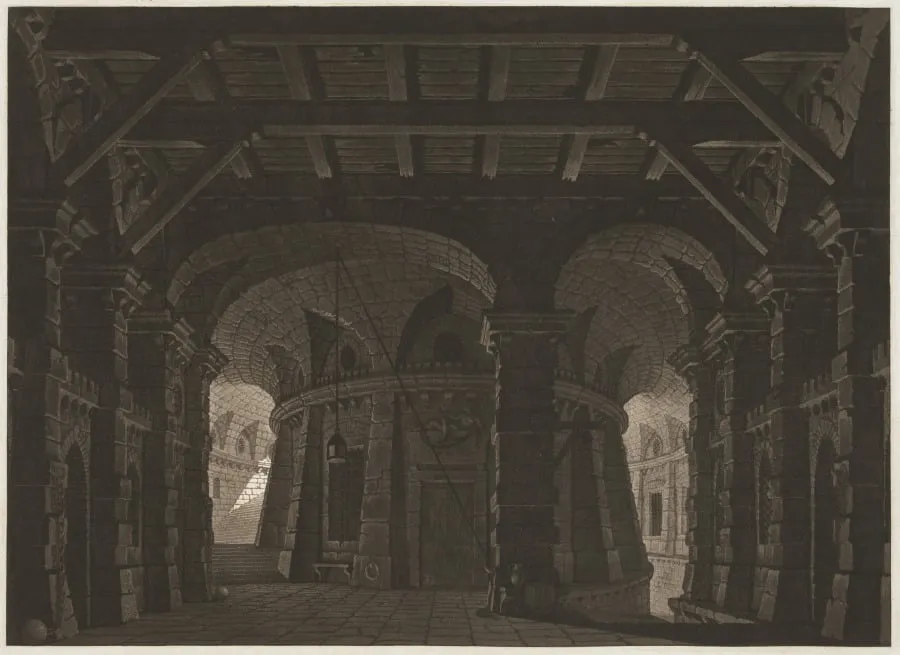
Subterranean Jail for the Stage is a print by the Romanticist artist Abel Schlicht. It dates from 1788 and is held in the collection of the Cleveland Museum of Art.
About this work
Overview
Subterranean Jail for the Stage is a print by Abel Schlicht, an architect who also designed stage sets for the Mannheim National Theater, a significant cultural institution in 18th-century Germany.
Subject & Meaning
The print depicts a dark, cramped prison cell with rough stone walls and flickering torchlight, featuring hunched figures in tattered clothes, likely representing a dramatic scene of injustice or suffering, a common theme in 18th-century theater.
Technique & Style
Schlicht used aquatint to create a range of tones, illuminating the background while plunging the foreground into darkness, employing chiaroscuro to build a somber mood and emphasize the oppressive atmosphere of the prison cell.
Context
Prison scenes were a popular subject in 18th-century drama, and Schlicht's design would have been used in multiple productions at the Mannheim National Theater, which was known for staging plays by German playwrights, including Friedrich Schiller.
Artist & collection

 H Beard Print Collection
 The Sawhorse
 The Sawhorse
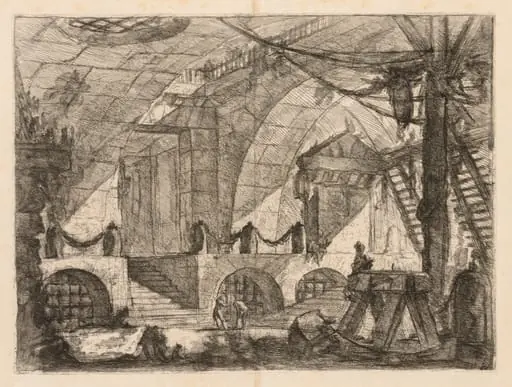 The Prisons: An Arched Chamber with Posts and Chains
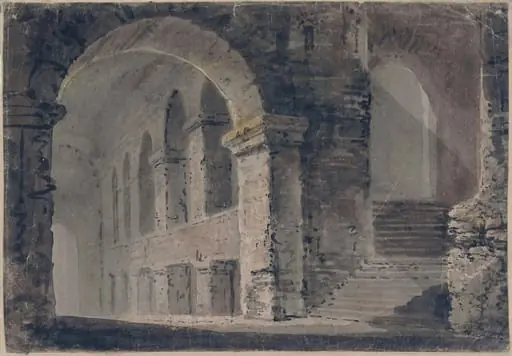 Interior with staircase
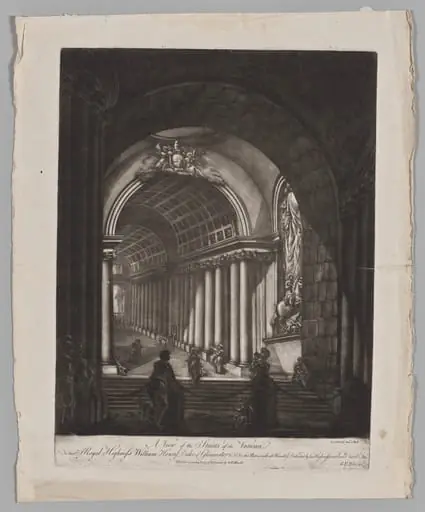 A View of the Stairs of the Vatican
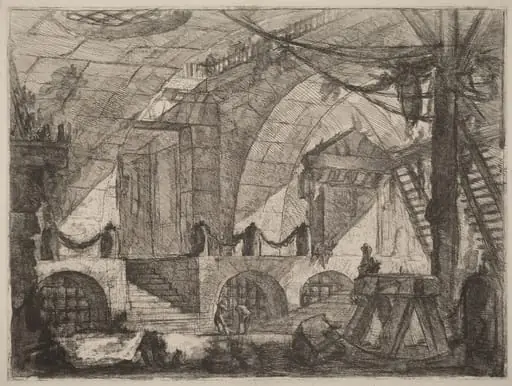 The Sawhorse
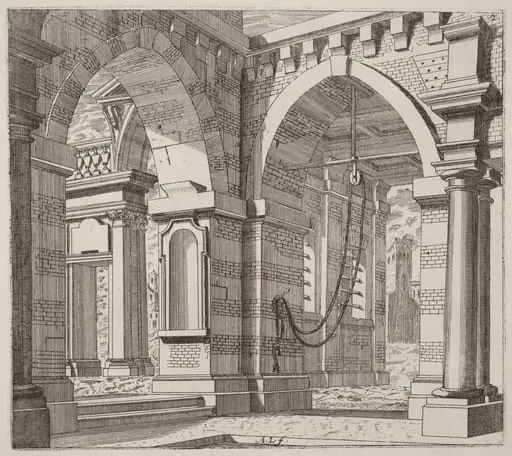 Architectural Fantasy with Arched Gateways
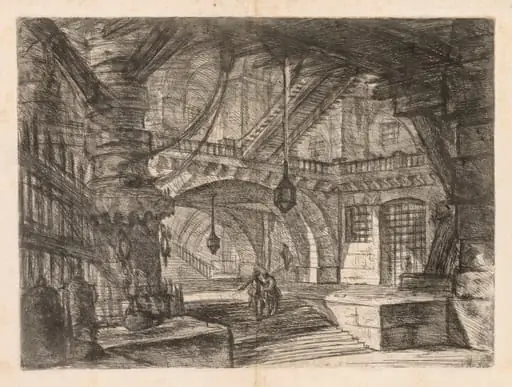 The Prisons: A Wide Hall with Lanterns
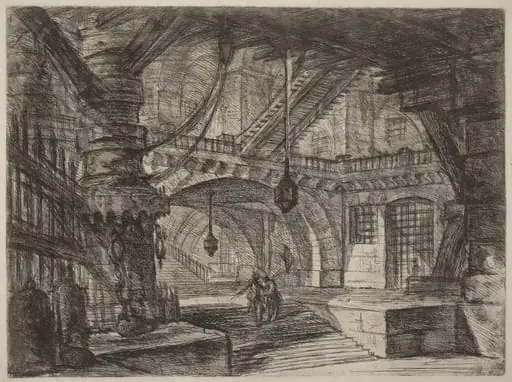 The Pier with Chains
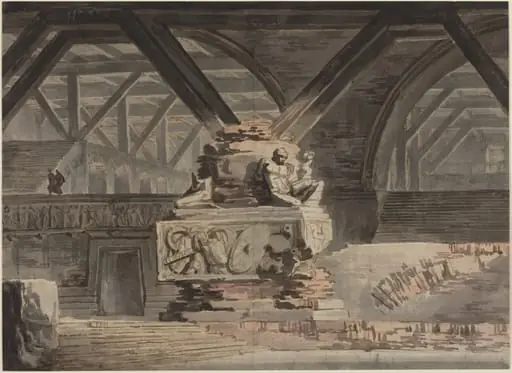 Stage Design: A Sepulchral Vault
 Gefængnis für die Schaubühne (Scenographic Design for a Prison)