Artwork
Mahomet, a Turkish Merchant
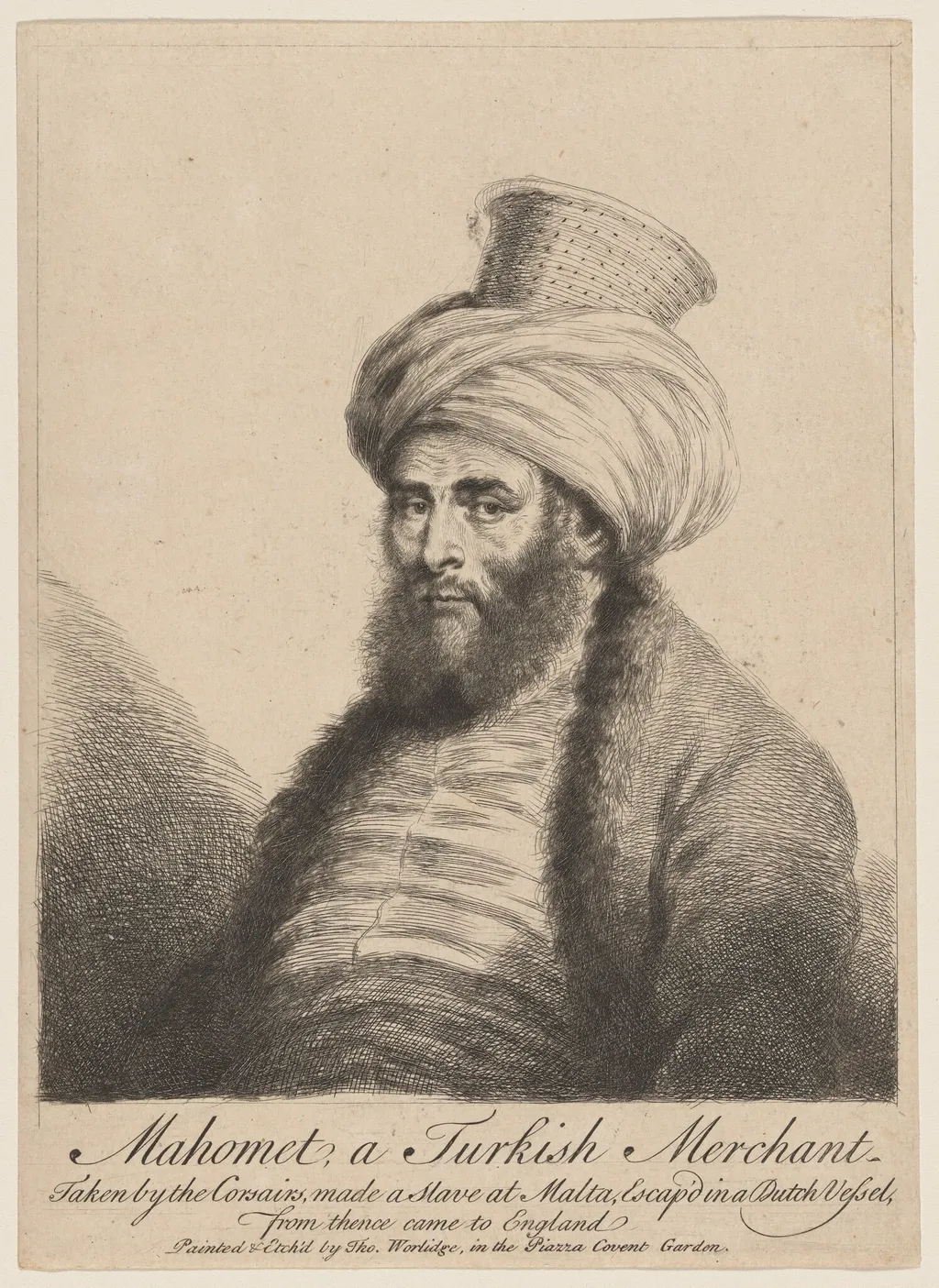
Mahomet, a Turkish Merchant is an ink print by the Baroque artist Thomas Worlidge. It dates from 1741 and is held in the collection of the National Gallery of Art.
About this work
The title at the bottom says he’s a Turkish merchant named Mahomet, captured by pirates and sold as a slave before escaping.
This is a black-and-white portrait of a man with a long beard and braided hair. He’s wearing a tall, fur-lined hat and a loose robe. The lines are scratchy and detailed, almost like they were drawn with a sharp tool.
The title at the bottom says he’s a Turkish merchant named Mahomet, captured by pirates and sold as a slave before escaping. The artist signed it in 1741.
Next, look up etching, drypoint, aquatint to see how this kind of print was made.
Overview
Thomas Worlidge’s print, titled *Mahomet, a Turkish Merchant*, dates to around 1741. Executed on laid paper, the work combines drypoint and etching techniques to render a monochrome portrait. The figure is presented with a long beard, braided hair, a tall fur‑trimmed hat, and a flowing robe, all depicted in sharply incised, expressive lines that convey a tactile sense of texture.
Subject & Meaning
The image portrays a Turkish merchant named Mahomet, whose narrative is inscribed beneath the composition. According to the caption, Mahomet was seized by pirates, sold into slavery, and later managed to escape. The work thus functions as both a visual document and a brief anecdotal record of the perils faced by Mediterranean traders in the eighteenth century.
Technique & Style
Worlidge employed drypoint to create deep, burr‑laden lines that appear rough and spontaneous, while etching provided finer, controlled details. The combination yields a contrast between bold, gestural strokes and delicate rendering of facial features and clothing. The use of laid paper, with its subtle ribbed texture, enhances the print’s tonal depth despite its strictly black‑and‑white palette.
History & Provenance
The artist signed and dated the piece in 1741, situating it within his mature period of printmaking. While specific ownership records are sparse, the work has been catalogued among Worlidge’s prints that document exotic subjects, reflecting contemporary European interest in the Ottoman world and its commercial networks.
Artist & collection

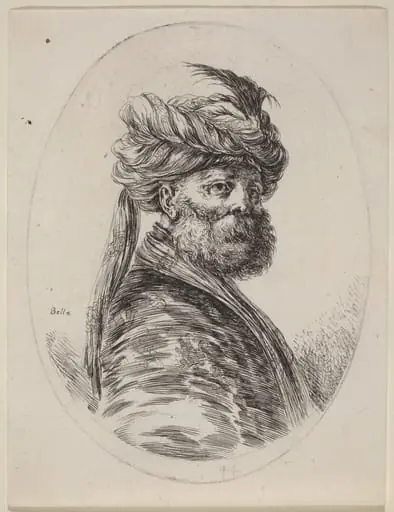 Bearded Moor in a Feathered Turban with a Veil, Turned to the Right
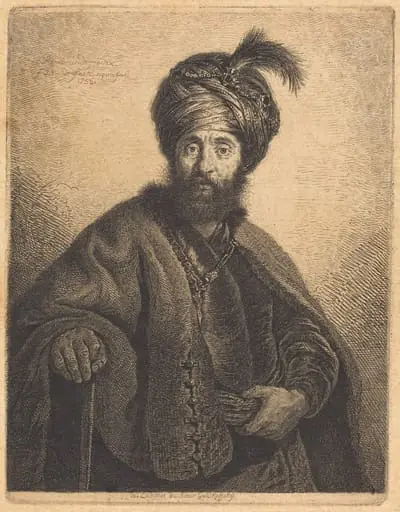 The Persian
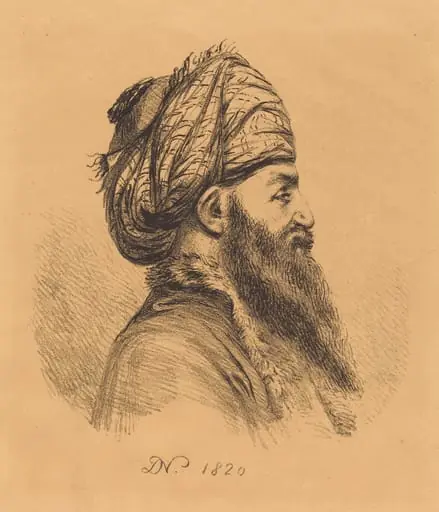 Profile Head of a Man in a Turban
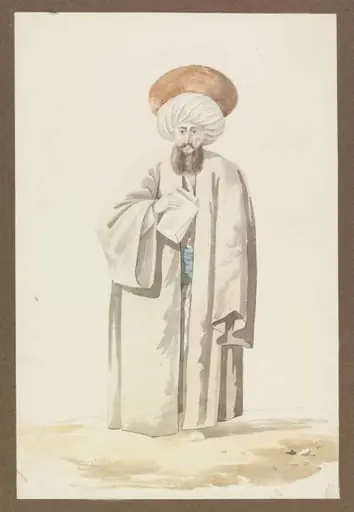 A Religious Dignitary
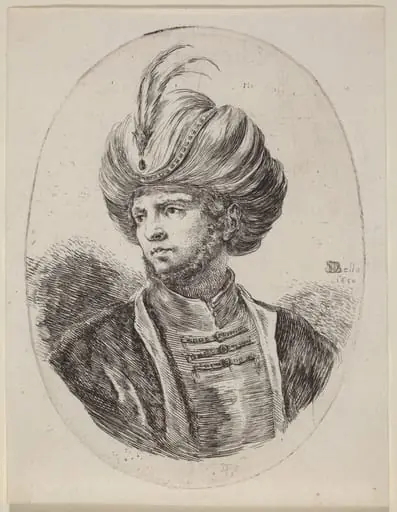 Young Moor with a Slight Beard and Feathered Turban, Turned to the Left
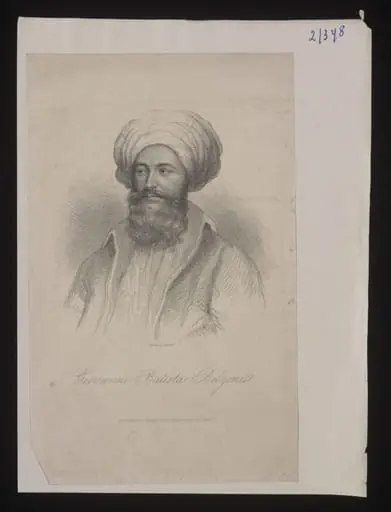 H Beard Print Collection
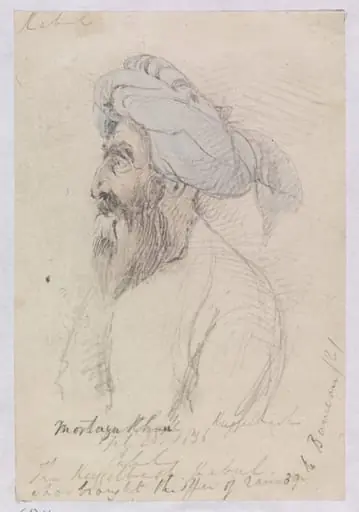 Mortaza Khan Kuzzelbash
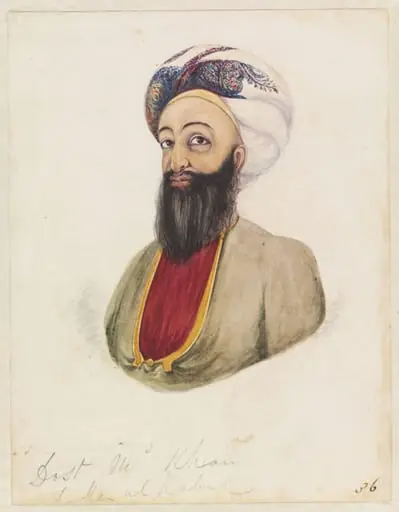 Dost Md Khan taken at Kabul
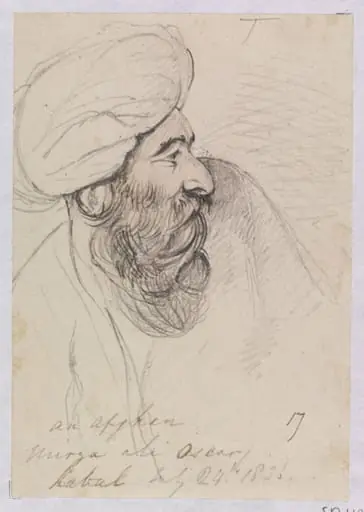 An Afghan. Mirza ali Oscary
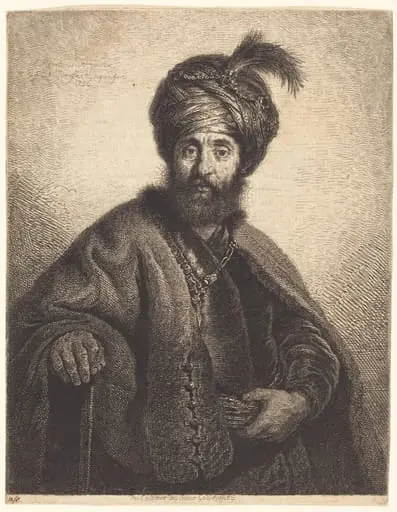 The Persian