Artwork
Saint Agnes
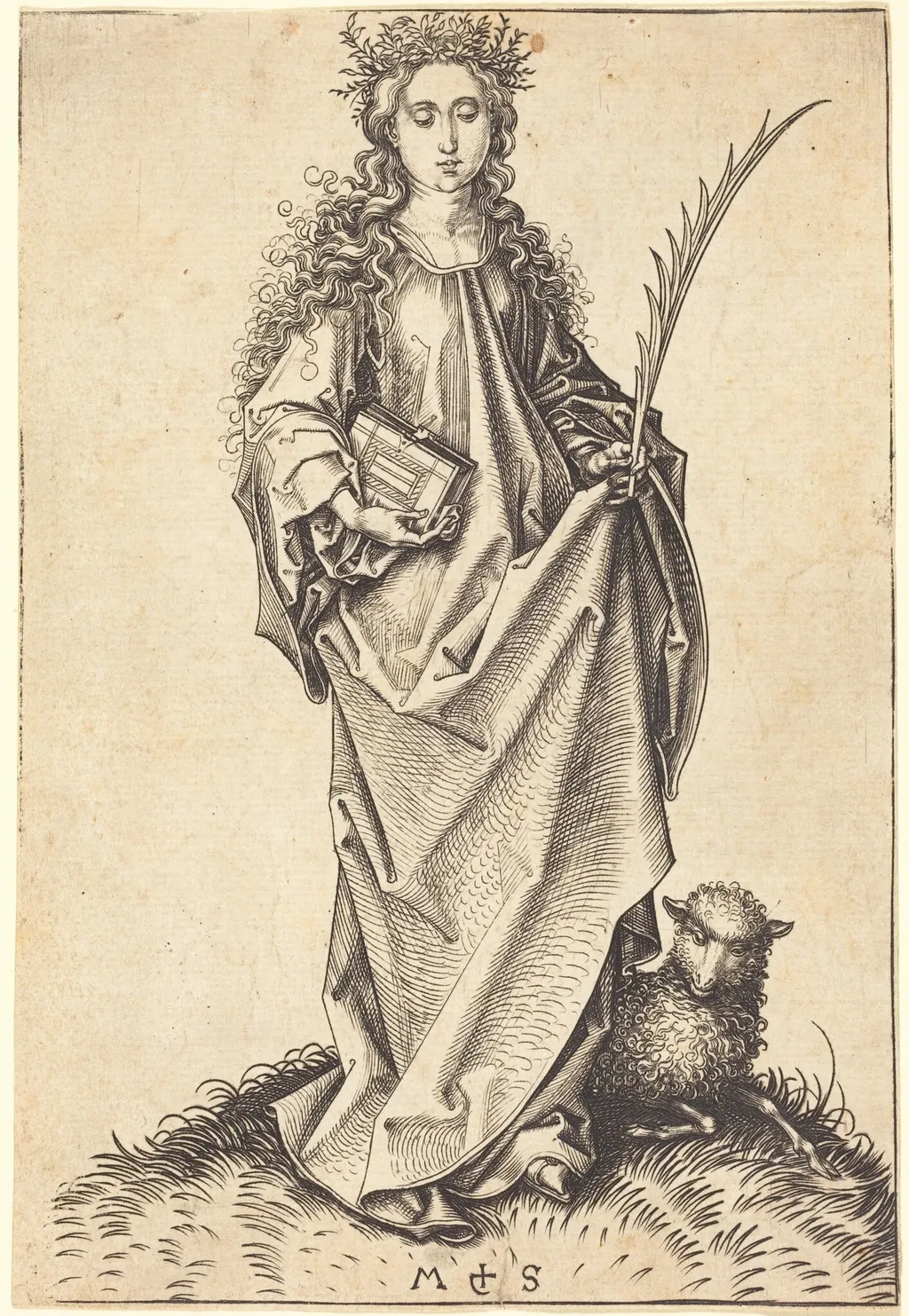
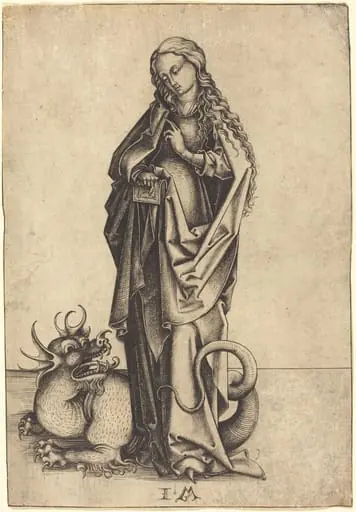
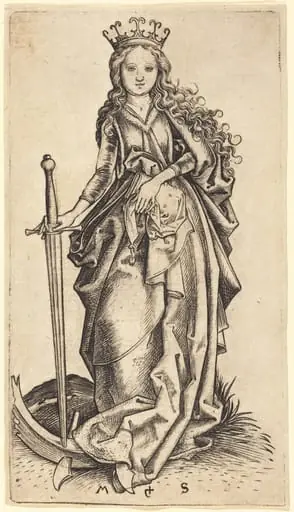
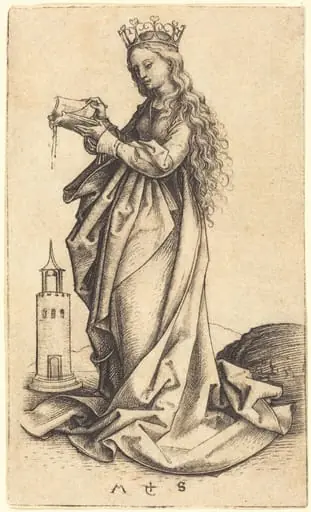
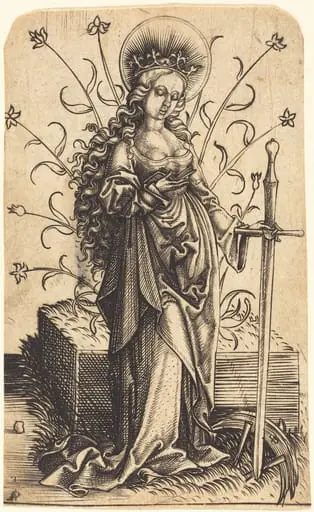
Saint Agnes is an ink print by the Renaissance artist Martin Schongauer. It dates from 1475 and is held in the collection of the National Gallery of Art.
About this work
Overview
An Alsatian artist active in the late 15th century, Schongauer elevated printmaking to new levels of technical refinement in northern Europe.
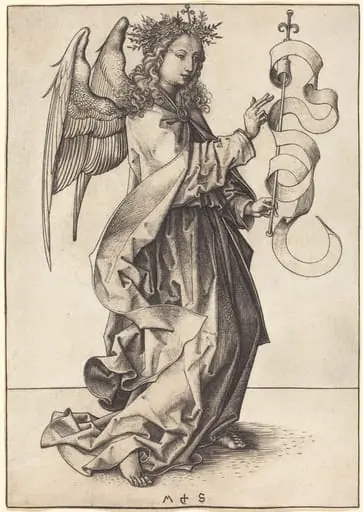
Created around 1475, Martin Schongauer’s engraving of Saint Agnes is one of 116 known engravings bearing his monogram. An Alsatian artist active in the late 15th century, Schongauer elevated printmaking to new levels of technical refinement in northern Europe. This work exemplifies his mastery of fine line work and tonal gradation, achieved through meticulous incisions on a copper plate. The image stands as a quiet yet powerful representation of a Christian martyr, rendered without color but rich in detail.
Subject & Meaning
Saint Agnes, a young martyr venerated for her chastity and faith, is depicted standing calmly amid natural elements. She wears a leafy wreath, symbolizing purity, and holds a book—likely the Gospels—signifying her devotion. A lamb rests beside her, a traditional emblem of her name, which resembles the Latin word for lamb. The bundle of sticks may reference her martyrdom by fire, though she is shown unharmed, emphasizing spiritual triumph over physical suffering.
Technique & Style
Schongauer employed fine, controlled lines to model form and texture, creating depth through subtle shifts in line density rather than shading. The folds of Agnes’s robe are rendered with precision, suggesting weight and movement. The lamb’s wool and the grass beneath her feet are defined by delicate cross-hatching. This approach, rooted in goldsmithing traditions, reflects a meticulous attention to surface detail and spatial clarity, characteristic of mid-15th-century engraving practices.
History & Provenance
Schongauer, born in Colmar around 1450, gained recognition across Europe during his lifetime, often referred to as 'Hübsch Martin.' His engravings circulated widely, influencing later artists including Dürer. While the exact early ownership of this print is undocumented, its survival in multiple impressions suggests it was reproduced and collected in religious and artistic circles. The work remains a key example of pre-Dürerian German printmaking.
Context
In the decades before the Reformation, devotional imagery in print form became increasingly accessible. Schongauer’s engravings met a growing demand for portable religious icons among both clergy and laypeople. His work bridged the traditions of manuscript illumination and metalwork with the emerging potential of the printed image, helping to establish engraving as a respected artistic medium beyond mere reproduction.
Legacy
Schongauer’s technical innovations in engraving laid groundwork for the generation that followed, most notably Albrecht Dürer, who studied his prints closely. His ability to convey emotion and narrative through line alone set a standard for Northern European printmakers. Though his paintings are rare, his engravings endured in collections and workshops, ensuring his influence persisted well into the 16th century as a model of precision and spiritual gravity.
Artist & collection

Artist
Martin Schongauer, also known as Martin Schön or Hübsch Martin by his contemporaries, was an Alsatian engraver and painter.