Artwork
The Lion of Saint Mark
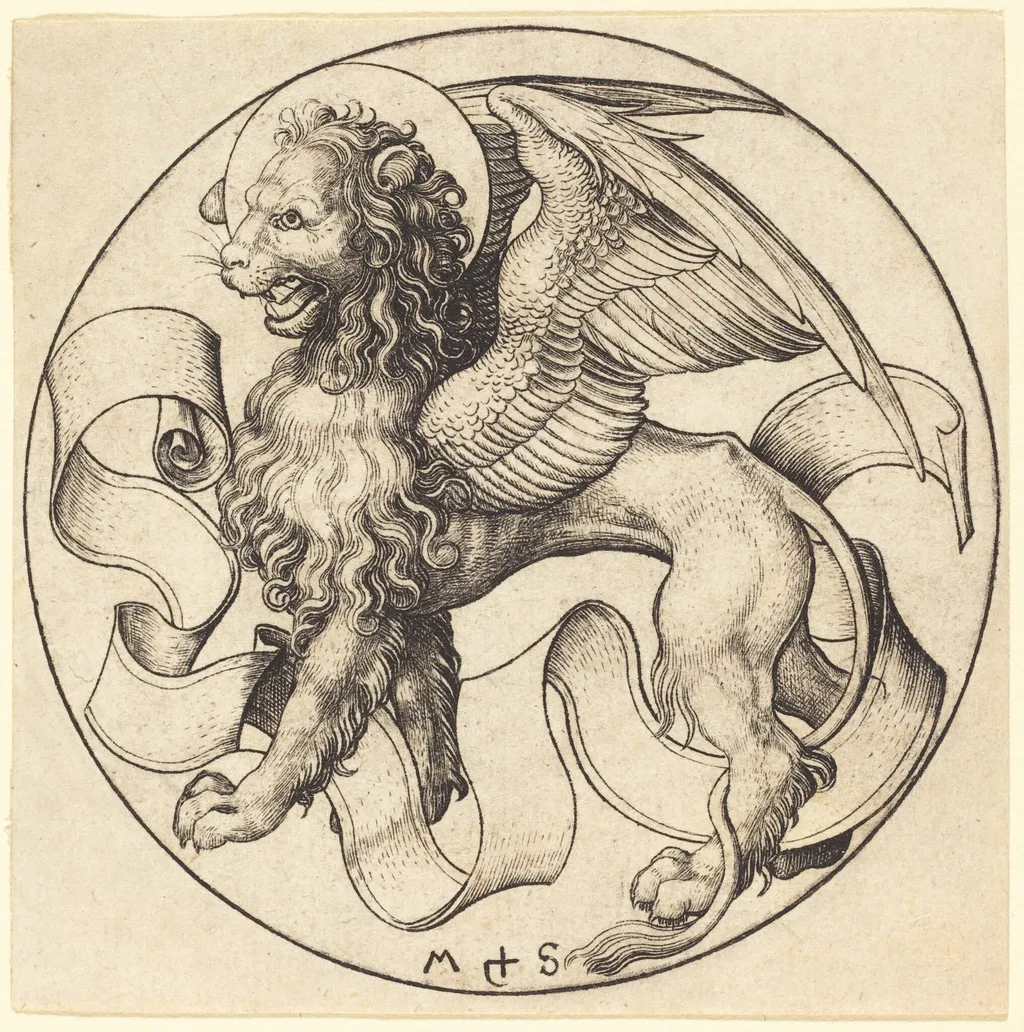
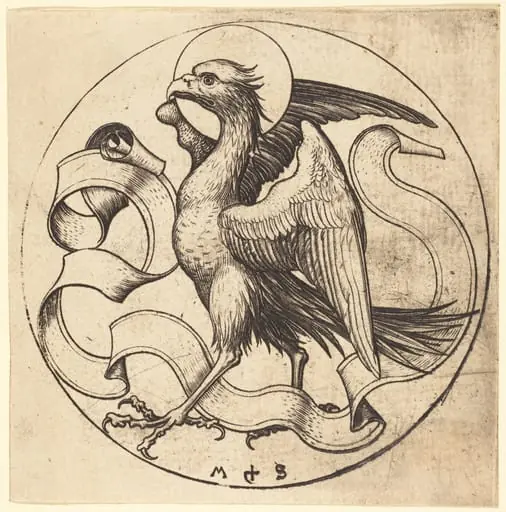
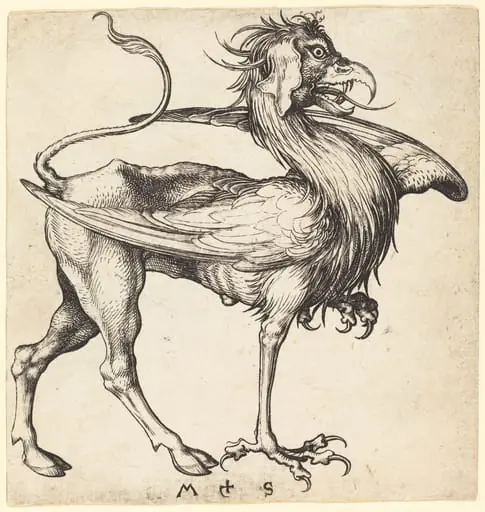
The Lion of Saint Mark is an ink print by the Renaissance artist Martin Schongauer. It dates from 1490 and is held in the collection of the National Gallery of Art. Created circa 1490, this copperplate engraving presents the winged lion that serves as the traditional emblem of the Evangelist Saint Mark.
About this work
Overview
Created circa 1490, this copperplate engraving presents the winged lion that serves as the traditional emblem of the Evangelist Saint Mark. The image is rendered entirely in line work, allowing the figure to emerge against a sparse background while retaining a clear, emblematic presence.
Subject & Meaning
The lion, equipped with wings, functions as a visual shorthand for Saint Mark, whose symbol combines the animal’s strength with the celestial. In medieval iconography the creature conveys both the evangelist’s authority and the spiritual aspiration of the Church, linking earthly power to divine inspiration.
Technique & Style
Martin Schongauer employed fine, intersecting incisions to model the lion’s fur and the surrounding foliage, achieving a delicate gradation of tone through varying line density. His control of line and cross‑hatching exemplifies the high level of craftsmanship that distinguished Northern European engraving in the late 15th century.
History & Provenance
Schongauer, an Alsatian artist active until his death in 1491, is regarded as the pre‑eminent printmaker north of the Alps before Albrecht Dürer. The engraving bears his distinctive monogram, and it survives among the 116 prints attributed to him, reflecting his prolific output and the enduring circulation of his works in early modern collections.
Artist & collection

Artist
Martin Schongauer, also known as Martin Schön or Hübsch Martin by his contemporaries, was an Alsatian engraver and painter.