Artwork
Thistle Ornament
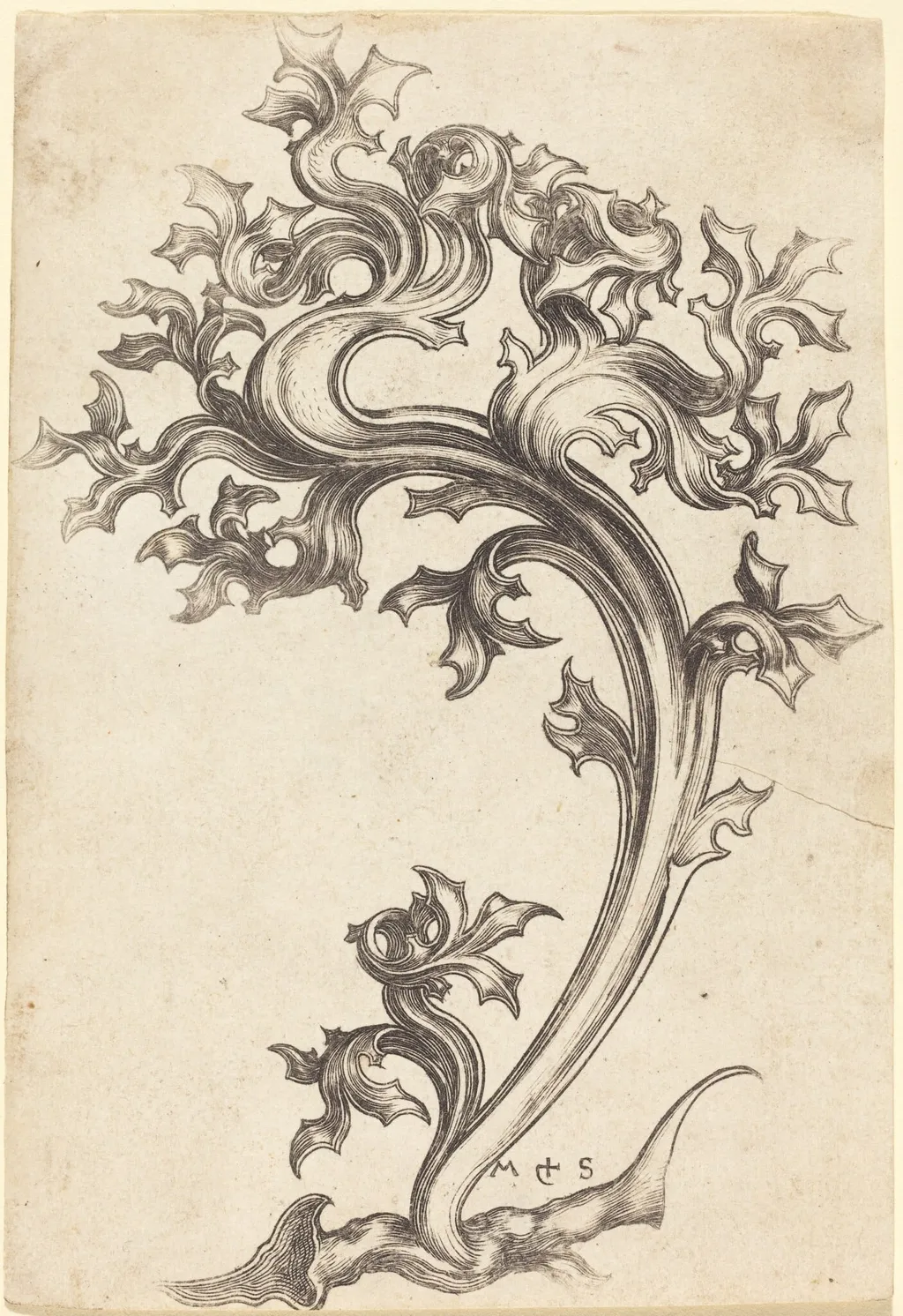
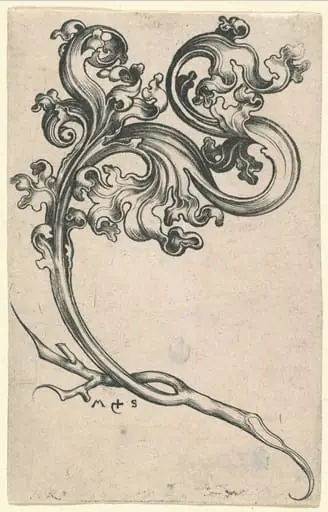
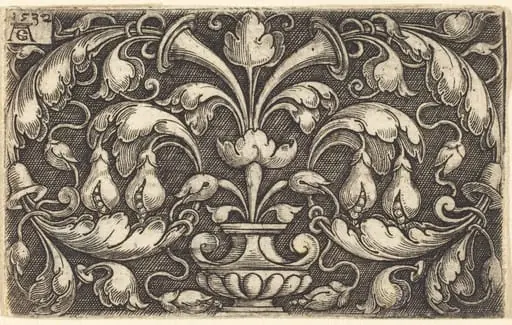
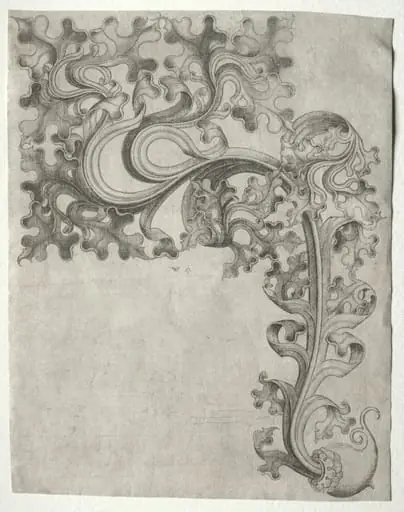
Thistle Ornament is an ink print by the Renaissance artist Martin Schongauer. It dates from 1470 and is held in the collection of the National Gallery of Art.
About this work
Overview
Thistle Ornament is a 15th-century engraving attributed to Martin Schongauer, created circa 1470. As a prominent Alsatian artist, Schongauer excelled in both painting and engraving, notably influencing printmaking north of the Alps prior to Albrecht Dürer.
Subject & Meaning
The engraving presents a meticulous botanical study of a thistle. The plant’s leaves and flower are depicted with anatomical precision, highlighting Schongauer’s attention to natural detail. The thistle, often symbolizing resilience and protection in medieval iconography, may have been chosen for its aesthetic or symbolic appeal.
Technique & Style
Executed with smooth, detailed lines and subtle shading achieved through tiny parallel lines, the work showcases Schongauer’s mastery of engraving. Trained initially in goldsmithing, his background influenced his precise technique. The monogrammed piece is characteristic of his signed body of 116 engravings.
History & Provenance
Created around 1470, Thistle Ornament is part of Schongauer’s prolific output. While specific ownership history is not provided, the engraving’s technique and date place it firmly within Schongauer’s known oeuvre, marked by his consistent use of a personal monogram.
Context
Produced in an era where engraving was a novel medium for mass-producing images, Thistle Ornament reflects the burgeoning interest in detailed, replicable artwork. Schongauer’s work bridged the gap between the goldsmithing tradition and the emerging print culture of the late Gothic period.
Artist & collection

Artist
Martin Schongauer, also known as Martin Schön or Hübsch Martin by his contemporaries, was an Alsatian engraver and painter.