Artwork
Asetelma
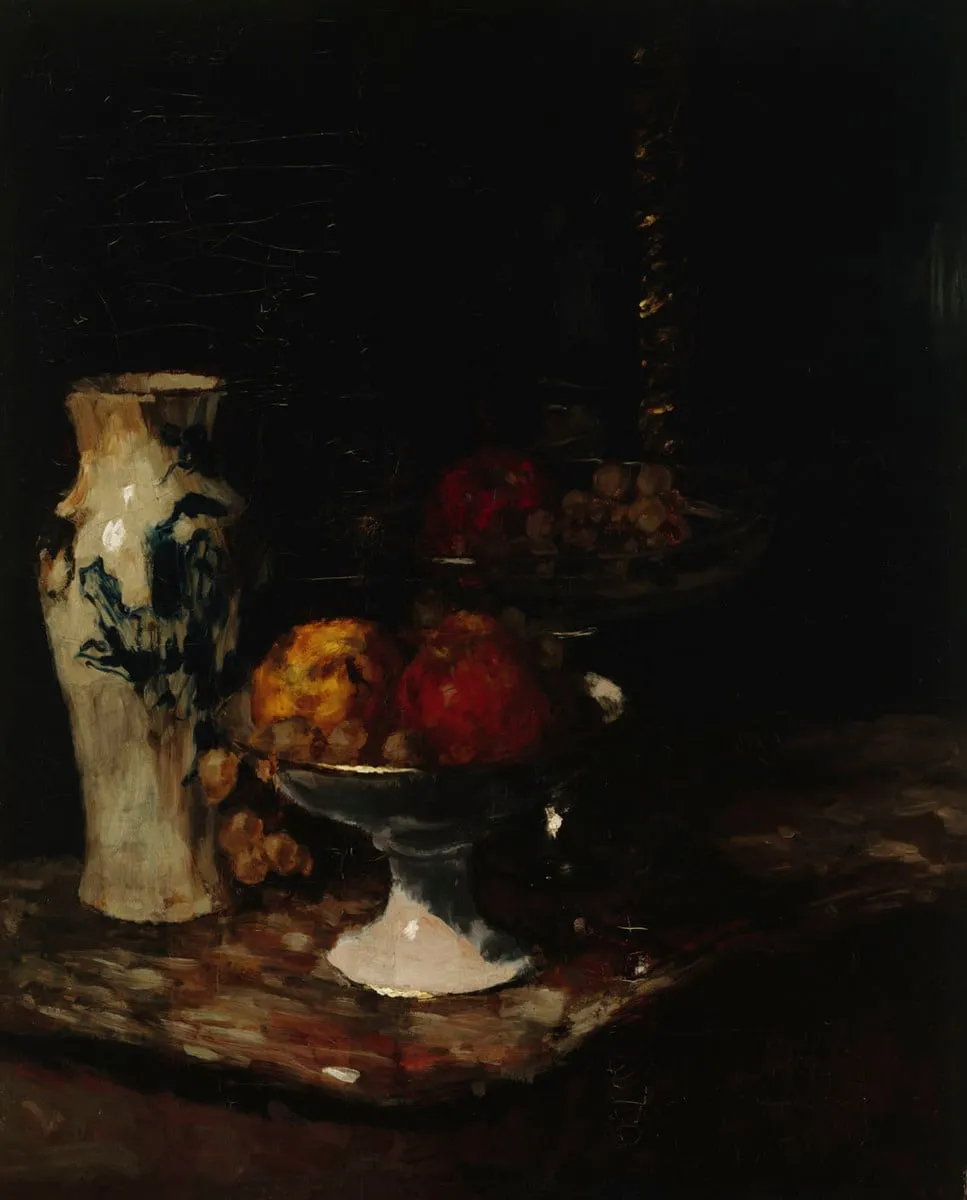
Asetelma is an unspecified painting by Carl Schuch. It dates from 1884 and is held in the collection of the Finnish National Gallery.
About this work
Overview
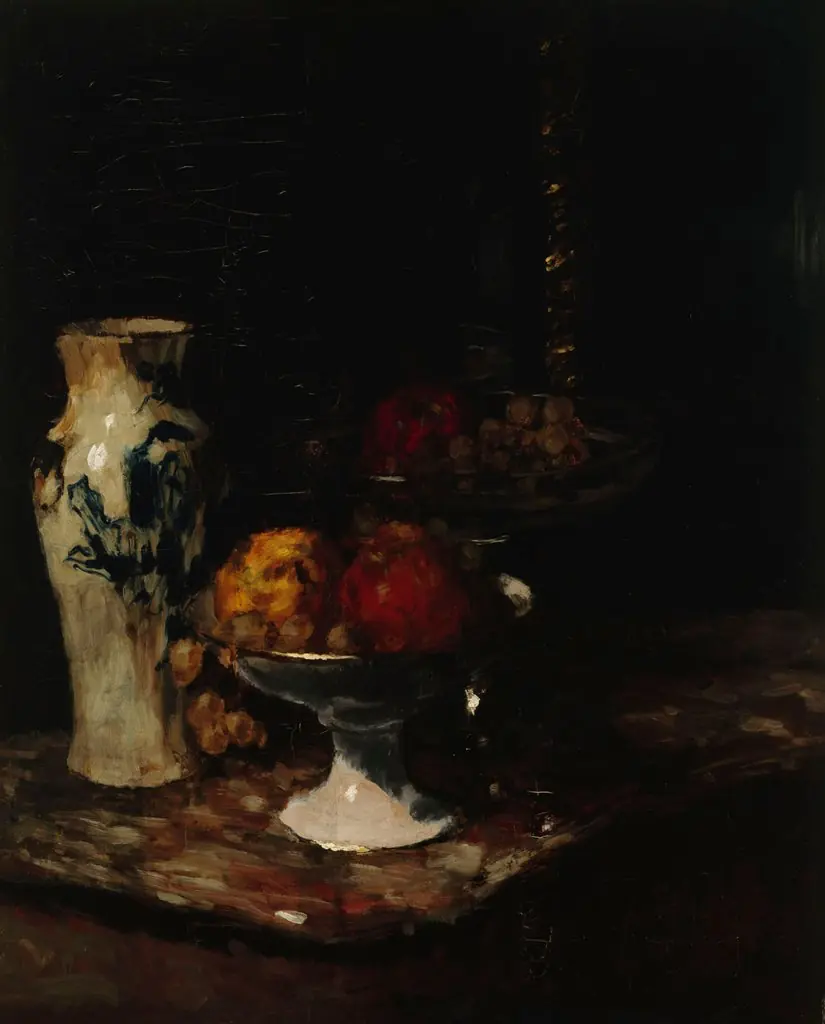
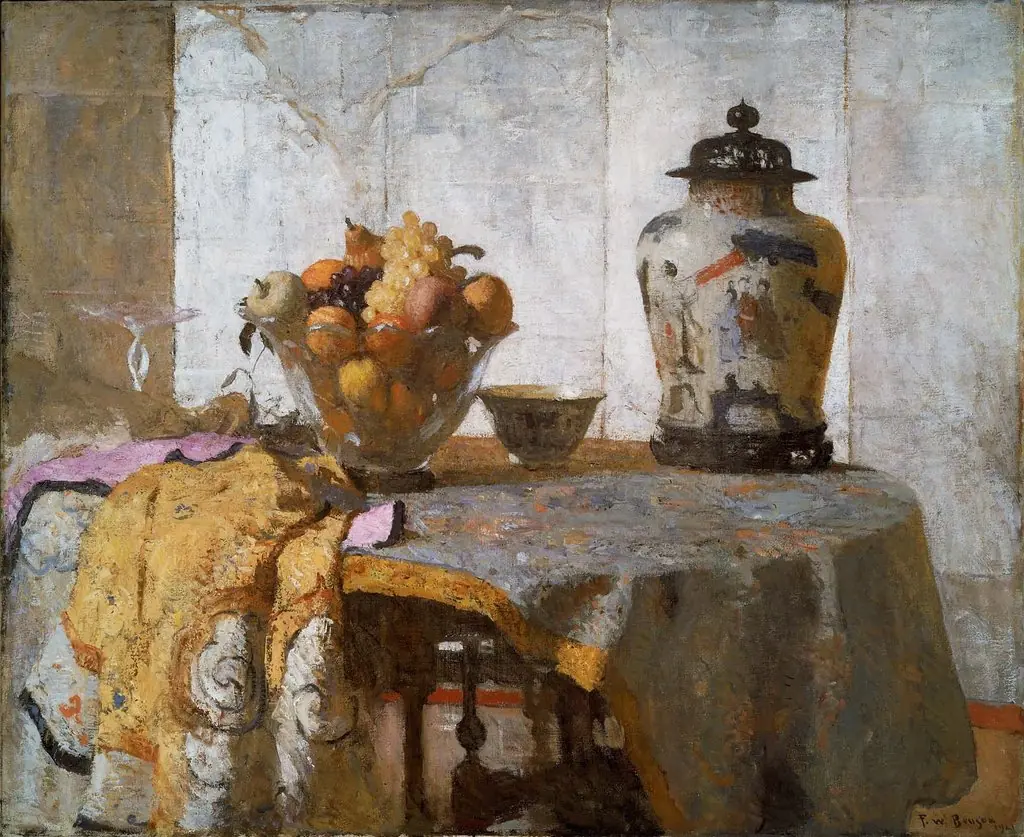
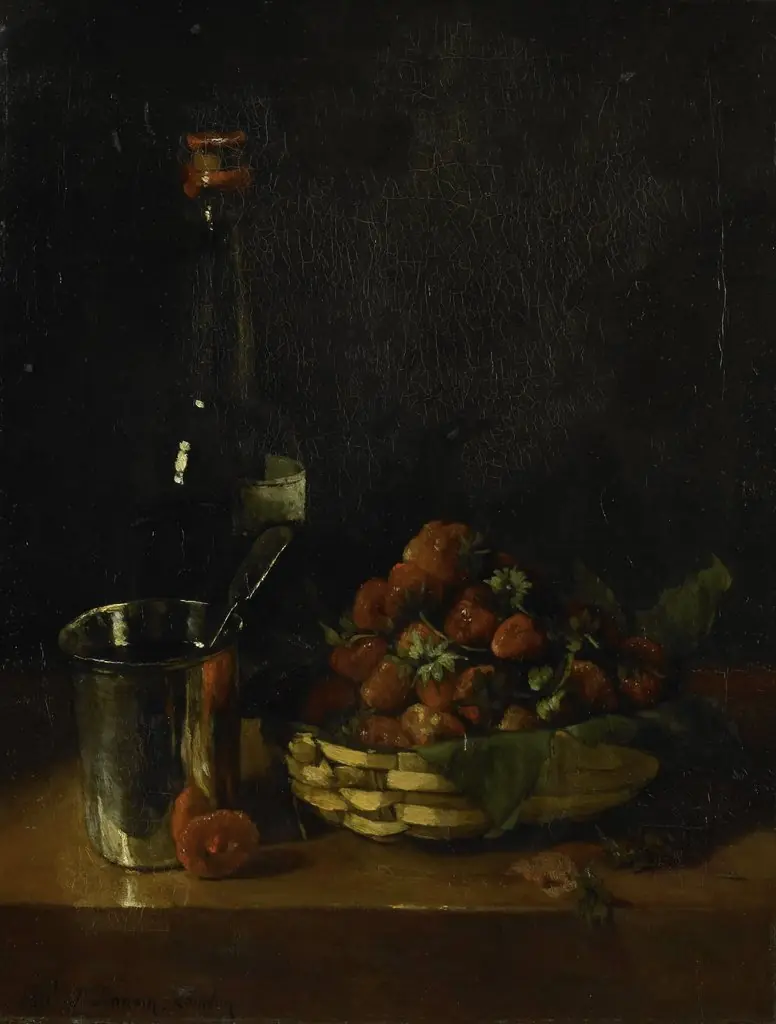
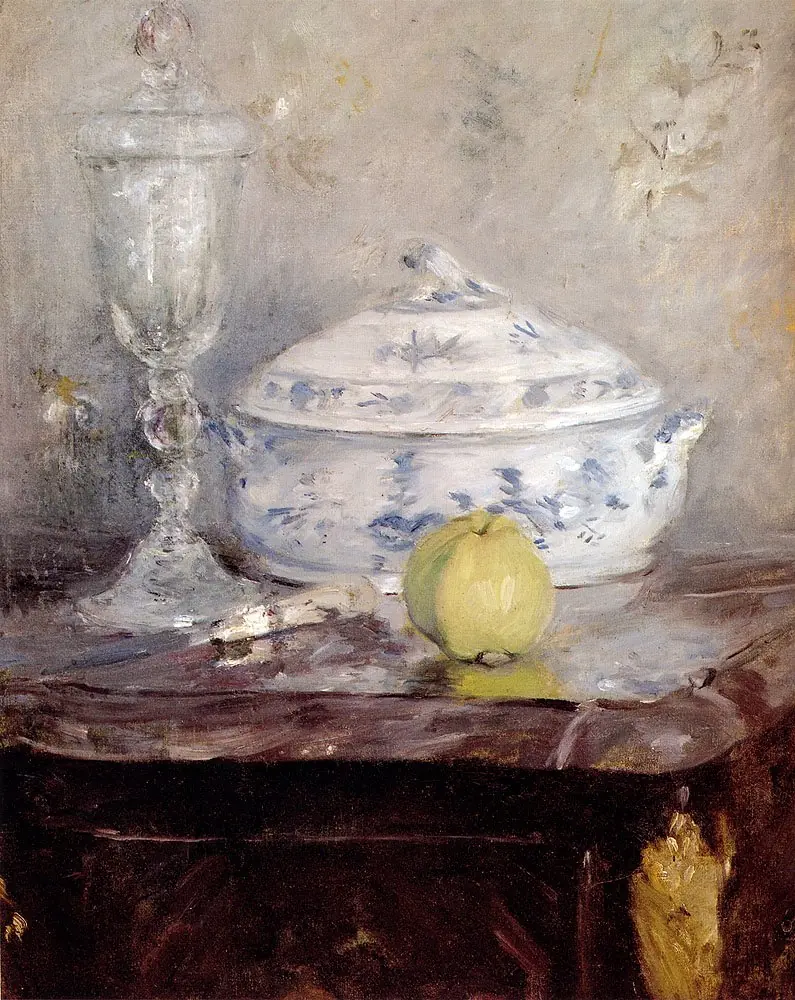
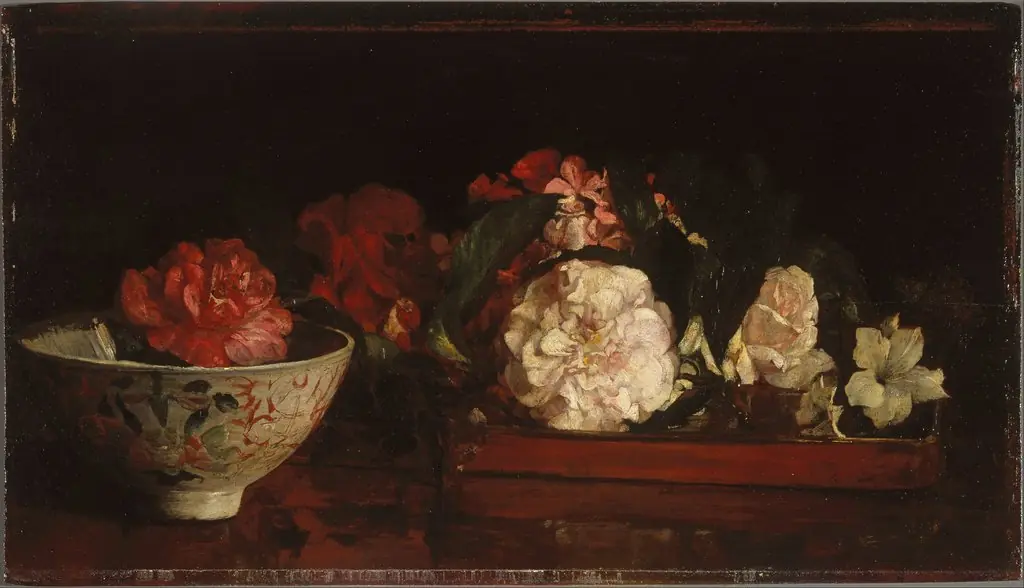
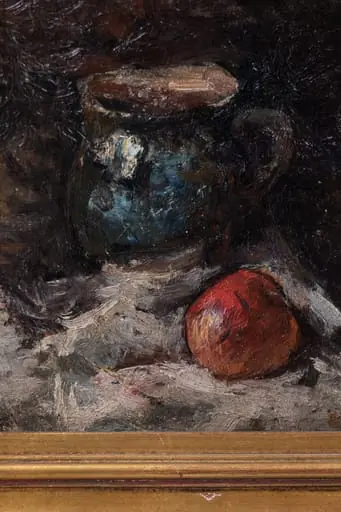
Created around 1884, Asetelma is a still‑life painting by Austrian artist Carl Schuch. The composition presents a modest arrangement of domestic objects rendered with restrained coloration, inviting quiet observation.
Subject & Meaning
At the left edge stands a tall white vase adorned with a blue motif, while a central bowl holds a modest collection of red and yellow fruit. The juxtaposition of these everyday items against a dark backdrop emphasizes their material presence and suggests a contemplative focus on ordinary beauty.
Technique & Style
Schuch employs a limited palette, allowing the whites, blues, reds, and yellows to emerge sharply from the surrounding darkness. The handling of light and shadow creates a subtle chiaroscuro effect, giving the forms a sense of volume without overt dramatization.
History & Provenance
Asetelma dates to the mid‑1880s, a period when Schuch was exploring still‑life subjects within a realist framework. The work’s provenance traces to private collections before entering public display, reflecting its continued relevance to studies of 19th‑century Austrian painting.
Artist & collection
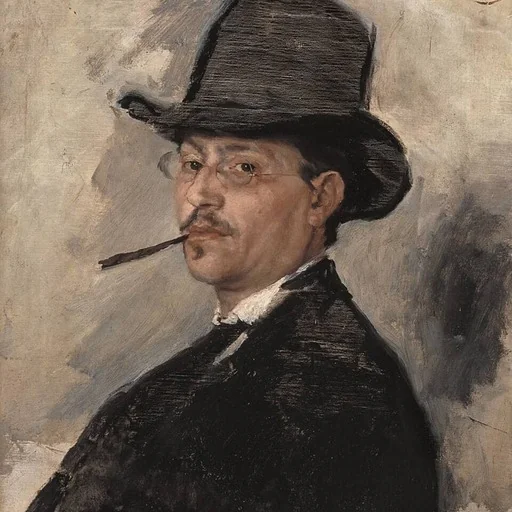
Artist
Carl Eduard Schuch (30 September 1846 – 13 September 1903) was an Austrian painter, born in Vienna, who spent most of his lifetime outside Austria, in Germany, Italy and France.