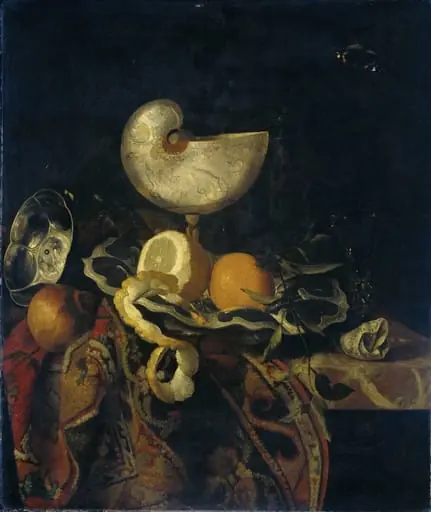
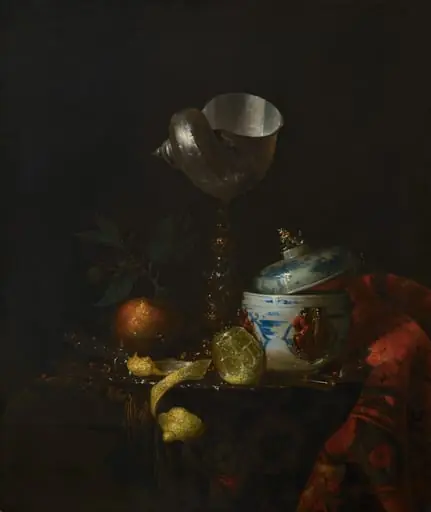
Artwork
Still-Life with Chinese Porcelain Bowl
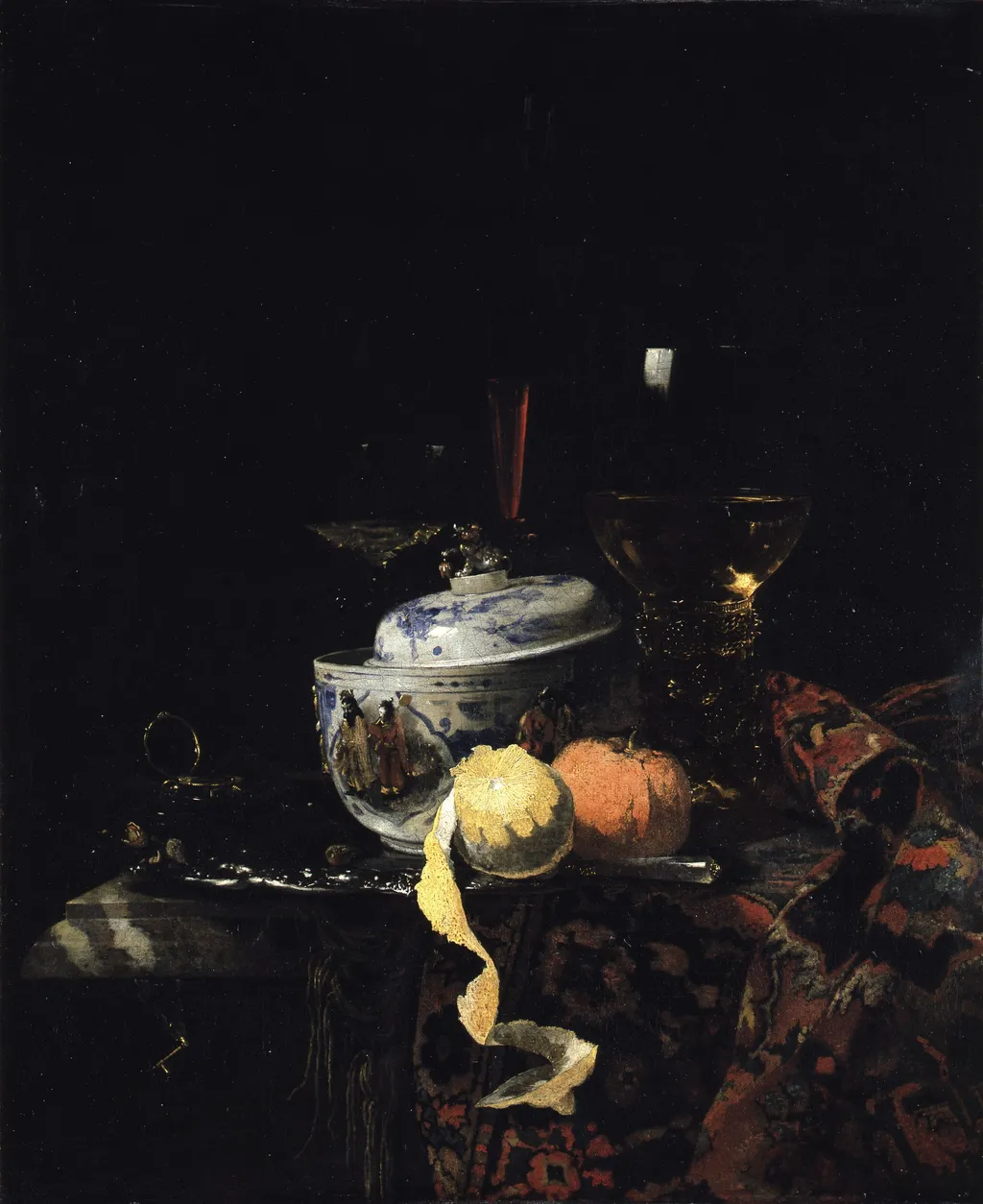
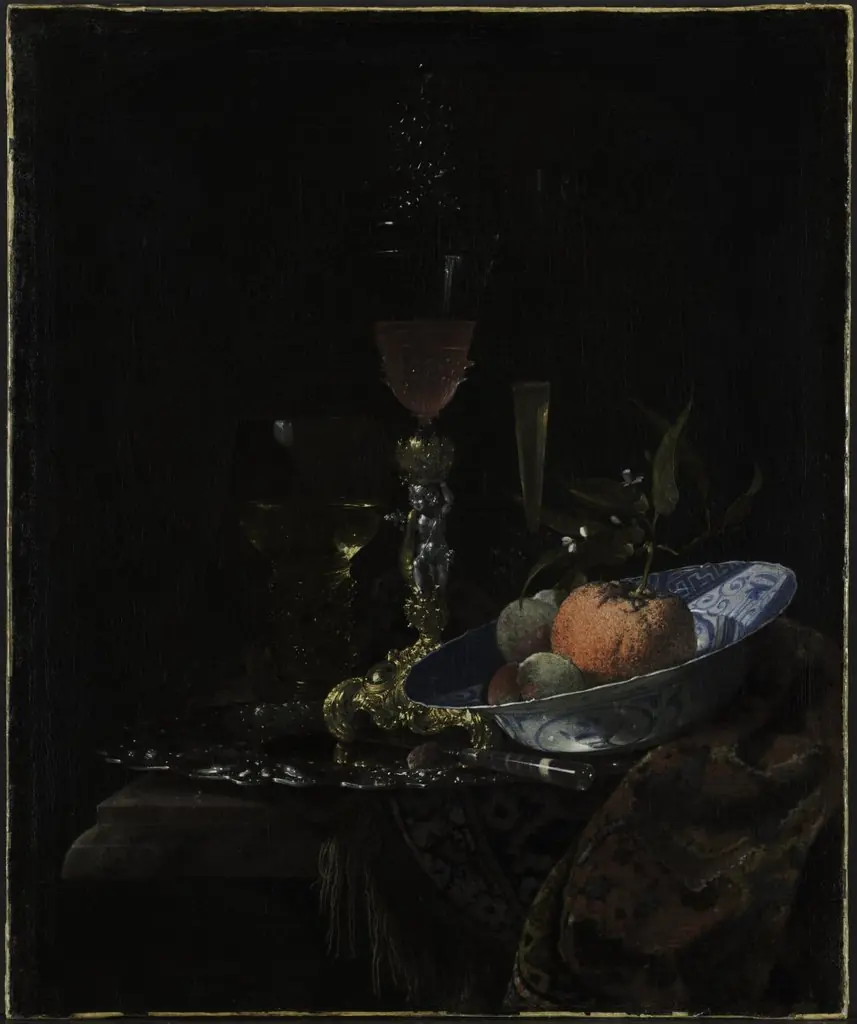
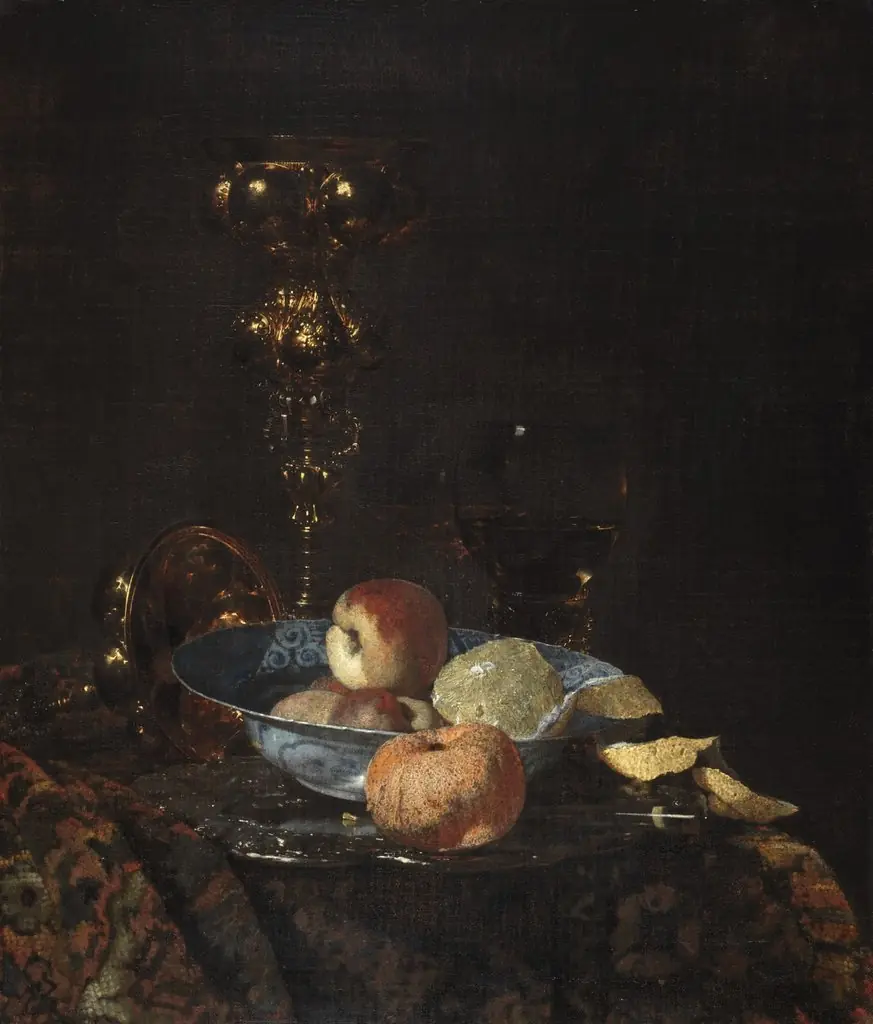
Still-Life with Chinese Porcelain Bowl is an oil painting by the Dutch Golden Age artist Willem Kalf. It dates from 1662 and is held in the collection of the Gemäldegalerie Berlin.
About this work
Overview
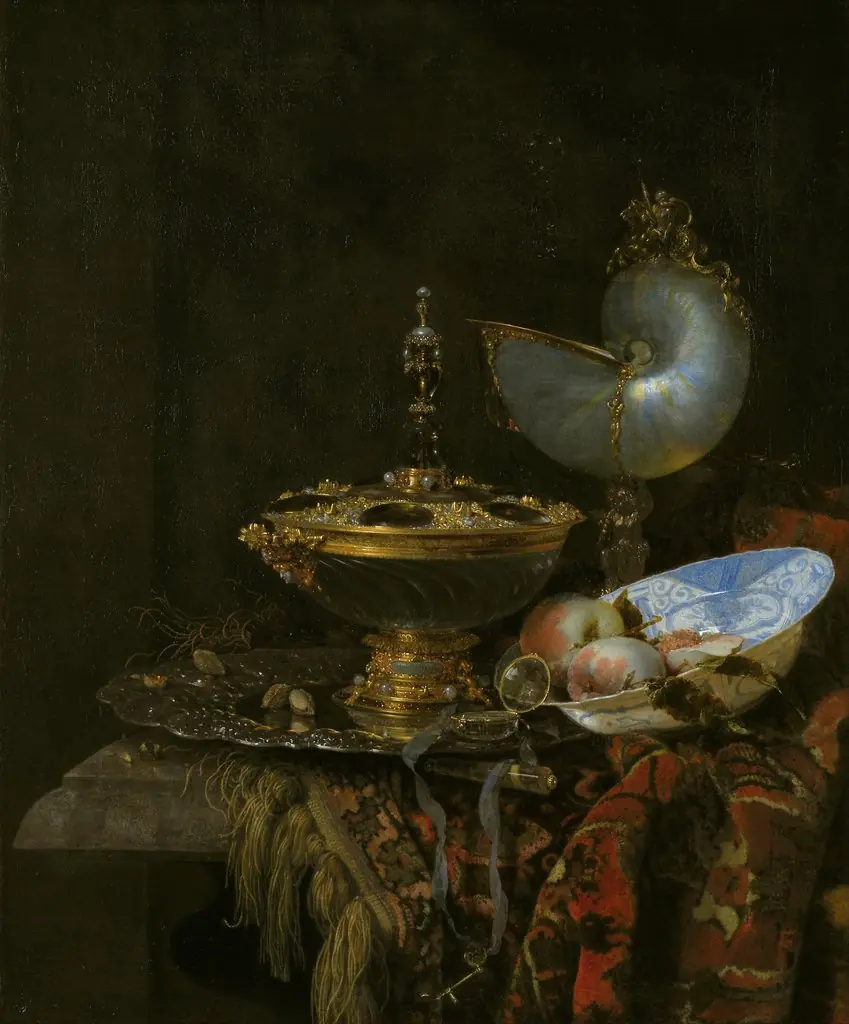
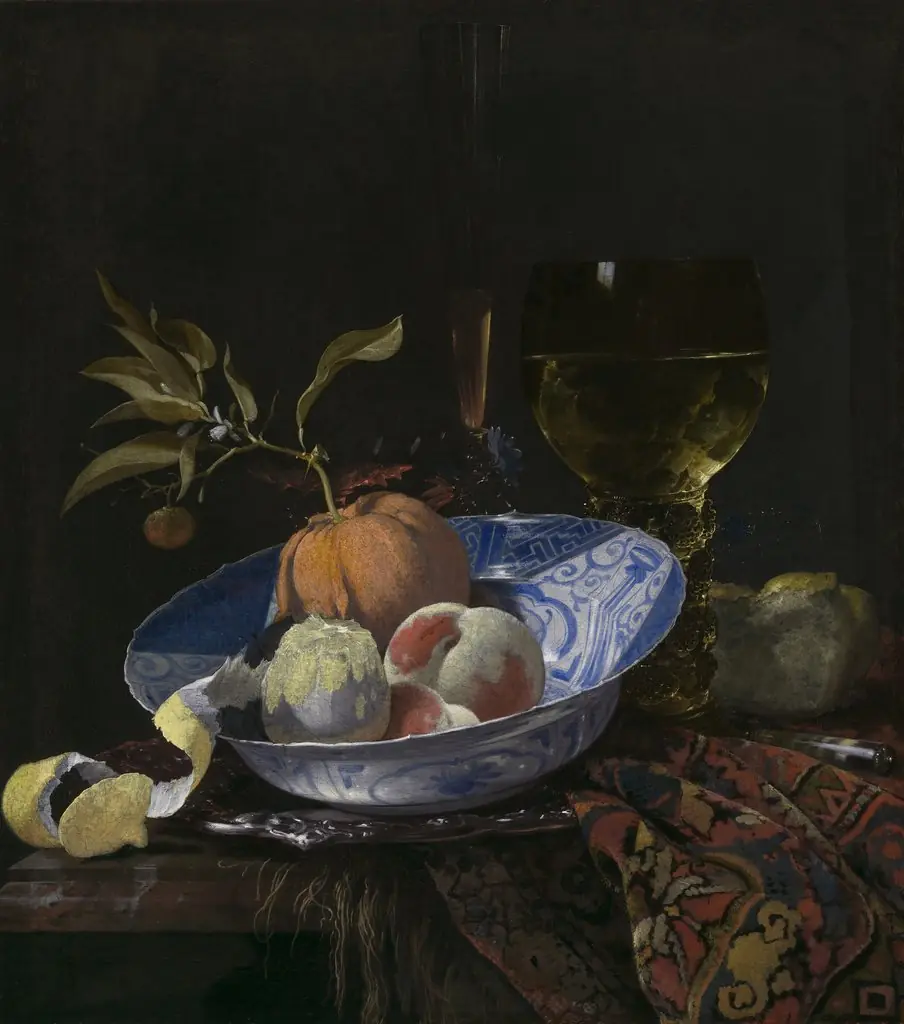
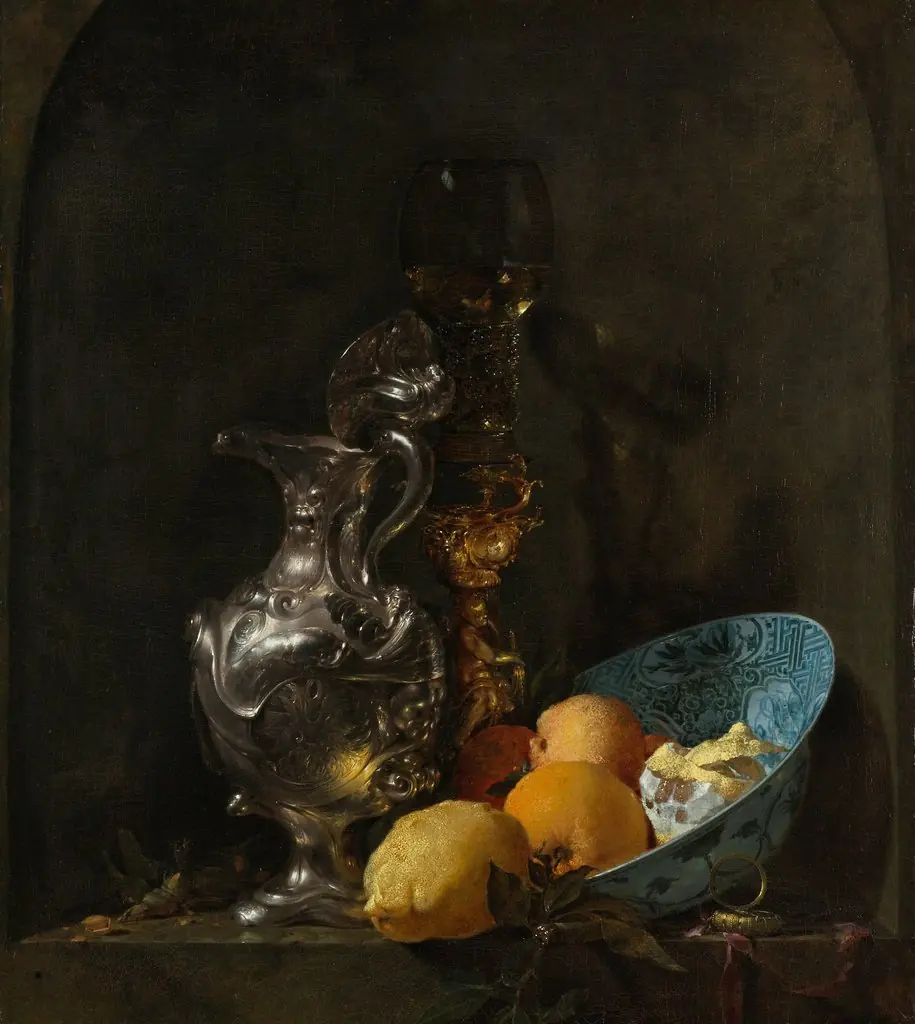
Still-Life with Chinese Porcelain Bowl, painted in 1662 by Willem Kalf, is a representative work of Dutch still-life painting from the 17th century. Characterized by its depiction of luxury items, the painting showcases Kalf's expertise in the pronkstilleven genre.
Subject & Meaning
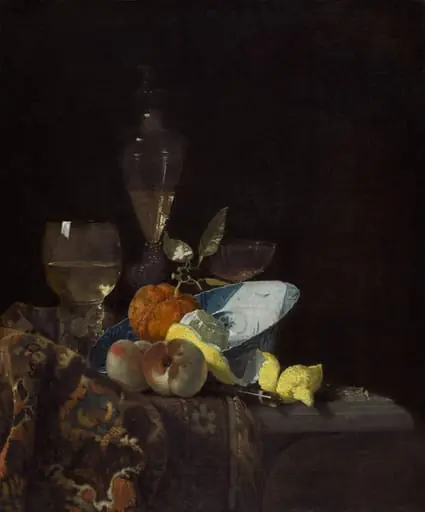
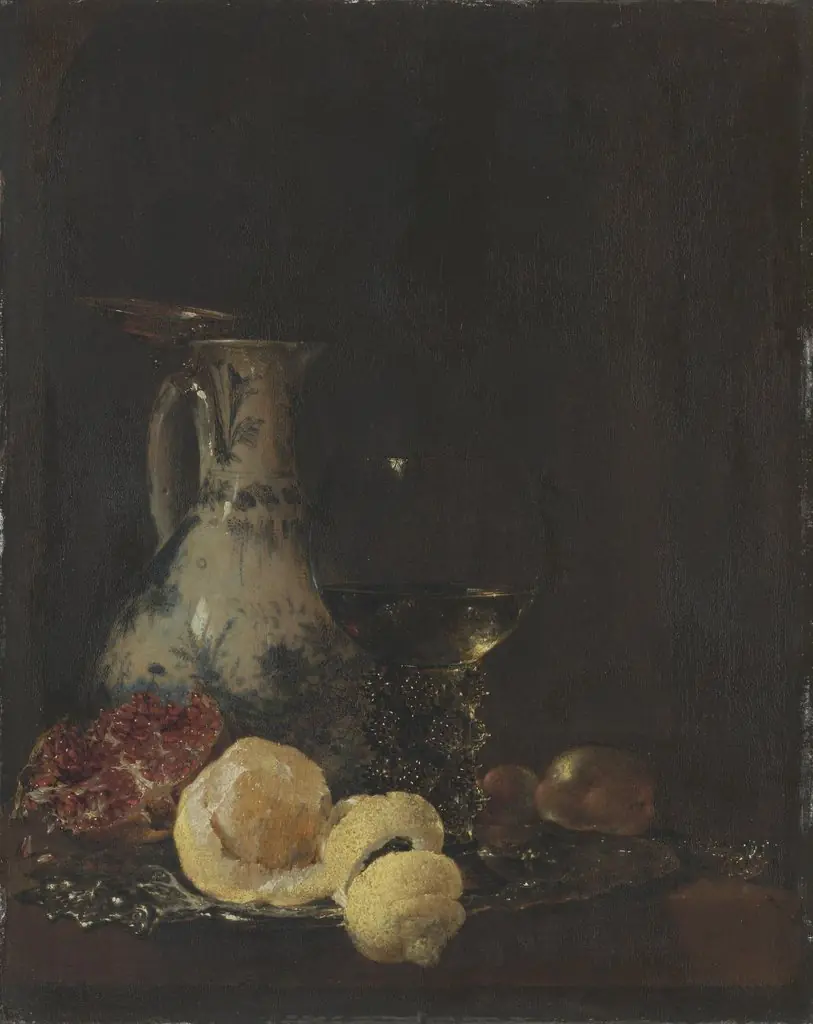
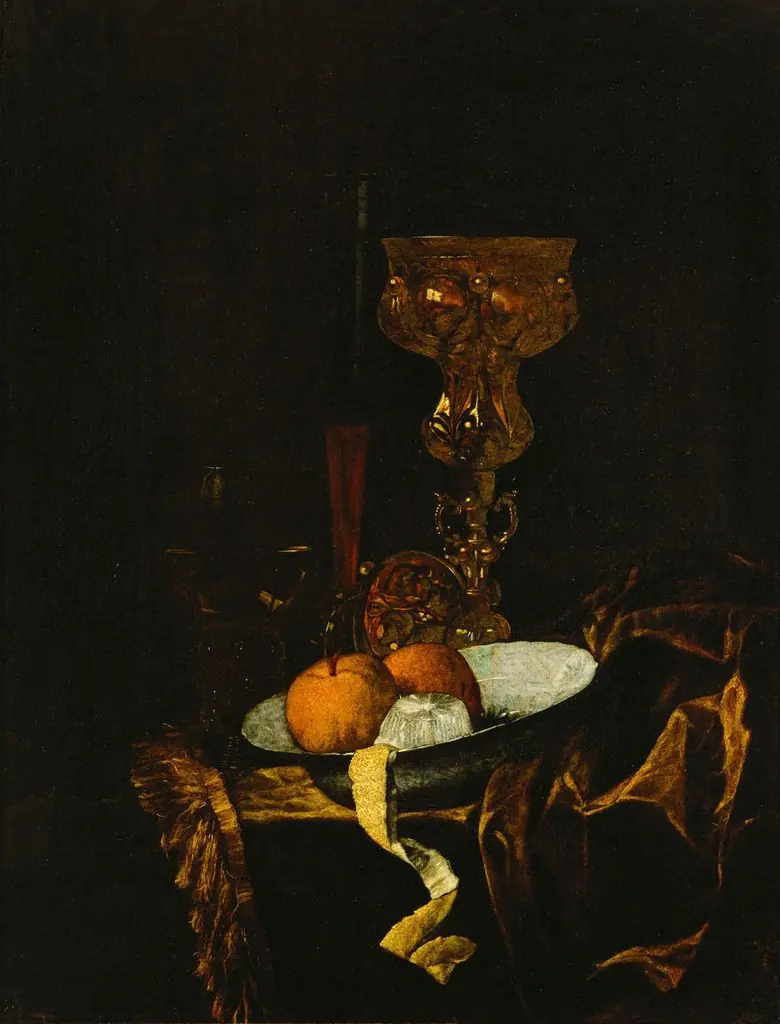
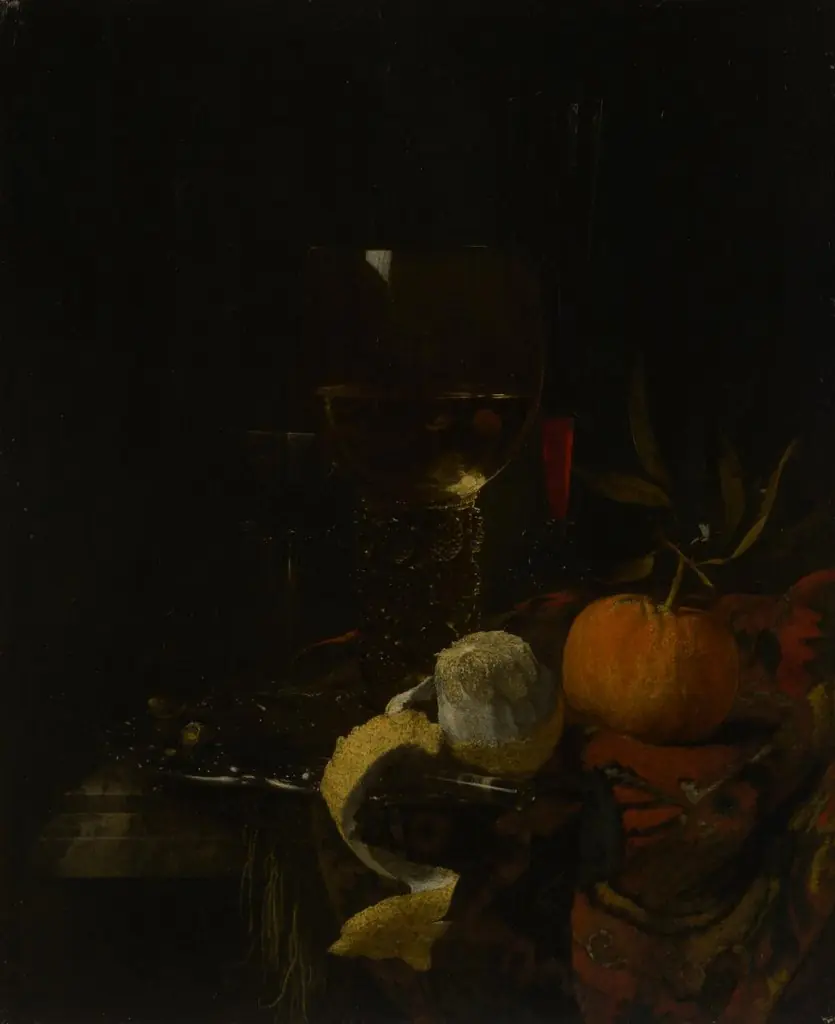
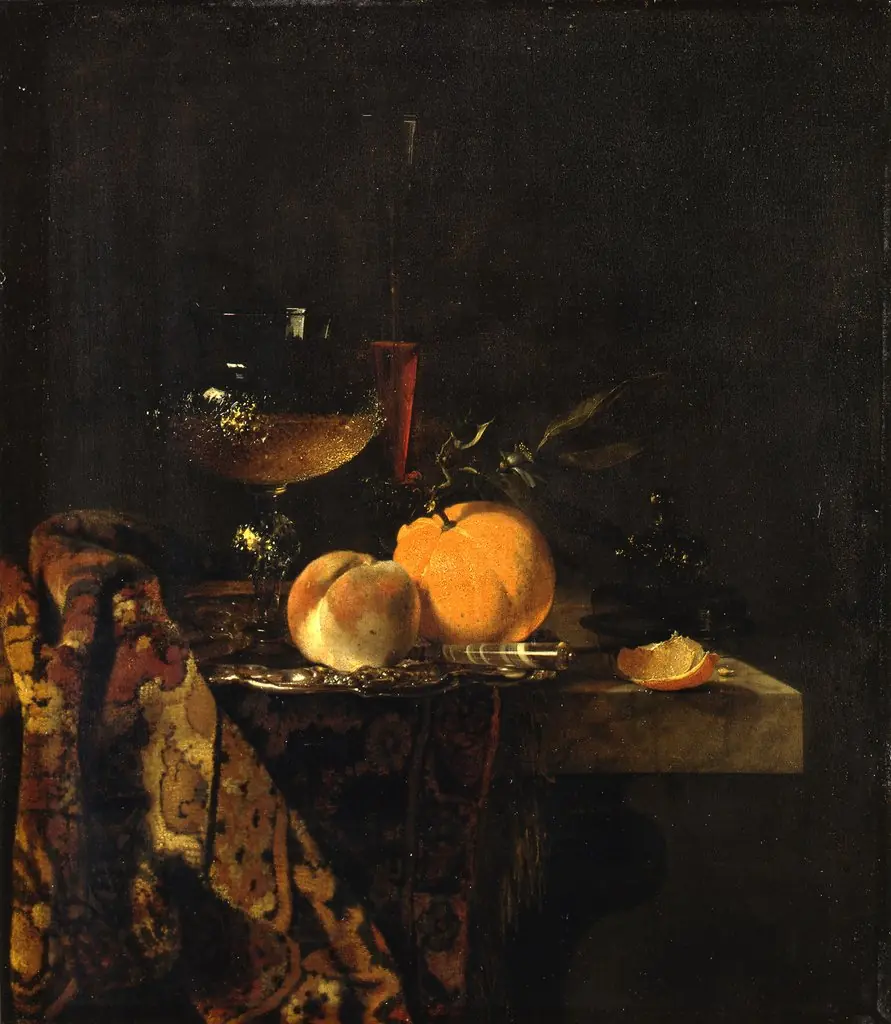
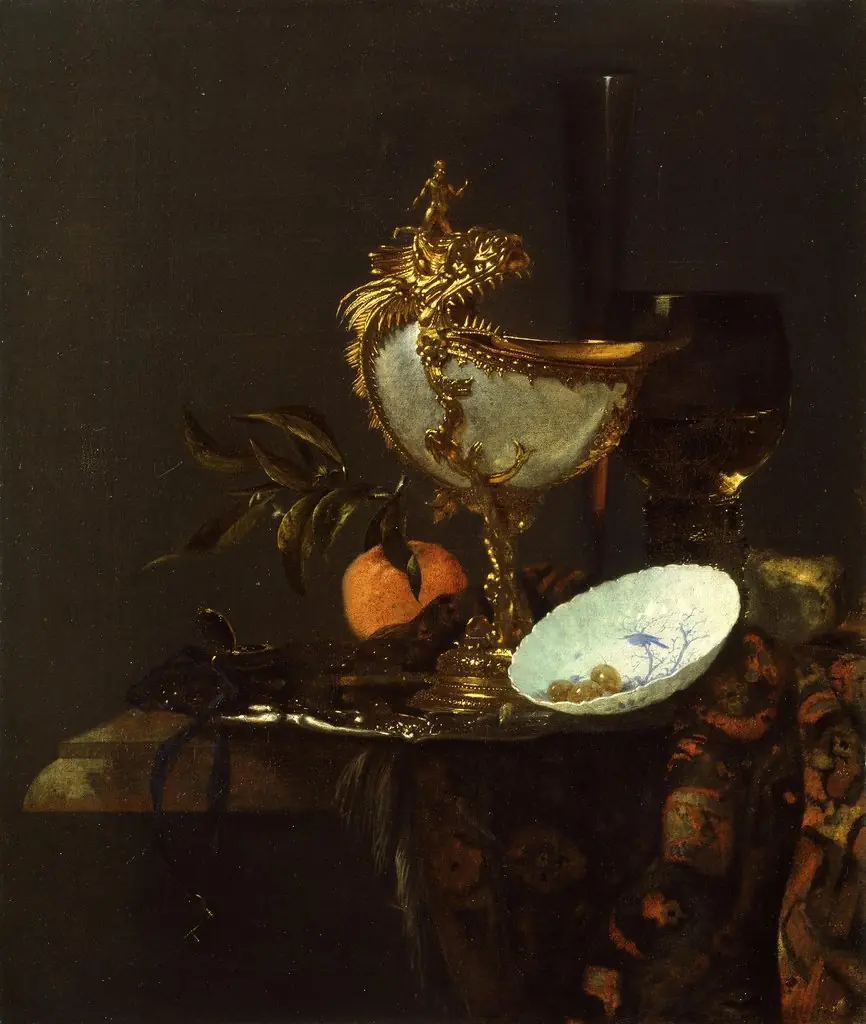
The painting features a select arrangement of precious objects, including a Chinese porcelain bowl with lid, a metallic cup, and a lemon with twisted peel, set against a dark table. These elements reflect the Dutch fascination with exotic, high-value goods during the period.
Technique & Style
Kalf employed chiaroscuro to dramatic effect, using a burning candle's warm glow to create deep contrasts of light and shadow. This technique accentuates the textures and forms of the depicted objects, making them stand out against the dark background.
History & Provenance
Created during Kalf's lifetime of acclaim for technical prowess and historical art awareness, the painting is now part of the collection at the Gemäldegalerie Berlin.
Context
The work embodies the 17th-century Dutch appreciation for rare, exotic commodities, such as Chinese porcelain, which symbolized wealth and global trade connections.
Legacy
As a leading exponent of pronkstilleven, Kalf's *Still-Life with Chinese Porcelain Bowl* contributes to the enduring legacy of Dutch Golden Age still-life painting, valued for its technical excellence and historical insight.
Own this work as a print
Artist & collection
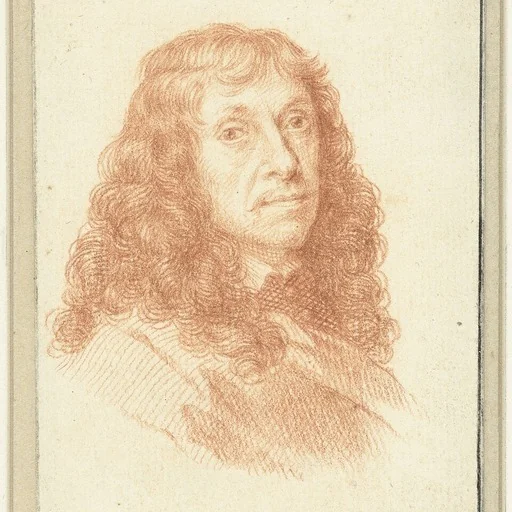
Artist
Willem Kalf (1619 – 31 July 1693) was one of the most prominent Dutch still-life painters of the 17th century, the Dutch Golden Age.