Artwork
A Monk with a Bagpipe Player
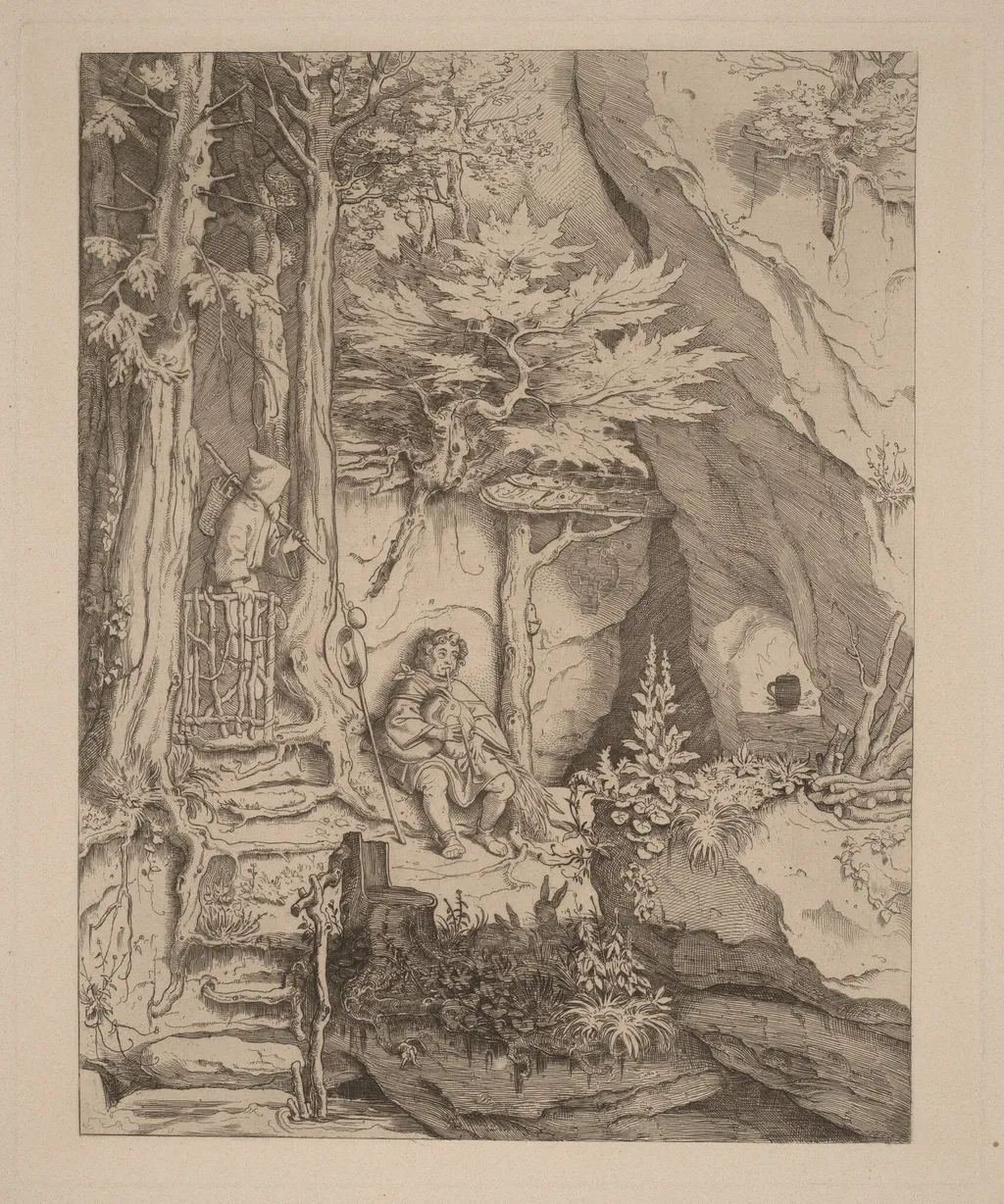
A Monk with a Bagpipe Player is an ink print by the Romanticist artist Moritz von Schwind. It dates from 1848 and is held in the collection of the National Gallery of Art.
About this work
Overview
A Monk with a Bagpipe Player is an 1848 etching on wove paper by Austrian artist Moritz von Schwind, characterized by its narrative depth and folkloric themes, set within a serene yet mysterious forest environment.
Subject & Meaning
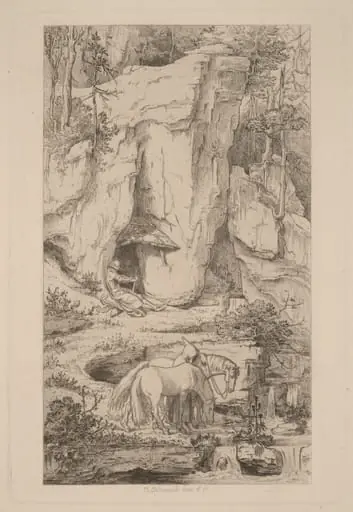
The etching depicts a tranquil forest scene with a monk and a bagpipe player, drawing on Schwind's romanticized interpretation of traditional themes, possibly alluding to the intersection of spiritual and folk cultures.
Technique & Style
Executed with precise lines, the etching utilizes shading to create a dark, mystical ambiance. The level of detail, evident in foliage, textures, and clothing, highlights Schwind's mastery of etching, a technique involving incising designs on metal plates for printing.
History & Provenance
Created in 1848, the work is a product of Schwind's period of engagement with lyrical, romantically charged subjects. Specific provenance details are not provided.
Context
Emerging from 19th-century Austrian art, the piece reflects the broader European Romantic movement's fascination with folklore, nature, and the expressive potential of printmaking techniques like etching.
Legacy
While specific legacy details of *A Monk with a Bagpipe Player* are not outlined, it contributes to Schwind's overall body of work that influenced subsequent generations in their approach to narrative and thematic depth in printmaking.
Artist & collection
Artist
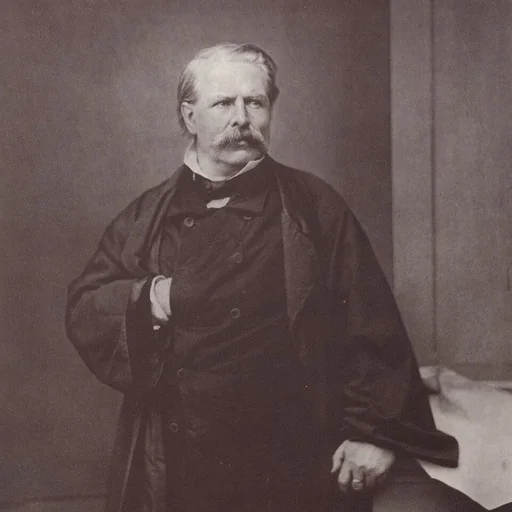
Moritz von Schwind (21 January 1804 – 8 February 1871) was an Austrian painter, born in Vienna.

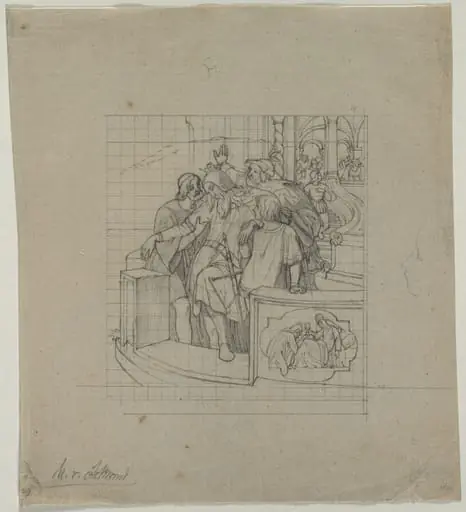
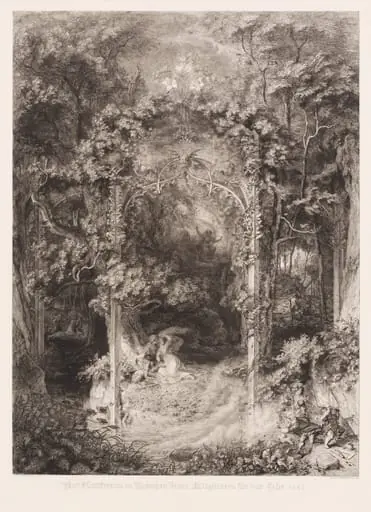 Das Waldfräulein (The Lady of the Forest)
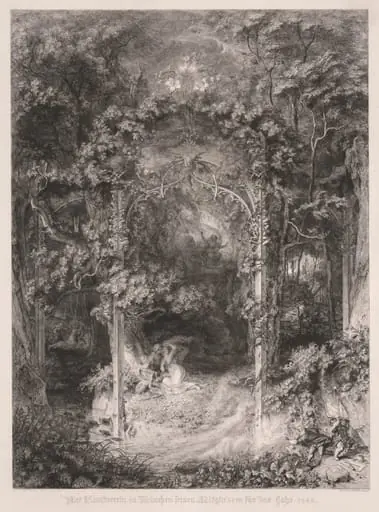 The Forest Maiden
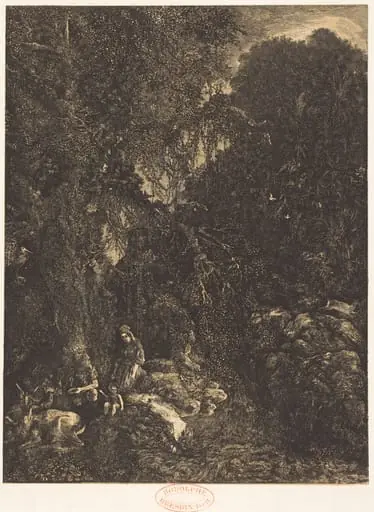 The Holy Family with the Does
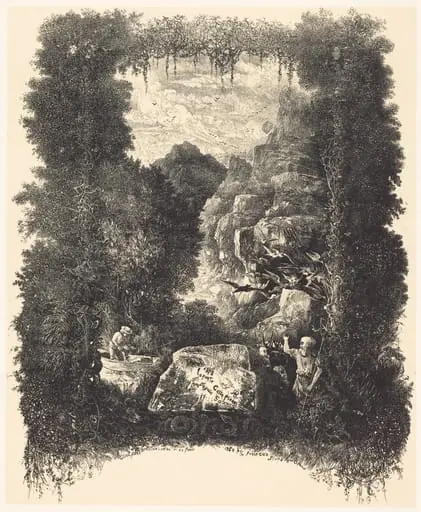 Frontispiece
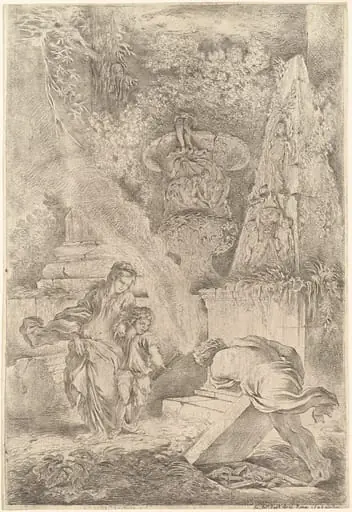 Theseus Finding Aegeus' Arms
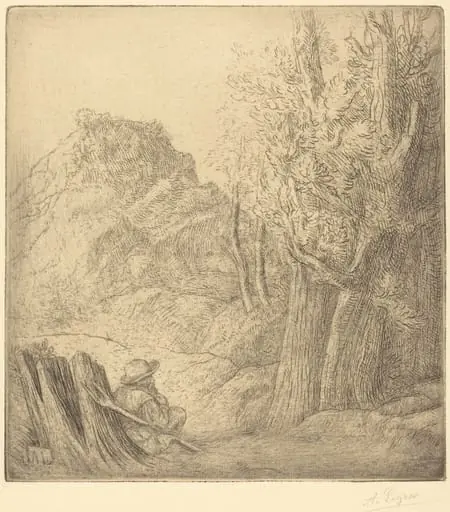 Old Village (Ville vieille)
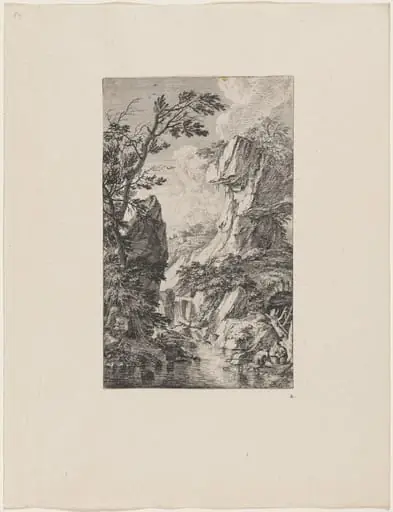 The Two Fishermen
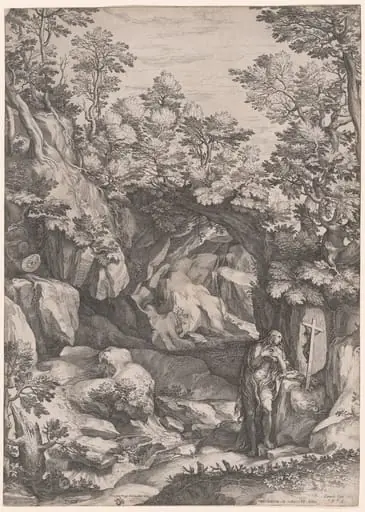 Landscape with a Penitent Magdalene
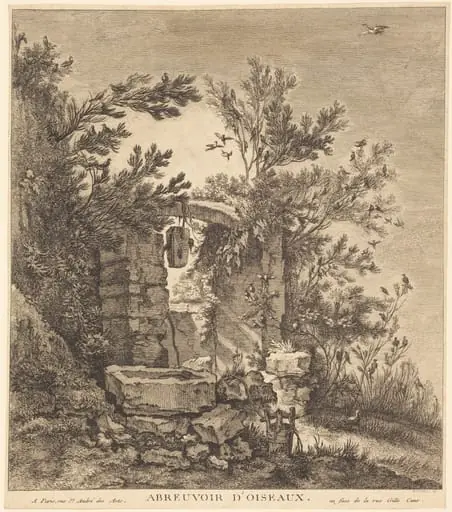 Abreuvoir d'oiseaux (The Birds' Watering Place)
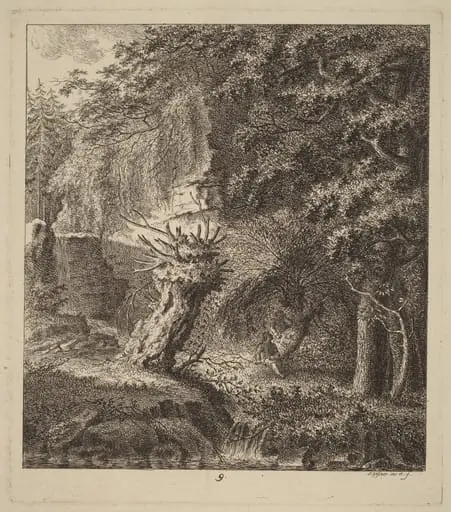 Wooded Landscape with a Pollarded Tree
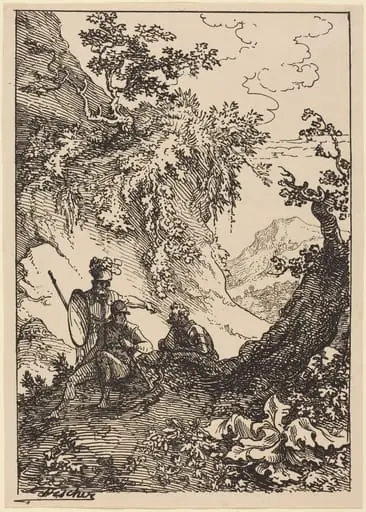 Landscape with Men in Armor, Tree Stump