Artwork
Abreuvoir d'oiseaux (The Birds' Watering Place)
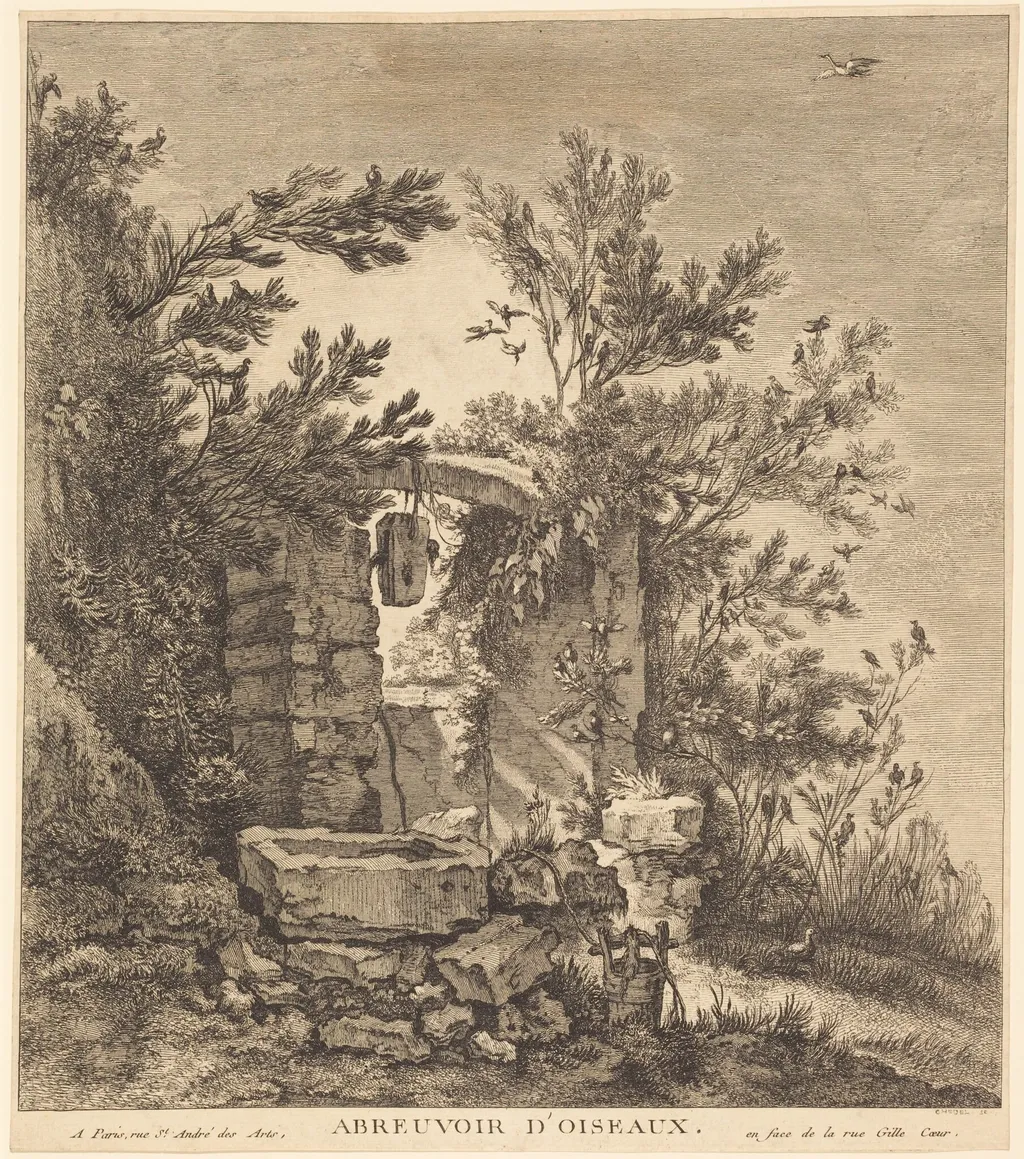
Abreuvoir d'oiseaux (The Birds' Watering Place) is an ink print by the Romanticist artist Quentin-Pierre Chedel. It dates from 1754 and is held in the collection of the National Gallery of Art.
About this work
Overview
Created in 1754 by Quentin-Pierre Chedel, this etching depicts a secluded stone watering trough in a natural setting.
Created in 1754 by Quentin-Pierre Chedel, this etching depicts a secluded stone watering trough in a natural setting. Rendered on laid paper, the work captures a quiet moment in the wild, where birds gather to drink and rest. The composition emphasizes stillness and organic growth, with vegetation overtaking the man-made structure. The technique allows for fine linear detail, characteristic of etching as a medium for delicate natural observation.
Subject & Meaning
The scene portrays birds interacting with a rustic watering place, suggesting a harmonious coexistence between wildlife and human-made elements. The overgrown vines and bushes imply abandonment or neglect, transforming the trough into a natural haven. Rather than idealized pastoralism, the image conveys a quiet, unmanicured reality—where nature reclaims utility, and animals inhabit spaces once designed for human use.
Technique & Style
Chedel employed etching to achieve intricate textures in the stone, foliage, and bird plumage. The fine, controlled lines define the roughness of the trough’s surface and the delicate tendrils of climbing plants. The use of laid paper, with its subtle chain lines, enhances the tactile quality of the print. The composition avoids dramatic contrast, favoring subtle tonal gradations that reinforce the scene’s calm, muted atmosphere.
History & Provenance
The print was produced in 1754, during a period when naturalistic subjects were gaining interest among European printmakers. Chedel, active in France, focused on rural and wildlife themes, often documenting overlooked corners of the landscape. While specific early ownership records are scarce, the work survives in institutional collections, reflecting its value as a specimen of 18th-century observational printmaking.
Context
In mid-18th-century France, interest in natural history and landscape detail flourished alongside Enlightenment ideals. Artists increasingly turned to the wild as a subject worthy of careful study. Chedel’s etching aligns with this trend, offering a quiet alternative to grand historical or mythological scenes. It reflects a growing appreciation for the ordinary and the unembellished in nature.
Legacy
Though not widely known today, Chedel’s etching contributes to a broader tradition of naturalist printmaking that valued precision over spectacle. Its quiet realism influenced later artists who sought to document the subtle interactions between animals and their environments. The work remains a modest but significant example of how printmaking could serve as a tool for attentive observation of the natural world.
Own this work as a print
Artist & collection


 Veue de quelques Grottes solitaires de la Thebaide
 Le chat et le rat (The Cat and the Rat)
 Le corbeau, la gazelle, la tortue et le rat (The Crow, the Gazelle, the Tortoise, and
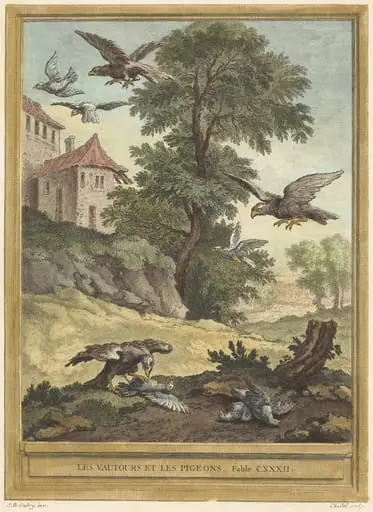 Les vautours et les pigeons (Vultures and Pigeons)
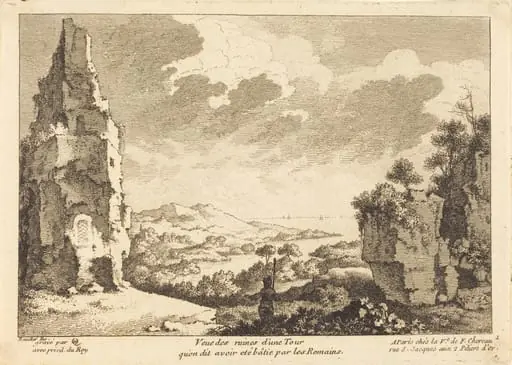 Veue des ruines d'une Tour qu'on dit avoir ete batie par les Romains
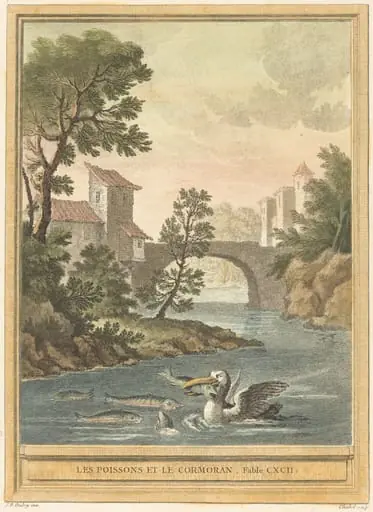 Les poissons et le cormoran (The Fish and theCormorant)
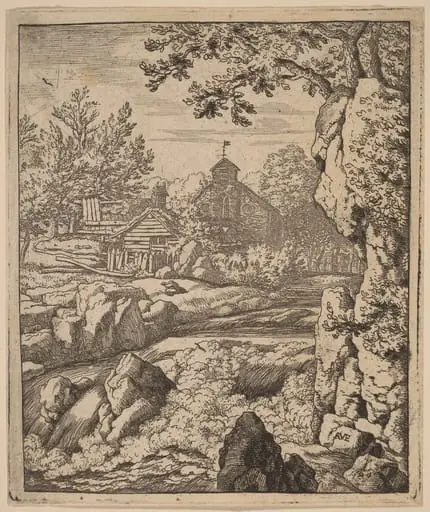 Waterfall
 Fifth View of the Colosseum
 Man on a Small Wooden Bridge
 Landscape near Rome, with a cistern in the foreground
 A Waterfall with Ruins (verso)
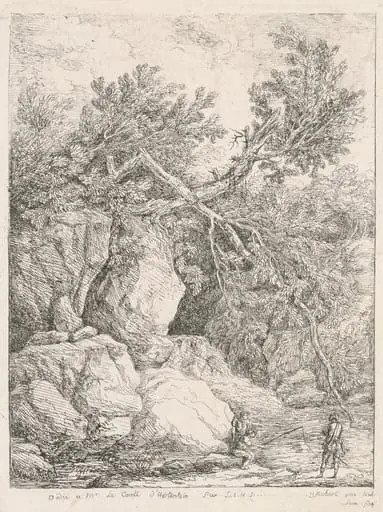 Landscape with a Fallen Tree (Paysage à l'arbre cassé)
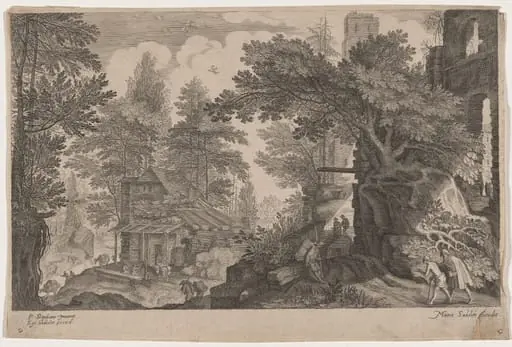 Travelers Resting in a Forest near a Hut
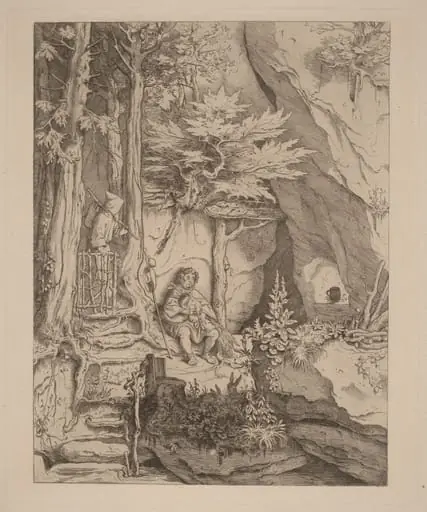 A Monk with a Bagpipe Player
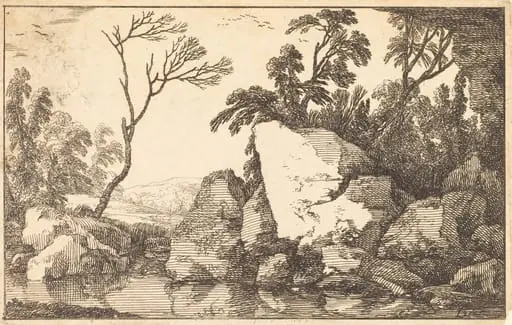 A Rocky Pond
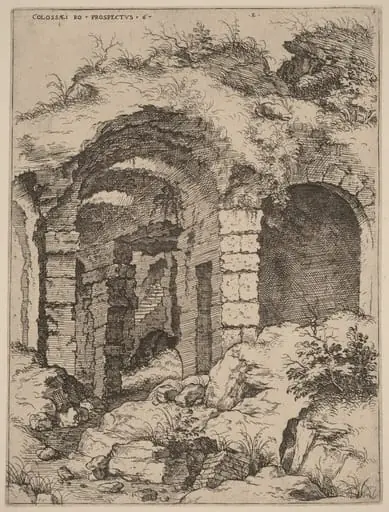 Sixth View of the Colosseum
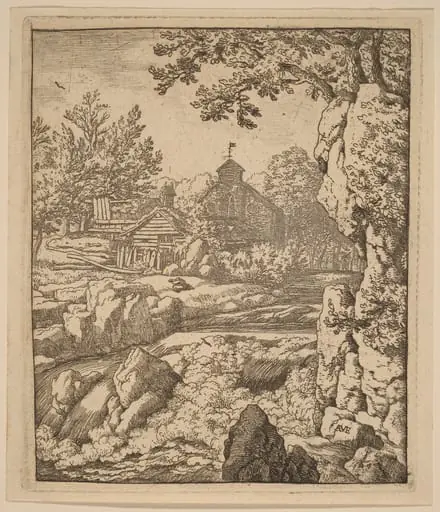 Waterfall
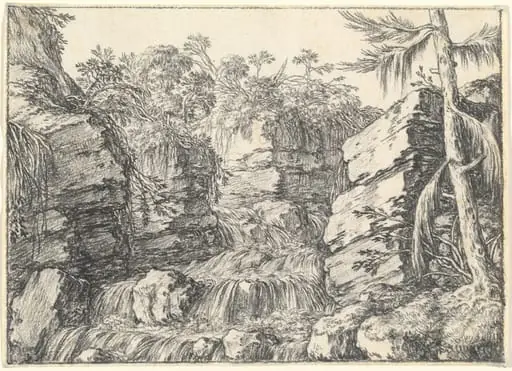 A Waterfall between Rocky Cliffs